
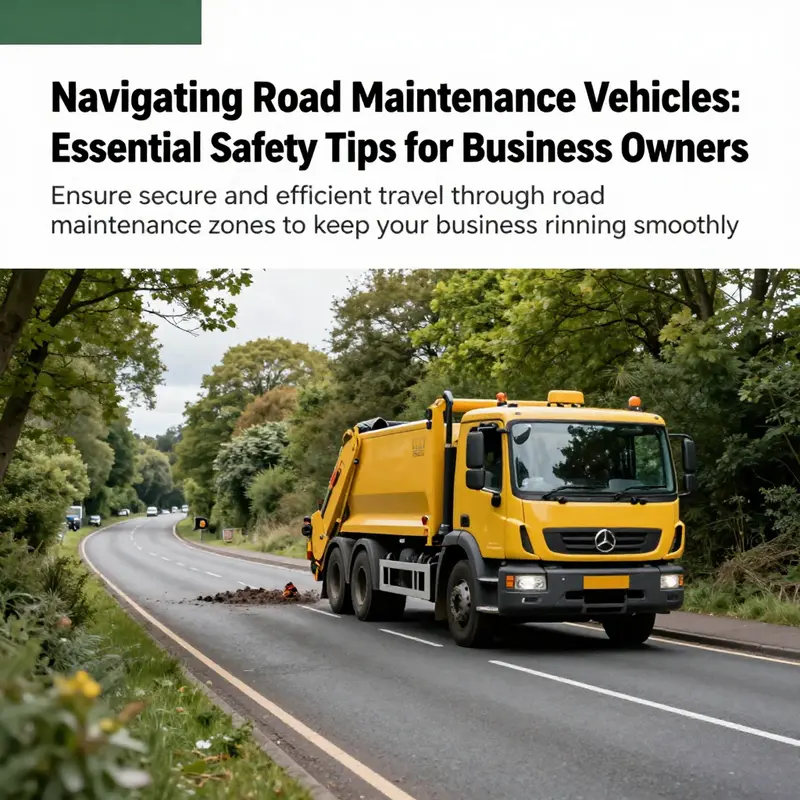
As a business owner who relies on transport for timely deliveries and client meetings, understanding how to navigate road maintenance vehicles on UK roads is pivotal. Frequent roadworks can disrupt travel plans and cause delays, impacting your business efficiency and reputation. By prioritizing safety and adhering to guidelines when encountering road maintenance vehicles, you not only ensure the safety of your drivers but also maintain timely operations. This article will explore critical steps involving awareness of warning signs, following traffic signals, best practices for driver behavior, and leveraging technology to navigate these situations effectively. Each chapter will build on these elements to provide a comprehensive approach to road safety.
Sharing the Road with Road Works: A Calm, Comprehensive Guide to Safety and Patience on UK Maintenance Zones
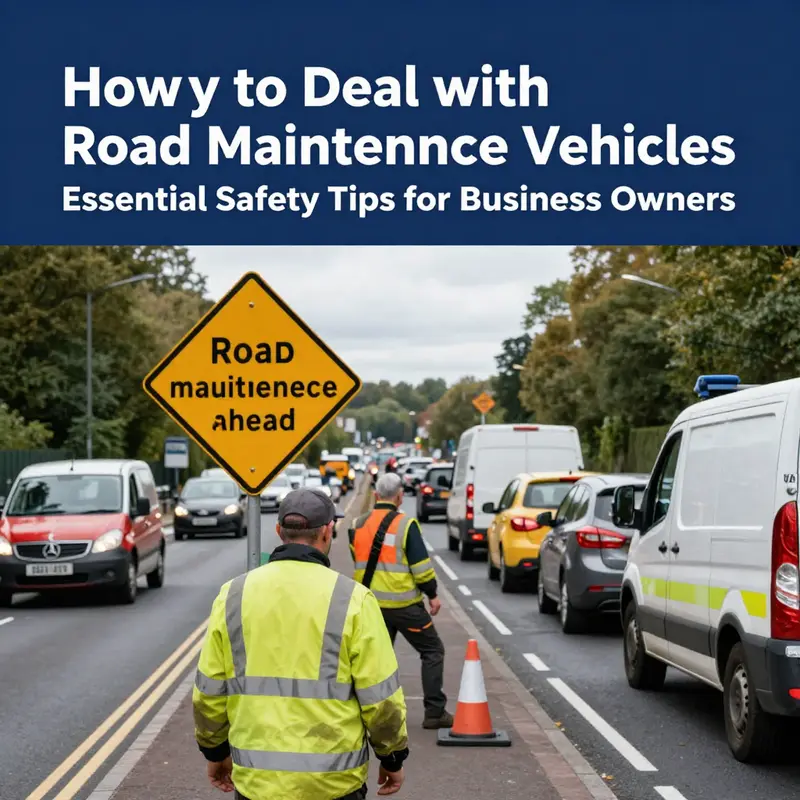
On a quiet morning or a bustling late-afternoon commute, UK roads can suddenly reveal a world where speed must yield to care. Road maintenance vehicles appear not as obstacles but as essential guardians of the network that keeps cities moving. Potholes, damaged signs, debris cleared from the carriageway—these tasks are the quiet backbone of safe travel. Yet their presence changes the rhythm of the road, demanding a different kind of attentiveness from every driver. The goal is simple in intent but demanding in practice: to pass or merge with maintenance operations without compromising the safety of the workers, other drivers, or yourself. To achieve this, a driver’s approach must be governed by awareness, restraint, and a readiness to adapt to evolving conditions on the ground. It is a discipline of patience that hinges on small, consistent choices made moment by moment as you encounter the shifts in traffic flow that come with road works.
The first principle is awareness. Road maintenance zones are marked well in advance with signs such as Road Works Ahead, or symbols indicating a lane closure. In the UK, these warnings are not decorative; they are deliberate signals designed to prepare you for changes in speed, direction, or lane position. Even if the line of traffic ahead looks familiar, a maintenance crew can appear suddenly in or near a closed lane. Your eyes must scan beyond the vehicle ahead and absorb multiple cues at once: the color and position of warning lights on the maintenance vehicle, the sting of a whistling wind across an open lane, the silhouette of cones that stretch into the distance. When you learn to read these cues with calm, your body naturally relaxes into a safer approach, reducing the tendency to jerk or brake harshly when the scene suddenly shifts. The Highway Code makes clear that you should slow down when approaching a road maintenance vehicle or a group of workers, a rule that travels with you through any road work zone as a reminder of the purpose behind the signs and the cones.
That awareness should translate into a measured reduction of velocity. Slowing down is more than a courtesy; it is a defensive strategy designed to increase your time to react. A work zone is populated not only by the vehicle you see but by people who may be in or near the carriageway. The drivers of support vehicles, the workers themselves, and even the equipment—vibrating road rollers, trucks with bright reflective panels—can create sudden changes in the line of travel. In practice, this means you need to move at a speed that allows you to stop if the lane becomes blocked or a worker signals for a vehicle to wait. The moment you notice a potential queue forming around a bend or a crest, you should begin to decelerate smoothly, using steady pressure on the brake rather than abrupt, last-minute taps that startle others or destabilize the vehicle behind you.
Evaluating how to navigate a work zone also means respecting the temporary traffic controls in place. Temporary signals, lane markings, and barriers can be unfamiliar to some drivers who rely on standard road patterns. When you encounter temporary traffic lights, cones, or barriers, treat them with the same caution you would a permanent traffic signal. Do not attempt to pass other vehicles or cut through cones unless explicitly permitted. This is not a test of nerve but a measure of shared responsibility. The rules of the road in these zones are designed to protect people who are literally engaged in rebuilding the road as you drive by. A moment of hesitation at a barrier or a miscalculated lane change can place a worker in harm’s way, a risk that can be mitigated by deliberate, compliant driving.
A critical aspect of this patience is maintaining a safe distance. Keeping space between your car and the maintenance vehicle in front of you is not merely a comfort; it is a life-saving precaution. The space allows you to absorb sudden decelerations, a common occurrence in work zones when workers redirect traffic around a lane closure or when a piece of equipment moves into a previously open lane. In addition to providing you with a buffer for reaction time, the safe distance helps to prevent rear-end collisions that can cascade into broader traffic disruptions. It is also prudent to adjust your following distance when you notice the maintenance crew signaling for slows or holds, because stopped or slowly moving vehicles can create a domino effect if the next car in line closes the gap abruptly.
Distraction remains a persistent danger as you negotiate road works. In recent years, drivers have become increasingly tethered to their devices, even in situations that require heightened attention. The most effective safeguard here is a commitment to focus on the road for the duration of the work zone passage. This means putting the phone away, pausing conversations, and resisting the urge to glance at in-car screens or assign yourself a multitasking task while traveling through a zone. Distractions erode your ability to respond to a sudden stop, a worker stepping into the lane, or a piece of equipment moving at an angle that narrows the path. In the context of maintenance zones, concentration is a form of respect—respect for the people who maintain the infrastructure that keeps the country moving, and for the fellow drivers who share the space with you.
Respecting workers and their equipment is another essential element. When you approach a work zone, you should not attempt to drive around barriers or to bypass the sabers of traffic control designed to funnel vehicles through a safe corridor. Workers may be positioned close to the roadway, often in close proximity to moving traffic and to the mechanical actions of the vehicles themselves. Speeding or reckless overtaking near a stationary maintenance vehicle with flashing lights creates a high risk of collision or injury. The goal is to minimize any unnecessary exposure for those who are doing hard, physically demanding work in often hot, dusty, or noisy conditions. Your vehicle acts as both shield and shielded participant in this process. By respecting the barriers and following the instructed path, you contribute to a safer environment for the crew and for every road user.
In some circumstances, a driver may feel compelled to sound the horn in the presence of a hazard. The rule here is sparing use. A horn should be deployed to warn another driver about an imminent hazard, not to express frustration or to signal impatience. The noise can startle workers or other drivers and could escalate tensions in an already tense zone. The purpose of the horn, in this setting, remains a tool for prevention, not a weapon for venting nerves. If you must alert someone, keep it brief, purposeful, and directed at the person who needs it, and avoid turning a controlled environment into a chorus of honks.
Patience emerges as the emotional ballast of driving through road work. Delays are common in work zones due to reduced speeds, lane closures, and the necessary alternation of traffic flow. Instead of letting frustration build, breathe, slow your tempo, and accept the temporary hindrance as part of a larger endeavour—protecting lives and sustaining the road network for millions of travelers. This mindset not only reduces the risk of an accident but also improves the flow of traffic downstream, as drivers behind you see that you are making deliberate, predictable decisions rather than abrupt changes that force others to react quickly. Practicing patience in these settings is, in a fundamental sense, keeping empathy on the road. You are sharing space with workers who carry out crucial tasks under sometimes challenging conditions, and you are participating in a collective, collaborative effort to keep the roads safe and functional.
Technology can be a helpful ally when navigating road works, but it must be used wisely. Real-time navigation apps can provide updates on ongoing roadworks, detours, and delays, helping you plan alternative routes if a lane remains closed for an extended period. The best practice is to consult these tools before and during your journey, then use the information to adjust your pace and your routing in a way that minimizes abrupt changes for others on the road. For drivers seeking a practical resource that aligns with the lessons of safe conduct, one can explore a dedicated routing tool that maps current conditions and disruptions. This approach is not about chasing speed but about choosing a safer, smarter path that respects the work zone and reduces strain on the overall traffic system.
To illustrate how a thoughtful, mapped understanding of road works can support safer driving, consider how a well-informed driver might approach a familiar corridor that sometimes features temporary lane shifts. Rather than pressing on with habitual speed, the driver evaluates the visible cues—the distance to a barrier, the glint of a sign, the rhythm of traffic compressing as a lane closes. The driver then slows gradually, allowing the line of vehicles ahead to remain evenly spaced, keeping the trajectory smooth and predictable. If there is a moment when the right-hand lane is closed and the left lane remains open, a careful driver will set the vehicle to maintain a steady lateral position, avoid darting into the opposing flow, and wait for a clear gap rather than forcing a squeeze through. This kind of deliberate, anticipatory driving reduces the chance of error and creates a safer passage for everyone involved.
A practical reminder to cement these habits comes from an accessible, real-world approach to route planning. For a practical map of current disruptions and maintenance activities, many drivers consult a resource like the Vehicle Tricks Map, which helps users visualize live conditions and anticipate where slowdowns might occur. By integrating this kind of mapped information into the decision-making process, drivers can approach maintenance zones with a calm, prepared mindset rather than a reactive one. The goal is not to overthink every moment but to cultivate a steady, adaptive rhythm that aligns with the road’s evolving cues. When drivers adopt this approach, the entire journey through a work zone becomes a test of composure and responsibility rather than a sequence of tense, shoulder-to-shoulder maneuvers.
Finally, the best way to anchor these practices in everyday driving is to treat road work as a public safety matter rather than a nuisance. If you notice unsafe practices by maintenance crews, or if signage is damaged or unclear, it is appropriate to report it through the local highway authority channels. Your observations can contribute to a learning loop that improves safety for all road users in the future. The shared responsibility principle is at the heart of road safety: you, the driver, the workers, and the broader driving public all benefit when everyone acts with care, communicates clearly through signals and lane changes, and adheres to the guidance laid out for these zones. Because road maintenance vehicles do their work to preserve and restore a road network that Anytown relies on, your courteous, cautious behavior is a direct investment in the safety of your own family and the families of others who share your route.
As this chapter has suggested, there is a simple but powerful rule when driving through road maintenance zones: slow, scan, and stay patient. Read the signs, observe the signals, and adjust your speed and position so that you present a predictable profile to other road users. Keep your distance, minimize distractions, and respect the workers and their equipment. When you carry these practices into your daily driving, you’re not just navigating a temporary inconvenience—you are reinforcing a culture of safety that makes UK roads healthier for everyone who uses them. In this way, the encounter with a maintenance vehicle becomes less about frustration and more about shared stewardship of a road network that serves as the backbone of daily life, work, and community mobility.
For more practical guidance grounded in official best practices, see the government guidance on driving and road users, which reinforces the importance of patience, awareness, and respect for those working to keep the UK’s roads safe and functional. In addition, to further support learning and real-world application, you can explore resources that offer route-aware insights, such as the Vehicle Tricks Map linked above. By combining official guidance with practical, map-based situational awareness, drivers can approach road works with confidence and calm, turning potentially stressful moments into safe, efficient passages through the UK’s dynamic road network. External resource: https://www.gov.uk/guidance/driving-and-road-users
Steady, Safe, and Patient: Mastering Interactions with Road Maintenance Vehicles on UK Roads
When you are behind the wheel on UK roads, the sight of a road maintenance vehicle can seem routine, yet it carries an obligation for caution that extends beyond personal convenience. The aim of this chapter is not to turn you into a jittery driver who crawls at every orange cone, but to cultivate a steady, principled approach to navigating through work zones. The road network, especially on motorways and busy A roads, is a shared space where the pace of progress must slow to a pace that prioritises people over progress itself. Maintenance crews, their vehicles, and the equipment they rely on occupy space that is not always aligned with the smooth flow of traffic. Recognising this fact, and acting with deliberate restraint, keeps everyone safer. The guidance here weaves together the practical steps you can take with a broader posture of patience and respect for the people who maintain the highways we depend on daily. It also nods to the universality of these safety practices, while acknowledging the UK’s specific driving culture where warnings, signals, and lane discipline are taken seriously by authorities and drivers alike.
As you approach any roadworks, your first habit should be to anticipate. The warning signs are more than decorative devices; they are early alerts designed to give you time to adapt. Look out for traffic signs indicating Road Works, Road Workers Ahead, or Lane Closed. These signs are typically placed well in advance to allow sufficient time to slow down and change your trajectory if needed. In practice, you can translate anticipation into a measured plan: reduce speed gradually, check mirrors, and scan the downstream traffic flow for signs of congestion or slow-moving vehicles. The moment you notice cones and barriers, your mental model shifts from “my lane is open” to “this lane is temporarily closed and I must proceed with caution.” This is where the language of safe driving becomes the language of the work zone itself, and your vehicle becomes a participant in a carefully choreographed sequence rather than a random occupant of space.
The next phase is to slow down and prepare to stop if necessary. It is common for work zones to demand slower speeds than the surrounding highway, because workers, equipment, and potential obstacles occupy the same strip of tarmac where you are driving. Slowing down is not a punishment meted out by a hard-shoulder rule; it is a shared protective measure. The critical point is to decelerate smoothly rather than abruptly, which reduces the likelihood of rear-end collisions and gives you more time to react if a vehicle ahead of you slows unexpectedly or if a worker signals you to pause briefly. In practice this means easing off the accelerator well before you arrive at a constraint, maintaining a controlled deceleration, and planning for a potential stop with a light, progressive brake application. Such discipline pays dividends even when the traffic is moving slowly, because it creates a buffer for the unplanned moments that can occur in a live work zone.
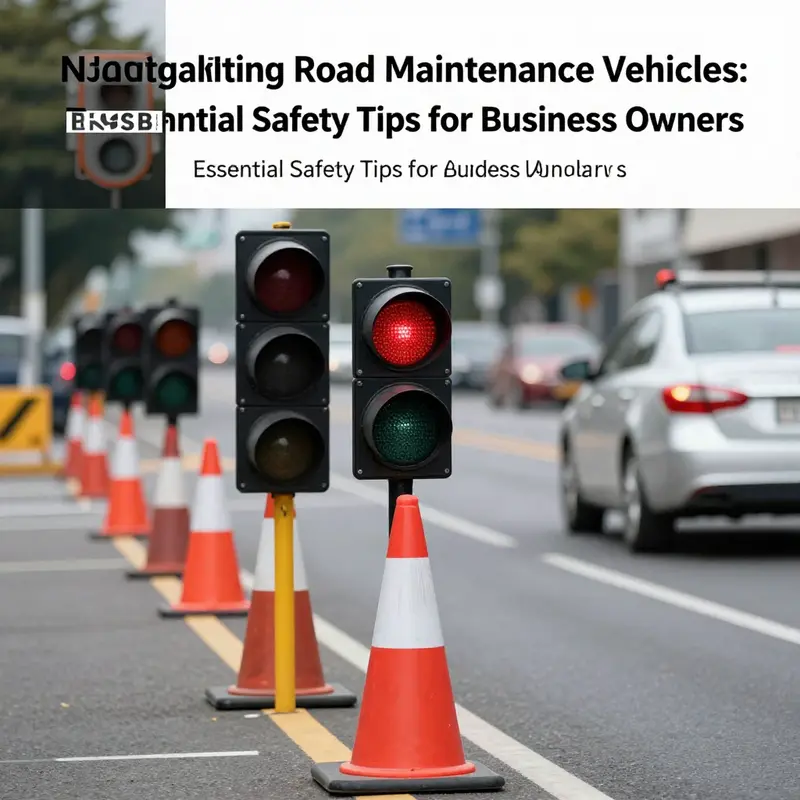
Temporary traffic signals and lane markings are a familiar part of modern road works. In many roadworks, conventional traffic controllers give way to temporary devices that regulate flow with its own rhythm. You must treat these signals—temporary lights, cones, and barriers—as you would treat normal traffic controls. They are not optional, and attempting to pass through a closed lane or weaving between cones is not a clever shortcut; it is a recipe for an infraction or an accident. The human element in work zones—drivers, flaggers, and maintenance personnel—depends on a predictable, orderly flow. If you arrive to a green light, proceed with caution, checking for pedestrians or workers who may step into the lane. If the signal changes to amber or red, or if a flagger signals you to stop, comply immediately. The goal is not speed but a steady progression that preserves space between you and the vehicle ahead, while allowing the workers to perform their tasks without distraction or fear of being struck by an errant vehicle.
Distance is a central theme in any discussion of road work safety. Maintaining a safe following distance reduces the chances of a sudden stop turning into a collision and gives you more time to process complex cues, such as a worker stepping back behind a barrier or a piece of equipment moving slowly into a driving lane. As a rule of thumb, leave extra space when you can—the vehicle in front of you may brake more suddenly than you expect, or a lane change may be required for a large piece of machinery to pass. In practice this often means increasing the typical two-second rule to a more generous cushion around the work zone, especially on wet or windy days when stopping distances are extended. The additional space is not merely a buffer for you; it is a buffer for the workers who can be exposed to more risk in close proximity to moving traffic. Think of the extra metres as a protective barrier that benefits everyone beside the machine and behind it.
Distraction is the enemy of safe driving through worksites. Road works demand your full attention because there are many moving parts and the possibility of the unexpected. Avoid using a mobile phone, adjusting a navigation device, or becoming distracted by passengers during the approach, passage, and clearing of a work zone. It is tempting to glance at a message or a map update, but even a momentary glance away from the road can have serious consequences when a lane is narrowing or a worker is signaling you to slow further. If you need to interact with your device for navigation or messages, plan to do so before you reach the zone or after you have passed through it. The aim is to cross the zone with your primary focus on the road and your secondary focus on the cues that indicate how the work is progressing. To stay safe, you should keep both hands on the wheel and maintain a relaxed but ready posture so your reflexes remain sharp.
Respect for workers and their equipment is the moral core of safe motorway conduct in work zones. Workers frequently operate close to live traffic, sometimes using vehicles with reverse gear, or positioning themselves near the road to operate equipment with limited visibility. In such moments, even a seemingly minor action—like speeding up to “squeeze” past a closed section—can endanger life. The safest approach is to refrain from attempting to bypass barriers or to overtake other vehicles through a work zone. If a lane is closed, stay out of that zone and wait for the guidance of the traffic signs or flaggers. Let the workers do their jobs without feeling pressured by impatient drivers. It is essential to respect the space they have set up; this is not a void to be exploited but a safety zone that protects the people who keep roads in serviceable condition. In this way, your respectful behavior becomes part of a larger culture of public safety rather than an isolated personal choice.
The occasional use of the vehicle horn in a work zone should be reserved for urgent warnings. The sound communicates imminent danger; it should not be used as a nuisance signal. In busy zones, where multiple drivers might interpret honking in different ways, restraint with the horn helps prevent panic and confusion among workers. A measured approach to sound communicates that you are aware and prepared to slow or stop, rather than attempting to force your way through a constricted space.
Patience, as a driving virtue, is particularly important near roadworks. Delays are a common by-product of construction activity, lane closures, and the need to maintain a narrow buffer for the safety of all road users. It is easy to become irritated by a slow-moving queue; it is more productive to view the delay as a contribution to safety. Being patient enables you to respond to changing conditions with poise rather than reaction. When you cultivate patience, your driving becomes more predictable for other road users and for workers who rely on stable, deliberate traffic patterns to perform their duties efficiently.
Real-time information can be a powerful ally in maintaining smooth progress through a work zone. Modern navigation apps offer live traffic data, incident reports, and user-submitted observations that can reveal emerging congestion caused by work (such as lane closures or reduced speed). Checking these tools before and during a journey helps you plan safer routes. If a work zone is complex, or if traffic conditions become unexpectedly congested, your options may include waiting briefly, changing lanes only at permitted points, or diverting to an allocated detour. Using these tools to anticipate changes reduces the likelihood of abrupt stops and last-second lane changes that can endanger workers.
When you are guiding your vehicle through a work zone, the presence of workers and the equipment they use often makes the work area visually busy. You may notice cones that create a safety corridor, barriers that separate the active road from the work area, and signs that direct you to use a particular lane or to slow down further. These elements aren’t obstacles to be defeated; they are safe boundaries that keep everyone on a shared path. Following these cues consistently—staying within the marked lanes, not weaving between cones, and obeying temporary speed limits—helps reduce the risk of accidental contact with equipment or workers. If a driver in front of you fails to obey these signals, your responsibility is still to comply and give extra space. Do not attempt to compensate for a mistake by taking dangerous shortcuts. By doing so, you preserve a calm, predictable traffic flow that makes the environment safer for adjacent vehicles and for anyone working along the verge.
In certain situations, the law reinforces these approaches through explicit duties on approaching and passing maintenance operations. While the exact wording varies by jurisdiction, the principle remains universal: when a road maintenance vehicle approaches from the opposite direction, slow down or stop safely to allow it to pass. This principle is designed to prevent collisions where maintenance operations may create non-standard traffic patterns or require drivers to yield to workers moving between the vehicle and the site. Similarly, when roadworks are underway and hazard lights are flashing, a driver should slow down significantly, avoid sudden lane changes, and be prepared to stop if necessary. Temporary signage or instructions given by flaggers should be followed precisely. In practice this translates to a patient, methodical approach to moving through the work zone, with frequent scanning of mirrors, careful lane positioning, and constant attention to the cues provided by the workers and the devices on the road.
An example is often useful for grounding these considerations. During highway repairs, you may see a line of cones and barriers forming a safe corridor for equipment. Drivers should respect this corridor and remain outside of it. If you encounter a disabled vehicle on the roadside, the standard safety advice—perhaps to place a warning triangle to alert approaching traffic—demands discretion and alignment with the local rules. On some highways this distance is prescribed to be considerable, while on ordinary roads it may be shorter; in every case, the responsible approach is to place warning devices in accordance with local regulations and to pause to assess the situation before proceeding. The point is not to complicate the driving task but to extend your situational awareness to cover both the immediate danger and the transitional space that leads through it. In this way, you contribute to a safer environment for workers who perform essential maintenance and for other road users who rely on a stable patchwork of signs, signals, and human guidance to navigate through the works.
If you want to reinforce these ideas through a broader set of driving resources, consider looking at additional guidance that frames road safety as a shared responsibility rather than a set of individual tricks. Within the broader landscape of driving advice, you can explore knowledge that aligns with the ethos of careful, considerate driving. For example, you can visit the broader resource hub offered by the vehicletricks blog: vehicle-tricks for supplementary perspectives on vehicle handling, situational awareness, and decision-making under pressure. While this chapter is focused on the UK context and the specific dynamics of roadworks, the core principles—anticipation, space, discipline, and respect for workers—are universal and transferable across jurisdictions and road types.
In the UK, the interaction with road maintenance vehicles is a living example of how law, policy, and everyday driving intersect. It is a practical demonstration of how drivers shoulder responsibility not just for their own safety but for the safety of others who share the road—the workers who keep the system functioning, the passengers inside other vehicles, and the pedestrians who might be near the verge or crossing points. When you approach a work zone with this mindset, your control over the vehicle becomes part of a broader civic duty. This is not about fear or punitive oversight; it is about a shared standard that aims to reduce harm and expedite progress in a way that respects human life. The more you internalise this perspective, the more natural the right action feels: reduce speed, read the signs, yield to the workers, and travel through the zone with a steady, purposeful rhythm rather than a rushed, reactive sprint. Embracing this approach turns a potentially stressful experience into a sequence of safe, predictable actions that protect everyone involved.
As you move from one work zone to another, bring with you a quiet confidence grounded in practice. You may encounter a range of configurations—single-lane closures on a straight highway, two-lane restrictions around a curving stretch, or a motorway junction where overhead gantries direct changeable lane use. In every case, your priority remains unchanged: keep the pedestrians and workers safe, keep other drivers informed through predictable behavior, and keep your own journey on track without compromising safety. The conditions may vary day to day, but the governing principle stays constant: give maintenance vehicles and their crews the space they need, modulate your speed accordingly, and align your actions with the cues provided by the signage and the people directing traffic. If you remember nothing else, remember that a well-timed brake, a measured turn, a patient wait, and a polite nod to the people who keep roads safe are the small, ongoing acts that add up to safe journeys for everyone on the network.
In closing, the practical steps are simple, and when practiced consistently, they flow into a natural, confident driving style. Watch for signs, slow down, obey signals, maintain distance, stay focused, respect the workers, use the horn sparingly, and exercise patience. Check your navigation app to anticipate delays and alternative routes, but always be prepared to adjust in real time as conditions shift. Remember that the road maintenance vehicle is part of a widely shared goal: keeping the roads safe and functional for all users. Your calm, deliberate steering through the zone translates into fewer hazards, fewer near-misses, and a smoother transition back to normal traffic once the work is complete. By embodying these practices, you support a culture of safety that extends beyond your own car and into the wider community of road users who rely on well-maintained infrastructure every day.
External references can ground these ideas in authoritative guidance. A useful external resource that discusses road safety rules in a general sense is Traffic Safety Law – Article 54, which highlights the importance of yielding to maintenance operations and following the signals in work zones: https://www.gov.cn/zhengce/zhengceku/2022-09/07/content_5710683.htm. This reminder aligns with the shared responsibility described here and reinforces the idea that safety in work zones is a collective effort, built on clear signs, prudent actions, and a respectful attitude toward everyone who keeps the road network functional.
For ongoing practical reminders and more nuanced discussion around vehicle handling in complex driving scenarios, the linked internal resource can provide additional context. See the broader collection at vehicletricks blog: vehicle-tricks for related insights on how drivers can refine their habits in everyday driving and in challenging conditions. The aim is not to overwhelm but to offer accessible, repeatable takeaways that reinforce safe driving as a habit rather than a one-off effort. This approach supports a cohesive understanding of road safety that works across regions, seasons, and road types, and it keeps the focus on people—the workers, other drivers, and the communities that rely on well-maintained roads—as the central concern of every journey.
Passing Road Maintenance Vehicles in the UK: A Driver’s Guide to Safe, Patient, and Lawful Manoeuvres

When you’re behind the wheel on a UK road and you spot a maintenance vehicle at work, the moment demands calm, focus, and a clear plan. It isn’t a test of bravado but a test of judgement. The difference between a routine delay and a near-miss often comes down to how well you read the signs, slow your speed, and give the people and equipment on site the space they need. Road maintenance is essential for keeping choices safe and routes reliable, but it also creates pockets of altered traffic flow, unexpected narrowing of lanes, and the potential for sudden changes in how traffic moves. The key is to approach these zones with a simple, consistent set of expectations: anticipate, slow down, and proceed with care. That frame works whether you’re navigating a single carriageway with cones marching along the verge, or a dual carriageway flashed with temporary signals and a team moving along the central reservation. The goal is not to rush through a work site but to pass it safely, with the least disruption to others and without endangering workers who operate inches from passing vehicles every hour of the day.
First comes awareness. Road maintenance signs in the UK are designed to be visible far in advance, a feature that many drivers underestimate. You’ll see warnings such as Road Works, Road Workers Ahead, or Lane Closed. These aren’t optional decorations; they’re signals that the roadway has been modified to protect people and machinery while work takes place. The signs are backed up by lane closure markers, traffic controllers, and, in busier stretches, temporary traffic signals. Your eyes should seek them out as soon as you see a hint of construction activity or mobile plant tucked behind a barrier. It’s not merely about spotting the sign but about acknowledging that the message requires a change in your approach. The moment you notice a work zone, you should adjust your speed accordingly and start planning for the possibility that traffic will reduce or your lane may narrow. This is the moment where patience replaces impulse, and that choice protects lives on both sides of the barrier.
As you draw nearer, the need to slow down becomes practical rather than optional. The guidance is straightforward: reduce speed to fit the conditions—slower than you would on a clear open stretch, with far greater attention to the actions of workers, plant, and other vehicles. The road surface can be uneven, the sight lines compromised by cones, and the movement of machinery unpredictable. Drivers often report that the most nerve-wracking moments come when the road narrows or a vehicle in front brakes sharply in response to a sudden obstacle. You can cut this risk by increasing following distance. Leaving more space between you and the vehicle ahead gives you a longer window to react if someone in the work zone suddenly moves, or if a temporary signal changes the flow of traffic in an unexpected way. In practice, a longer following distance translates to a more gradual braking action—soft rather than abrupt stops—so you are less likely to catch the vehicle in front with a sudden squeeze of the brakes.
The temporary signals and lane markings that appear in work zones are not decorative toggles to be ignored. Treat them as you would the normal traffic controls on a busy highway, but with the awareness that they can be altered at short notice. Temporary traffic lights, cones, barriers, and arrow boards are set up to orchestrate the flow of traffic around the work area. They aim to keep drivers moving smoothly, even if the pace is reduced. Do not attempt to pass other vehicles or cut through the space between cones unless a supervisor or the signage explicitly permits it. What looks like a momentary gap may be a narrow, unseen hazard beyond the next barrier. The responsible choice is to stay in your lane, follow the signals, and let the system do the work of directing the movement in a controlled manner. This approach reduces the chance that a driver will misread a signal or attempt an unsafe overtake in a confined space.
All of this emphasizes safe distance and vigilance. Keep a generous margin behind the maintenance vehicle and any other traffic progressing through the site. In practice, that often means watching not just the car in front but the entire line of vehicles, including those entering and exiting the work zone via the opposite carriageway or side roads. If you’re on a multi-lane road and a lane closure concentrates traffic into one lane, you’ll likely experience slower speeds and a queue at the approach. Your instinct should be to absorb the delay with patience rather than to surge forward or squeeze into a shrinking gap. Aggressive actions—such as abrupt lane changes, tailgating, or rapid overtaking—create a high-risk environment for workers who are exposed to passing traffic. For many drivers, the most reliable path through is to slow down early, maintain a calm, steady pace, and allow the system to move you safely to the other side of the work zone.
Distraction remains a leading cause of near-misses in work zones. When you’re navigating a site, your attention should be entirely on the road and the people and equipment around you. That means put the phone away, minimize in-car distractions, and avoid non-driving tasks that steal your focus. Even a brief glance away from the road can have consequences in an environment where a worker might step into the line of travel or where a barrier shifts position without much warning. This is the moment to honor a straightforward rule: focus on the task of driving and let the work zone demands take priority. The same principle applies to passengers who may be excited by the activity in the work zone or children who want attention. Calm, quiet, and steady driving not only improves safety but reduces the cognitive load for everyone in the vehicle.
Respect for the people conducting the maintenance work is foundational. Workers are positioned close to traffic, handling equipment that moves with little warning, and sometimes standing in close proximity to the flow of vehicles. The simplest way to show respect is to obey barriers and to refrain from driving around restricted areas. That includes not driving through closed lanes or across movable barriers and not attempting to bypass traffic management in ways that look expedient but are in fact dangerous. The penalties for non-compliance can be severe, but they are not the only reason to act with caution. The humane motivation is straightforward: a single careless moment can cause life-changing injuries. The better choice is to slow down, be patient, and wait for a safe pass or an authorized gap in the traffic. In the UK, the culture of road safety in work zones is built on mutual consideration: drivers recognize the importance of the work, and workers acknowledge the inevitable delays that drivers experience.
The decision whether to honk the horn should be governed by necessity rather than impulse. The occasional horn blast can warn an oncoming driver of a hazard or alert a colleague to a potential collision. But in a work zone, unnecessary honking can create alarm or confusion among workers and other drivers who may interpret the sound as a directive. It’s generally best to use the horn only if there is a clear and imminent danger that requires alerting someone nearby. The aim is to maintain a calm atmosphere within the zone, where clear signals and predictable movements reduce risk. If you’re tempted to honk as a way to speed the process, remind yourself that the real path to progress is patience and attentiveness, not loudness.
Patience itself is a skill that pays off in the long run. Delays in work zones are common, and the speed reductions required for safety are not negotiable. The fluctuations in traffic, the presence of pedestrians near the verge, and the possibility of changes in lane configuration all combine to create a fragile balance. A driver who maintains composure can navigate these zones with less stress and fewer mistakes. That steadiness extends to how you engage with real-time information. Real-time navigation apps can help you anticipate slowdowns, lane closures, or re-routed segments around the work site. They’re an indispensable companion for planning alternate routes when the work stretches into multiple blocks or hours. But rely on them judiciously. If a map suggests a route change that would require risky maneuvers near a work zone, weigh the options against the local signs and the guidance of traffic controllers or road crew. The map can guide you, but it should not override the present signage.
Beyond the on-road etiquette, there is a practical habit that can prevent trouble before it starts: scan and plan. Before you reach a work zone, check the approach for clues about the layout of the road ahead. If you see a lane that is clearly closed, you should position yourself accordingly to avoid last-minute lane changes. If you know you need to pass through a site during peak hours, it may be prudent to merge earlier and avoid late-murge squeezes near the barrier. In some stretches, you might encounter a temporary 20 or 30 mph limit. In others, a longer or shorter spacing is required. The important thing is not to rush the approach. The moment you anticipate the changes, you take a measured action that reduces the risk for everyone in the zone. This approach not only protects you but also safeguards the workers and any pedestrians who may be near the road shoulder waiting for a safe moment to cross or move around the site.
The human factor in road maintenance work is continuous watching and judgment. Workers use signals and devices that demand constant attention from approaching drivers. There are moments when the lane you’re in becomes too narrow to pass, or when a machine needs to back away to let a vehicle through. In those moments, your response should be to slow, stop if needed, and wait for a safe opportunity to proceed. It’s not about who has the right of way but about ensuring the safety of everyone involved. In practice, that means you should be prepared to stop if the vehicle ahead slows abruptly or if a barrier shifts to reveal a new hazard. You should also be prepared to stop if a worker steps onto the road to guide traffic, even if that moment seems unreasonably early. The work zone is a collaborative space, and the best results come from a Driver who blends vigilance with restraint.
To connect this guidance with broader driving knowledge, consider the idea that safety in these contexts isn’t about finding a loophole to swerve through the site more quickly. It’s about understanding that road works are a finite interruption on a longer journey. When you see a work zone, your objective is straightforward: pass through it safely, with as little disruption as possible, and continue your journey. This means respecting the signs, slowing to the appropriate speed, keeping ample distance, and avoiding any actions that could threaten workers or other motorists. It also means thinking ahead. If you anticipate repeated work zones on a familiar route, you can plan for these segments in advance—perhaps by leaving a few extra minutes in your schedule or by selecting alternative routes when the forecast indicates heavy construction during your usual drive window. The aim is reliable travel, not reckless speed, and the psychology behind this approach is as important as the physical measures on the road.
In terms of practical steps you can implement now, here is a concise mental checklist you can carry into every work zone: observe the warning signs early; reduce speed and increase following distance; follow any temporary signals or lane markings precisely; avoid distractions; remain patient and composed; and respect the workers and equipment by not attempting to bypass barriers. If you ever find yourself uncertain about what to do, remember that the safest move is almost always to slow further and give more space, not to push forward into a potentially dangerous gap. In the long run, this disciplined approach minimizes risk and keeps you, your passengers, and the road crew safer. For drivers who want to explore related discussions on vehicle behavior and road safety beyond this topic, see how the broader vehicle community frames safe driving practices, such as the detailed examination found in the piece titled how-safe-are-jeep-wranglers-unveiling-the-truth. This resource provides a broader context about vehicle dynamics and safety perceptions that can complement the practical habits outlined here.
Finally, while the UK’s road safety framework is built on national guidance and local authority practices, it is also important to recognize that each work site has its own rhythm and constraints. You will encounter variations in signage, pacing, and lane configurations. The core principles—awareness, patience, and restraint—remain constant. If you approach each work zone with a calm mind and a consistent method, you will reduce risk and contribute to safer roads for everyone who shares the journey with you. When in doubt, err on the side of caution, give the work crew the space they require, and let the system guide you through the site. And as you reflect on these moments after they pass, you can carry forward the discipline you demonstrated into the next stretch of the road, confident that safe driving is a practice that compounds—one careful pass after another, across every road maintenance zone you encounter.
External resources for further reading can provide more detail on the legal and practical frameworks that govern road works. For a global perspective on road traffic safety and official guidance, refer to the Ministry of Public Security’s Road Traffic Safety document, which offers comprehensive context about how road safety standards are articulated at the national level: https://www.mps.gov.cn/n2253869/n2253870/n2253871/c6724332/content.html. In addition, for a practical example of how drivers discuss and reflect on vehicle safety practices in related contexts, you can explore related driver safety discussions at this internal reference: how-safe-are-jeep-wranglers-unveiling-the-truth.
null

null
Final thoughts
Navigating road maintenance vehicles in the UK requires a multifaceted approach that emphasizes safety, compliance, and awareness. As a business owner, implementing these strategies not only protects your drivers but also ensures that your operations run smoothly despite roadworks. By fostering a culture of safety and utilizing available technology, you can seamlessly integrate these practices into your business routine. Awareness, adherence to traffic signals, and proactive engagement with technology can aid in keeping your drivers safe and your commitments to clients intact. Stay vigilant, patient, and informed, and you will drive your business forward safely.