
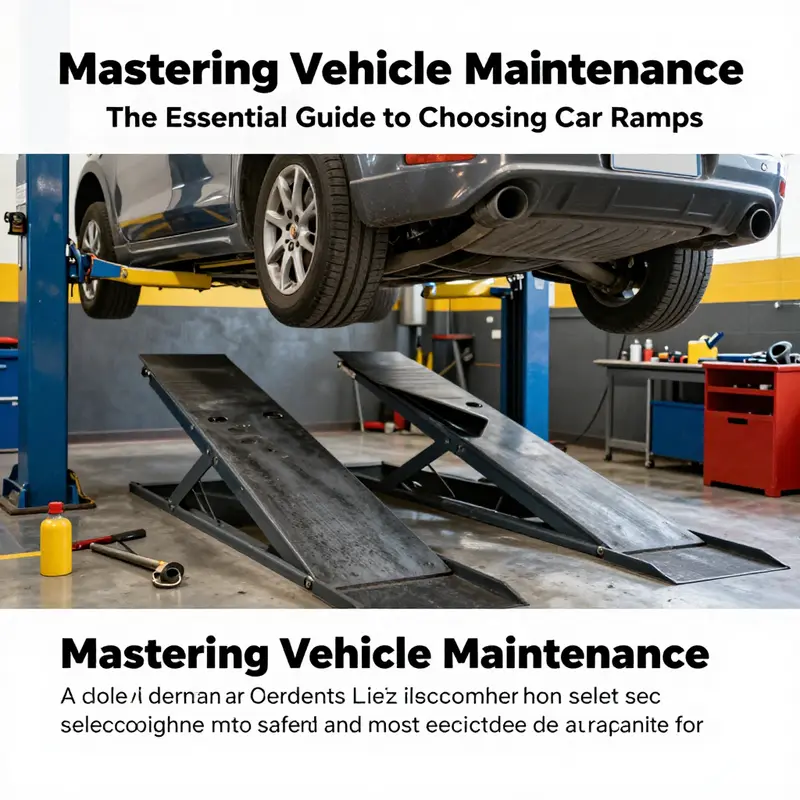
Selecting the right car ramps is a critical aspect of vehicle maintenance for business owners. The choice not only affects efficiency but also safety during servicing. This guide walks you through essential considerations such as vehicle weight, lift height needs, and evaluating stability and safety features. By understanding these key factors, you will be better equipped to make informed decisions that ensure smooth operations and safeguard both your vehicles and personnel.
Raising the Right Standard: How to Choose Car Ramps for Vehicle Maintenance Based on Weight, Ground Clearance, and Real-World Needs
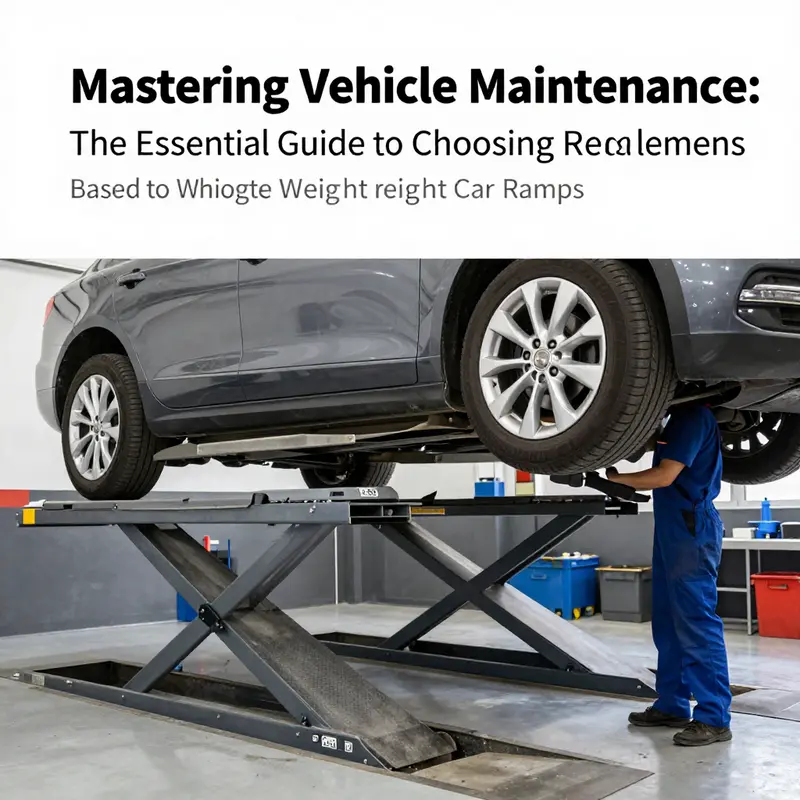
*Choosing the right car ramps for vehicle maintenance starts with a clear picture of what you’re lifting and where you’ll work. The goal is safety first, but safety without practicality quickly becomes a hurdle to getting the job done. A thoughtful choice blends the vehicle’s weight, the ground clearance you’re dealing with, and the maintenance tasks you routinely perform. It is not enough to buy the strongest ramp in the store; you need a ramp that respects the limits of the vehicle, fits your workspace, and supports the specific service you’re about to undertake. The path to that match begins with two straightforward questions: How heavy is the vehicle at its heaviest moment during maintenance, and how much clearance will the undercarriage need to breathe while you work? These questions illuminate the path toward a safe and efficient lifting setup that can stay reliable for years of routine maintenance.
When we talk about weight, we’re not just talking about the car’s curb weight. The total load that the ramps must support includes passengers, cargo, and the tools or equipment you carry in or under the vehicle during maintenance. The concept is simple but crucial: the ramp’s capacity must exceed the vehicle’s weight by a generous margin, not by a hair’s breadth. A practical rule is to select ramps whose rated capacity significantly surpasses the vehicle’s maximum weight. For example, if a vehicle weighs around 3,500 pounds, choosing ramps rated for 4,000 pounds or more creates a safety buffer that accounts for dynamic loads, uneven terrain, and the possibility of shifting weight while you’re under the vehicle. This margin protects you from the kind of sudden overload that can bend lips, twist frames, or compromise the ramp’s grip. Think of the load rating as the backbone of your work, a fundamental line you do not want to cross. The safety margin isn’t a luxury; it’s a foundational choice that keeps you from rewarding risk with a moment of careless drama.
The second question concerns ground clearance—the distance between the vehicle’s lowest point and the ground when the vehicle sits on a flat, level surface. Ground clearance is the enemy of awkward angles and scraping if you happen to choose ramps that are too short or too tall for your car. The objective is to have the ramp provide enough height so the vehicle’s undercarriage can rest securely on the ramp without striking any portion of the chassis or exhaust. A practical guideline is to select ramps that are at least two inches taller than your vehicle’s ground clearance. That extra two inches reduces the angle of ascent and gives you a little room to maneuver, especially when the surface you’re standing on isn’t perfectly level. If you routinely tackle work that requires scooting the vehicle forward a bit after the lift, this extra headroom helps you avoid the lip at the ramp’s edge or the forward edge of the platform.
Beyond the fundamental math of weight and clearance lies the choice of ramp type, a decision that translates weight and height into a workable workflow. For many drivers performing routine maintenance—an oil change, a brake inspection, or a tire rotation—standard ramps with broad, flat platforms remain a reliable baseline. They offer a generous width that accommodates a range of tire widths and leave enough surface area for a stable drive onto the ramp. However, when the ground clearance is less forgiving or when the vehicle’s design risks a sharp approach angle, low-profile ramps become the pragmatic choice. Their lower ascent angle helps a sports car or a low-slung sedan reach the ramp without the kind of scraping you might fear when the car nose is already close to the ground. Tilt-adjustable ramps, meanwhile, extend the range of tasks you can tackle with a single pair. With multiple height settings or an adjustable tilt, you can position the vehicle at a more favorable angle for accessing the engine bay or for tasks that benefit from a shallower ramp incline. In practice, many hobbyists end up keeping a standard pair for typical oil changes and a low-profile or tilt-adjustable pair for vehicles that approach the lift with a tighter clearance. As with any tool, the best choice is the one that aligns with your most frequent vehicle profile and your most common maintenance tasks, not the one that promises the most extreme performance in the showroom.
Weight capacity and type are closely connected to the material that makes up the ramp. Capacity is nonnegotiable: if a ramp can’t support the vehicle’s weight safely, the rest of the conversation stops there. The material choice—steel versus aluminum—shapes weight, durability, and maneuverability. Steel ramps deliver robust strength and a long service life, which is why they remain a staple in many professional shops and serious home setups. They handle heavy loads with resilience and are less prone to the flex that can occur with lighter materials. The trade-off is weight; steel ramps are heavier to lift, load, and store, a factor that becomes significant if you need to move them around frequently or carry them up and down stairs. Aluminum ramps offer a different balance. They are lighter to handle and resistant to corrosion, which makes them appealing in damp garages or exterior work areas. Aluminum ramps are easier to lift and reposition, but they can carry a slightly lower maximum weight than their steel counterparts. The choice between steel and aluminum thus hinges on your vehicle’s weight, how often you move the ramps, and where you store them. If your vehicle sits near the upper end of a typical residential range, or you anticipate frequent repositioning, aluminum can be a rational choice. If you consistently work with heavier vehicles or need the utmost assurance of capacity, steel remains a dependable workhorse.
But capacity and material don’t tell the whole safety story. A ramp’s safety features are the guardrails of good practice. The surface matters—non-slip textures and rubberized coatings help tires bite into the ramp, especially on oily or wet garage floors. A wide, stable base is essential; it spreads the load and reduces the chance of tipping or wobbling as you roll onto or off the platform. The presence of integrated safety pins or locking mechanisms is more than a convenience; it’s a critical containment feature that keeps the vehicle from sliding forward or sideways while you work beneath it. Clear load indicators and genuine certifications from recognized safety standards bodies provide external assurance that a ramp has been tested for the kinds of forces you may encounter in real scenarios. It is tempting to rely on a ramp’s rough appearance, but the safest approach is to look for these explicit safety design elements. Remember, ramps are your first line of defense against uncontrolled movement, and a robust set of features reduces the risk that a single misstep becomes a serious accident.
The work environment also matters in channeling the right ramp choice. An indoor garage demands materials that resist corrosion and denting and that won’t scuff delicate flooring. A robust finish, perhaps a powder-coated or reinforced aluminum surface, helps preserve both the ramp and the garage itself. Outdoor use introduces weather considerations: exposure to rain, salt, snow, and temperature fluctuations can accelerate wear. In such settings, you’ll want weather-resistant finishes and a design that holds up under variable conditions. The surface should remain grippy when wet and offer reliable performance across seasons. If storage space is tight, consider ramps that are designed for easier storage and transport—lightweight, foldable varieties or those with built-in handles can transform a storage dilemma into a manageable routine.
A critical step in the ramp selection process is to verify compatibility with your vehicle’s wheelbase and tire width. A good rule of thumb is to choose ramps that extend beyond the tire width by roughly six to twelve inches. This extra distance helps ensure that the vehicle’s wheels land squarely on the ramp and that the tire tracks remain centered as you drive up. The goal is smooth alignment rather than repeated nudges while you reposition. Portability becomes a practical factor if you are working in a small garage or share tools with a compact workspace. Lightweight ramps that fold or telescope can dramatically reduce the effort required to store or move them. Equally important is ease of setup: some ramps are designed for quick placement, while others require a more deliberate leveling process. If you anticipate moving ramps between vehicles or across different work areas, a design with easy alignment aids or built-in handles can save time and reduce the risk of underestimating the load during setup.
Once you’ve narrowed down options by weight, height, and materials, it’s wise to anchor the decision in reputable brands and robust installation practices. Even the best ramps are only as effective as the way they’re used. Read the manufacturer’s instructions carefully and follow them precisely. The real safety net, however, is to never rely solely on ramps for undercarriage work. Always pair ramps with jack stands as a secondary safety measure whenever you are beneath a lifted vehicle. The combination of ramps and stands provides redundancy that protects against unexpected movement, a safeguard that is invaluable when performing tasks that require extended access under the vehicle. In practice, the decision process becomes a balancing act: you weigh the vehicle’s weight and the required lift height, you consider the terrain in which you’ll work, you compare the materials’ durability against your storage constraints, and you verify the ramp’s safety features. The result is a configuration that supports a predictable workflow, minimizes the risk of damage to the vehicle, and keeps you secure while you perform routine maintenance.
To ground this approach in a broader view of maintenance planning, you can explore a concise framework that discusses what vehicle maintenance encompasses and why thoughtful tool choices matter. For a broader framing of maintenance decisions, see What is vehicle maintenance. This context helps ensure that every tool you bring into the garage—from ramps to jacks to protective mats—serves your maintenance goals rather than complicating them. It also reminds us that the objective of choosing ramps is not only to lift more weight or to speed up a task, but to create a predictable, repeatable process that reduces risk and improves the quality of work you can perform under the vehicle.
In the end, the chapter on selecting ramps is really a chapter about disciplined assessment. It asks you to quantify weight with a conservative eye, to measure ground clearance with a practical margin, and to imagine the common maintenance scenarios you face week after week. It asks you to translate those numbers into a hands-on choice—the ramp type that best suits your needs, the material that matches your handling habits, and the safety features that transform potential hazards into controlled, manageable conditions. It asks you to think of ramps as part of a system rather than as a single object. The system includes the vehicle, the workspace, the lighting, and the human element—the operator who will be guiding the vehicle up the incline, aligning the tires, and placing jack stands after the lift. With this integrated view, every maintenance session becomes less of a gamble and more of a controlled, methodical process. That is the aim: to turn tool selection into a reliable routine that protects people, preserves vehicles, and supports steady, effective work over time.
Finally, a note on safety culture in the garage. The best ramps cannot substitute for careful, attentive work. The moment you notice a change in ramp behavior, a misalignment, a crack in the platform, or a wobble that wasn’t there before, pause the task, inspect, and, if in doubt, replace or service the ramp. Build a habit of pre-use checks, including a walk-around inspection and a quick test drive onto the ramp with minimal weight to confirm stability before fully committing to a repair. These steps may seem small, but they are the difference between a routine maintenance session and a avoidable accident. In other words, pick ramps that align with weight and clearance, inspect them regularly, and treat every session as a controlled sequence rather than an open-ended risk. That mindset turns maintenance from a force of friction into a steady, reliable practice.
For the external reader seeking safety guidance beyond the vehicle context, the National Institute for Occupational Safety and Health (NIOSH) provides authoritative recommendations on workplace vehicle lifting safety, including proper use of ramps and lifting equipment. You can consult their guidelines for a broader safety framework when planning maintenance activities in a shop or workspace.
Raising the Bar: Aligning Lift-Height Needs with Car Ramps for Safer Vehicle Maintenance
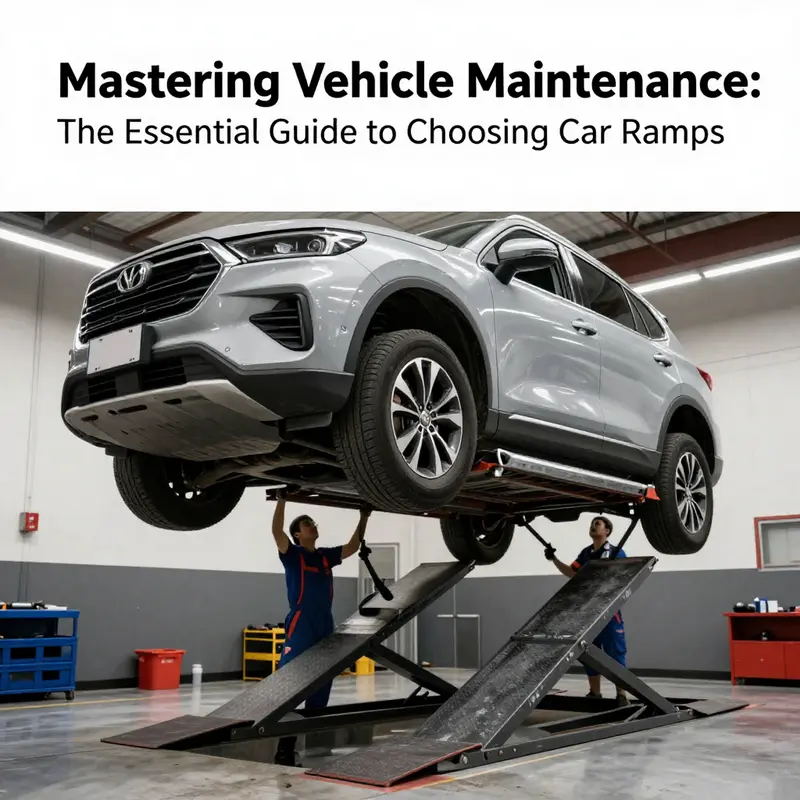
When you plan maintenance beneath a vehicle, the first question isn’t which jack to buy or which tool to grab. It’s how you will elevate the car safely enough to do the work without compromising the surrounding space, the vehicle’s weight, or your own mobility around the workspace. Car ramps are a simple, accessible solution that can, when chosen thoughtfully, transform a routine oil change into a smoother, safer task. Yet lift height, weight capacity, and stability aren’t independent features. They form a coordinated system that must fit the vehicle you own, the tasks you perform, and the environment where you work. The result is a pragmatic decision process: you select ramps that offer the right clearance for the job, with a built-in safety margin, on a surface that doesn’t invite slips or shifts, and in a configuration that remains practical for your shop or garage layout. In this sense, choosing ramps is less about chasing a single specification and more about weaving several criteria into a coherent setup that aligns with your maintenance goals.
To begin, you translate the work you plan into a lift-height target. The standard guidance centers on a practical clearance window: roughly 12 to 18 inches (30 to 45 cm) of lift for ordinary undercarriage inspections, brake servicing, and exhaust checks. This range represents a balance between access and stability. With this height, you can reach the most commonly serviced components without contorting your body or introducing risk from elevated angles. If you anticipate deeper components or more extensive repairs—perhaps items tucked behind the suspension or within the deeper reach of the drivetrain—you may decide to pursue higher-capacity ramps or pair ramps with jack stands to create a staged approach that keeps the vehicle firmly supported at all times.
But height is only one part of the equation. The weight your ramps must bear is equally critical. Every ramp is rated for a maximum load, usually stated as part of the product specifications. The safest practice is to select a ramp with a load rating well above your vehicle’s total mass, which includes the curb weight plus an allowance for the vehicle’s passengers and any tools you carry while you work. If you drive a typical sedan in the 1.5 to 2-ton range, a sensible choice is often a ramp rated at 3 tons or more. For SUVs and light trucks, targeting 5 tons or more provides a comfortable safety margin. For very large or specialty vehicles, the calculation shifts toward heavy-duty ramps or alternative lifting systems designed for higher GVWs. The essential principle is straightforward: never rely on the stated capacity as a strict limit. A small overage in weight translates into a safety margin that matters when you factor in dynamic loads, tire deflection, and the fact that the vehicle still exerts maximum force at the contact points with the ramp surface.
The interplay between lift height and weight capacity becomes most evident when you consider how ramp geometry handles load transfer. A ramp’s base must be wide enough to distribute weight across a stable footprint. If the base is narrow or the ramp’s stance is unbalanced, the risk increases not only of tipping but of a sudden shift as you roll the vehicle onto the incline. Non-slip surfaces are non-negotiable. The texture or rubberized coating on the ramp’s tread reduces the chance of tires sliding, especially when the surface is damp or the ground is uneven. Integrated wheel stops or locking pins add another layer of security; they help keep the vehicle from creeping or rolling beyond its intended contact point once it is on the ramp. In practice, the most dependable ramps offer a blend of these features—textured tread, a broad base, and a mechanism that can positively secure the vehicle, such as a pin or a simple interlock—so that you can focus on the maintenance rather than on counterbalancing risk.
The environment where you work influences the selection as well. An indoor garage with a smooth concrete floor benefits from ramps that resist rust and corrosion, perhaps steel ramps with a durable coating or reinforced aluminum that won’t mar the floor or degrade quickly in a humid climate. Outdoor setups, exposed to rain, snow, or temperature swings, cry out for materials that resist water and salt exposure and remain straightforward to manage in less-than-perfect weather. In both cases, the ramps should fit within the available space, leaving enough room to maneuver around the vehicle without forcing you into awkward body positions or risky detours. The arrangement matters just as much as the ramp’s raw specs because a cramped or cluttered workspace magnifies every risk, from trips and slips to accidental misalignment during a lift.
A crucial but sometimes overlooked dimension is compatibility. Vehicle geometry—width, wheelbase, and track width—dictates how easily a ramp can cradle a tire and distribute the vehicle’s weight across a stable contact length. A ramp that is too narrow may feel wobbly or require excessive steering corrections to align the tire with the tread. Conversely, ramps that extend too far beyond the tire width can create unnecessary dead space, inviting misalignment or slow handling during the approach. A practical rule of thumb is to choose ramps that extend at least 6 to 12 inches beyond the tire width. This generous extension not only helps center the wheel but also lowers the point at which the tire travels onto the ramp, reducing the chance of a sharp, abrupt contact. Portability becomes a factor here as well. If you anticipate frequent relocation between a home garage and a driveway, lighter, foldable models with handles are a real asset. If the ramps will stay in a shop or fixed location most of the time, sturdier, heavier-duty designs may be preferred for the longer, repeated sessions they will host. The ease of setup matters, too. Some ramps are designed for quick placement and removal, while others require anchoring or leveling. If you tend to work on uneven ground or over a slightly imperfect floor, you’ll want ramps that offer a simple way to compensate for minor deviations—whether through adjustable feet, a locking mechanism that can be engaged on the surface, or a design that naturally self-centers as you drive up.
All these considerations funnel into one practical strategy: prioritize reputable design and careful installation. Even the most robust ramp can fail if it isn’t used correctly or if the installation is neglected. The recommended approach is to purchase from a maker with a track record for safety and to follow the manufacturer’s instructions to the letter. As a secondary safety measure, always treat ramps as part of a broader system that includes jack stands or other support devices. Ramps alone cannot guarantee full protection while you work beneath a vehicle; they reduce risk, but they do not eliminate it. The dual-safety mindset—use ramps for elevation and jack stands for secured support—remains the best practice in any maintenance scenario.
In translating these principles into a concrete choice, the weight, height, and stability must be mutually compatible. A ramp that offers a comfortable lift height but teeters on a narrow base invites a different kind of hazard than a broad, stable ramp with a slightly taller profile. Similarly, a ramp with an excellent non-slip surface may still present risk if the weight distribution is uneven or if the vehicle’s tires track poorly onto the surface. The best ramps meld thoughtful geometry with reliable materials, a robust surface, and a clear indication of load capacity and safety features. When you stand back and evaluate a ramp against your specific vehicle, you aren’t choosing a tool in isolation; you are selecting a safe, efficient pathway into the undercarriage, a way to reach the components you need to service with confidence and minimal intervention.
To connect this decision to broader vehicle maintenance knowledge, consider how ramp choice sits within the larger maintenance framework. A ramp is not a stand-alone investment; it is a component of smart, ongoing service. It helps you access components that require routine checks—brakes, exhaust, suspension, steering linkages, and even areas where fluids reside. When you use the ramp in concert with established safety practices, you gain a clearer sense of your vehicle’s health and a better sense of what tools or parts you will need as you work. For a broader look at the scope of maintenance basics and how equipment choices support sustainable upkeep, you can explore more about what vehicle maintenance entails. What is vehicle maintenance.
As you finalize your ramp selection, keep in mind that the goal is not to maximize one attribute at the expense of others. Lift height should enable access without compromising stability. Weight capacity should exceed the vehicle’s mass with a solid margin, and the surface should grip reliably under working conditions. The environment—indoor or outdoor—should shape material choice and finish. Compatibility should harmonize with the car’s dimensions, while portability and ease of use should align with how you actually operate in your space. When these threads are woven together, the resulting ramp setup feels intuitive: you position the vehicle with the nose slightly to the side, roll up the wheel until it sits on the textured surface, hear a confirmatory click if the model has a locking pin, and keep a careful eye on wheel alignment as you rise. You know you’re in a safe, stable operating window, where the undercarriage remains accessible and the risk of movement or collapse is minimized.
In practice, the decision becomes a matter of reading the specifics clearly: weight rating, clear lift height, the safety features in the design, and the practical realities of your workspace. A thoughtful evaluation answers the question, not just of whether you can lift the vehicle, but whether you can do so with the quiet confidence that comes from a well-matched system. When you walk through the garage with that confidence, you are more likely to stay focused on the job, apply the correct service procedures, and complete your maintenance with fewer interruptions. The result is a more efficient workflow, less downtime spent rearranging equipment, and a safer environment for you, your vehicle, and anyone who shares the space.
For those who want to explore an authoritative synthesis of safety guidelines alongside ramp features, consult established guidance on workplace vehicle maintenance safety; this reference emphasizes that ramps are part of a broader safety ecosystem and highlights how to integrate ramps with additional supports and procedures. As a practical takeaway, remember that the choice of ramps should be driven by real-world use—the vehicle’s weight, the precise lift height you need, the space you have to operate in, and the stability features that will keep you on solid ground throughout the job. The more you align these factors, the more likely you are to complete maintenance tasks efficiently, safely, and with a clear sense of control over the process.
External resource: https://www.mechanicshelp.com/car-ramps-selection-guide/
Assessing Stability and Safety: A Comprehensive Approach to Choosing Car Ramps for Vehicle Maintenance

Lifting a vehicle to work beneath it is as much about psychology as it is about mechanics. When the right ramps are chosen, the work environment becomes predictable, the body stays protected, and the job proceeds with fewer interruptions. The ramp is more than a tool; it is a statement about how you value safety, precision, and efficiency in every maintenance task. To translate that respect into practice, you must evaluate stability and safety features as a seamless part of the decision process. The path to a sound choice begins with understanding how the ramp will carry the load, how it behaves on the floor you intend to use, and how its design aligns with the kinds of repairs you most often perform. In the realm of vehicle maintenance, these considerations are inseparable from the broader principle that safety is cumulative. Small design choices—like the texture of a surface, the width of a base, or the presence of a locking pin—can ripple into meaningful reductions in risk, time, and fatigue. The practical aim is to select ramps that not only meet a vehicle’s weight requirements but also create a stable, predictable work platform under a variety of conditions. The framework for this decision rests on four pillars: load capacity, material quality, anti-slip design, and ancillary safety features. The dialogue among these elements should feel like a single, coherent assessment rather than a checklist of isolated specs. In that sense, the process is deeply intuitive when performed with a clear mental model of how ramps interact with real-world garage surfaces, weather, and the inevitable variability of every maintenance scenario. Before turning to specifics, it helps to situate the discussion in a broader safety context. Nationally recognized guidelines emphasize that ramps and lifting devices are part of a controlled system that includes secure supports, proper training, and the use of secondary safety measures. These guidelines advocate using ramps as part of a layered approach: rely on a robust ramp, then place jack stands or support stands as a fail-safe whenever the vehicle is elevated. This perspective is not merely prudential but practical, because it recognizes that even the best ramps cannot eliminate all risk on their own. With that mindset, let us move into the essential characteristics that govern stability and safety in a way that reads as a continuous narrative about safer maintenance, not as a catalog of features. The first element is load capacity, the most obvious and non-negotiable criterion. A ramp’s weight rating should exceed the total weight of the vehicle, plus the driver and any cargo or tools that may be present during a maintenance task. In numbers that reflect real-world use, most standard passenger cars fall in the 1,500 to 2,500 kilogram range. To provide a prudent safety margin, ramps with a minimum rating around 3,000 kilograms are recommended. For larger vehicles—such as sport-utility vehicles, light trucks, or vehicles with heavier drivetrains—the capacity requirement increases accordingly, with a healthy margin often pushing the official rating well beyond the vehicle’s curb weight. The underlying rationale is simple: engineering tolerances are finite, and materials will yield when pushed beyond their limits. Exceeding the rated capacity invites a cascade of risks, from wheel slip and structural deformation to sudden failure while a wrench is still in your hand. A safety-minded approach is to treat load capacity as a hard floor, not a target, and to plan for the unexpected—such as a sudden shift in weight distribution when a heavy tool case is moved to one side. The second pillar, material quality, is less flashy but equally decisive. Ramps are typically fabricated from heavy-duty steel or aluminum alloys. Steel offers exceptional strength and resilience; it resists deformation under load and maintains its structural integrity under repeated cycles. Aluminum, while lighter and inherently more resistant to corrosion, trades some stiffness for portability. The choice between steel and aluminum should reflect the work environment and the vehicle mix you expect. Outdoor use, exposure to moisture, and frequent transport may tilt the preference toward aluminum, while a stationary indoor shop that prioritizes longevity in high-load scenarios might justify steel. Regardless of material, a well-designed ramp uses reinforced framing—cross-bracing or ribbing—to prevent flexing under load. Weld integrity is a consistent telltale of quality; fissures, porous joints, or inconsistent bead patterns can become initiating points for failure under stress. A ramp that carries its load without visible midspan deflection is not just a comfort; it is a reliability signal. Safety-conscious buyers also look for compliance with recognized standards, such as ISO or ANSI certifications, which provide independent verification that the product adheres to established performance and durability criteria. The third pillar is the anti-slip design, whose importance cannot be overstated. A ramp’s surface must offer reliable traction across a spectrum of conditions. Textured or grooved surfaces, rubberized pads, and integrated grooves that align with wheel tread can markedly improve grip. Some ramps incorporate raised edges or wheel stops at the front and rear to physically restrain the tire. The friction coefficient is a technical shorthand for this quality; a value around 0.6 is widely regarded as a workable target for safe operation on both dry and wet surfaces. Of course, oil, grease, snow, and rain add layers of complication. Traction is not guaranteed by appearance alone. A ramp that feels secure on a clean concrete bay floor can become slippery on a damp or oil-spattered surface. Therefore, stability testing under realistic conditions—such as a light oil spill test or a simulated wet-mud scenario—becomes part of a prudent evaluation process. The best anti-slip designs are those that deliver traction consistently across these common contingencies, not only when the garage is pristine. The fourth and final pillar concerns the array of safety features that graduate a ramp from a passive loading device to a safer working platform. Integrated wheel chocks are a simple, effective addition that can make a measurable difference. Locking mechanisms, often in the form of safety pins or mechanical interlocks, help secure the vehicle and alert the operator to any unintended movement. Clear weight indicators can provide a quick visual cue about load status and help manage expectations during setup. Wide base designs and a low center of gravity contribute to overall stability, especially when working near the edge of a ramp or on slightly uneven ground. It is often the combination of several features—stability-conscious geometry, a secure locking system, and a visible load readout—that delivers the most reliable safety profile. In practice, these features are best assessed as a system rather than as a shopping list. A ramp that offers a strong base and a locking mechanism but uses a flimsy surface will fail to deliver consistent performance. Conversely, a ramp with excellent traction but a narrow footprint may become unstable on soft ground. The goal is to achieve a concise equilibrium where load capacity, material robustness, traction, and protective features reinforce one another. The environment in which the ramps live plays a supportive, not merely contextual, role in this assessment. Indoor spaces demand materials that resist corrosion and abrasion, yet they also demand quiet operation and compatibility with flooring. Durable steel or reinforced aluminum with suitable coatings can prevent floor damage and minimize the risk of scratching or denting. Outdoor settings, with rain, salt, or snow, call for corrosion resistance and robust weather sealing, so that the ramps maintain their integrity after repeated exposure. The physical footprint matters, too. Width and length determine how comfortably a ramp accommodates a given vehicle’s wheelbase and how far the ramp extends beyond the tire. A practical rule of thumb is to select ramps that extend at least 6 to 12 inches beyond the tire width. This margin helps ensure full support for the wheel as the vehicle rises and reduces the likelihood of tire overhangs that could destabilize the vehicle. Portability is another practical consideration for those who work in small spaces or move between locations. Foldable designs, integrated handles, and lightweight construction can transform a heavy, bulky tool into a manageable piece of equipment. Yet portability must be balanced against stability. A lighter ramp may be easier to move, but if the folding mechanism introduces play or the jointing system allows minor flex under load, the safety equation tilts unfavorably. The easiest way to mitigate that risk is to favor robust joinery and to verify that folds and deployment are intuitive and secure. Ease of setup matters too. Some ramps are designed for quick placement and removal; others demand careful anchoring, leveling, or specialized technique. The more foolproof the setup process, the less time you spend wrestling with a misaligned ramp and the more time you can devote to the actual maintenance task. A factor that should not be overlooked is the long-term assurances that come with procurement. Reputable brands, warranty coverage, and certification attest to the product’s durability and the manufacturer’s confidence in its performance. A ramp that is backed by a solid warranty and supported by clear installation instructions is more likely to endure the rigors of regular maintenance use. In the same breath, it is worth noting that warranties do not substitute for proper practice. Even the best ramp can be compromised by improper installation, failure to use jack stands as a secondary safety measure, or neglecting periodic inspections for wear and structural fatigue. This is where a broader safety culture comes into play, one that aligns with professional guidelines and common-sense risk management. It is common to encounter professional guidance that ties ramp use to a broader safety framework. For instance, the National Institute for Occupational Safety and Health emphasizes that workplace vehicle maintenance safety involves proper use of lifting equipment, adequate space for maneuvering, and contingencies for environmental hazards. While that guidance is oriented toward workplaces, the underlying prudence translates well to home garages and hobby setups. In a well-considered maintenance routine, ramps are chosen not in isolation but as part of a safety ecosystem that includes jack stands, wheel chocks, a clean and dry workspace, and a plan for emergency actions should something go awry. The careful reader will also note the role of standards in shaping reliable products. The American Society of Mechanical Engineers, among other bodies, provides guidelines and performance standards for automotive service equipment and lifting devices. Compliance with these standards offers a form of external assurance that the ramps have undergone appropriate design, testing, and quality assurance. When you approach ramp selection with this integrated mindset, you move beyond superficial features and toward a robust, safety-centered practice that harmonizes the physical properties of the ramp with the realities of how you maintain and repair vehicles. To ground this discussion in practical, day-to-day decision-making, consider how the internal demand for reliability intersects with the external reality of a busy workshop. You may be juggling multiple tasks, such as draining fluids, changing filters, inspecting suspension components, or addressing brake-line concerns. The ramps you choose need to perform consistently across these tasks without introducing new risks. In that sense, the “best” ramp is not necessarily the one with the highest load rating or the most advanced locking mechanism alone. It is the ramp that offers a coherent blend of load capacity, material quality, traction, and safety features that harmonize with your typical vehicle profile, your workspace footprint, and your maintenance tempo. If you are constructing a mental model for evaluation, imagine opening a toolbox where each feature slots into the overall safety picture. The load capacity is the frame; the material resilience is the backbone; the anti-slip surface is the handrail that keeps the task from slipping away; and the safety features act as the guardrails that create a forgiving contingency for human error. This integrated view helps avoid the common pitfall of focusing too narrowly on a single specification. It also reinforces the practical advice commonly echoed in safety literature: never rely on a single safety device as your sole protection. Always complement ramps with jack stands, chocks, and careful planning of the work sequence. The chapter would be remiss if it did not acknowledge that real-world decisions also hinge on available space and how easily a ramp can be stored when not in use. A compact, foldable design may win on convenience, but it must not compromise the ramp’s essential stability and traction. Likewise, a ramp with a generous footprint may feel more secure in theory but can be unwieldy in a small garage. Therefore, the best choice emerges from a candid assessment of how these trade-offs balance against your most common maintenance tasks, your vehicle types, and your workshop layout. As you continue to refine your selection criteria, a practical tip is to anchor your reasoning in one or two non-negotiables that reflect your true priorities—whether that is maximum load margin, proven anti-slip performance on wet surfaces, or the simplicity of a secure locking system. These anchors help you navigate the marketplace with fewer distractions and more confidence. For further context on how ramp selection fits into a broader maintenance framework, you may explore resources that explain the fundamentals of vehicle maintenance more generally. What is vehicle maintenance. Finally, when you identify a ramp that appears to meet your stability and safety standards, verify that it aligns with recognized testing and certification bodies. Look for documentation that confirms conformity to standards such as ISO or ANSI, and check that the product carries a warranty that reflects its confidence in long-term performance. In practice, this means reading the manufacturer’s guidelines carefully, understanding installation requirements, and adhering to the recommended support practices. The best outcomes arise when you pair careful product evaluation with disciplined usage—placing the vehicle, securing it with appropriate safety devices, and resisting the temptation to improvise or to skip steps that safeguard human life. The result is a maintenance routine that feels secure, deliberate, and efficient, where the ramp acts as a dependable partner rather than a potential point of failure. For those who want to extend their understanding beyond the workshop floor, it is worth consulting external standards and guidelines from respected engineering bodies. These resources help translate practical experience into verifiable safety commitments and provide a benchmark against which your own shop practices can be measured. In sum, the chapter on stability and safety features in car ramps is really about building confidence. Confidence that the ramp will carry the load as expected, that its surface will maintain traction under common garage conditions, and that the suite of safety features will contribute to a controlled work environment rather than an elevated risk. It is the difference between performing maintenance with a sense of practiced ease and performing it with quiet caution that slows you down. The safer and more predictable the platform, the more effectively your attention can stay on the task at hand, from inspecting brake lines to replacing an oil filter, rather than obsessing over whether the ramp will hold. With the principles outlined above in view, you are well prepared to translate a set of numbers into a trusted, actionable choice. The process is not merely about picking a product; it is about embracing a safety-first discipline that underwrites every repair, every inspection, and every thoughtful decision you make as a vehicle owner and a conscientious technician. External resource: ASME guidelines on automotive service equipment can provide further validation of design and testing expectations for ramps and related lifting devices: https://www.asme.org
Final thoughts
In summary, selecting the right car ramps for your vehicle maintenance needs involves understanding vehicle weight, lift height, and stability features. By prioritizing these aspects, you can not only enhance operational efficiency but also ensure the safety of your team during maintenance tasks. The informed choices made today will lead to a more reliable and productive workflow in your business.