

Keeping your business on the road requires more than just fuel and a driver; it demands a proactive approach to vehicle maintenance. Regular maintenance ensures that your fleet operates efficiently, minimizes downtime, and extends the lifespan of your vehicles. However, determining how often to schedule these services can be challenging due to several factors, including vehicle type, driving conditions, and manufacturer guidelines. This article will delve into the frequency of vehicle maintenance, explore the importance of adhering to the manufacturer’s recommendations, analyze how different driving conditions impact maintenance needs, and highlight the benefits of following a structured maintenance schedule. By understanding these components, business owners can enhance operational efficiency and reduce unexpected repair costs.
The Pulse of Maintenance: Decoding How Often Your Vehicle Truly Needs Service
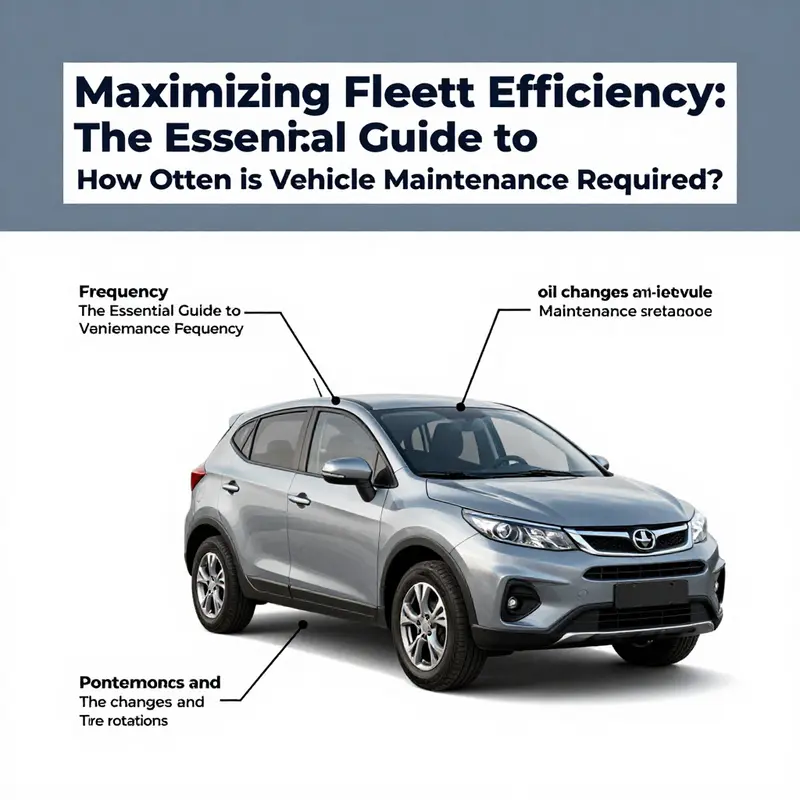
A car runs on schedules, not whims. The frequency of maintenance is a measure of how well a vehicle translates miles into safety, reliability, and lasting value. For many drivers, the most practical way to think about it is as a series of pulse points—moments when attention to the car’s needs helps prevent small issues from becoming expensive problems. In everyday terms, the question isn’t simply how often, but how often under your specific conditions. General guidance exists, but the best answer always reflects the car’s make and model, the roads you travel, and the environment in which the vehicle operates. Across markets, a common starting point is maintenance every 5,000 to 10,000 miles, or roughly every 6 to 12 months, whichever comes first. This broad window accommodates variations in driving style, climate, and the mechanical aging process, but the exact cadence should always be checked against the owner’s manual and the vehicle’s onboard reminders when available. Through this lens, maintenance becomes not an inconvenience but a prudent investment in safety, efficiency, and long-term performance.
The heart of the matter lies in translating those general ranges into routines that fit a driver’s life. For many everyday vehicles, the routine service cycle is anchored by a core set of checks: an oil and filter change, a tire rotation to promote even wear, brake inspections to ensure stopping power remains robust, and a careful assessment of fluid levels—coolant, transmission fluid, brake fluid, and windshield washer fluid among them. The idea is not to chase a calendar date alone, but to balance the calendar with the actual wear and use the car has endured. If you drive mostly on smooth highways in a temperate climate, your car will likely not need as frequent attention as a vehicle that endures heat, dust, and stop-and-go traffic daily. The same principle applies when a car is used for heavy duty work, such as towing or frequent urban driving with frequent short trips where engines never fully warm up. In such cases, the engine and auxiliary systems accumulate stress at a faster rate, nudging the maintenance schedule toward the more frequent end of the spectrum.
An important nuance is the role of the owner’s manual, which offers a tailored maintenance schedule that reflects a vehicle’s design and its components’ tolerances. Manufacturers often calibrate intervals not merely to elapsed time but to cumulative usage and operating conditions. In other words, the manual recognizes that two identical models can require different care based on how they’re driven and where they live. That is where onboard reminder systems—if the car is equipped with them—become valuable allies. These systems synthesize a driver’s usage patterns with the car’s own monitoring sensors to suggest service when the vehicle has accumulated wear beyond the standard baseline. The reminders are not a substitute for reading the manual, but they do provide a practical, real-time nudge to keep maintenance aligned with actual life on the road.
The literature on maintenance frequency often emphasizes a tiered approach based on age and mileage as a practical framework. For many vehicles, routine maintenance during the early years emphasizes preserving component life and peak engine performance. In terms of kilometerage or mileage, some manufacturers and reputable sources describe a routine service every roughly 40,000 kilometers (about 25,000 miles) or every two years as a more comprehensive upstream service. This interval typically expands beyond the basics to include air and cabin filters, a thorough cooling system inspection, and a more complete evaluation of hoses, belts, and drivetrain components. The reasoning is simple: as an engine and its supporting systems accumulate miles, the potential for gradual wear grows, and small vulnerabilities can become performance-limiting faults if left unattended. The goal is to catch wear in its earlier stages when it is most affordable to address and least disruptive to daily life.
When mileage climbs higher, the maintenance story changes again. For vehicles pushing into the 60,000- to 80,000-kilometer range, a major service every three to four years becomes a prudent practice. At this level, more thorough tasks come into play, such as assessing transmission fluid quality, inspecting or replacing timing belts or chains as required by design, and conducting full diagnostic checks to ensure that electronics, sensors, and emission-control systems continue to function harmoniously. The emphasis shifts from the routine upkeep that keeps a car running smoothly to a more proactive safeguard against aging components and potential system-wide failures. Reading about these milestones in the abstract is useful, but applying them to your own car requires a candid assessment of the car’s history, its current symptoms, and the environment it operates in.
Against this backdrop, the practical approach is to blend the manufacturer’s schedule with a reality check based on usage. If you drive in severe conditions—extreme heat or cold, dusty or salted roads, frequent short trips that don’t let the engine reach optimal operating temperature, or repeated heavy loads—the aging process speeds up, and maintenance intervals may need to be adjusted downward. Conversely, if your driving is steady, predictable, and mostly highway-based with gentle acceleration, you may find more breathing room between services, though not so much that you ignore the warning signs that a vehicle inevitably presents as it accumulates miles. The balance point is not a single number but a spectrum shaped by the car’s design and the realities of daily life. The benefit of sticking to a thoughtful cadence is clear: safer operation, better fuel efficiency, and a smaller environmental footprint, because a well-maintained engine runs cleaner and more efficiently, wasting less fuel and producing fewer emissions.
To make this approach tangible, imagine the maintenance cycle as a living protocol rather than a rigid timetable. Routine maintenance acts as muscle memory for the car’s performance and safety features. Oil changes keep the engine lubricated and free from damaging particles, tire rotations promote even tread wear and predictable handling, brake inspections guard against sudden failures, and fluid checks prevent overheating, corrosion, and hydraulic malfunctions. Each item in that routine is a safeguard with a price tag that remains modest when caught early. Skipping or delaying these steps increasingly invites the cost of more invasive repairs later—things like contaminated oil that accelerates engine wear, imbalanced tires that wear unevenly and degrade road grip, or a cooling system that runs too hot and invites costly heat-related damage. The habit of routine checks does more than preserve mechanical function; it sustains the car’s ability to respond quickly to emergencies, to stop safely when needed, and to deliver predictable performance on wet or icy surfaces.
In practice, the decision about when to call for service should be informed by a blend of three inputs: the published schedule in the owner’s manual, the car’s onboard reminders and warning lights, and a frank assessment of driving conditions and current performance. If you notice a change in how the car runs—strange noises, irregular idle, reduced power, fading brakes, rough shifting, or unusual vibrations—those are signals that you should not wait for a scheduled service window to pass. Issues caught early are usually cheaper to fix and less likely to escalate into major repairs. This approach—regularity anchored in guidelines, then refined by real-world cues—gives drivers a practical, humane framework for maintaining the car’s health over years and miles.
For readers who want a clearer pointer to how maintenance is defined in a broader sense, a concise explanation is worth noting: maintenance encompasses the routine tasks that keep the car safe, efficient, and reliable, from oil changes to tire care, fluid upkeep, and periodic component inspections. If you want a plain, straightforward definition of what maintenance entails, see What is vehicle maintenance. This reference helps frame the mindset you bring to the road: maintenance is about sustaining a vehicle’s designed performance rather than chasing a cosmetic or coincidental standard.
In the context of the broader automotive landscape, the conversation about maintenance frequency is evolving alongside technology. Modern vehicles increasingly integrate more sensors, smarter diagnostics, and more nuanced monitoring systems that tailor service needs to actual use patterns. This evolution makes the case for using digital reminders and the owner’s manual as the backbone, while also embracing the reality that every car has a life story told through miles, weather, and driving habits. The result is a more personalized maintenance schedule—one that respects the vehicle’s design while acknowledging the realities of daily life. And while the specifics may differ from one model to another, the core idea remains constant: regular attention to the basics, timely upgrades when wear meets thresholds, and a proactive stance that prioritizes safety, efficiency, and value.
As you look ahead to future chapters in this piece, you’ll see how maintenance frequency intersects with other practical concerns—cost, reliability, and resale value—without losing sight of the everyday choices that keep a vehicle dependable. The aim is to provide a clear, human-centered framework for thinking about maintenance cadence that you can apply across different cars and life circumstances. In short, frequency is less about chasing a perfect number and more about building a disciplined habit that aligns with your car’s needs and your life on the road. The path to reliable performance is a quiet one, grounded in routine, guided by the manual, and illumined by the practical signals that your own driving tells you day after day.
As a practical takeaway for readers who want to anchor this awareness in everyday life, consider keeping a simple log of service dates and mileages. Record not just the service performed, but the conditions you faced since the last visit—commuting distance, weather, terrain, and whether you towed or carried heavy loads. This living record becomes a personalized guide, helping you see patterns over time and anticipate maintenance before the car asks for help. If you’re ever unsure, a quick consult with a trusted technician can translate those patterns into a precise service plan tailored to your vehicle and your needs. The road is a long one, and a steady, informed cadence is the surest way to make sure your car stays with you through those miles and years ahead.
For readers seeking connected resources, the journey toward understanding maintenance frequency is enriched by reputable testing and manufacturer-informed guidance. A well-regarded automotive source emphasizes the same themes—periodic care, attention to aging components, and the value of a proactive maintenance mindset—alongside practical distinctions for different life stages of a vehicle. While specifics vary by model, the underlying principle holds: regular, attentive maintenance is the most reliable insurance for safety, performance, and longevity on the road. To explore broader perspectives on maintenance guidelines and real-world testing, you can consult established automotive coverage that regularly updates content on best practices and model-specific advice. These external insights complement the chapter’s emphasis on using the owner’s manual and onboard reminders as the primary guides while recognizing that real-world use can shift the cadence in meaningful ways.
In closing, the frequency of vehicle maintenance is a layered question with a straightforward answer: follow the manufacturer’s schedule, stay attentive to the car’s signals, and adapt to your driving reality. The aim is to keep the car not just running, but running well—quietly, safely, and efficiently. A disciplined maintenance habit yields dividends in reliability, fuel economy, and resale value, all while reducing the likelihood of unexpected breakdowns. The cadence will look different for every driver and every model, but the core practice—regular checks, timely service, and informed adjustments—remains universal. By treating maintenance as a living routine rather than a fixed rule, you empower your vehicle to perform at its best, mile after mile, across seasons and years. The road ahead rewards such steady stewardship with smoother drives, lower risk, and the confidence that comes from knowing you’ve given your car the care it deserves.
External reference to expand on these guidelines and to see contemporary testing data: https://www.autocar.co.uk/car-review/
Decoding Manufacturer Schedules: How Often Your Vehicle Truly Needs Maintenance and What Drives the Timing

Manufacturers set maintenance schedules as a practical guide built from testing data and engineering judgment. The numbers you see in a manual or on a reminder screen balance keeping the car reliable and safe with avoiding unnecessary service costs. They start from a baseline interval and then can be influenced by how the vehicle is used, where it is driven, and how aggressively it is driven. The reminder system in many cars uses actual driving patterns rather than a simple miles counter, which makes the schedule more responsive to real wear. Yet the reminders still derive from the same engineering assumptions about engine type, cooling and lubrication needs, and component wear. The classic rule of thumb is a basic service every 5000 to 10000 miles or every six to twelve months, whichever comes first. But this is a starting point, not a rigid mandate. If you tow often, drive in hot or dusty environments, or take short trips that never allow the engine to reach full temperature, the cadence should be adjusted. Different brands and engines have different specifics; a compact sedan may have shorter intervals while a high performance or turbocharged engine may demand more frequent checks of oil, filters, and fluids. Transmission service is also factored in, with many manufacturers moving away from the idea of lifetime fluids and recommending inspection and replacement at defined mileages. Hybrids and electric vehicles change the picture again by reducing some oil related maintenance while introducing items like battery cooling and high voltage system checks. The owner manual and the vehicle’s on board diagnostics are the most reliable guides, but your own observations matter too. If you notice reduced fuel economy, rough idle, unusual noises, or changes in braking feel, those cues should prompt a closer look at service timing. Keeping a simple service log over several months helps reveal a pattern that fits your car and your life. The goal is to preserve performance, safety, and resale value without over scheduling maintenance. When you work with the baseline and adjust for your circumstances, you walk a practical path that respects both design intent and real world usage. For readers who want a broader perspective, reputable sources emphasize consulting the owner manual for model specific intervals and using the maintenance reminder system when available. They also remind drivers that equipment ages with time and exposure, so environments that are dusty, hot, or cold can accelerate wear independent of mileage. In the end, the decision is a collaborative one between the design goals of the manufacturer and the realities of daily driving. Use the reminder as a guide, log actual service and observed symptoms, and be prepared to tighten or loosen the cadence based on how the car responds over months rather than days. A practical outcome is a maintenance schedule that protects the powertrain, brakes, and electrical systems while staying mindful of cost and convenience.
The Road Reschedules Itself: How Driving Conditions Steer the Frequency of Vehicle Maintenance
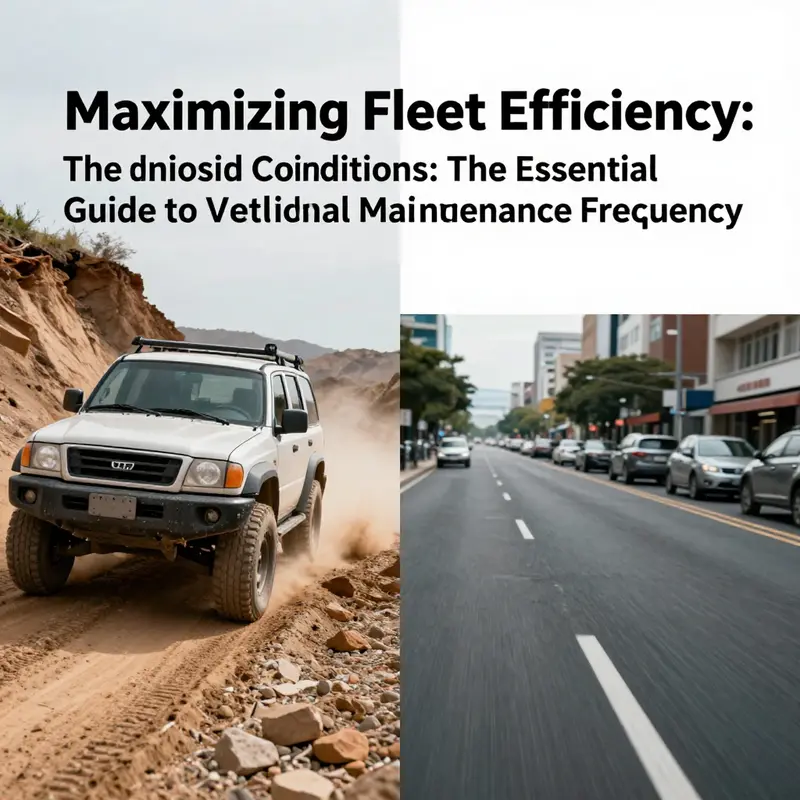
Every car comes with a maintenance manual, but the true cadence of keep-up is written on the road you drive. Frequency isn’t a fixed number etched in stone; it ebbs and flows with where you travel, how you drive, and what the climate and road quality throw at your suspension and powertrain. The broad guideline—oil changes, tire rotations, brake inspections, and fluid checks every 5,000 to 10,000 miles or six to twelve months, whichever comes first—gives a dependable baseline. Yet drivers who spend most days in the city, those who navigate remote rural stretches, and everyone in between, will find their own rhythm that aligns with wear patterns, fuel efficiency, and safety. Understanding why that rhythm shifts helps you tailor a schedule that protects your investment, preserves performance, and reduces the odds of costly, unexpected repairs.
City driving is a frequent test of a car’s endurance. The urban environment is a factory of stop-and-go motion: signals, congestion, and a clock that never seems to slow down. Each leg of a trip may be minutes long, but the engine cycles through cold starts more often, and the oil never gets a clean, fully heated run. Cold starts are tough on engines; they impose higher friction until the oil warms and circulates. The result is a higher rate of oil contamination from combustion byproducts and fuel dilution. Short trips mean the engine may not reach its optimal operating temperature, which can lead to condensation in the crankcase and more acidic byproducts in the oil. Over time, that accelerates wear on seals and bearings if the oil change interval is stretched to match a less demanding, long-distance schedule.
The brakes bear the brunt of urban life. Frequent braking heats the pads and rotors, and the steel-to-metal contact wears away at components that are already under constant stress from traffic variability. Tire wear mirrors the same pattern: rapid acceleration and frequent cornering at varying speeds increase tread scuff and uneven wear, especially when the pavement is uneven or potholes are common. In-city driving, transmission behavior also shifts. The automatic transmission, in particular, adapts to mixed throttle positions and frequent shifts from stop to go. Those early cycles can stress clutches and torque converters if the vehicle never gets the opportunity to operate in steady-state cruising. The maintenance schedule, therefore, benefits from a slightly more frequent cadence for oil changes and brake and tire inspections when the urban miles pile up. Retaining the ability to monitor brake fluid, transmission fluid, and coolant levels becomes a practical habit because the costs of neglecting small issues can escalate quickly in heavy traffic.
Rural and suburban roads, by contrast, tend to offer longer, steadier runs. The engine warms fully and stays warmer, and the trips heat cycled in a way that can be gentler on engine oil and catalytic converters. A highway-or-rural profile means fuel dilution is less likely on a typical day, and the engine operates closer to its optimum temperature more consistently. This generally translates into slower wear on engine internals and a reduced frequency of certain inspections. Yet rural driving is not a simple blessing. Road quality varies dramatically: gravel, potholes, frost heaves, and washboard surfaces can impart different forces on the suspension, steering, and alignment. Those conditions can gradually knock wheel alignment out of spec, bend a control arm, or loosen bushings. The suspension and steering system, which keep tires in contact with uneven surfaces, will reveal itself through handling changes, feathering tire wear, or abnormal tire noise. A maintenance schedule that ignores these realities risks missing subtle early signs of misalignment or worn suspension components that will eventually show up as vibration, tire wear, or unsafe handling.
Driving style adds a further, often decisive layer to the maintenance equation. Even with a solid schedule, aggressive behavior compounds the wear in unpredictable ways. Quick acceleration, abrupt braking, and aggressive cornering can heat up brakes fast, quicken pad wear, and stress the drivetrain. The tires wear in patches that can create pull or pull-to-one-side tendencies, affecting steering and safety. The noises, vibrations, and feel of the car begin to tell a story about how hard the car is being worked beyond what the odometer would suggest. A driver who accelerates hard from a red light will not only burn more fuel but also create more thermal and mechanical strain across numerous components. That strain adds up over months, nudging the point at which a component’s performance dips below the threshold of safe operation. In practice, this means a person who drives aggressively may need to check fluid levels and inspect brakes, tires, and suspension more often than someone who adopts smoother driving habits. It also underscores the value of a comprehensive periodic inspection that goes beyond the bare minimum—an inspection that validates the health of seals, gaskets, bushings, and fasteners that are otherwise hidden from view.
Seasonal and climate factors further complicate the maintenance calculus. Extreme temperatures—whether scorching summers or frigid winters—affect lubricant viscosity, battery capacity, and the behavior of tires. In hot climates, brake systems endure extended exposure to heat, accelerating pad wear and potentially triggering brake fade in heavy stop-and-go traffic. In very cold areas, battery performance declines, fluid thickening can impact pump efficiency, and tire pressure fluctuations are more pronounced, leading to uneven wear patterns. The cooling system bears extra responsibility in heat, and the air conditioning system sees heavier use in summer, raising the likelihood of compressor or condenser wear. In winter, lubricants thicken when cold, adding friction to startup, while winter road salt and moisture combine to corrode components not designed to deal with corrosive environments. All of these factors can push the optimal maintenance window earlier in the year, so the owner’s manual clock should be treated as a flexible timer rather than a rigid appointment book.
The practical upshot is that the maintenance cadence should reflect not just the distance traveled but the environment that shapes wear. A car used in city traffic in a damp climate may benefit from slightly more frequent oil changes, fluid checks, and brake inspections. A vehicle that routinely traverses rural roads with rough pavement and frequent potholes may require more diligent suspension and tire inspections to catch misalignment, worn shock absorbers, or tire damage before they compromise safety. Modern vehicles often include onboard maintenance reminder systems, designed to recalibrate service due dates based on actual usage patterns rather than a fixed calendar. For drivers who log miles in varied conditions, these reminder systems offer a practical pathway to align the maintenance schedule with real wear and tear rather than a generalized chart. When these reminders appear, they should be treated as a diagnostic signal rather than a suggestion; they reflect how the car has been clocked by the road and the engine, and they invite a personalized maintenance review that accounts for the environment and the way the car is driven.
All of this leads to a central recommendation: tie the maintenance cadence to actual operating conditions as closely as possible. That means staying aware of where you drive most and how you drive when you’re on that road. It also means understanding what a baseline service plan looks like and how to adapt it. The baseline keeps the engine clean, the fluids at the proper levels, and the brakes and tires in good condition. The adaptation—more frequent oil changes for city-bound drivers, enhanced suspension checks for rural drivers, and targeted inspections for aggressive drivers—protects longevity and safety. The owner manual remains your primary source for a tailored schedule, because it captures the specifics of your engine variant, transmission, and the exact service items your car requires at defined milestones. Yet the real-world road experience—your daily drive—should inform how strictly you adhere to those milestones. The goal is not to chase a number on a calendar but to preserve the car’s reliability and safety in the conditions you actually encounter.
To illustrate how these dynamics play out in practice, consider a driver who splits time between a densely populated metropolitan area and nearby countryside. In the city portion, the routine might lean toward more frequent oil changes and brake inspections every 5,000 miles, with careful monitoring of brake pad thickness and rotor wear due to heavy stopping patterns. The rural portion may prompt a heavier emphasis on suspension and tire integrity, given the higher likelihood of potholes and uneven surface conditions that stress wheels and alignment. The combined workload could justify keeping the maintenance schedule slightly ahead of the standard mileage-based interval, or using a maintenance reminder to trigger more frequent checks—particularly for fluids and tire condition. This blended approach helps prevent failures that could arise from the dual pressures of urban and rural wear, preserving performance and safety across a broader range of conditions.
From a cost and safety perspective, the approach pays off in two ways. First, catching wear early reduces the risk of cascading failures. A small oil leak discovered during a routine city inspection, for example, can prevent an engine oil starvation scenario after a long rural drive or an unexpected mountain pass ascent. Second, maintaining tires and brakes in good condition directly translates to better fuel efficiency and shorter stopping distances, which are essential for safety in traffic and on unfamiliar rural routes. The math is straightforward: the save-on-maintenance mindset is a hedge against expensive, last-minute repairs. Regular, condition-aware maintenance helps sustain performance, efficiency, and resale value, while also delivering peace of mind in daily driving.
An ongoing awareness of your road environment is easier to cultivate when you bring the concept into daily practice. Let the car’s indicators guide you—oil pressure and temperature gauges, brake wear indicators, tire tread depth readings, and fluid levels become signals that you interpret alongside your mileage. Even non-technical cues—the way your car responds to a start on a cold morning, the feel of the steering, or a faint seasonal squeak from the suspension—can be clues that the car is asking for a check, rather than a calendar date. In this sense, the maintenance schedule evolves from a fixed plan into a living, responsive process that mirrors the road you travel.
If you want a concise starting point for building your own condition-informed cadence, begin with the standard baseline: adhere to the manufacturer’s recommended maintenance at the 5,000–10,000 mile (8,000–16,000 kilometer) range or six to twelve months, whichever comes first. Then adjust based on your environment. In cities, consider nudging the oil-change interval closer to every 5,000 miles or sooner if your oil appears dark and contaminated after short trips. If you spend vast stretches of time on highways or rural roads on good pavement, you may be able to extend some checks slightly beyond the strict six-month period, provided fluid levels remain stable and there are no signs of wear or leakage. However, with rough rural roads, a stricter emphasis on suspension and tire condition is prudent, because those components are more exposed to shocks and surface irregularities that can degrade alignment and tire integrity. In all cases, leverage the maintenance reminder system when your car provides one. It is a built-in, data-driven tool that translates real usage into service timing, a feature especially valuable for drivers whose routes and habits shift over the year.
To connect the practical with the theoretical, it helps to frame maintenance as a holistic, ongoing health check rather than a single event. Your vehicle’s health emerges from the interplay of engine wear, fluid quality, brake performance, tire condition, and suspension integrity. Each visit to the service bay becomes a diagnostic session that confirms whether wear has progressed as expected or whether a particular system is deviating from its normal pattern. The result is a dependable maintenance rhythm that aligns with how you live on the road, rather than forcing you into a one-size-fits-all timetable. This mindset is especially valuable for drivers who frequently change routes or who relocate to areas with very different driving conditions. It keeps the plan flexible while ensuring critical components stay within safe operating limits.
For readers seeking a broader perspective beyond personal experience, research from reputable automotive outlets underscores the same theme: driving conditions—city versus rural—exert a measurable influence on maintenance needs. The study highlights how city driving stresses brakes, oil, and transmission more than highway driving, while rural driving elevates concerns about suspension, tires, and alignment due to rougher surfaces. The takeaway is clear: your maintenance plan should reflect the realities of your daily routes, not just the distance you accumulate. The takeaway also reinforces the value of staying informed about how different environments shape wear patterns, so you can tailor your service visits accordingly.
As you contemplate your next maintenance cycle, consider linking this understanding to the practical tool of a well-kept maintenance log. Record miles, driving conditions, and notable vehicle behaviors—such as unusual noises, delays in shifting, or changes in steering feel. Over time, patterns will emerge that reveal whether your current cadence is meeting the car’s needs. If you notice that oil darkens quickly after a short urban commute, or that tires wear unevenly after a season of rural driving with potholes, you’ll know where to focus your inspections and when to schedule them. The log becomes a narrative of your vehicle’s life on the road, guiding proactive care rather than reactive fixes.
Finally, it is worth acknowledging that maintenance is not solely about the vehicle. It is also a matter of safety and reliability for you and other road users. A well-timed service not only protects your investment but also reduces the risk of roadside emergencies. When you align maintenance with your actual driving environment, you’re better prepared to face conditions that range from crowded urban corridors to remote rural routes. You are less likely to face a surprise breakdown that could have been prevented by a timely oil change, a properly inflated tire, or a fresh brake inspection. In this way, maintenance cadence becomes a practical expression of responsibility—both to the vehicle and to the road network it shares with others.
For readers who want to explore the concept further, a broad resource on vehicle maintenance that explains the basics and reinforces the idea of a tailored schedule can be a helpful companion. The discussion there emphasizes that maintenance is a foundational habit, rooted in understanding your vehicle and your routes. This complements the idea that driving conditions shape maintenance timing and that modern reminders can help translate real-world usage into appropriate service windows. In the end, the best maintenance plan is one that respects the road you travel while protecting the car you drive, ensuring safety, reliability, and efficiency across seasons and miles.
External reference for broader context: City vs Rural Driving: Car Maintenance Needs. https://www.autocar.co.uk/car-news/road-tests/city-vs-rural-driving-car-maintenance-needs
For a deeper, more general understanding of maintenance concepts, see the overview at What is Vehicle Maintenance.
Timing the Care: How Often Your Vehicle Truly Needs Service to Safeguard Safety, Performance, and Value

The question of how often to service a car is less a fixed number and more a conversation between a vehicle and the road it travels. It hinges on three core factors: the make and model you drive, the conditions you subject it to, and the manufacturer’s own recommendations. In practice, most cars align with a cadence of roughly every 5,000 to 10,000 miles (8,000 to 16,000 kilometers) or every 6 to 12 months, whichever comes first. This range acknowledges that a car designed for city commuting under gentle conditions won’t need the same intervention as a high-mileage, highway-biased daily driver across rough pavement or extreme climates. The owner’s manual is the primary map here, the place where the vehicle’s specific maintenance schedule is laid out in precise terms. Yet even within that framework, modern vehicles carry additional guidance that can help you tailor service to real use. Maintenance reminder systems, when present, translate daily driving into actionable service prompts, nudging the owner toward timely checks rather than waiting for symptoms to appear. In this sense, maintenance frequency becomes less about a rote ritual and more about a dynamic, data-informed process that keeps the car in its optimal state for as long as possible.
What makes this topic so important is that the cadence isn’t arbitrary. Manufacturers test, analyze, and refine intervals around the life cycles of critical components—the heart of the engine, the link between transmission gears, the brakes that keep us from harm, and the suspension that determines comfort and control. The maintenance schedule is a carefully engineered contract between the vehicle and the owner, one that promises reliability, safety, and longevity if honored. When these schedules are followed, the car’s performance tends to stay closer to its designed potential, and the risk of unplanned failures—those moments when a driver finds themselves stranded or facing expensive repairs—drops considerably. The value of adherence isn’t just measured in a smoother drive; it’s reflected in safer operation, better efficiency, and a more predictable total cost of ownership over time.
To understand what the recommended cadence actually means in practice, it helps to look at some concrete maintenance tasks and the science behind them. Consider oil changes, the most canonical service item of all. Many drivers know oil protects the engine, but the details of how often and why matter. Modern engines may require oil and filter changes at intervals around 7,500 kilometers when synthetic oil is used, a cadence chosen to balance oil longevity with engine cleanliness and performance. The oil itself isn’t just a lubricant; it’s a working medium that carries away heat, carries away contaminants, and maintains the precise clearances inside the moving parts. For example, maintaining the engine’s piston-and-cylinder clearance within a narrow band—often described in technical terms as a fraction of a millimeter—depends on fresh, properly formulated oil circulating without oxide buildup. When the oil is fresh and the contaminants are removed, the engine can sustain its designed compression, fuel efficiency, and power delivery more consistently, even under higher loads.
The oil filter deserves equal attention. A modern filter isn’t merely a coarse strainer; it’s a high-precision barrier designed to trap microscopic particles that can abrade bearing surfaces or clog channels. Some filters are capable of filtering particles as small as 5 micrometers, which, in practical terms, means removing millions of microscopic contaminants over the life of the oil. Regularly replacing the filter ensures that clean oil continues to wash over the engine’s surfaces, helping to preserve lubrication quality and prevent accelerated wear.
Tire maintenance, too, plays a crucial role in how your vehicle performs week to week and mile after mile. Routine rotation—recommended every 5,000 kilometers in many maintenance schedules—helps ensure even tread wear across all four corners. Even wear translates into more predictable handling and longer tire life, with some studies indicating wear can be extended by as much as 30 percent when rotation is performed on schedule. An equally important, though sometimes overlooked, factor is tire pressure management. A modern vehicle’s tire pressure monitoring system (TPMS) helps drivers keep each tire within a narrow pressure band, often within ±1 psi of the target. Proper inflation reduces rolling resistance, which not only stabilizes handling but also contributes to improved fuel efficiency by a measurable margin—roughly in the area of a couple of percentage points in the right conditions.
Braking systems demand vigilant attention as well. Routine brake inspections help ensure the critical components—pads, rotors, lines, and calipers—remain in good working order. Replacing worn pads, for instance, when the material reaches a 3-millimeter thickness threshold can yield a meaningful improvement in stopping distance under emergency conditions. The effect isn’t merely theoretical; the real-world advantage translates into faster, more confident braking when a driver needs to react quickly. Regular inspection helps catch issues early—warped rotors, uneven pad wear, or caliper sticking—before they escalate into costly repairs or safety compromises.
When these maintenance touchpoints are considered together, a coherent pattern emerges: adherence to a manufacturer’s schedule is a safeguard not only for safety but for overall performance and cost efficiency. The benefits are severalfold. First and foremost is safety. A vehicle that is serviced on time is less likely to encounter a failure of a critical system at an inopportune moment, whether in city traffic, on a long highway stretch, or during an unexpected weather event. Regular checks of the braking system, suspension, and steering components contribute to consistent, reliable stopping and handling, which is the bedrock of safe driving.
Second is performance. Engines that maintain proper oil levels and clean filtration tend to deliver smooth acceleration, stable idle, and efficient combustion. The transmission benefits from clean fluid and proper cooling, reducing heat-related wear and preserving shift quality. For drivers who expect a responsive feel from their car, following the prescribed maintenance cadence supports that sense of reliability, letting the car respond as intended across years of ownership.
Third is resale value. Documentation of complete, on-time maintenance can have a measurable financial payoff. In markets where buyers weigh mechanical history heavily, fully documented service records can carry a premium, signaling that the car has been cared for according to the manufacturer’s plan. This matters not only for those who anticipate selling the vehicle soon but for anyone who wants to maximize long-term value and minimize risk of unexpected costs.
Fourth is cost efficiency. While it can be tempting to defer maintenance to save money in the short term, the long view often reveals the opposite. Routine care reduces the likelihood of abnormal wear, lowers the probability of transmission or engine failures, and can keep repair costs well below what a surprise breakdown would demand. Some analyses suggest that properly maintained engines keep abnormal wear to a fraction of a percent and can cut transmission failure rates substantially, contributing to lower lifetime ownership costs and greater reliability.
Fifth is battery management in today’s technology-rich cars. Calibrating the battery management system on a regular cadence helps ensure that the battery operates near its peak capacity, preserving overall energy efficiency and battery longevity. Likewise, the intake system benefits from periodic cleaning, which can help the engine breathe clean air and prevent the ECU from triggering protective modes that might degrade performance when sensors misread faulty air/fuel mixtures.
Finally, these arguably overlooked tasks—whether a careful intake cleaning or a calibration schedule—can limit performance degradation to a modest level even after high mileage. The research landscape suggests that proactive attention to these items helps keep a vehicle within a narrow band of optimal performance across hundreds of thousands of kilometers.
This is not merely about ticking boxes at the shop. It is about cultivating a mindset of proactive care. The most effective approach hinges on two practical habits. First, a digital maintenance log that tracks service intervals, reminders, and the date of the next recommended service can turn a vague notion of “soon” into a concrete action plan. When a driver leverages connected vehicle data and maintenance reminders, the likelihood of skipping service drops significantly. Second, a modest adjustment to the schedule—advancing scheduled services by a small margin, such as 500 kilometers for vehicles used in long-distance travel—can preempt wear and creep, keeping components within their intended tolerances as the miles rack up.
To make this more concrete, consider a driver who sticks to a consistent 7,500-kilometer oil-change cadence with synthetic oil and stays attentive to tire pressure and brake service. The experience is smoother, safer, and ultimately more economical than a looser approach that relies on symptoms alone. And while these numbers provide a general frame, the real discipline lies in aligning with the car’s own guidance—those reminder prompts, the warranty recommendations, the long-term data that tell the story of wear and tear across different climate zones and driving styles.
For readers seeking a practical takeaway from this broader view of maintenance scheduling, the answer is not a single, universal interval. It is a disciplined pattern built on the car’s manual guidance, augmented by the car’s own reminder technology, and informed by the realities of your daily driving. If you want to see a clear, benefit-focused example of how consistent maintenance translates into tangible outcomes, you can explore the idea of maintenance efficiency in real-world driving by reading about how vehicle maintenance saves on gas expenses. how vehicle maintenance saves on gas expenses.
Beyond the routine tasks, the deeper message remains: maintenance frequency should reflect more than a calendar or a mileage marker. It should reflect the story your vehicle tells as it ages, the environment it endures, and the way you use it. Long highway commutes, frequent heavy loads, or operations in dusty or salted climates all push the maintenance needle slightly toward earlier checks. Conversely, a well-maintained vehicle in a tempered climate, driven mostly at moderate speeds on smooth pavement, may tolerate longer stretches between services—again, within the guardrails of the manufacturer’s plan.
Crucially, the cadence should never be treated as a one-and-done decision. It is dynamic. It invites you to review, reflect, and adjust. If you notice that your brakes are taking longer to respond, or if tire wear becomes unusually uneven, or if an oil-change interval feels overdue by a few hundred kilometers, those are signals to revisit the schedule and align it with the reality of your vehicle’s performance. The goal is not perfection but resilience: a car that remains reliable, safe, and economical because its care keeps pace with its miles.
In the end, frequency is a strategic choice supported by data, validated by the car’s design, and enhanced by modern technology. It is the quiet discipline that turns routine maintenance into a powerful investment in safety, performance, and value. And as vehicle technologies continue to evolve—with smarter sensors, more efficient lubricants, and increasingly sophisticated powertrains—the cadence of maintenance will continue to adapt. The core principle, however, stays the same: heed the manual, listen to the car, and let proactive care guide how often you service your vehicle so it serves you faithfully for the road ahead.
External reference: Edmunds Maintenance Guide.
Final thoughts
Incorporating a disciplined maintenance schedule into your business operations is not merely a recommendation but a necessity for ensuring the longevity and reliability of your fleet. By recognizing the frequency at which maintenance should be performed, understanding the manufacturer’s guidelines, and factoring in driving conditions, business owners can make informed decisions that positively impact their vehicles’ performance. The advantages of following a structured maintenance plan extend beyond simple repairs—they lead to enhanced safety, reduced fuel costs, and an increase in the overall efficiency of your operations. Regular maintenance is an investment in your fleet’s efficiency and productivity, helping you to stay focused on growing your business.