
Managing a fleet of leased vehicles poses unique challenges for business owners, particularly in maintaining safety, reliability, and efficiency. Understanding how vehicle maintenance works is crucial to maximizing value and minimizing unforeseen costs. This article will delve into three critical facets of leasing vehicle maintenance: the importance of preventive maintenance and scheduled servicing, the clear responsibilities and cost allocation involved in this process, and the role of professional support and technology in optimizing maintenance management. By gaining insight into these areas, business owners can ensure better performance and longevity of their leased vehicles, ultimately enhancing operational efficiency.
Steady Hands on a Leased Road: Preventive Maintenance and Timed Servicing as Core Pillars of Vehicle Life-Cycle Management
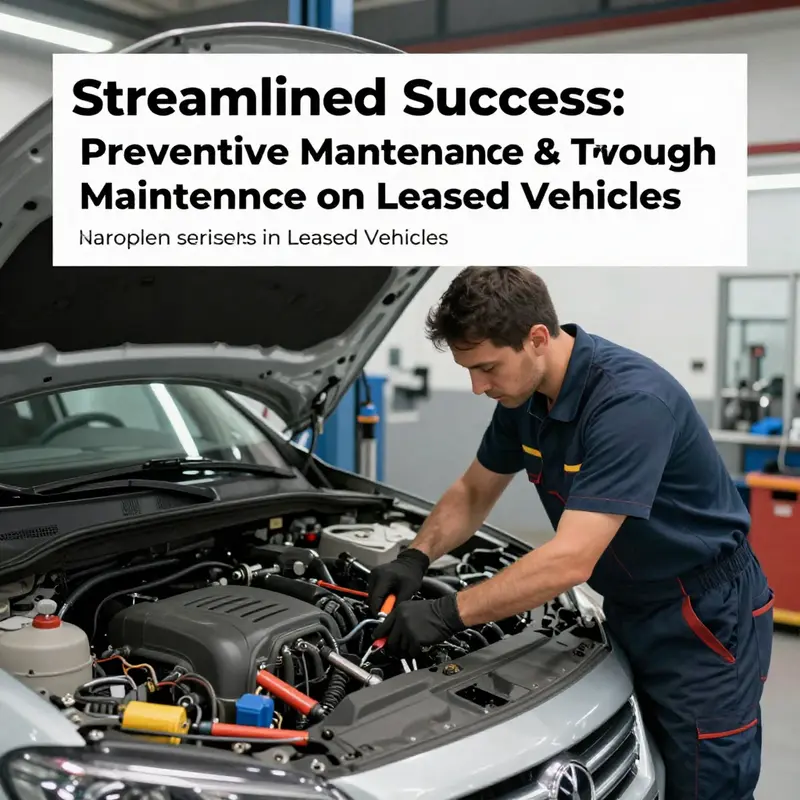
A leased vehicle arrives with a promise not only of reliable transportation but of a structured approach to upkeep that protects both the lessee’s interests and the lessor’s asset. In the most practical sense, preventive maintenance and scheduled servicing are the disciplined routines that keep a car safe, dependable, and cost-efficient over the term of the lease. They are not mere afterthoughts or optional extras; they are the backbone of how a leased fleet, a corporate vehicle program, or a personal lease stays in good shape, day after day, mile after mile. This chapter follows that thread, tracing how preventive care is defined, who carries the responsibility for it, how it is executed across professional networks, and why it matters for safety, cost control, and compliance with lease terms. The picture that emerges is less about occasional pit stops and more about an integrated management discipline that turns maintenance from a reactive nuisance into a predictable, value-adding process.
At the heart of preventive maintenance is the simple insight that devices—like modern vehicles—perform best when they are cared for before problems appear. For leased vehicles this logic has both practical and contractual resonance. Practical, because regular checks and timely part replacements prevent unexpected breakdowns that could strand a driver or disrupt a fleet operation. Contractual, because lease agreements often specify maintenance expectations and record-keeping as conditions of the arrangement. In the long view, preventive maintenance is a safeguard against the cascading costs of neglect. A small, routine service today can avert a major repair tomorrow, preserve the vehicle’s resale value, and minimize downtime that erodes the cost efficiency that leasing is meant to deliver.
A standard preventive maintenance program begins with a manufacturer-recommended schedule. The goal is to address wear and tear before it becomes a fault, not to chase every ticking clock with expensive, unnecessary work. In many leases, the rule of thumb is to service every 5,000 to 10,000 kilometers (or every 6 to 12 months, whichever comes first). This range is not arbitrary. It reflects engine design, fuel systems, transmission needs, and the realities of real-world driving, including climate and driving style. Within that framework, the key is adherence to the intervals that the vehicle’s manual and the lease agreement endorse. Oil changes and oil filter replacements are classic anchor tasks, often scheduled every 5,000 kilometers or six months, depending on the vehicle and the environment. Air filters may be due at 10,000 kilometers or 12 months, and other consumables follow a similar cadence that aligns with the manufacturer’s guidance and the lease terms. The aim is not to overservice but to ensure that essential lubrication, filtration, and protection systems remain effective.
But preventive maintenance is far more than a checklist of oil changes. A comprehensive program encompasses a broad set of inspections that extend across the vehicle’s critical systems. Brakes—checking pad thickness and rotor wear, brake fluid condition, and hydraulic integrity—play a central role in safety. Steering and suspension components are inspected for play, leaks, and abnormal noise, because deteriorating steering performance or a twitchy ride can signal issues that escalate quickly in everyday driving. Tires receive attention for pressure, tread depth, and uneven wear patterns that can compromise grip, braking, and stability. Lights, wipers, and the battery are also examined, as visibility and electrical performance strongly influence safety and reliability. In modern vehicles, a full diagnostic assessment is often part of scheduled servicing. These diagnostics go beyond the routine, probing electronic systems, sensors, and the stability and safety networks that govern everything from traction control to advanced driver-assistance features. The objective is to surface latent conditions that might not yet be audible or visible but could degrade performance or safety if left unchecked.
A crucial aspect of this phase is documentation. In a leased arrangement, every maintenance action is typically recorded in an electronic log that follows the vehicle across its life cycle. This log serves multiple purposes. It provides proof of compliance with the lease terms, supports warranty claims, and helps preserve the vehicle’s resale value by offering a transparent, verifiable service history. From the lessee’s perspective, meticulous record-keeping supports cost control and accountability. For the lessor, it offers oversight of the fleet’s health, enabling data-driven decisions about vehicle rotations, parts stocking, and maintenance scheduling across the portfolio. Digital maintenance logs, often integrated with onboard telematics or dealer management systems, enable automated reminders for upcoming services and help prevent gaps that could otherwise lead to penalties or breaches of contract. In practice, the combination of routine servicing and rigorous record-keeping builds a credible narrative of care that sustains both safety and value.
The divide of responsibility and cost between lessee and lessor is a defining feature of maintenance in leased vehicles. On balance, the lessee is responsible for routine maintenance and minor repairs arising from normal use. This typically includes the costs of oil changes, tire rotations, replacement wiper blades, and the replenishment of fluids that drivers routinely monitor. It also includes the daily up-front checks that a conscientious driver performs before each trip: tire pressure, fluid levels, lights, and the overall readiness of the vehicle. The lessee’s discipline in these areas creates a stable foundation for longer-term reliability. By contrast, the lessor, acting either directly or through a maintenance package, generally takes on major repairs and unexpected breakdowns that stem from mechanical failures or wear that exceeds normal use. In some leasing structures, a comprehensive maintenance package is wrapped into the monthly payment, effectively removing the variable, out-of-pocket costs for the lessee while guaranteeing access to a network of authorized service providers.
This division is complemented by the role of insurance, which is an essential pillar in risk management. A lease that includes the proper insurance coverage—often encompassing collision and comprehensive protection—ensures that when the vehicle sustains damage, the repair costs fall within an insurance policy’s terms, rather than creating a dispute between the lessee and the service provider. Insurance coverage thus interacts with maintenance in two important ways. First, it influences how and where repairs are performed, as in many leases the lessor requires that repairs occur at approved facilities to maintain warranty and policy conditions. Second, it provides a financial backstop that helps ensure that high-cost repairs do not disrupt the lease’s economic viability for either party. The upshot is a coordinated risk management regime in which maintenance planning, service delivery, and insurance terms align to keep the vehicle safe, legal, and cost-effective.
Beyond the obvious safety and cost considerations, professional support and technology play an outsized role in modern maintenance for leased vehicles. Leasing companies increasingly rely on dedicated maintenance teams that understand the peculiarities of their fleets. These teams work with certified repair shops and authorized dealerships to ensure repairs meet the lender’s standards and the manufacturer’s specifications. The instruments of this support are sophisticated: diagnostic tools that can pinpoint electronic faults quickly, repair protocols that ensure consistency across multiple locations, and training that keeps technicians up-to-date with the latest systems, including hybrid and electric drivetrains where applicable. The presence of a centralized management system is priceless. It aggregates data on each vehicle’s service history, current health indicators, upcoming service needs, and repair orders. Such systems enable fleet managers to push automated reminders, allocate work orders, and monitor the overall health of the fleet with dashboards that reveal patterns, bottlenecks, and opportunities for optimization. The effect is a balance between proactive maintenance and efficient, timely repairs that minimize downtime and extend the vehicle’s useful life.
From a practical standpoint, the interplay among lessee discipline, lessor provisioning, and professional service networks creates a predictable maintenance rhythm. A lessee who treats routine service as a non-negotiable schedule, who keeps receipts and service logs, and who uses only approved service channels, contributes to a smoother lease experience. The lessor, in turn, can plan capital expenditures, anticipate parts and labor costs, and optimize the servicing network. The fleet, whether it’s a small corporate program or a broader business line, benefits from fewer roadside incidents, more consistent performance, and a clearer path to resale value when the lease ends. The cycle becomes self-reinforcing: good preventive care reduces unexpected failures, which in turn lowers emergency costs and contract risk, while the digital records strengthen compliance and traceability.
The human element remains indispensable. Preventive maintenance requires a clear mind-set—one that recognizes maintenance as a shared responsibility rather than a series of isolated tasks. Drivers must perform pre-drive checks with attention, reporting anomalies early rather than waiting for a vehicle to misbehave. Maintenance teams and service partners must follow the manufacturer’s service schedules while adapting to the lease’s governance structure. Fleet managers must translate the data from the centralized systems into actionable policies, from routine servicing windows to vehicle rotation plans. And the leasing company must maintain a quality network of technicians and service centers that adhere to standards and deliver consistent outcomes. When these elements align, the road ahead becomes smoother and safer, with the lease acting as a framework that channels maintenance into predictable, manageable expenditure rather than an unpredictable expense stream.
The practical implications extend to the everyday decisions of drivers and fleet operators. For one, digital maintenance logs should be harmonized with the lease’s documentation requirements, ensuring that every service entry includes the service provider, the parts used, and the mileage or time point at which the service occurred. This level of detail matters not only for warranty claims but also for audit trails during vehicle inspections and end-of-lease appraisals. For another, the choice of service provider matters. Leases often specify that maintenance should be performed at authorized service centers or dealers to protect warranty terms and lease protections. While independent facilities can offer cost savings in some contexts, the guarantee of original equipment parts, factory-approved procedures, and the alignment with the lease’s terms often makes authorized channels the preferred path. The goal is to sustain performance while minimizing disputes about service quality, part compatibility, or warranty coverage.
An important nuance lies in the relationship between preventive maintenance and the overall lease design. Some leases feature maintenance-included terms, where routine servicing, part replacements, and certain inspections are bundled into the monthly payment. In these arrangements, the lessee benefits from predictable costs and minimized administrative complexity, while the lessor gains more control over the maintenance schedule, enabling better lifecycle management for the fleet. In other cases, maintenance remains a cost object for the lessee, with the responsibility to arrange and pay for routine services and to submit the invoices for reimbursement or warranty coverage as defined in the contract. Either model can be effective when the terms are clear, the provider network is robust, and the documentation workflows operate without friction. The underlying principle is the same: a well-planned maintenance regime reduces the likelihood of disruptive failures, extends the vehicle’s useful life, and preserves the lease’s economic rationale.
For those navigating how to implement or optimize preventive maintenance in leased vehicles, a few concrete practices can help. First, establish a digital maintenance log that integrates with the vehicle’s onboard diagnostics data and the lease administrator’s systems. This integration allows automatic reminders for upcoming services and makes it easier to verify that the required work has been performed. Second, keep meticulous receipts and service orders for every maintenance activity. A well-documented history supports warranty claims and provides a transparent record at the end of the lease, which can influence residual value and resale options. Third, prioritize maintenance at authorized centers or dealerships when the lease requires it, especially for major repairs or critical safety systems. While independent shops may offer cost advantages, authorized facilities ensure compliance with warranty terms and alignment with the vehicle’s specifications. Fourth, pay close attention to the contract details around service intervals and what constitutes “normal wear and tear.” Some lease agreements impose penalties for missed maintenance or for using non-original parts, while others offer flexibility through maintenance packages that cover a broader range of services. Understanding these terms is essential to avoid surprises and to plan maintenance activities with predictable cash flows.
Finally, it is worth acknowledging that the landscape of guidance for leased-vehicle maintenance is shaped by industry standards and regulatory expectations. A central reference in North America is the guidance published by the National Auto Leasing Association (NALA). Their materials emphasize that maintenance should be conducted according to the manufacturer’s recommended service schedule and that lessees should maintain appropriate documentation to support warranty claims and compliance. This kind of authoritative framework is especially valuable for organizations managing multiple leased vehicles, where consistency across fleets reduces risk and simplifies governance. For readers who wish to explore these standards in more depth, the leasing guidelines portal provides a consolidated view of recommended practices and compliance expectations. As a practical matter, the core message of the NALA guidance—follow the manufacturer’s schedule, document every intervention, and coordinate with authorized service providers—aligns with the everyday realities of running a lease-driven maintenance program and helps ensure that the vehicle remains a dependable asset rather than a financial liability.
In this light, the preventive maintenance and scheduled servicing of leased vehicles emerge not as isolated chores but as a coordinated discipline that underpins safety, reliability, and financial predictability. The lessee’s daily diligence, the lessor’s program design, the service network’s expertise, and the digital systems that stitch these pieces together all contribute to a lifecycle where maintenance is a living process rather than a fixed inconvenience. When the maintenance rhythm is properly managed, the vehicle remains a reliable tool that serves as a platform for mobility, productivity, and growth, even as it travels through the different stages of its lease and, ultimately, into the next phase of its life. For many organizations and individuals, that alignment—between a well-planned maintenance program and a clear contractual framework—is what makes a leased vehicle feel less like a ticking clock and more like a trusted, well-supported mobility solution.
For readers seeking a concise, practitioner-oriented summary of who bears what responsibility in these arrangements, the general rule of thumb remains clear: the lessee tends to handle routine maintenance and minor wear associated with normal use, while the lessor shoulders major repairs and issues arising from manufacturing defects or substantial mechanical failure, particularly when covered by a maintenance package or warranty. The practical upshot is a governance rhythm that rewards proactive care, transparent record-keeping, and disciplined collaboration among driver, service provider, and lease manager. The chapter of maintenance is not an isolated chapter in the life of a leased vehicle but a continuous narrative that repeats—with more certainty, less downtime, and stronger performance—throughout the path from delivery to end-of-lease appraisal. And that is precisely the value that preventive maintenance and scheduled servicing brings to any lease-driven mobility program.
The discussion here invites a practical reflection: consider the typical service cycle you would expect in a leased fleet, and imagine how each maintenance action translates into safer driving, lower risk of unexpected downtime, and a clearer line of accountability for expenses. When you can visualize the maintenance journey as a well-orchestrated sequence rather than a patchwork of ad hoc fixes, you gain a more reliable, lower-risk road ahead. The lease becomes not merely a contract but a carefully managed process that aligns safety, reliability, and cost efficiency with the realities of daily operation. For more practical context on who pays for maintenance on a leased vehicle, you can explore a focused discussion at the linked resource: who pays for maintenance on a leased vehicle.
External reference for deeper standards and guidelines: https://www.nala.org/leasing-guidelines
Between Leases and Longevity: Navigating Responsibility and Cost in Leased-Vehicle Maintenance
Maintenance on leased vehicles is not simply a series of service appointments; it is a carefully choreographed partnership shaped by the lease agreement, the capabilities of the servicing network, and the realities of daily use. The goal is clear: keep the vehicle safe, reliable, and resale-worthy while aligning expenses with the terms the lessee agreed to when entering the contract. Because the lease exists at the intersection of finance, risk management, and vehicle stewardship, responsibility for maintenance and the attendant costs become a conversation about who should do what, when, and at what price. This conversation, far from being merely administrative, has real implications for safety, downtime, budgeting, and the eventual disposition of the vehicle. When a lessee approaches maintenance with this mindset, they transform routine servicing from a checkbox on a calendar into a strategic habit that preserves value and minimizes surprises at lease end. The process begins with preventive maintenance and scheduled servicing, which form the backbone of any lease program. Manufacturers typically provide a maintenance schedule that spells out intervals by mileage or by time, whichever comes first. In many leases, this is translated into a formal requirement: oil changes at regular 5,000 to 7,500-kilometer marks, filter replacements at 10,000 or 12,000 kilometers, and periodic inspections for brakes, tires, steering, suspension, lights, and battery health. Within the lease, these intervals are not arbitrary suggestions; they are contractually anchored expectations designed to protect the vehicle’s integrity and the lessee’s warranty rights. The emphasis on routine maintenance is more than a matter of keeping the car running smoothly. It is a preventive shield against cascading failures that could arise from neglected fluids, worn components, or out-of-spec tires. When a vehicle is serviced on schedule, the manufacturer’s recommended tolerances are respected, warranty coverage remains intact, and the lessor’s risk exposure is contained. The service events themselves are more than oil changes; they are comprehensive checkups that extend beyond fluids to core systems such as brakes, steering geometry, suspension alignment, tire wear and pressure, lighting, wipers, and battery health. In modern practice, these visits also include a full diagnostic scan of electronic control units, ensuring that software updates, fault codes, and sensor calibrations are current. The digital footprint created by these visits—time, mileage, parts replaced, technician notes—becomes the vehicle’s health ledger, a tangible record of care that supports warranty claims, resale value, and accountability at lease termination. Within this framework, cost allocation is the practical counterpart to responsibility. The lessee is typically entrusted with routine maintenance and minor repairs resulting from normal wear and use. They bear the costs of oil changes, tire rotations, fluid top-offs, filter replacements, brake pad wear within expected limits, and other activities that keep the vehicle operating according to the manufacturer’s schedule. This arrangement makes intuitive sense: the lessee is the one who uses the vehicle every day, exposes it to road conditions, and is best positioned to perform basic upkeep as a daily discipline. Daily checks before each trip—fluid levels, tire pressure, lights, and visible leaks—are framed not as a chore but as a proactive habit that guards safety and helps detect issues early. The lessor, on the other hand, typically assumes responsibility for major repairs and unexpected failures that arise from mechanical problems not caused by ordinary wear or misuse. This division aligns with the logic that major defects, especially those tied to manufacturing quality or inherent design, are more reliably managed by the party who possesses the asset and bears the risk of large, unplanned expenditures. Some leases go further by offering maintenance packages that bundle routine services into the monthly payment. These programs can simplify budgeting, converting unpredictable maintenance costs into a predictable operating expense. Yet they come with caveats. Maintenance packages often require service at approved facilities, which can limit choice and flexibility. They may exclude certain services or limits on the scope of work, so a seemingly comprehensive plan could still exclude items that fall outside the defined maintenance menu. For the lessee, the trade-off is clarity and budgeting ease on one hand, and potential restrictions on where and how work is performed on the other. Reading the lease terms with care becomes essential. The contract will specify what is covered, what is excluded, and what conditions trigger responsibility shifts. A clause might state that routine services are included but that major repairs remain the lessee’s responsibility if the damage results from misuse, abuse, or neglect. Conversely, if a transmission failure occurs during the factory warranty period and is determined to be a manufacturing defect, the lessor may cover the repair, particularly in the early years of the lease. These boundaries matter because they determine not only the dollar outlays but also the timing of those outlays. A surprise bill for a transmission rebuild or a failed cooling system can disrupt monthly budgets and strain goodwill with lessors. To navigate these waters effectively, lessees must understand how their lease interacts with warranty coverage and maintenance packages. Warranty coverage often remains with the vehicle during the initial years of a lease, especially when the car is still within its factory warranty. The lessor may assume responsibility for major repairs that fall under these warranties, particularly if the repairs arise from manufacturing defects rather than accidental damage or neglect. However, the precise division can hinge on contract language and the actions of the lessee. If neglect or misuse contributes to a failure that would otherwise be covered by warranty, the lessee may forfeit that protection. This is where the lease document, and the accompanying policy documents, become critical guides. The lessee’s obligation to perform regular checks and basic maintenance is not merely a good practice; it is a contractual duty that helps preserve warranty rights and the vehicle’s value at lease end. A well-documented maintenance history is not just bureaucratic administrative work; it is evidence of stewardship, a visible commitment to keeping the asset in near-new condition. In practice, this is where technology and professional support converge. Leasing companies increasingly rely on dedicated maintenance teams, certified repair shops, and manufacturer-trained technicians who understand the nuances of the fleet’s common models. The goal is to ensure repairs and routine services are performed to the highest standards, using approved parts and calibrated procedures. The result is a more predictable maintenance experience for the lessee and a more reliable outcome for the lessor. Modern central management systems tie all this together. Each vehicle’s maintenance history is logged, service reminders are automated, and repair orders are tracked from inception through completion. This digital orchestration helps prevent both over-maintenance and under-maintenance, optimizing the balance between cost control and vehicle health. It also creates a robust documentation trail that can streamline warranty claims, facilitate audits, and support resale value. Yet even with sophisticated systems, the human element remains crucial. The lessee’s daily discipline—performing quick checks, reporting any irregular sounds or warning lights, and scheduling maintenance within the prescribed windows—has a direct impact on the vehicle’s reliability and the lease’s economic outcome. It is easy to underestimate the financial significance of a missed service interval or a delayed tire replacement, but those oversights can ripple through the maintenance log, affect warranty eligibility, and ultimately influence end-of-lease charges. When the lease ends, the careful balance between responsibility and cost allocation comes into sharper focus. A wear-and-tear assessment will review the condition of tires, brakes, and exterior and interior wear, along with the vehicle’s service history. Vehicles with a robust maintenance log that shows timely oil changes, tire rotations, and preventive inspections are more likely to pass inspection with minimal charges. By contrast, gaps in service or evidence of neglected maintenance increase the risk of end-of-lease repairs that fall to the lessee. This is not simply a punitive mechanism; it is a practical acknowledgment that the lessee’s ability to demonstrate ongoing care is a key determinant of the vehicle’s residual value. For readers navigating this terrain, a practical approach emerges: treat the lease as a living document whose maintenance responsibilities are not abstract lines on a page but actual operating habits. Build a routine around the manufacturer’s recommended service intervals, maintain a transparent and accessible digital log, and use the scope of the lease to inform budgeting decisions. If there is a maintenance package, weigh its value against potential limitations: the convenience and predictability of bundled costs versus the flexibility to choose preferred service centers, the scope of included services, and any caps on coverage. It is worth noting that the way forward is often shaped by the lease’s language and the broader regulatory framework. In the United States, for instance, the Federal Trade Commission provides guidance on understanding lease agreements, including how costs are allocated and what protections exist for consumers. This guidance helps lessees recognize when a term effectively shifts costs in a way that may be unfair or unclear, prompting a closer review before signing and a proactive plan after signing. For additional insight into the broader landscape of lease terms and maintenance responsibilities, consult resources such as the FTC guidance on lease agreements. Who Pays for Maintenance on a Leased Vehicle offers a concise discussion of common allocations and the practical implications for budgeting and compliance, reinforcing how critical it is to read the fine print and keep records intact over the life of the lease. In practice, the successful management of leased-vehicle maintenance rests on clarity, discipline, and timely collaboration between the lessee, the lessor, and trusted service partners. The lessee’s daily stewardship—rigorous pre-drive checks, timely service appointment adherence, and careful monitoring of wear components—complements the lessor’s organized maintenance support network, warranty alignment, and centralized data management. The resulting synergy reduces downtime, preserves safety margins, and sustains the vehicle’s value trajectory. It also reduces the likelihood of end-of-lease charges that arise from neglected maintenance or unclear coverage. When these elements work in concert, maintenance ceases to be a burdensome ledger entry and becomes an integrated practice that protects people on the road, preserves the asset’s economic value, and keeps the lease experience predictable and fair. External resources around this topic stress the importance of understanding what is covered and what is not, and they emphasize the value of documenting care as a shield against disputes at the point of lease end. As long as the lessee remains engaged, adheres to the recommended service schedule, and collaborates with reputable service partners, leased vehicles can deliver the safety, reliability, and economic efficiency that makes them a compelling option for personal use or fleet operations. External resource: https://www.ftc.gov/tips-advice/business-center/guidance/understanding-lease-agreements
Coordinated Care Behind Leased Vehicles: How Maintenance Keeps Safety, Reliability, and Value On Track
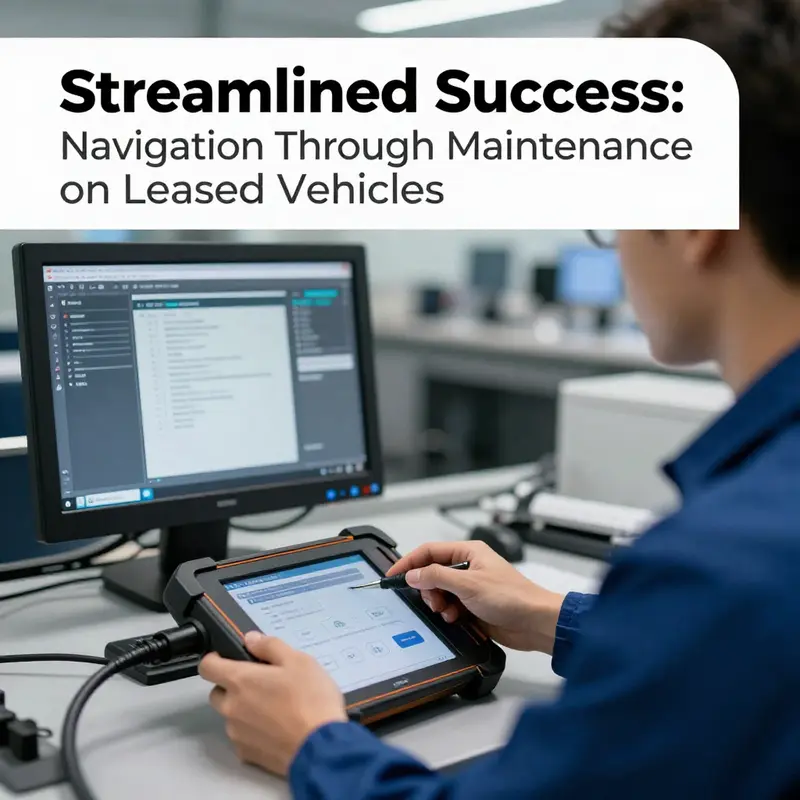
Maintenance on leased vehicles is best understood as a carefully choreographed system that balances safety, reliability, and cost across a defined lifecycle. It is not a set of isolated fixes but a collaborative discipline that aligns the lessee’s daily responsibilities with the lessor’s obligation to protect the asset and its resale value. While lease terms vary—between business fleets, personal leasing, or mixed-use arrangements—the core architecture of maintenance remains remarkably consistent. At its heart lies a preventive, data-informed approach: a schedule anchored in manufacturer guidance, a clear division of duties, and a technology-driven backbone that keeps every vehicle’s health trajectory visible to managers, technicians, and drivers alike. In practice, this means a vehicle is kept in service not by chance but by a predictable cadence of care, executed by professionals who understand the nuances of the specific model and the fleet’s operating profile. The resulting outcome is safety that protects lives, reliability that sustains operations, and value that endures beyond the term of the lease. To appreciate how this works in the real world, it helps to see how the different strands come together and why the balance matters when a vehicle is leased rather than owned outright. Preventive maintenance and scheduled servicing form the backbone of the system. The manufacturer’s guidance is the compass, typically translated into a concrete timetable that hinges on mileage and time intervals. A widely observed pattern asks for routine service every 5,000 to 10,000 kilometers, or every six to twelve months, with the still-common oil change and filter replacement every 5,000 kilometers or six months, and air filter replacement around the 10,000-kilometer mark or annually, whichever comes first. This schedule is not arbitrary. It is designed to intervene before wear accelerates and before small problems escalate into costly failures. Each service visit expands beyond mere fluid changes; it becomes a comprehensive health inspection of the vehicle’s critical systems. Brakes, steering, suspension, tires (with pressure and tread wear checks), lights, wipers, and the battery are audited, and a full diagnostic scan confirms that electronic systems—from stability controls to telematics modules—are communicating properly. The goal is to catch subtle signs of degradation, misalignment, or calibration drift before they impact performance. All of this is documented in an electronic maintenance log that travels with the vehicle through its entire life in the lease. This log serves multiple roles: it is the proof of compliance with lease terms, a record for warranty claims, and a searchable history that adds value at the point of resale. The documentation becomes particularly important when the vehicle transitions between users or fleets, or when service history is reviewed during an audit. The second leg of the maintenance framework is the clear allocation of responsibility and cost. Lease agreements spell out who bears what and under what circumstances. The lessee typically handles routine maintenance and minor repairs arising from normal wear and tear—oil changes, tire rotations, brake pad wear, and the replacement of consumables like wiper blades. They are also responsible for daily pre-drive checks, a practical habit that includes verifying fluid levels, tire pressures, and functional lights. Meanwhile, the lessor assumes responsibility for more substantial repairs and unexpected breakdowns caused by mechanical failure or significant damage not attributable to the lessee’s negligence. In some leases, maintenance is bundled into the monthly payment through a maintenance package or a “maintenance-included” option. This arrangement shifts the onus of scheduling and parts procurement to the lessor or its network of service partners, providing a predictable cost structure for the lessee and a lever for the lessor to optimize the lifecycle costs of the fleet. Insurance is a parallel axis in risk management. A robust policy—often arranged or coordinated through the leasing company—helps manage the financial impact of accidents or major damage. In practice, insurance coverage dovetails with the maintenance plan by defining which costs are recoverable under warranty, which repairs are considered standard wear and tear, and how deductibles affect the total cost of ownership during the lease. The interplay between maintenance and insurance reinforces the principle that leased vehicles are managed assets rather than disposable tools. Professional support and technology form the third pillar that sustains this system at scale. Leasing companies build their competitive edge on access to professional maintenance networks that understand the specifics of the fleet’s composition. Dedicated maintenance teams staffed with certified technicians perform diagnostic work, ensure adherence to manufacturer guidelines, and coordinate timely repairs. These professionals routinely work with certified repair shops or authorized dealership networks to guarantee high-quality workmanship and the use of appropriate parts. The scale of operations matters here: a fleet of hundreds or thousands of vehicles requires standardized processes, not just earnest intent. Professional support extends beyond the shop floor. It includes proactive management of service schedules, parts inventory, and warranty claims. When a vehicle is flagged for service, the system can automatically assign a qualified technician, pull the correct parts from inventory, and route the repair order to the most suitable facility. This orchestration reduces downtime, avoids cascading delays, and preserves the vehicle’s uptime—a critical factor for fleets that rely on consistent availability. Technology underpins all of this with a robust, centralized management ecosystem. Modern maintenance management relies on telematics and onboard diagnostics to convert real-world vehicle behavior into actionable insights. Telematics devices continuously monitor a spectrum of data—engine performance, fuel efficiency, tire wear, brake health, and battery status in electric vehicles. Onboard diagnostics (OBD-II) feed the central system with near real-time health indicators, flagging anomalies before they become disruptions. The software architecture then uses these inputs to generate automated reminders for upcoming service intervals, not just by mileage or time, but by actual vehicle conditions. This distinction—between a fixed calendar and condition-based maintenance—represents a nuanced shift toward precision and cost control. Predictive maintenance powered by AI takes this a step further. By analyzing historical service records alongside live sensor data, AI models forecast the likelihood of component failure at a specific point in time. The practical payoff is dramatic: fewer unexpected breakdowns, shorter repair dwell times, and a clearer view of when to replace components to extend the asset’s useful life. The digital layer also ensures that every action is traceable. Digital platforms centralize records, track service history, and generate detailed reports for audits and compliance. They make it possible to demonstrate adherence to maintenance schedules during warranty claims and to verify the integrity of the asset for resale value assessments. In the broader picture, these platforms enable a transparent dialogue among lessees, service providers, and fleet administrators. Cloud-based portals become the shared workspace where drivers receive service reminders, maintenance coordinators approve work orders, and technicians access the vehicle’s history and manufacturer specifications in real time. This common digital language reduces miscommunication, speeds up service, and aligns expectations across all parties involved. The integration of people, process, and technology is where the maintenance engine truly shines, but it grows more intricate when the fleet includes electric vehicles. EV fleets introduce specialized variables that demand careful attention from maintenance planners. Battery health, charging cycles, and energy efficiency take center stage. Battery degradation, influenced by charging habits and thermal management, becomes a strategic concern because it affects range, reliability, and resale value. Tools designed for EVs monitor battery state of health, charging profiles, and thermal behavior, guiding maintenance decisions that balance performance with longevity. Best practices emphasize avoiding unnecessary stress on the battery, such as excessive fast charging or prolonged high-current demand, and ensuring routine checks on cooling systems and thermal pathways. The combination of specialist tools and qualified technicians helps ensure that EVs stay within their expected performance envelope, preserving the leasing company’s asset value while meeting the operator’s mission-critical needs. This EV-oriented discipline is inseparable from the broader maintenance framework. The unified approach—preventive care, clear responsibility, professional support, and technology-enabled oversight—delivers a predictable, data-driven lifecycle for leased vehicles. It is not merely about fixing problems as they arise; it is about anticipating wear, scheduling interventions at the right moments, and maintaining a clear record that travels with the vehicle from one user to the next. This is why many lease agreements emphasize the importance of documentation and timely service. When a lessee adheres to the recommended checks and turns the maintenance log into a living record, the lease becomes easier to manage, the vehicle stays safer, and the path to resale value becomes more straightforward. The leverage of professional partners and a centralized digital system also helps reduce maintenance waste. Without a disciplined approach, a fleet can fall into over-maintenance, where services are performed too frequently and parts are replaced prematurely, or under-maintenance, where subtle warning signs are ignored until a breakdown occurs. Neither extreme serves the lease or the driver well. The ideal state is a calibrated rhythm: routine care that aligns with the manufacturer’s guidance, triggered by actual vehicle condition when appropriate, and executed by technicians who understand the asset’s particularities. It is a rhythm that scales from a single-car lease to a multi-hundred-vehicle fleet, and it is designed to withstand the pressures of real-world operation—seasonal variations, high-mileage demand, and the unforeseen contingencies that can accompany any substantial vehicle pool. For readers seeking clarity on responsibility, see Are you responsible for maintenance on a leased vehicle. This reference captures a common point of friction in lease discussions and reinforces the practical reality that successful maintenance hinges on clear lines of accountability, not merely on good intentions or nice equipment. Readers should also appreciate that every maintenance decision feeds into a broader objective: preserving safety for drivers, ensuring reliable performance for operations, and sustaining the asset’s value for the end of the lease. Effective maintenance is therefore as much about governance as it is about gears and fluids. Governance here means contract clarity, standardized processes, performance metrics, and accountable roles. It means ensuring that the lessee knows exactly when a service is due, that the lessor has arranged access to the right technicians and parts, and that data flows smoothly among everyone involved. When governance aligns with the operational realities of the fleet, the maintenance program ceases to feel like a burden and becomes a strategic tool. It helps managers predict costs, minimize downtime, and make informed leasing decisions that reflect actual vehicle usage and condition rather than best-case assumptions. The practical implications extend to warranty claims as well. A well-maintained vehicle with complete service documentation is far more likely to qualify for warranty coverage when a mechanical issue arises. The digital maintenance log becomes essential in supporting claims and demonstrating that the vehicle was kept within the manufacturer’s parameters. In the end, maintenance on leased vehicles is a holistic discipline that blends preventive discipline with responsive support and smart technology. It is about the careful choreography of schedules, responsibilities, and data that makes a leased fleet resilient. The result is a system where drivers experience fewer surprises, operations enjoy steadier uptime, and owners protect the financial value embedded in their assets. For organizations that manage large, distributed fleets, this is not a luxury but a necessity. It translates into safer roads, more predictable budgets, and a lifecycle approach that treats every vehicle as a valued asset, not a disposable tool. External resource: Fleet Management – Leased Vehicle Maintenance Technology: https://www.fleetmanagement.com/leasemaintenance-technology
Final thoughts
Effective maintenance of leased vehicles is not just a necessity but a strategic advantage for business owners. By implementing structured preventive maintenance schedules, understanding the cost responsibilities clearly, and leveraging professional expertise and modern technology, businesses can ensure their leased vehicles remain operational and efficient. This comprehensive approach not only fosters vehicle longevity but also contributes to overall business success. The investment in time and resources for proper maintenance ultimately yields benefits in safety, reliability, and cost savings, positioning businesses for sustained growth and success.