
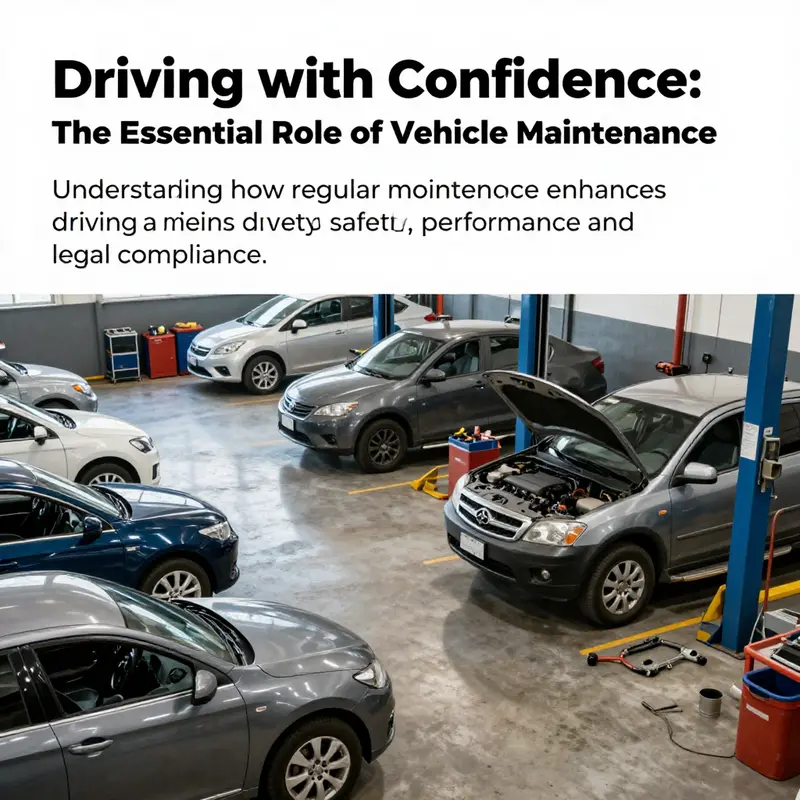
When it comes to driving, the importance of regular vehicle maintenance cannot be overstated. For business owners relying on vehicles for daily operations, ensuring their fleet is in optimal condition reflects directly on their reliability and overall safety. Regular vehicle maintenance goes beyond mere efficiency; it dramatically influences driving safety, enhances performance, and aligns with legal requirements. Chapter one explores how consistent upkeep can minimize road risks and improve driver accountability. Chapter two delves into the mechanics of vehicle performance and how maintenance practices ensure vehicles operate at their best. Lastly, chapter three examines the legal implications tied to vehicle maintenance, highlighting the need for compliance with safety inspections and emissions standards. Together, these chapters provide a comprehensive view of how preventive vehicle care significantly affects driving.
Maintained for Motion: How Regular Vehicle Upkeep Shapes a Driver’s Ability to Respond, Control, and Stay Safe
Driving is a continuous dialogue between a person and a machine. When a driver sits behind the wheel, every action—pedal press, turn of the wheel, or brief glance in the mirror—depends on a vehicle that is reliable, predictable, and ready to respond. Regular vehicle maintenance is the unseen partner in that conversation. It doesn’t simply prevent costly breakdowns or extend the life of the car; it preserves a driver’s capacity to perceive, decide, and act in real time. The link between maintenance and driving ability runs deeper than a checklist. It influences how smoothly a driver can control the car, how quickly they can react to hazards, and how confidently they can navigate the daily uncertainties of the road. In practical terms, a well-kept vehicle behaves as it should under a wide range of conditions. Brakes engage when you expect them to, steering responds with consistency, tires hold the line in bends, lights illuminate the path ahead, and the engine delivers power without surprise. When any of these systems falter, the driver’s capacity to operate safely is altered. The vehicle becomes, in effect, another variable to manage, one that can erode reaction time, reduce situational awareness, and increase the likelihood of errors under pressure. The everyday driver may not notice the subtle shifts at first, but the effect compounds over time. A car that experiences intermittent braking noise may still stop, but the braking system’s feel, bite, and modulation could degrade. A driver then compensates by squeezing the pedal more firmly, shortening the distance to potential hazard. Over a busy week, those small compensations crystallize into increased fatigue, reduced attention, and greater cognitive load—factors that can undermine safe driving as surely as a bright, flashing warning light that is ignored. The relationship between maintenance and driving safety is not about chasing perfection; it is about preserving the driver’s essential capability to process information, to act decisively, and to maintain control under varying conditions.
The core of this connection lies in safeguarding critical control systems. Brakes are the most explicit link to safety, and their condition often mirrors the driver’s level of control. Worn brake pads, for instance, can reduce stopping power and lengthen stopping distances. This is not merely a mechanical concern; it directly shapes a driver’s decision-making in traffic. If stopping distances become uneven or unpredictable, a driver may hesitate, brake harder than necessary, or repeatedly brake at the last moment, each action increasing risk. Tires represent another primary axis of control. Proper tread depth and correct inflation influence grip, steering response, and resistance to hydroplaning. Underinflated tires can make steering feel languid and vague, particularly in wet conditions, while overinflated tires may produce a harsher ride and reduced contact patch. In both cases, the driver’s ability to place the car precisely on the intended trajectory is compromised. These dynamics emphasize that maintenance is not a luxury but a safety baseline. When tires are in good condition and inflated to the recommended pressure, a driver experiences more predictable turn-in, more consistent braking, and better overall handling. The same logic applies to lights and visibility. Headlights that cast a dim or uneven beam, windshield wipers that smear but do not clear, or cracked mirrors that distort a driver’s perception—all of these factors degrade the driver’s situational awareness. In poor weather or at night, visibility becomes the primary determinant of whether the driver can respond quickly enough to a developing hazard. Maintenance ensures that vision is clear and that the driver’s eyes are not forced to compensate for a failing system. In turn, this contributes to more accurate judgment and faster, more appropriate responses.
Beyond the mechanical basics, there is a broader ecosystem of maintenance that supports driving ability in less obvious but equally important ways. Fluid levels, battery health, suspension integrity, and cooling system performance all contribute to the vehicle’s reliability and the consistency of its behavior. A well-tuned engine and transmission provide smooth, predictable acceleration and braking. When the engine runs cleanly and the transmission shifts crisply, the driver can time throttle inputs more effectively, which is essential in merging, lane changes, and emergency maneuvers. In contrast, a vehicle that hesitates or revs irregularly increases the cognitive load on the driver. The mind must compensate for the vehicle’s quirks, leaving less bandwidth to monitor other road users, anticipate changing conditions, or manage complex traffic patterns. Regular maintenance reduces these cognitive burdens by eliminating avoidable mechanical irregularities.
The health of a vehicle’s electrical and electronic systems also matters for driving ability. In modern vehicles, a network of sensors, actuators, and control modules coordinates everything from stability control to traction management and adaptive lighting. When these systems are functioning well, they provide a driver with timely, reliable feedback and assistance during routine and unexpected scenarios. Conversely, if a fault code lights up the dashboard or a sensor malfunctions, the driver may encounter delayed or inappropriate responses from safety systems. Even when a driver is not relying on advanced driver-assistance features, the absence of reliable sensor input can erode decision confidence and lead to misjudgments in complex traffic situations.
Another layer to consider is the way maintenance shapes a driver’s mental stance toward safety. Regular upkeep cultivates a sense of responsibility and preparedness. When a person routinely checks tire pressures, fluid levels, and lights, they build a habit of proactive risk management. This habit naturally extends to day-to-day driving choices—planning routes based on fuel efficiency and maintenance costs, scheduling regular service visits, and recognizing when the vehicle’s behavior deviates from normal. That mindset matters because safe driving is as much about behavior as it is about mechanical fitness. A driver who understands the fragility of return-to-road performance after a minor failure will drive more conservatively in the interim, avoiding risky situations that would otherwise catch them off guard. The confidence that comes from knowing the vehicle is well cared for can also translate into steadier hands and steadier decisions, even in stressful moments on the road.
The maintenance story also intertwines with the regulatory landscape that governs driving. On a practical level, many regions require periodic safety inspections, emissions tests, or other checks that assess a vehicle’s roadworthiness. Vehicles that pass these inspections are likelier to be considered safe and lawful to operate. The process serves a public purpose by encouraging owners to address issues before they escalate into failures that could jeopardize the driver or others. Legal compliance, in turn, reduces the risk of penalties or enforcement actions that could interrupt a driver’s mobility. In this sense, maintenance acts as a bridge between personal safety and public accountability, reinforcing the idea that responsible driving is a collective obligation that starts with caring for one’s own vehicle.
The argument for maintenance as a driver-capability issue does not rest solely on the likelihood of a breakdown. It rests on how upkeep shapes the predictability and reliability of vehicle behavior, which in turn influences how a driver perceives and interacts with the road. For example, consider the role of cooling in thermal management. In both conventional and electric vehicles, the cooling system keeps critical components within safe operating temperatures. A clogged radiator or restricted airflow can lead to overheating, which may trigger reduced power or sudden performance changes. In a moment of danger—an uphill merge, a rapid lane change, or a quick response to a pedestrian—the driver’s ability to rely on consistent power delivery becomes a lifeline. Although the specifics may vary across different propulsion systems, the underlying principle remains: thermal stability supports stable performance, which helps the driver execute precise maneuvers when the road demands it most.
A further point concerns the pre-driving checks that many experienced drivers perform almost automatically. These checks—tire condition, tread depth, fluid levels, battery health, light functionality, and wiper operation—function as a personal risk-guardrail. They do not guarantee a flawless journey, but they do reduce the probability that the vehicle will behave unfavorably in a way the driver cannot anticipate or manage. When a driver begins a trip with a clear sense of the vehicle’s readiness, they can distribute attention more effectively across road conditions, other vehicles, and potential hazards. The driver’s cognitive load decreases because the vehicle’s responses are more predictable. As a result, reaction times can improve, and the chance that a driver must compensate for an unexpected mechanical event diminishes. In this way, maintenance contributes not only to the car’s reliability but also to the driver’s perceptual acuity and decision-making speed when confronted with the dynamic demands of driving.
Turning to the social and psychological dimensions, it is worth noting that maintenance also influences how drivers perceive risk and safety in others’ driving. A well-maintained car may inspire a higher level of trust in its capabilities, which can translate into more measured and thoughtful driving, such as greater space following, smoother lane positioning, and more deliberate speed management. Conversely, a vehicle with visible maintenance issues may provoke heightened alertness or anxiety in other road users, which, in turn, can create a feedback loop of tension and unpredictable behavior. In all cases, the central thread remains the same: a vehicle that behaves consistently supports a driver’s capacity to anticipate, plan, and execute safe actions.
For those who wonder about the practical returns on maintenance, the case extends beyond safety alone. Fuel efficiency, for instance, benefits from properly inflated tires, clean air filters, and timely engine tuning. While the financial benefits of better fuel economy are not a substitute for safety, they contribute to the overall cost-benefit calculus of keeping a car in good condition. A vehicle that runs efficiently is less likely to experience stress on mechanical components, reducing the chance of performance fluctuations that can distract a driver. In this sense, maintenance helps preserve the car as a reliable tool for daily life, enabling people to reach work, care for loved ones, or pursue essential tasks without interruption. The broader value proposition is clear: responsible upkeep strengthens both the driver’s ability to operate the vehicle and the vehicle’s ability to support those daily commitments.
A practical, lived-in approach to maintenance emphasizes routine checks that fit real-world schedules. Rather than treating maintenance as a distant, government-mandated task, many drivers find value in embedding simple habits into their weekly routines. For example, a quick Sunday review of tire pressures and fluid levels, followed by a monthly light-check and a six-month service schedule, can be integrated into a family calendar. The act of scheduling service visits, too, plays a role in driving ability. Regular service reduces the odds of unexpected repairs that could require sudden trips to a shop or leave a driver with a car inoperative during critical moments. When a vehicle is reliably available, the driver’s mental map of daily life remains intact, and the stress associated with potential failures decreases.
The overarching message is not merely about avoiding breakdowns; it is about sustaining continuous, safe mobility. A driver’s ability to respond quickly, steer accurately, and stop confidently depends on the vehicle’s health. Routine maintenance preserves the vehicle’s behavior under a broad spectrum of conditions—rain, heat, cold, snow, and crowded urban traffic alike. It is a form of risk management that aligns mechanical reliability with human capability. In this light, maintenance emerges as a foundational aspect of responsible driving, a practice that protects the driver, passengers, and other road users by ensuring the vehicle remains a dependable instrument for safe transportation.
To connect these ideas to a broader understanding, consider the basic question: what does maintenance truly entail? The answer is not a long, daunting list of procedures but a philosophy of care that starts with respect for the vehicle and for everyone who shares the road. It invites drivers to view upkeep as an investment in safety, usability, and peace of mind. For readers seeking a concise repository of what maintenance covers and why it matters, one can explore resources that describe, in practical terms, what maintenance encompasses and why it matters to the driving experience. This can serve as a bridge to more detailed explorations, including how individual maintenance tasks translate into tangible improvements in driving performance and safety outcomes. For those who want a quick frame of reference, a helpful starting point is a straightforward explanation of what vehicle maintenance involves, which can be further explored here: what is vehicle maintenance.
In sum, vehicle maintenance is not a passive duty; it is an active contributor to driving ability. It shapes the reliability, predictability, and responsiveness of the car, which in turn supports a driver’s perception, decision-making, and action. It also reinforces a culture of responsibility and safety that benefits everyone on the road. By viewing maintenance as an essential element of driving skill, individuals can approach their vehicles with intention, steadiness, and a clear sense of the consequences of neglect. The road demands constant attention, and a well-maintained vehicle helps ensure that attention is rewarded with steady performance, clear signals, and timely responses. As the prior chapters have shown, safety emerges not from a single heroic maneuver but from a continuous, well-supported practice of care that keeps the machine in harmony with the human mind behind the wheel. For those who wish to learn more about the regulatory and safety frameworks that elevate maintenance to a public good, ongoing guidance from national safety agencies emphasizes that consistent upkeep is a cornerstone of road safety and a practical prerequisite for lawful, reliable driving.
External reference: NHTSA’s guidance on vehicle maintenance and safety provides a broader context for how upkeep translates into safer driving and compliant operation on public roads. See https://www.nhtsa.gov/vehicle-maintenance-safety for ongoing information and recommendations.
Maintenance as Driver’s Edge: How Regular Upkeep Shapes Safe, Predictable Driving
Maintenance is more than a checklist of repairs; it is a continuous feedback loop between a vehicle and the person behind the wheel. When a driver keeps the machine in top condition, the car becomes a more reliable partner in motion, translating maintenance into consistent handling, reliable power, and responsive safety systems. Without that upkeep, performance wanes in ways that often go unnoticed until a critical moment arrives. In this sense, the mechanisms of vehicle performance are not abstract ideas reserved for engineers; they are practical truths that shape a driver’s ability to navigate, accelerate, brake, and react. The core idea is straightforward: the better the health of the car’s essential systems, the more predictable the vehicle’s behavior, and the more confident the driver can be in dynamic situations.
At the heart of this relationship is the engine, a complex orchestra of moving parts, sensors, and control logic that converts fuel into motion. A well-tuned engine maintains smooth combustion, steady compression, and clean fuel economy, while a neglected engine can develop misfires, rough idle, or reduced acceleration. Misfires may seem minor at first, but they erode throttle response and can lead to uneven power delivery at the moment power is needed most—when merging onto a busy highway or overtaking in heavy traffic. Modern engines rely on sensors to optimize air-fuel mixtures and timing, and when maintenance gaps allow oxygen sensors or mass airflow sensors to become dirty or faulty, the engine control unit may receive bad data. The result is suboptimal fuel-air ratios, rough idling, hesitation, and, in some cases, unexpected stalling. In driving terms, that translates to a driver who cannot reliably anticipate how the car will react to a given input, undermining both confidence and safety.
Brakes are perhaps the most immediate link between maintenance and driving safety. Worn brake pads reduce stopping power and increase stopping distance, a risk amplified in wet or icy conditions. Low brake fluid can introduce spongy pedal feel, delaying the moment the driver can apply effective braking force. In emergency maneuvers, even small degradation in braking performance narrows the window for avoiding a collision. Regular checks for pad thickness, rotor wear, and brake fluid levels help preserve a driver’s capacity to slow or stop promptly. The same logic applies to the parking brake, which should engage cleanly and hold the vehicle when needed. A vehicle that cannot stop as commanded forces the driver into compensatory actions, such as braking earlier or with greater anticipation, which can be fatiguing and error-prone over long drives.
Beyond the engine and brakes, the transmission shapes the fundamental feel of driving. Transmission health matters because gear engagement and shift quality influence propulsion, stability, and driver confidence. When transmission fluid deteriorates or leaks, shifting can become harsh or unreliable, producing sudden lurches or slipping out of gear under load. These symptoms may be subtle at first but can complicate situations requiring precise throttle control, such as navigating steep grades or maintaining speed on a highway. Regular fluid changes and level checks help ensure smooth shifting, reducing driver distraction as they no longer need to compensate for rough gear changes while negotiating traffic or adapting to varying road grades.
Tires are the closest interface between a vehicle and the road, and their condition governs traction, steering precision, and stability. Correct tire pressure is essential for even tread wear, predictable cornering, and optimal braking. Underinflated tires flex more, heat up faster, and increase rolling resistance, which not only wastes fuel but also reduces cornering stiffness and, in extreme cases, can lead to a blowout in high-speed driving. Overinflation, on the other hand, can reduce the contact patch, diminishing grip when grip is needed most, such as on wet or uneven surfaces. Tread depth is equally critical; worn tread compromises water evacuation, increasing the risk of hydroplaning in rain. Regular tire inspections, including pressure checks and tread measurements, stabilize the vehicle’s response to steering inputs and road texture, enabling the driver to keep a steady line through curves and lane changes.
Suspension and alignment further shape how a vehicle behaves under load and on imperfect pavement. A worn or degraded suspension can lead to body-roll, reduced wheel contact with the road, and erratic steering response. When the suspension fails to maintain tire contact consistently, braking and cornering become less predictable. Misalignment increases tire wear and makes steering tug toward a particular direction, forcing the driver to compensate with constant steering corrections. Routine maintenance—replacing worn bushings, checking shock absorbers, and realigning wheels when necessary—helps preserve a stable ride height and consistent handling. The payoff is a vehicle that tracks smoothly through highway curves and responds to steering with a calm, linear feel, even in less-than-ideal conditions.
Electronics now dominate how a modern vehicle performs, and maintenance determines whether those electronic systems act as reliable enablers or uncertain variables. Oxygen sensors, mass airflow sensors, and various actuators feed data to the engine control unit, which then orchestrates fuel delivery, ignition timing, and other controls. When sensors become dirty or drift from specification, the ECU may overcompensate or miscalculate, causing throttle lag, rough idling, or stalling. Electronic stability control, anti-lock braking systems, and traction control rely on continuous, accurate data from wheel speed sensors and control modules. If maintenance allows sensor debris or corrosion to compromise signal integrity, drivers may experience reduced stability control or delayed braking interventions precisely when they need them most. In dynamic driving—such as merging with fast-moving traffic, negotiating a curve in rain, or avoiding an obstacle—reliability in these electronic systems translates directly into predictable vehicle response.
The idea that electronic and mechanical systems must work in concert highlights a broader principle: maintenance sustains a synchronized performance. A car’s various subsystems aren’t isolated; they exchange information, share control objectives, and collectively determine how the vehicle behaves in real time. If any part of this network falters, the entire system can respond with hesitation or unexpected behavior. For drivers, this means that maintenance reduces the cognitive load required to drive safely. When the vehicle behaves as expected, the driver can devote more attention to scanning the road, planning routes, and making timely decisions rather than compensating for faults. This is especially important in adverse conditions where reaction time matters. A well-maintained car preserves the integrity of the driver’s perception-action loop—the process by which a driver perceives a situation, decides on a course of action, and executes it through precise control inputs.
Reliability is not merely a convenience; it is a safety imperative. When a vehicle is neglected, the likelihood of breakdown increases, and with it, the risk of emergency scenarios that demand quick, accurate responses. A sudden engine stall on a busy highway, a tire blowout in a rural stretch, or an overheating cooling system in desert heat can create life-threatening moments. Regular maintenance acts as a preemptive shield, identifying wear before it invites a failure that could leave a driver stranded or force an unsafe stop. Even routine inspections mandated by regulations serve a dual purpose: they verify that the vehicle meets minimum safety standards and signal to the driver that the machine remains capable of performing in the open road environment. In this sense, maintenance is not a private concern but a public responsibility that supports mobility and safety.
Another critical dimension is how maintenance intersects with safety-critical systems. Modern vehicles rely on airbags, seatbelts, lighting, and electronic stability mechanisms to manage risk in emergencies. These systems do not exist in a vacuum; they depend on subsystems that require ongoing care. For airbags, seatbelts, and sensors to function as intended, regular checks and servicing must occur. A compromised sensor or a miscalibrated system can degrade a vehicle’s protective response, reducing the likelihood that occupants are safeguarded during a collision or that warning cues reach the driver in time. Therefore, maintenance supports the driver not only by enhancing driving performance but also by ensuring that safety features are ready to protect in an accident scenario. The synergy between reliable performance and functioning safety mechanisms reinforces the central claim: maintenance preserves the driver’s ability to react with confidence and to rely on the car to behave predictably when it matters most.
From a practical standpoint, maintenance and regulatory compliance intersect in ways that influence a person’s ability to drive. Many regions require periodic safety inspections or emissions tests, and a car that misses these checks faces penalties or, in some cases, a temporary loss of driving privileges. The social and legal dimensions of maintenance remind drivers that their capability to drive is not purely a private matter; it is tied to broader standards that safeguard public health and road safety. In this sense, regular maintenance becomes a form of personal accountability—an ongoing discipline that aligns a driver’s skills with the vehicle’s capacities and with the expectations of the road environment.
In sum, the mechanisms of vehicle performance demonstrate why maintenance matters for driving ability. The engine’s health, the brakes’ reliability, the transmission’s smoothness, tire condition, suspension stability, and the integrity of electronic systems all contribute to a single outcome: a vehicle that responds to driver input in a predictable, controllable, and safe manner. When drivers attend to maintenance, they invest in the brain and muscle of the machine. The result is less cognitive load, more situational awareness, and faster, more accurate responses in the moment of need. This is the practical bridge between mechanical reliability and driving capability: maintenance sustains a driver’s control, confidence, and safety on the road.
For readers seeking a concise definition of maintenance and its scope, consider exploring a clear overview of what maintenance encompasses: What is vehicle maintenance. Understanding the scope of maintenance helps drivers design a sensible, preventive routine that covers the critical systems discussed here without becoming overwhelmed by a long, disjointed checklist. The aim is not to transform maintenance into a burdensome routine but to integrate it into regular driving life so that the vehicle consistently supports the driver’s decisions and actions.
In looking ahead, the chapter’s themes align with broader safety practice guidelines that emphasize prevention, preparation, and timely intervention. The more drivers understand how each system contributes to driving performance, the better equipped they are to maintain that performance across a vehicle’s life. That understanding does not replace hands-on checks or professional service; it complements them by framing maintenance as a core element of driving ability. When a driver sees maintenance as part of safe driving rather than an afterthought, the road becomes a more stable place, and every mile traveled becomes a test of predictable, confident capability. This perspective helps readers connect the mechanics of maintenance to the real-world skills that keep them safe behind the wheel on a day-to-day basis.
External resources can provide broader guidance on safety standards and best practices. For broader safety guidelines and official recommendations, see the National Highway Traffic Safety Administration’s guidance on vehicle maintenance and safety: https://www.nhtsa.gov/vehicle-maintenance-and-safety
null
null
Final thoughts
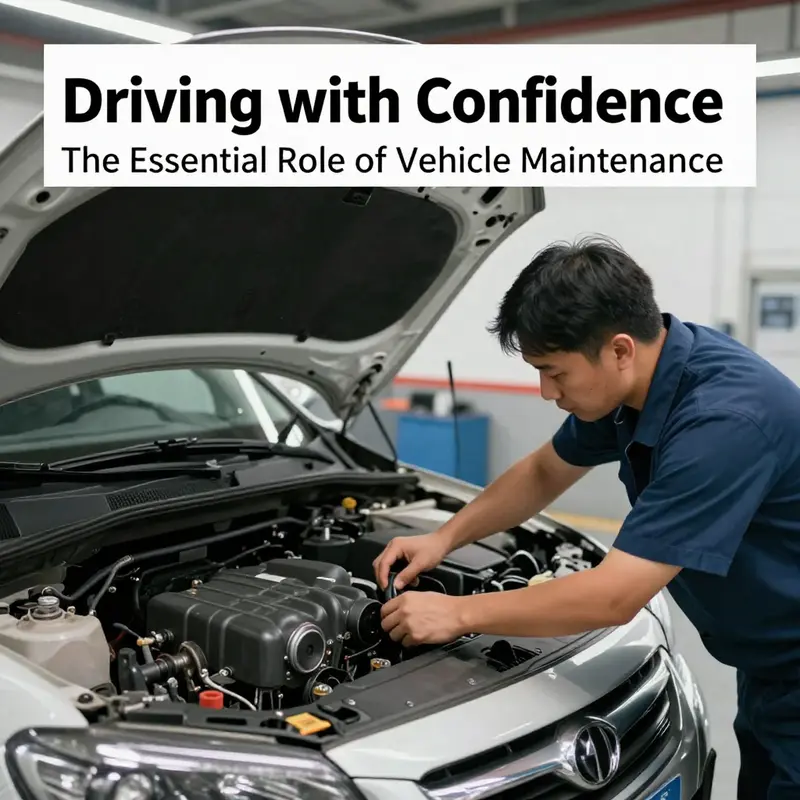
In conclusion, regular vehicle maintenance is not merely a suggestion; it’s an imperative for business owners who value safety, performance, and legal compliance. Implementing a routine maintenance schedule not only helps mitigate risks of accidents and mechanical failures but also ensures vehicles remain legally compliant and operate efficiently. Understanding the significance of vehicle upkeep equips business owners with the knowledge needed to make informed decisions, ultimately fostering a reliable driving environment. Investing in maintenance is investing in a future of safe and sustainable business operations.