
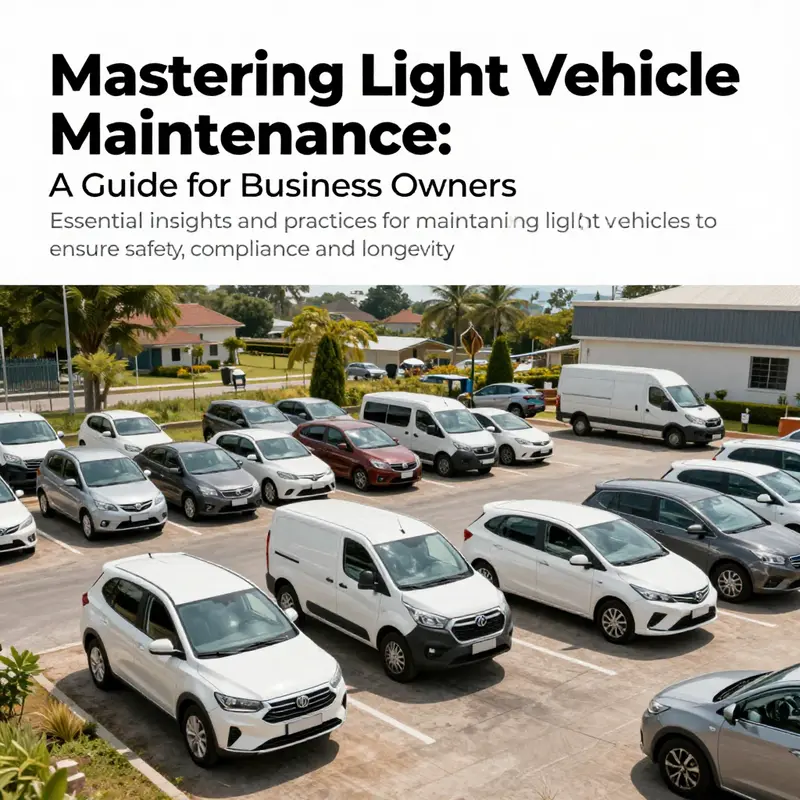
Light vehicle maintenance is critical for business owners managing fleets or service operations. Regular care of light vehicles, which include passenger cars, vans, and light-duty trucks, not only enhances safety but also promotes reliability and efficiency. As vehicles accumulate mileage, maintaining routine practices such as fluid checks, tire rotations, and systems inspections becomes indispensable. This article delves into the essential practices of light vehicle maintenance, outlines the regulations and standards that govern it, and explores its economic impact on vehicle longevity and safety, setting the foundational knowledge for effective management of vehicle assets.
Road-Kept and Ready: A Thorough, Integrated View of Light Vehicle Maintenance
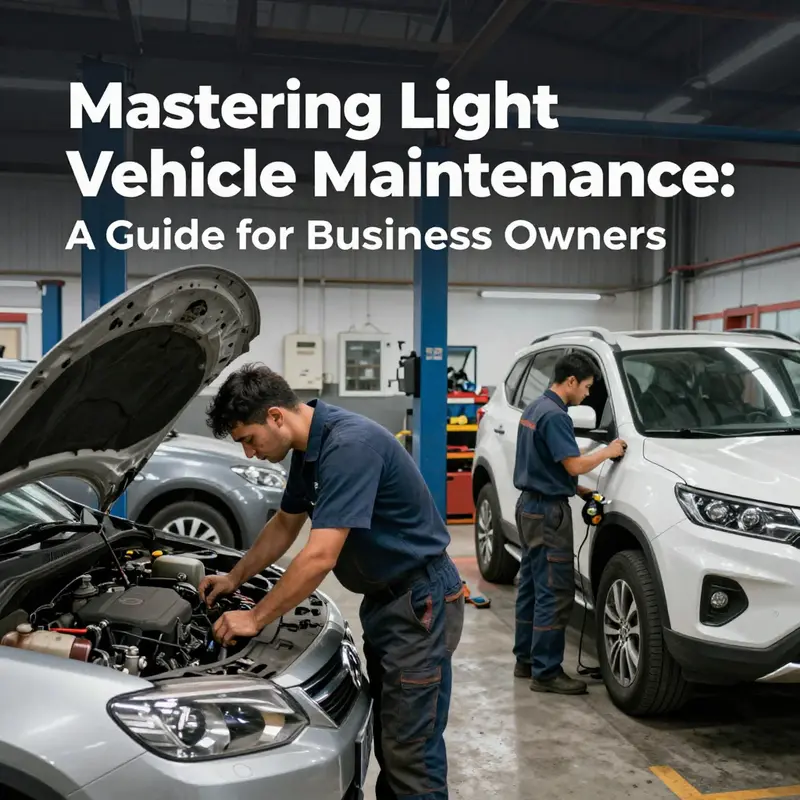
Maintenance is not a single task but a philosophy of care that keeps light vehicles—the cars, small vans, and light-duty trucks most people rely on—safe, dependable, and economical to operate. In practice, light vehicle maintenance is a continuous, proactive practice rather than a sprint to fix something after it fails. It encompasses routine inspections, timely servicing, and a disciplined approach to fluids, filters, tires, braking systems, lighting, and electrical systems. When understood this way, maintenance becomes a shared responsibility that extends beyond the mechanic’s bay to the driver’s daily habits and the fleet operator’s scheduling discipline. At its core, maintenance aims to preserve performance, minimize unexpected downtime, and extend the vehicle’s useful life. It does this by addressing the invisible factors that accumulate over miles and seasons—heat and cold cycles, dust and salt, and the subtle wear that accrues in small, cumulative amounts rather than in dramatic one-off failures. The result is a vehicle that responds with consistent throttle, predictable handling, and steady fuel economy, all of which contribute to safety, reliability, and long-term cost control.
Light vehicles are typically described as having a gross vehicle weight rating (GVWR) of up to 3.5 metric tons, which covers the majority of passenger cars, SUVs, small vans, and light-duty work trucks used on public roads. This designation matters because it helps define applicable maintenance standards, service intervals, and regulatory expectations. While there is a long tradition of manufacturer recommendations and automotive industry guidance, the practical essence of light vehicle maintenance is simple: keep the engine and the critical systems in good order so the vehicle does what you expect, when you expect it, with as little drama as possible. That simple aim hides a broad set of tasks, all of which reinforce each other. When one element—the engine oil, for example—is kept healthy, it helps the engine tolerate detours in temperature, road conditions, and driving styles. When tires are properly inflated and tread is sufficient, steering response and braking feel stay consistent. And when lights, wipers, and visibility aids are maintained, the driver’s awareness and the vehicle’s ability to communicate intent to other road users remain intact.
The most familiar and foundational practice is changing engine oil and the oil filter on the recommended schedule. This is one of the most fundamental aspects of maintenance because clean oil lubricates, cushions, and cools the moving parts inside the engine. Over time, oil degrades and collects contaminants. The consequences of neglect can include increased friction, overheating, and accelerated engine wear. A seasoned technician often emphasizes the importance of starting the process with a prepared routine: warm the engine for a few minutes before draining old oil. That modest heating helps the old oil flow more freely, carrying out debris and improving the effectiveness of the service. The interval itself is not arbitrary. For normal driving conditions, a range of roughly every 5,000 to 7,500 miles is common, but this can tighten in severe environments—extreme heat, dusty or dirty roads, or frequent short trips that prevent full engine warmup. The exact interval is best defined by the vehicle’s owner’s manual and a technician who understands the actual operating conditions the vehicle experiences.
That routine oil care sits at the center of a broader maintenance ecosystem. Tires, for example, are the other critical interface between the vehicle and the road. Progressive wear and improper pressures distort a vehicle’s handling and efficiency. Checking tire pressure at least once a month, and before long trips, is a low-cost, high-impact habit. Underinflated tires increase rolling resistance, which raises fuel consumption and heat buildup, while overinflated tires can reduce grip and produce uneven wear that undermines safety. Beyond pressure, tread depth is the driver’s primary contact with the road in wet or snowy conditions. A simple test with a gauge or a coin—though many drivers rely on a quick visual—helps ensure that tread remains above a safe threshold. Tires are a capstone of handling and stability; when you couple good tires with appropriate rotation schedules, you distribute wear evenly and preserve cornering confidence and braking performance.
Brakes represent another safety-critical arena that deserves quiet, attentive maintenance. Routine inspection of pads, rotors, and fluid levels is essential, and signs of trouble are often subtle. Squealing or grinding noises, a soft or spongy pedal, or reduced braking responsiveness should trigger prompt attention. Braking systems are not just about stopping power; they’re about predictable response and consistent pedal feel, both of which reduce the likelihood of an abrupt roadside event. In a broader sense, brake maintenance intersects with tire condition and suspension health. All contribute to a vehicle’s ability to slow, steer, and regain control under diverse conditions. Insurance against surprises in braking is not a luxury; it’s a core safety requirement that drivers should internalize as part of their daily checklist.
The cooling system, too, deserves vigilant attention. Regular checks of coolant levels, hoses, and belts help prevent overheating, which can lead to catastrophic engine damage. The cooling system operates at a delicate balance: too little coolant, and the engine overheats; too much air in the cooling circuit, and the system loses efficiency. Regular inspections ensure hoses are supple, clamps are secure, and belts remain free of cracks or glazing. These components operate in concert with the radiator, water pump, thermostat, and fans to maintain a stable operating temperature—a prerequisite for engine longevity and reliable performance across the seasons.
Beyond the mechanical heart, maintenance breathes through the vehicle’s fluid matrix and filtration system. Fluid checks extend beyond coolant and oil to include brake fluid and transmission fluid. These fluids perform critical roles: brake fluid transmits force through the hydraulic system and resists moisture buildup that can undermine braking performance, while transmission fluid lubricates and cools complex gear sets and torque converters. Fluid health is not merely a matter of levels; color, transparency, and odor reveal contamination or breakdown. When a technician tests and reviews these fluids, they assess whether a flush or a simple top-up is needed to sustain smooth shifting and reliable braking.
Filter replacements are a quiet but essential act. Air filters prevent dust and debris from entering the engine’s combustion process, preserving efficiency and power. Cabin air filters improve the air quality inside the vehicle, which matters for comfort and long-term occupant health. Fuel filters, although less frequently changed on many modern spark-ignition engines, protect sensitive fuel-injection components from contaminants. Each filter’s condition tells a broader story about the vehicle’s operating environment, and neglect here can undermine performance in ways that drivers might not immediately notice—a slight drop in power, a faint change in fuel economy, or unfamiliar engine noise.
Lights and the electrical system are not cosmetic concerns but practical safety features. Regular checks of headlights, taillights, turn signals, and interior lights ensure the vehicle remains visible and communicates intent to other road users. Electrical diagnostics can uncover corroded connections, aging fuses, or failing relays before they become inconvenient failures. In modern light vehicles, a cluster of warning lights on the dashboard acts as a diagnostic map. The most common ones—check engine, battery, and oil pressure—signal potential problems that, if ignored, can escalate into more costly repairs or unexpected breakdowns. Vigilance here is not about chasing every fault as soon as it flickers, but about recognizing patterns and responding promptly when something persists or worsens.
A practical maintenance cadence weaves all these elements into a single, repeatable rhythm. Vehicle owners and fleet operators alike benefit from documenting service visits, noting what was inspected, what was replaced, and why. Records provide a truthful record of the vehicle’s life and form the basis for informed decisions about when to service next, when to consider more extensive repairs, and how to budget for periodic expenses. This record-keeping is especially meaningful in fleets where uptime translates directly into productivity, and in personal ownership where total ownership costs depend on the balance of preventive maintenance against repair expenditures.
The narrative of maintenance is also a narrative of prioritization and time management. The simplest way to translate this into everyday practice is to integrate maintenance into routine driving life. It means recognizing warning lights as signals to pause and assess rather than to dismiss. It means approaching the car with a habit of monthly checks: a quick spin through the levels, a glance at tire pressures, and a sanity check of lights and windshield wipers. It means scheduling oil changes and inspections at the intervals recommended by the vehicle’s manufacturer but adjusting those intervals to match real-world usage and climate. If the driving involves extreme heat, salty roads, rough terrain, or short trips that never allow the engine to reach full operating temperature, maintenance becomes more frequent, not less important. The rationale is straightforward: a well-maintained vehicle tolerates unusual conditions better, recovers faster from loads and detours, and preserves performance you rely on when it matters most.
The interdependence of these tasks is part of what makes light vehicle maintenance both comprehensive and practical. For instance, a well-maintained oil system reduces fuel dilution and buildup of contaminants that can hamper sensor accuracy and fuel efficiency. In turn, better engine efficiency reduces heat stress and preserves life for metallic parts that wear gradually. The tire–brake–suspension axis often reveals how maintenance compounds, reinforcing why rotating tires on schedule helps equalize wear and stabilize braking performance. It is a cycle where attention to one component creates downstream benefits for others, a principle that holds true whether you own a car, a small van, or the light-duty truck that forms the backbone of a small business fleet.
For drivers who want to connect maintenance to cost and efficiency, the correlation is not merely theoretical. Routine maintenance, when executed consistently, lowers the likelihood of expensive, unplanned repairs, reduces fuel consumption, and minimizes downtime. The financial logic extends beyond the direct cost of parts and fluids; it includes the less tangible costs of time, inconvenience, and the risk of being stranded. In that sense, maintenance becomes a form of proactive risk management—an investment in performance reliability and peace of mind. This mindset aligns with the broader discipline of vehicle stewardship, which recognizes that maintenance is not a single event but an ongoing partnership among the vehicle, the driver, and the service professional.
In terms of practical guidance, the tradition of maintenance is reinforced by reputable technical standards and industry best practices. While the specifics can vary with vehicle type, engine technology, and climate, the central message remains consistent: be proactive, be informed, and be attentive. The everyday driver can carry out many of the most impactful checks with a modest toolkit and a routine that fits the vehicle’s operating profile. The professional technician complements this by handling more complex diagnostics, fluid analyses, and component replacements, ensuring that the vehicle’s mechanical, electrical, and control systems work in harmony. The synergy between owner-driven checks and professional service is what sustains a vehicle’s reliability across years and miles.
In synthesis, light vehicle maintenance is the disciplined practice of preserving performance, safety, and longevity through a balanced, proactive approach to the vehicle’s core systems. It requires not just technical know-how but a daily habit: to listen to warning signs, to verify essential measurements, and to respect the interwoven logic that links oil health, tire integrity, braking reliability, cooling efficiency, fluid conditions, filtration, lighting, and electrical stability. When drivers adopt this integrated outlook, maintenance stops feeling like a chore and becomes a practical framework for safe, efficient, and dependable mobility.
As a practical note for readers who want to deepen their understanding of how this maintenance philosophy translates into real-world choices, consider this: ongoing maintenance is deeply connected to fuel economy and overall operating costs. Maintaining a vehicle in good condition lowers friction, optimizes energy use, and helps the engine and transmission operate within their designed tolerances. For a concise perspective on how maintenance decisions translate into gas savings and efficiency, see how vehicle maintenance saves on gas expenses.
The journey of light vehicle maintenance is ongoing, not episodic. It invites curiosity, disciplined action, and a willingness to adapt to the vehicle’s story as miles accumulate, seasons change, and driving demands shift. The benefits, however, are tangible: more predictable performance, safer operation, fewer costly surprises, and a vehicle that serves well for the long haul. In the chapters that follow, we’ll explore how diagnostics, maintenance planning, and tailored checklists translate this philosophy into concrete, actionable routines for both individual drivers and fleet managers. The idea is simple and powerful: a well-maintained light vehicle is a reliable partner, ready to meet the road with confidence at every turn.
External reading and broader context can expand this practical understanding. For a broader context on routine maintenance, see Essential Car Maintenance Tips.
External resource: https://www.autoblog.com/2025/12/18/essential-car-maintenance-tips/
Regulatory Roadmap for Light Vehicle Maintenance: Understanding Standards that Shape Safe, Reliable Cars
Light vehicle maintenance sits at the intersection of daily care and formal regulation. It is not merely a routine of oil changes and tire checks, but a structured practice that regulators, manufacturers, and fleet operators rely on to safeguard safety, reduce environmental impact, and extend vehicle life. When we unpack what maintenance means in this regulated sense, we start to see how rules, standards, and best-practice guidelines translate into real-world service that keeps millions of passenger cars, small vans, SUVs, and light-duty trucks on the road each day. The scope of light vehicles, defined technically as those with a gross vehicle weight rating up to 3.5 metric tons, covers more than personal transport. It includes many work vehicles, delivery vans, and family SUVs that weave through cities and rural routes alike. Within this broad category, maintenance becomes a shared obligation among owners, technicians, manufacturers, and regulators. Understanding how these obligations are framed helps explain why certain service intervals exist, why inspections emphasize specific components, and why documentation matters as much as the act of servicing itself.
In the United States, the regulatory landscape is anchored by federal safety standards that set the floor for vehicle safety and environmental performance. The National Highway Traffic Safety Administration, or NHTSA, establishes federal motor vehicle safety standards (FMVSS) that define the performance and design criteria necessary for critical systems such as braking, lighting, steering, and occupant protection. These standards shape what manufacturers must implement in new vehicles and influence maintenance practices by defining the components and systems that demand regular scrutiny. While FMVSS focuses on how vehicles must perform, maintenance standards translate those performance expectations into service realities. Regular inspections, fluid checks, and component servicing are framed as part of a broader commitment to safety and compliance. Individual states may layer in additional inspection requirements, such as annual or biennial checks, which can modify when and how often a given vehicle must be examined for roadworthiness. The result is a layered approach: federal baseline standards guarantee a nationwide safety floor, while state and local regulations address region-specific concerns, from emissions to glittering differences in inspection cadence.
Across the Atlantic, the European Union applies a parallel, but distinctly structured set of checks known as the technical inspection regime. In many EU countries, a vehicle undergoes periodic inspections—often called MOT in the United Kingdom or TÜV in Germany and equivalent bodies elsewhere—that verify safety and emissions performance. The criteria span the suspension and steering geometry, braking efficiency, lighting and signaling systems, and exhaust emissions. This regulatory approach reinforces the role of maintenance as a proactive, preventive discipline rather than a reactive one. In practice, a vehicle presented for inspection must demonstrate that wear and deterioration have not compromised safety or environmental performance. A compliant vehicle is not merely one that runs; it is one that remains within defined tolerances for critical systems and operates without excessive emissions. For fleets and service providers, this imposes a rigorous standard for the quality of maintenance work, the accuracy of service records, and the traceability of parts and fluids used during servicing.
The regulatory definitions of light vehicles, though internally straightforward, have broad implications for how maintenance work is planned, executed, and documented. The GVWR threshold helps professionals distinguish between light vehicles and heavier commercial equipment, ensuring that the standards most applicable to passenger cars and light-duty fleets guide the typical maintenance workflows. This clarity informs maintenance scheduling, personnel training, tool selection, and even the environmental considerations that accompany servicing. When a regulator defines “light vehicle,” it creates a predictable framework in which technicians operate, from the kinds of tests that should be conducted to the intervals for critical inspections and the level of documentation that must accompany each service. Manufacturers also lean into this framework. They publish detailed service manuals and maintenance schedules that reflect both the vehicle’s engineering design and the regulatory expectations for safety and emissions. Following these guidelines is not optional; it aligns with the expectation that the vehicle will remain compliant and perform as intended under normal operating conditions.
A core idea in this regulatory landscape is the emphasis on critical components. Brakes, tires, lights, and emissions-control systems are repeatedly singled out as priority areas for inspection and servicing. The brake system, for example, is not just about pad wear or rotor thickness; it is about maintaining reliable stopping distances and mastery of anti-lock braking system behavior under varied road conditions. Tire integrity and proper inflation influence braking, steering, and fuel efficiency, and regulatory bodies increasingly view tire maintenance as a shared responsibility of vehicle owners and service providers. Lighting and electrical systems affect visibility and signal communication—fundamental to safety—and emissions-related components are closely tied to environmental standards and regulatory testing. The maintenance routines for these components are not ad hoc; they are defined by manufacturer guidelines and reinforced by regulatory expectations to ensure consistent performance across the vehicle’s life cycle.
To translate these principles into everyday practice, we must consider both the inspections and the servicing that occur within a typical maintenance episode. Inspections are not decorative; they are structured assessments designed to identify wear, corrosion, misalignment, or part degradation before failures occur. Regular inspections cover a wide array of systems but concentrate on the most safety-critical ones. A technician will typically evaluate the braking system for pad and rotor wear, check the hydraulic lines for leaks, and verify the integrity of the parking brake mechanism. They will assess wheel bearings and suspension components for unusual play or degradation, test steering response, inspect tires for tread depth and tread wear patterns, and confirm that lighting and signaling systems illuminate correctly and respond to controls. In parallel, the service interval logic that many regulators and manufacturers endorse links maintenance timing to operator usage, environmental exposure, and observed wear, rather than relying solely on calendar-based schedules. This usage-based approach acknowledges that a vehicle used in harsh climates, with frequent stop-and-go traffic or heavy loads, will experience different wear patterns than a vehicle in mild conditions and light duty use.
The servicing portion of maintenance is equally precise. Critical components require servicing according to explicit procedures, often defined in the vehicle manufacturer’s guidelines. Brakes, for example, may require pad replacement, rotor resurfacing or replacement, and hydraulic system bleed as part of a standardized service protocol. Fluids—engine oil, coolant, transmission fluid, brake fluid, and others—are checked and replaced at intervals that reflect the vehicle’s design, operating environment, and weight of use. Filters—air, fuel, and cabin—must be replaced in accordance with specified service windows to preserve engine efficiency, indoor air quality, and overall performance. Battery health becomes a matter of proactive testing and replacement when necessary, protecting reliability in all seasons. And as electrical systems become more connected and more complex, checks of lighting, sensors, and control modules are increasingly routine parts of maintenance, not afterthought tasks.
The literature and regulatory resources emphasize that compliance is not only about passing a safety test at a given moment. It is about establishing and maintaining a reliable baseline through consistent maintenance that aligns with both federal and regional norms. For fleet managers, this means building maintenance schedules that harmonize with regulatory cadences while also reflecting the manufacturer’s recommended service intervals. A well-managed fleet will balance the cost of maintenance against the risk of noncompliance and the consequences of unexpected downtime. It will implement meticulous record-keeping practices that document each inspection, the parts and fluids used, the service performed, and the next due date. In the end, this is the kind of administrative discipline that regulators hope to see: verifiable proof that vehicles are being maintained according to standards designed to protect safety and the environment.
The role of guidance and standards bodies in this ecosystem is substantial. The Society of Automotive Engineers (SAE), for example, publishes technical standards that address the engineering, performance, and maintenance aspects of light vehicles. These standards provide developers, manufacturers, and service professionals with common reference points for quality and compatibility. They help ensure that a service performed on one vehicle can be understood and validated across the industry, enabling consistent outcomes across brands and markets. While the exact standards are technical and beyond a casual glance, their practical effect is clear: they undergird a shared language for maintenance, from diagnostic procedures to component testing, which in turn supports safer, more reliable vehicles on the road. The ubiquity of such guidance across manufacturers and service networks means that technicians can rely on a well-trodden path when diagnosing issues, performing preventative maintenance, and documenting work performed.
For those who manage vehicles in day-to-day life, these regulatory realities translate into concrete expectations. Understanding that maintenance is governed by standards can temper the impulse to defer service. It reinforces the idea that a scheduled oil change is not simply about the level of oil in the crankcase but about a broader assurance that the engine will continue to operate within design tolerances. It also highlights why it is essential to keep detailed records of all maintenance activities. If a vehicle is ever presented for inspection or for warranty considerations, the ability to demonstrate adherence to the prescribed maintenance plan can be decisive. The same applies to emissions testing, where proof of proper upkeep of the exhaust and fuel systems can determine whether a vehicle passes or fails, affecting both operational availability and environmental performance.
The implications extend to owners beyond the immediate safety or regulatory compliance. Regular, standards-aligned maintenance typically results in more consistent performance, better fuel economy, and longer vehicle life. An engine that is serviced on schedule, a braking system that is kept within specified tolerances, and a cooling system that maintains stable operating temperatures all contribute to reliability and lower total cost of ownership over time. Conversely, neglecting maintenance in the context of regulatory expectations can lead to accelerated wear, reduced efficiency, and higher risk of penalties or failed inspections. In other words, the regulatory framework is not an abstract constraint; it is a practical guide that helps owners avoid preventable problems while safeguarding others who share the road.
In discussing these frameworks, it is useful to remember that maintenance is not a one-size-fits-all proposition. The precise requirements can vary by country, state, or region, reflecting local conditions, regulatory cultures, and environmental priorities. What remains constant is the fundamental logic: frequent, thorough inspections; servicing of critical systems according to manufacturer and regulatory guidance; rigorous documentation; and an ongoing commitment to safety and environmental stewardship. This logic is what makes light vehicle maintenance both a personal responsibility and a systemic obligation. It binds together owners, technicians, fleet operators, regulators, and manufacturers in a continuous cycle of care that keeps vehicles safe, reliable, and compliant as they traverse roads every day.
To illustrate how this plays out in practice and to reinforce the idea that knowledge of regulations supports better maintenance decisions, consider the narrative of a typical service event that a certified technician might supervise. The process begins with a documented inspection plan tailored to the vehicle’s age, usage, and regional regulations. The technician reviews the vehicle history, notes any recurrent issues, and conducts a visual and functional assessment of critical systems. Brakes are measured for pad and rotor wear, the brake fluid is tested for moisture content, and the hydraulic lines are checked for leaks. The tires are rotated and balanced, and tread depth is measured to ensure even wear and optimal grip. Lights and signaling devices are tested for brightness, alignment, and proper operation. The emissions-related components undergo checks for sensor function, catalytic converter integrity, and exhaust leaks. Engine oil and other fluids are tested or measured for contamination and proper levels, with replacements performed according to the manufacturer’s schedule. Cabin air filters are replaced to protect interior air quality, and engine air filters are changed to maintain air intake efficiency. Battery health is assessed through voltage tests and load testing, and charging systems are evaluated for reliability. Throughout this process, the technician documents every action, making note of parts replaced, fluids used, and the next due maintenance date. This record-keeping is not merely bureaucratic; it forms the documentary backbone that supports regulatory compliance and future maintenance planning. The vehicle then proceeds to the next steps, which may include a test drive to verify that all systems respond as expected and to confirm that no issues remain evident. If the vehicle passes, the owner receives a clear summary of work performed, reminders for upcoming maintenance, and access to the vehicle’s updated maintenance history. If a concern is identified, the technician will provide guidance on necessary repairs or further inspections and adjust the maintenance plan accordingly.
Within this continuous cycle, the role of the operator or owner cannot be overstated. Responsible care requires scheduling maintenance in alignment with regulatory expectations and the vehicle’s operating context. A fleet manager, for instance, must balance the cost and downtime of service with the risk of noncompliance and safety concerns. They may implement a preventive maintenance program that uses usage data, regional regulatory timelines, and OEM recommendations to determine when to service or replace components. Such programs rely on reliable data, which is why documentation and traceability are central to the overall approach. The ability to track when a part was installed, the mileage at replacement, and the service intervals achieved offers a powerful lens for improving reliability, optimizing downtime, and meeting regulatory reporting requirements. In the long run, these practices contribute to a more predictable maintenance ecosystem where the cost of ownership is more manageable and the vehicle’s life cycle becomes easier to plan around.
The relationship between regulation and maintenance also has environmental dimensions. Emissions-related checks, proper disposal of used fluids and parts, and the adoption of newer, cleaner practices in service bays are all embedded within regulatory expectations. Standards bodies and regulators often emphasize that maintenance should support not only safety but environmental protection. This means that maintenance decisions—such as when to replace a component or what fluids to use—are influenced by broader environmental criteria. It is a reminder that maintenance is a form of stewardship: a responsibility to minimize pollution, reduce waste, and optimize fuel efficiency across the vehicle’s life.
As readers consider how these ideas translate into their own driving or fleet management, a practical takeaway emerges. Knowing that maintenance is regulated and standardized helps frame the expectations for service quality and timing. It also supports informed conversations with service providers about compliance, documentation, and the quality of work. In this sense, understanding the regulatory roadmap is not esoteric knowledge reserved for compliance officers; it is a core competency for anyone who wants to keep light vehicles safe, efficient, and durable over time. If you are exploring maintenance from a broader perspective, you may find it helpful to review resources that summarize how maintenance principles fit within regulatory and industry frameworks. For instance, you can explore more about vehicle maintenance at what is vehicle maintenance, which offers foundational insights into the everyday practices that underlie the standards discussed here.
In conclusion, the regulatory road map for light vehicle maintenance is a guide rather than a rigid set of rules. It reflects the shared aim of safety, reliability, and environmental responsibility. By aligning maintenance practice with FMVSS and EU inspection criteria, manufacturers’ maintenance guidelines, and industry standards, owners and technicians translate complex regulatory discourse into measurable, defensible, and repeatable service outcomes. This alignment helps ensure that every inspection, every fluid change, and every replaced part contributes to a vehicle that remains roadworthy, efficient, and compliant across its usable life. The result is a better experience for drivers, a safer road environment for all users, and a more sustainable path for the broader automotive ecosystem. As the landscape evolves with new propulsion technologies, connected systems, and evolving environmental targets, the commitment to maintenance as a standards-driven discipline will continue to shape how light vehicles are cared for, leaving a clear imprint on road safety and responsible stewardship for generations to come.
External resource: For formal standards and technical guidance, see SAE’s official standards on light vehicle maintenance at https://www.sae.org/standards
Maintenance as Momentum: How Light Vehicle Upkeep Shapes Longevity, Safety, and Sustainability

Maintenance is more than a routine box to tick; it is the quiet driver of performance, reliability, and responsible ownership. When we speak of light vehicles, we refer to passenger cars, small vans, SUVs, and light-duty trucks whose gross vehicle weight rating (GVWR) sits at or below 3.5 metric tons. In this sense, maintenance becomes a continuous conversation between the vehicle and its owner, a dialogue about keeping moving parts coordinated, fluids at the right levels, and the electrical and braking systems aligned with the stresses of daily use. The maintenance cycle is not a generic prescription but a tailored discipline that depends on the vehicle’s design, its operating conditions, and the expectations of safety and efficiency. The practical work—oil changes, tire rotations, brake inspections, and fluid level checks—forms a backbone, but the deeper value lies in how those tasks translate into safer roads, lower costs over time, and a smaller environmental footprint. For readers who want a crisp definition of maintenance itself, a concise overview is available at What is vehicle maintenance, which helps anchor the broader discussion in concrete terms.
From a broad perspective, light vehicle maintenance sits at the intersection of safety, economics, and sustainability. It is the set of actions that preserves the essential interfaces between engine, transmission, suspension, steering, and the electrical system. Regular oil changes, for instance, aren’t just a reminder to drain and refill; they protect the engine’s internal surfaces, maintain lubrication efficiency, and reduce the risk of abnormal wear. Tire care—pressure checks, balancing, and rotation—helps maintain handling, fuel efficiency, and even tire life. Brake system inspections catch wear before it becomes a hazard, preserving stopping power and steering control. Fluid checks for coolant, brake fluid, and transmission fluid ensure that critical pathways and heat management do not fail under load. Filters—air, fuel, and cabin—play a subtler but equally important role by preserving air quality, fuel efficiency, and engine corrosion resistance. Lighting and electrical systems, often invisible until they fail, are a daily safety net for visibility and signaling. Taken together, these tasks create a feedback loop: well-maintained components tend to operate smoothly, predictably, and safely, reducing the chance of unexpected breakdowns that disrupt schedules and compromise safety.
Economic reality frames maintenance not as an expense but as an investment with a measurable payoff. Regular upkeep reduces the likelihood of minor issues ballooning into major repairs, thereby extending a vehicle’s useful life. This logic translates into a lower total cost of ownership over the vehicle’s lifecycle. In practical terms, preventive maintenance helps preserve resale value and can lower insurance costs, since well-maintained vehicles are statistically less prone to risky failures. The financial logic is reinforced by research into lifecycle costs. In studies led by K. Danilecki (2023), the finding that maintenance and repair can account for nearly half of cumulative life cycle costs—depending on replacement policy—highlights the strategic position preventive care occupies in a fleet or personal ownership plan. In other words, delaying maintenance is a bid to save a few dollars today at the risk of compounding expenses tomorrow. The implication is clear: preventive maintenance isn’t simply a cost control measure; it is a financial discipline that aligns short-term budgeting with long-term reliability and value.
Safety is the most immediate, tangible benefit of steady upkeep. A well-maintained vehicle is less likely to experience sudden mechanical failures that could lead to dangerous outcomes on a highway or a residential street. The brake system that is inspected and refreshed as needed, the tires kept at optimal pressures and tread depth, the lights and signaling devices functioning correctly, and the cooling system that maintains engine temperatures within safe limits—all of these elements cooperate to keep a vehicle responsive in emergencies and predictable in routine driving. When maintenance routines are omitted, the risk of near-term failure rises, and with it the potential for accidents that affect not only the vehicle operator but other road users. The safety argument is reinforced by durability. A vehicle whose critical systems are kept within design specifications is more likely to respond consistently under the stresses of varied weather, road surfaces, and load conditions. The result is a road environment where accidents are less likely to occur because a component failed at a critical moment, rather than due to a preventable maintenance lapse.
Sustainability is an increasingly central frame for maintenance philosophy. Extending a vehicle’s longevity reduces the rate at which new vehicles are manufactured and deployed. Fewer replacements mean fewer raw materials extracted, fewer manufacturing emissions, and lower energy use across the supply chain. For fleets and individual owners alike, longevity translates into durable utility while maintaining a lighter environmental footprint. Well-planned maintenance supports this outcome by keeping components functioning efficiently for longer periods, thereby reducing waste and resource consumption. The environmental argument integrates with the economic one: a longer-lived vehicle means a slower depreciation curve and a steadier investment that doesn’t force rapid churn in the market. In a broader sense, the maintenance decisions we make today contribute to how effectively the transportation sector can balance mobility with stewardship of natural resources and emissions. The idea is not simply to drive fewer miles, but to optimize the life cycle of each vehicle so that its productive years are used to their fullest without unnecessary early replacement.
To ground these reflections in practical terms, consider the routine maintenance program as a living protocol rather than a checklist. The typical tasks—engine oil changes, tire rotation and pressure checks, brake system inspections, and fluid level monitoring—are not isolated acts. They are connected to a larger web of decisions about when to service, how to inspect, and what parts to replace. The quality of the service matters as much as the schedule. A clean oil change performed with the correct viscosity and filter, a brake inspection that tests pad wear and rotor condition, or a coolant swap performed with the right concentrate and air purging can all influence car behavior in subtle but critical ways. A cabin air filter change, for example, improves interior air quality and the effectiveness of HVAC systems, while a fresh air intake filter can keep the engine breathing cleanly in dusty environments, reducing fuel consumption and emissions for a modest expense. These details accumulate over time, contributing to smoother operation, steadier performance, and a more predictable driving experience.
The maintenance conversation also has a fleet dimension. In professional and industrial contexts, light vehicles function as moving assets that must deliver reliability under varying duty cycles. Fleet managers monitor service intervals, track wear patterns, and analyze maintenance data to balance uptime with the cost of parts and labor. This operational perspective emphasizes that maintenance is not merely about preventing failures; it is about optimizing resource allocation, reducing downtime, and maintaining service levels in environments where schedules and routes are tightly choreographed. The regulatory and safety obligations that govern fleets add another layer of complexity, as standards from governing bodies and manufacturers set expectations for inspections, fluid service, and diagnostic checks. SAE standards and official manufacturer guidelines provide benchmarks that help ensure consistency and quality across diverse vehicle models, reinforcing the idea that maintenance is a professional discipline with defined best practices. The definition of light vehicle maintenance, as used in industry contexts, aligns with this professional framing: it is the systematic care and inspection of vehicles whose GVWR is up to 3.5 metric tons, intended to sustain performance, safety, and longevity.
If a reader seeks a practical touchstone for a concise yet comprehensive definition of maintenance, the linked resource What is vehicle maintenance offers a compact primer that complements the broader narrative here. The marriage of a clear definition with a deep dive into the lifecycle dynamics described above helps connect everyday care with long-term value. Beyond the personal car and family SUV, this approach applies to small commercial vehicles and light-duty trucks whose usage patterns may involve heavier loads, more frequent stopping and starting, or exposure to challenging weather. In all cases, the fundamental logic remains: consistent, data-informed upkeep reduces risk, preserves capability, and lowers the total cost of ownership over time. This is not an argument for hypervigilance or excessive servicing; it is a case for disciplined, informed maintenance that respects both the vehicle’s design and the realities of how people drive.
From a planning perspective, the decision to invest in maintenance begins with understanding how a vehicle is used. A vehicle that operates in urban traffic with frequent short trips experiences different wear patterns than one that drives long highway miles. Climate also matters—extreme temperatures, road salt, and dusty environments all accelerate certain forms of wear and corrosion. The maintenance plan that works for a vehicle in a temperate, low-mileage setting may need adjustments for a vehicle in a cold snowy climate or a desert environment. In all cases, the aim is a proactive rhythm: anticipate wear, schedule service before it becomes urgent, and maintain good records so that the timing of future interventions is informed by history rather than guesswork. When owners or managers adopt this proactive posture, the benefits appear not only in the absence of breakdowns but in the steadiness of performance, the stability of operating costs, and the peace of mind that comes from knowing the vehicle is operating within its intended design envelope.
This discussion naturally leads to a broader reflection on how maintenance culture shapes the experience of owning and operating light vehicles. A culture that values preventive care tends to cultivate habits that support safety and efficiency. It becomes easier to justify routine inspections, to prioritize quality service, and to recognize that maintenance is a form of stewardship—of the vehicle, of the road, and of the resources that enable mobility. For readers who want a practical entry point into the maintenance dialogue, a concise definition and overview can be found at What is vehicle maintenance, which helps anchor the discussion within a broader, accessible framework. And for those seeking a deeper, research-backed lens on how maintenance affects longevity and safety, the MDPI sustainability study offers a thorough exploration of these consequences and their implications for policy, industry practice, and environmental accountability. The core takeaway is simple and powerful: investing in light vehicle maintenance is an investment in reliable transportation, safe travel, and a more sustainable future for road users everywhere.
External resource: https://www.mdpi.com/2071-1050/15/8/6427
Final thoughts
Regular light vehicle maintenance is not merely a checkbox; it is a vital aspect of ensuring that your fleet operates safely and efficiently. By implementing the best practices outlined, understanding the associated regulations, and recognizing the economic benefits, business owners can significantly enhance safety and reduce long-term operational costs. Prioritizing these maintenance routines not only protects investments in vehicles but also promotes a reliable transportation service. As you move forward, invest in comprehensive maintenance strategies to secure your business’s success.