
Understanding a vehicle’s maintenance history is crucial for business owners seeking to make informed decisions about their fleets. With the right information, you can avoid costly repairs and ensure operational efficiency. This guide explores effective methods for checking a vehicle’s maintenance history, including the use of reputable third-party platforms, querying original dealerships, collaborating with insurance companies, reviewing maintenance manuals, and combining these methods for a comprehensive overview. By exploring these avenues, you will be better equipped to assess vehicle reliability and uphold your business standards.
Unlocking a Car’s Past: Checking Maintenance History with a Trusted Third-Party Platform
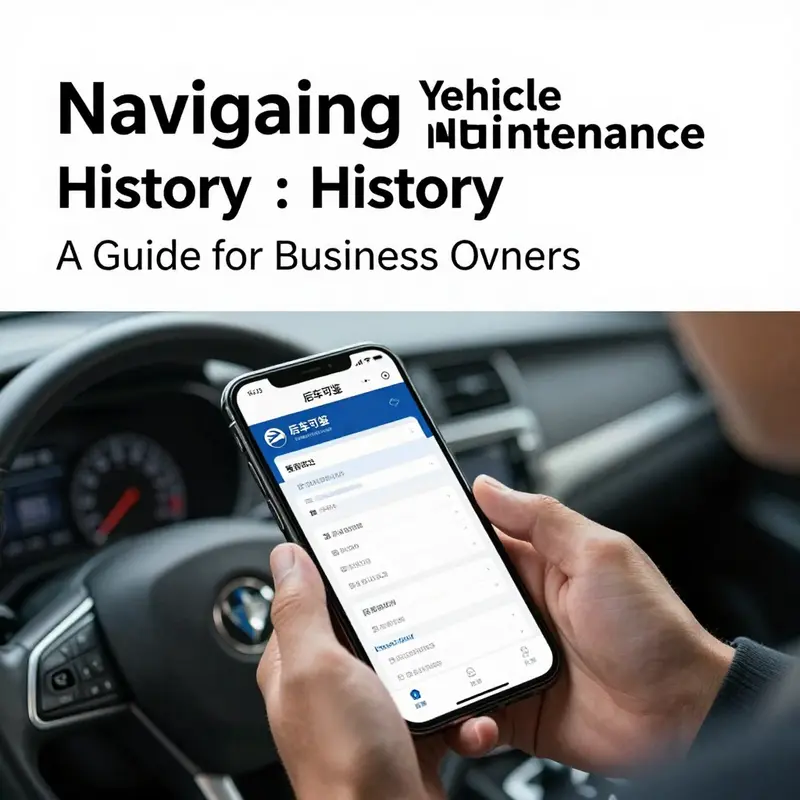
A vehicle’s maintenance history can be the difference between a confident purchase and a costly surprise. A trusted third-party history check acts like a panoramic lens, stitching together data from a broad network of service providers, insurers, and other record sources. The result is a coherent timeline that reveals not only routine care but also anomalies that might signal hidden trouble. The central idea is straightforward: feed the platform a unique identifier, and let it assemble a multi-source narrative that helps you understand how the car has been kept over the years. The most common identifier is the VIN, a 17-character code that travels with the car. You can usually find it on the vehicle registration certificate, or in the lower-left corner of the windshield. If you cannot access the VIN directly, some platforms let you upload a clear photo of the registration certificate and extract the number automatically. The value of this approach lies in breadth. These platforms pull data from thousands of sources—franchised dealer networks, independent repair shops, and sometimes insurers—so you see a picture that transcends any single shop’s receipts. That breadth matters because a car can accumulate maintenance and repairs outside the factory network, and those encounters are often the events that shape reliability downstream. Once you choose a platform, you access it on your mobile device or computer and navigate to the maintenance and repair history query function. The wording varies, but the goal remains the same: retrieve a complete maintenance narrative rather than a patchwork of invoices. You will be asked to enter the VIN precisely or upload a legible image of the registration certificate. It helps to double-check every character if you enter manually; if you upload a photo, ensure the registration details are readable. The system then processes the request, typically within minutes, and returns a report that reads like a well-organized dossier. Expect a chronological timeline that includes routine services like oil changes and tire rotations, significant repairs, and data points such as parts replaced and labor notes. Many platforms also flag broader context: whether the vehicle is under lien, has insurance claims, or bears markers for mileage tampering. This multi-source approach is especially helpful when you are evaluating a car for purchase or deciding whether to keep a vehicle going for several more years. The report’s value lies not merely in listing services, but in illustrating patterns. A cluster of brake- or cooling-system-related entries may signal wear patterns worth a closer look, while a long, uninterrupted run of regular maintenance suggests steadier long-term upkeep. The report also enables a buyer or seller to ground conversations in concrete data. Buyers can compare service intervals against manufacturer recommendations and assess whether a vehicle has endured a disciplined maintenance regime or a patchwork of ad hoc repairs. Sellers can demonstrate transparency by sharing the report in the listing, helping to speed negotiations and build trust with prospective buyers. The ability to view accidents or insurance-related events alongside routine maintenance provides a fuller risk assessment than maintenance logs alone. It is the kind of context that translates into informed decision-making, especially in markets where ownership histories vary widely in how well they are documented. However, it is important to recognize limitations. No single source captures every service event, especially work performed at smaller independent shops that do not participate in a data-sharing ecosystem. The resulting report is a highly valuable baseline, but it may not tell the entire story. With that in mind, cross-checking remains prudent. If possible, you can corroborate the history with the original brand network’s records and compare the findings with the owner’s manual entries to gauge whether the documented care aligns with recommended service intervals. The owner’s manual can serve as a personal, low-level record of care, indicating regularity and care that the owner saw fit to document, yet it often misses work done outside the primary network or not updated consistently. For those who want to frame the concept before diving into the specifics, a general overview of vehicle maintenance provides useful context about what regular care entails and why certain service actions matter over time. For a broader context on what maintenance entails, see this overview What is vehicle maintenance. The linked article helps you interpret the history report in light of maintenance expectations, turning raw data into actionable insight. This interpretive step is essential because a report is only as good as the reader’s ability to translate data into a plan. A clean bill of health on the page does not guarantee future perfection, but it does offer a strong baseline from which to forecast reliability and budget for anticipated upkeep. The speed and convenience of third-party history checks also deserve emphasis. In most cases you can obtain a detailed, professionally organized report in a matter of minutes, without visiting a dealer or a shop. You receive a multi-source history packaged with a readable narrative, often accompanied by a straightforward interpretation of the data, including notes about mileage integrity. This is particularly valuable in markets where service-provider data collection practices vary, and where a single source cannot guarantee completeness. Many buyers use the report as a guiding document during negotiations, while sellers leverage it to establish credibility and set fair expectations. Yet the real power of this approach lies in its integrative potential. A well-constructed history report complements other due-diligence steps, such as checking the manufacturer’s official service notes when accessible and cross-referencing the owner’s manual to understand the recommended maintenance cadence. The aim is to assemble the clearest possible picture from a mosaic of sources, not to rely on any single fragment of information. When you read the report, look for consistency—the alignment of maintenance intervals with the vehicle’s age and mileage, and the absence of red flags such as long gaps between services or repeated repairs in a short timeframe. Absence of red flags does not guarantee future reliability, but it does increase the odds that the vehicle has been maintained with care. If the report reveals anomalies—such as a string of major repairs clustered in one period—or shows confirmation of accidents or lien status, request the underlying documentation and consider a professional inspection to verify structural or mechanical implications. The practice of using a third-party maintenance history check should feel like arming yourself with a reliable map before a journey. It empowers buyers to negotiate more effectively, helps sellers set fair expectations, and gives owners a tool to monitor ongoing care. The report becomes more than a ledger of past activities; it can serve as a predictor of future performance when read alongside service intervals and the vehicle’s age. The core skill is reading data with discernment—recognizing patterns, spotting outliers, and using the report to inform, not merely to confirm, assumptions. For readers seeking a quick reminder of how to interpret a history report, remember that consistency matters. Regular maintenance at expected intervals, and the absence of large gaps, are signs of careful ownership. If a report flags anomalies like mileage irregularities or undisclosed incidents, pursue the underlying documentation and consider a professional evaluation. The conversation about vehicle history is not a one-off check; it is a continuous risk-management process that starts with a trustworthy history platform and ends with better decisions at the point of purchase or ownership. To further explore related topics about how maintenance data shapes ownership costs and decision making, see the deeper discussions in related articles that examine maintenance tracking and its impact on total cost of ownership. External resource: https://www.nhtsa.gov/
The Source at Hand: Directly Accessing Your Vehicle’s Maintenance History Through the Brand’s Authorized 4S Dealership
Direct access to a car’s service history from the brand’s authorized network is more than a convenience; it’s a window into the care the vehicle has received and the reliability you can expect going forward. When you’re evaluating a used car, this source is often the most trustworthy because it comes straight from the brand’s service ecosystem rather than third‑party summaries. The 4S dealership network—the brand’s official service centers—hosts a comprehensive digital ledger of every visit, every part, and every technician note tied to a given VIN. Accessing that ledger requires the right authorization, but the payoff is substantial: a precise chronology of service intervals, the exact components that were replaced, the labor notes associated with each repair, and the calibration details for systems that demand specialized setup. In many cases, the history also flags recalls, service campaigns, and whether the vehicle has been subject to mileage tampering or other integrity checks. For buyers, this is a powerful sanity check against seller claims; for owners preparing to sell, it’s a way to demonstrate transparent care and reassure a prospective buyer. The data is not simply a list of dates; it’s a narrative of how well the car has been maintained over its life, including subtle signals that might influence future reliability or the cost of ownership.
To begin a direct inquiry, locate the authorized service center that most recently maintained the vehicle or the one associated with the vehicle’s original purchase. If you are the prospective buyer, start with the dealership closest to the seller’s location or the one that historically serviced the car. Gather the essential identifiers: the VIN and proof of ownership. In many jurisdictions, the dealership will require documentation showing you are authorized to request the records. This can be a copy of the vehicle’s title, a bill of sale, or a written letter from the current owner authorizing access. Your approach may vary if the vehicle was originally purchased through, or consistently serviced at, a different brand’s network. The staff can then access their internal Dealer Management System (DMS), which stores the complete maintenance and repair history. It’s not something the public can browse; it’s shared with permission to protect privacy and to comply with data governance policies. In practice, the process can take several minutes to a few business days, depending on the dealership’s workload, the complexity of the records requested, and the tools they use. Some centers offer an online request form or a secure email process; others require you to visit in person to verify identity and ownership. If you’re a seller, preemptively securing this access in your name can speed up the transition by allowing a buyer to verify the vehicle’s care without delays. If you’re unsure where to start, a quick call to the brand’s official service line—or the service desk at the most recently used dealership—can confirm the exact documents you’ll need and the preferred method of submission. This initial step sets the stage for a transparent exchange and reduces the likelihood of gaps that could complicate negotiations later on.
When the dealership retrieves the records, you typically receive a detailed report that covers a range of data points. You’ll see service dates and mileages, notations about routine maintenance such as oil changes or tire rotations, and the specific parts that were replaced—down to part numbers when the system captures them. The labor performed is often itemized, including hours logged and the technician’s notes, which can reveal whether a service was preventive, corrective, or part of a larger recall or campaign. Brand‑level records also help you verify whether the vehicle’s maintenance aligns with the manufacturer’s recommended interval schedule and whether key systems—engine, transmission, brakes, cooling, and electronics—have stayed within expected service windows. If the vehicle was subjected to a recall repair, the 4S history will usually flag this, along with any subsequent service campaigns that may affect warranties or performance. You may even find notes about alignments, software updates, or calibrations that aren’t always easy to deduce from a seller’s records alone. For a broader framework of what maintenance history can include, you may want to explore the general article on maintenance knowledge linked above. The report often also includes mileage verification checks, which can be a crucial factor when assessing odometer integrity and the overall wear profile of the vehicle. This layer of detail helps you build a credible, data‑driven picture of how the car has aged and how well it has been cared for over time.
The value of clean, authoritative data extends beyond mere verification. It enables you to identify patterns that might influence long‑term ownership costs. For instance, repeated maintenance with the same type of parts can indicate the vehicle’s propensity for a particular wear item to need early replacement. Replacements tied to wear items—like brakes, timing belts or chains, or cooling system components—paired with precise service intervals, tell you whether the car has followed a predictable maintenance rhythm or if something unusual occurred between visits. You’ll also gain visibility into any software or system recalibrations that can affect performance and efficiency. If the history reveals extended gaps in service, that absence may signal a risk of undetected issues evolving into more serious repairs. Conversely, a consistently tight service timeline, especially when verified by the brand’s network, can bolster confidence in the vehicle’s overall condition. The narrative the history creates becomes a practical guide for the next owner, informing expectations around upcoming maintenance milestones and potential warranty considerations. To strengthen your understanding of how to interpret these findings, you can explore the linked overview on maintenance fundamentals.
In practice, the 4S dealership path harmonizes with broader due diligence. It complements third‑party history checks by anchoring the story in a source that is authenticated by the brand itself. Together, they reduce the risk that you’ll inherit undisclosed damage or negligent maintenance. If you’re navigating a purchase, plan to combine this direct inquiry with a thorough mechanical inspection and a careful review of any accompanying vehicle condition report. The goal is not to rely on a single source but to construct a layered, credible view of the car’s life—one that supports informed decision‑making rather than mere hopeful assumptions. As you integrate these insights into your evaluation, keep a clear record of every document you receive and every contact you make. This audit trail can prove invaluable should questions arise during negotiations or after the sale, and it lays a solid foundation for confident ownership.
To reinforce the concept of what maintenance history comprises, you can consult additional reading on maintenance fundamentals at the linked resource. For a ready reference that expands on this topic, see the short explainer linked above. This channel of information helps you anchor your expectations in a practical, repeatable process that you can apply across brands and markets. If you are preparing to engage with a brand’s 4S network, approach the interaction with a concise brief: identify the vehicle, confirm your ownership status, specify the records you want, and choose the retrieval method that suits your timeline. The transaction becomes less about paperwork and more about building a credible, well‑documented story of the vehicle’s life. This approach not only sharpens your negotiating position but also elevates your confidence as you step into ownership or into a new round of discussions with a potential buyer.
External resource: For a brand’s official service history lookup, see the external portal of a major automaker: https://www.toyota.com/service
Tracing the Insurance Trail: Verifying Accident and Major-Repair History Before You Buy
When you’re evaluating a used car, the accident and major repair history is a critical lens through which to judge value and safety. Direct access to a full, unfiltered claims record is generally restricted by privacy laws and data protection rules. Insurance companies maintain detailed histories, but those records aren’t publicly available, and even legitimate access often requires ownership, authorization, or a formal, privacy-compliant process. This reality isn’t a roadblock so much as a reminder to rely on trusted, regulated sources that aggregate and present data in a buyer-friendly way. The aim is to construct a clear narrative: what happened to the car, what repairs it underwent, and how those events might affect its future reliability and value. A well-assembled history helps you avoid unknowingly purchasing a vehicle with hidden trauma or recurring issues that could surface after you drive it off the lot. The path to that clarity lies in a careful combination of sources, rather than a single, isolated record.
One of the fastest and most informative routes is a third-party vehicle history report. These services compile data from multiple sources, including insurers, repair facilities, and government records, to create a comprehensive snapshot. A well-constructed report can reveal whether the car has been in a major collision, the severity of any damage, when and where it was repaired, and whether the title has any flags such as a prior salvage or lemon status. In addition to accidents and repairs, such reports often cover mileage inconsistencies, number of owners, and reported liens or seizures that could complicate ownership. The value of this approach lies in breadth: instead of piecing together fragments from various places, you receive a single, organized dossier that aggregates data points across systems. Yet no single source is perfect, and data can be incomplete or outdated. A cautious buyer uses these reports as a starting point and then cross-checks key findings with other available records.
If you have legitimate access or authorization, you can sometimes request information directly from the insurer that covered the vehicle. In practice, this pathway is limited by privacy protections and policy restrictions. When accessible, it may yield detailed details such as the exact date of an incident, the parts replaced, and the labor notes associated with major repairs. The upside is authenticity—data backed by the insurer’s own claim records, rather than a secondary compilation. The downside is scope: such direct inquiries rarely cover repair work done outside the insurer’s network or in independent shops. They may also require proof of ownership or a formal authorization process, which can slow down the decision-making timeline. For buyers, this means relying primarily on third-party histories while keeping the insurer route as a backstop if you can obtain it legally and efficiently.
Beyond insurers, integrated data platforms aggregate information from diverse channels, including dealership service records, repair shops, and public registries. These platforms improve completeness by filling gaps left by any one source. Real-world anecdotes illustrate their potential: a buyer who relied on a multi-source history uncovered an instance where a car had been declared a total loss in the past, a revelation that saved a prohibitive investment. In another scenario, a vehicle’s prior water damage surfaced through a consolidated report, enabling the buyer to pursue a replacement or price adjustment before committing. While these stories are encouraging, they also underscore the importance of corroboration. A clean report doesn’t guarantee future flawless performance, and a report with red flags should prompt deeper investigation. Use these platforms as part of a disciplined check rather than the final verdict.
When you’re assessing the value of a history report, plan your approach in advance. Start with the VIN, or, if it’s easier, the vehicle’s registration details, and obtain a current report from a reputable history provider. Read the section that covers accidents and damage carefully, noting the dates and the reported severity. Compare the reported repairs with any maintenance receipts you’ve seen from the seller or with the vehicle’s service history. Look for inconsistencies in mileage claims or gaps in service that could indicate tampering or neglect. If the report notes an ownership transfer, confirm that the vehicle’s odometer readings align with the seller’s stated mileage and any accompanying records. Red flags to watch for include multiple minor accidents clustered within a short period, repeated repairs of the same component, or a history of salvage titles that were not properly disclosed. These signals don’t automatically disqualify a car, but they do justify a more thorough mechanical inspection and perhaps a price adjustment to reflect risk.
In practice, you’ll often need to stitch together insights from several sources. The third-party history report provides the broad strokes—accidents, major repairs, title status, and notable claims. An insurer’s record, when accessible, can validate the accuracy of that data and add depth about exact parts and labor, while the dealership’s own service history can fill in day-to-day maintenance details that the broader report might gloss over. If there are discrepancies, request supporting documentation. Service invoices, workshop notes, and title records can help you determine where the truth lies and how it might affect your ownership experience. Even when the history appears favorable, a professional pre-purchase inspection remains essential. A qualified mechanic can verify the condition of critical systems, assess for water intrusion, corrosion, frame damage, or hidden wear that isn’t fully captured in history reports.
For readers seeking practical context on routine care and what consistent maintenance looks like, consider exploring an accessible explainer on vehicle maintenance concepts. What counts as standard upkeep, how service intervals are determined, and how to interpret maintenance entries in a history report all become clearer when you understand the baseline expectations for your vehicle type. You can learn more about these concepts here: what is vehicle maintenance.
Ultimately, the central message is that no single source tells the whole truth about a car’s past. Privacy protections ensure that insurers’ claims histories aren’t publicly disclosed in full, but a thoughtful combination of third-party history reports, any permissible direct insurer data, and localized service records can equip you with a robust, actionable picture. If something in the history raises questions, don’t push past the red flags. Ask the seller for documentation, request clarification from the reporting service, and seek out a professional inspection before finalizing any decision. The goal isn’t to chase perfect history; it’s to understand what risks you’re taking and how they might translate into reliability, safety, and value over time.
For readers who want a broader understanding of how to interpret these histories in the context of the vehicle’s lifecycle, consider the general guidance offered by consumer-focused resources on vehicle history reporting. They discuss what information is typically available, how data is compiled, and how to interpret reports in a balanced way. This external reference can complement the steps outlined above and help you navigate the decision-making process with greater confidence.
Reviewing the Owner’s Maintenance Manual as a Source for Maintenance History
A vehicle’s maintenance manual is more than a week-by-week checklist; it is a formal record of the road the car has traveled in terms of care, parts, and procedures. This chapter centers on treating the owner’s manual as a primary source for maintenance history, especially when paired with actual service records. The manual consolidates manufacturer-approved intervals, fluid types, torque specifications, and diagnostic procedures. It is a reference designed to optimize performance, longevity, and safety by setting standardized guidelines for upkeep. When a owner’s manual is used as a living document—augmented by stamped service entries and receipts—it becomes a verifiable narrative of how the car has been tended. This approach aligns with best practices in vehicle history assessment, where a complete picture often emerges when manual guidance is cross-checked with independent records and third-party data sources.
One of the most valuable aspects of the maintenance manual is its role in establishing a documented maintenance history. When service records are kept in conjunction with the manual’s guidelines—such as noting the date, mileage, and type of service performed—it creates a traceable trail of care that can be reviewed later for trends and compliance. This documentation is especially useful for identifying recurring issues, confirming that manufacturer-recommended intervals were followed, and supporting resale value or warranty claims. In many cases, manufacturers require compliance with specific service schedules to maintain warranty coverage, making the manual not just guidance but a contractual reference point. The manual’s dates and procedures provide a frame of reference for any maintenance dialogue with a shop or a potential buyer, strengthening the credibility of the car’s upkeep story.
Beyond the broad maintenance schedule, the manual contains system-specific details that help preserve safety and efficiency. For example, tire pressure monitoring systems (TPMS) are often covered in the manual, with explicit instructions on sensor checks, reprogramming, and thresholds for proper operation. When TPMS is managed according to the manual, the risk of misreadings, warnings, or failures drops, which in turn reduces the chance of tire damage or unsafe driving conditions. The same logic applies to other critical modules—brake fluid refresh intervals, transmission service guidelines, coolant replacement timelines, and filter change schedules. While this information is technical, it is precisely what technicians need to perform accurate inspections and align any work with the manufacturer’s expectations. Maintaining a consistent log of when and how these tasks were performed helps reveal patterns, such as a cluster of minor services around specific mileage markers, which could signal broader wear or parts that require closer attention.
The manual’s guidance on record-keeping naturally feeds into practical steps for owners and buyers. Start with the latest version of the manual from the manufacturer’s official channel. The reason is straightforward: manuals evolve as new service bulletins are issued or when design updates change recommended intervals. Access to the most current information minimizes guesswork during inspections or negotiations. In this regard, the manual functions as a living document that should grow with the car’s life. A well-maintained owner’s manual will show entries that clearly mirror the recommended service types—oil changes, filter replacements, brake inspections, and fluid top-offs—each with the corresponding date and mileage. When reviewing a used car, buyers should look for a correlation between the manual’s recommended maintenance windows and the actual service entries. Any gaps in the record are red flags that point to undocumented work or potential lapses in care.
Consulting the official manuals also guides interpretation of more nuanced records. For example, certain maintenance tasks are mileage-driven rather than time-driven, and some tasks depend on driving conditions. The manual explains these nuances, so a careful reader can assess whether a vehicle has received maintenance appropriate to its use. This is especially relevant when evaluating vehicles that have seen heavy-duty use, extreme climates, or frequent short trips. A solid manual-based history helps distinguish routine wear from unusual events, such as unexpected service delays or repeated corrective actions that might indicate underlying issues. The process becomes less about tallying visits and more about validating that each action aligns with manufacturer expectations and long-term reliability goals.
For buyers and sellers alike, the manual offers a framework for evaluating both maintenance discipline and additive value. A comprehensive manual-supported history—complete with documented services, consistent record-keeping, and alignment with the manufacturer’s recommended schedules—bears on resale value, as it demonstrates care and predictability. Conversely, a manual that is sparse or inconsistent can cast doubt on the vehicle’s maintenance story, even if other data sources suggest a clean history. This is why the manual should be treated as a cornerstone, not a standalone proof. When the manual is reinforced by third-party data, such as a vehicle history report or dealership logins, the combined picture becomes more robust and trustworthy.
To make the most of the manual without getting lost in its pages, approach it as a lens for interpreting service receipts and dealership notes. Cross-reference the manual’s suggested intervals with the mileage stamps on receipts. Check that oil change intervals match the type of oil and filter specified in the manual. Confirm that fluids specified by the manual—coolant, brake fluid, transmission fluid—were replaced within the recommended timeframes. If a replacement was flagged as “within spec” by a technician, verify that the exact part type matches the manual’s specification. This level of cross-checking can reveal whether an entry is a genuine maintenance action or a corrective fix that might have been misclassified. In short, the manual helps you distinguish planned care from reactive repairs.
A practical nuance often overlooked is the manual’s role in safety-critical checks. The manual may direct readers to inspect and recalibrate systems like TPMS or steering assist, which can be overlooked by casual records. When you read these sections, you gain the ability to interpret logs that mention sensor replacements, software updates, or system reboots as part of routine maintenance rather than as isolated repairs. This perspective matters because it reframes maintenance history from a simple ledger of visits to a cohesive story of proactive care and system integrity.
Finally, owners should view the manual as a living resource that supports ongoing care. Keep it in a central, accessible location for future reference. When you take the car in for service, ask for the technician to annotate the entry within the manual with notes or a stamp indicating the service date, mileage, and a brief description of the work performed. Doing so creates a synchronized record that future owners can trust. If you are purchasing a used vehicle, request copies of all pages where maintenance actions are logged and look for consistency between the manual’s instructions and the documented services. The goal is not to prove perfection but to confirm that the vehicle has been cared for in a predictable, manufacturer-aligned manner.
For readers who want a deeper dive into the concept of vehicle maintenance in general, you can explore a related resource that discusses the broader question, What is Vehicle Maintenance. This piece expands on how routine care translates into long-term value and reliability, and it helps readers connect the dots between the manual’s specifications and real-world service data. What is Vehicle Maintenance.
As you weave together the insights from the owner’s manual with third-party history data, dealership records, and insurance histories, you build a layered understanding of a vehicle’s past. This integrated approach—manual-guided history plus corroborating records—offers a more reliable foundation for decision-making, whether you are buying, selling, or simply maintaining your own car. The chapter’s aim is to demonstrate that the owner’s manual is not merely a reference book but a practical instrument for assessing the integrity and care of a vehicle over time. By honoring its guidance and documenting actions carefully, you safeguard both performance and peace of mind. For further context on how manuals interact with broader maintenance considerations, refer to official manufacturer resources and the practical examples discussed above. In the next section, we turn to how third-party history platforms and direct dealership inquiries complement the manual-based narrative, helping readers arrive at a well-supported conclusion about any vehicle’s history.
External resource for authoritative guidance: Honda’s manuals portal provides access to up-to-date manuals and maintenance guides from the manufacturer, ensuring users have the most current and accurate technical information. See https://www.honda.com/support/manuals for official materials.
A Multi-Method Odyssey: Building a Thorough Vehicle Maintenance History
When you’re evaluating a used car, a single source of truth rarely exists. The vehicle’s past is scattered across different systems, owned by different entities, and often incomplete. A robust due diligence approach thus becomes less about chasing a single document and more about stitching together a coherent narrative from multiple verified threads. A well-constructed history hinges on cross-checking data from brand-authorized records, a broad third-party data platform, insurers, and even the seller’s own documentation. This multi-layered strategy turns a potential risk into a clear, evidence-based assessment, reducing the chance of unexpected maintenance surprises after you sign the deal. It also helps you distinguish routine wear from red flags that could affect safety, reliability, or long-term value. The aim is not to chase perfect, but to converge on the most credible picture possible through thoughtful synthesis of diverse sources.
To begin, the most authoritative thread often lies within the brand’s own network. If the car has been serviced consistently at a specific brand’s authorized outlets, those 4S stores store records in their Dealer Management System (DMS). This data captures precise service dates, mileage at service, exact parts replaced (with part numbers), labor entries, and even technician notes. The granularity is typically far greater than what a single independent shop can offer. Access to these records is usually restricted to authorized owners or purchasers, or to individuals who can demonstrate ownership or legitimate interest. When access is granted, you’re not just seeing a list of visits; you’re glimpsing the car’s maintenance cadence in the language the manufacturer uses to describe its care. You can verify whether essential intervals—such as timing belt or chain replacements, brake fluid changes, or coolant service—occurred on schedule and used the correct parts. This chain of verification is invaluable because it anchors your understanding of whether the vehicle has followed the manufacturer’s recommended maintenance plan.
Yet brand-specific data, while powerful, is not complete in isolation. Cars often wander outside the brand’s network—into independent repair shops, quick-lube chains, or specialty garages. Here, a reputable third-party vehicle history platform becomes a pivotal bridge. These platforms pull data from thousands of service centers, insurers, and other sources to assemble a more panoramic report. The strength of such a platform lies in its aggregation: a single VIN query can reveal a longitudinal picture that includes routine maintenance and whether the car has undergone non-routine repairs, major rebuilds, or parts swaps that may otherwise be hidden in siloed records. Beyond maintenance entries, the report can flag incidents such as collisions, insurance claims, and even whether the vehicle is currently under lien or has been seized. The breadth of data helps you detect inconsistencies—like a predicted mileage trajectory that diverges sharply from the odometer’s history—and assess potential odometer tampering. Because the data set spans multiple data providers, gaps in one source may be filled by another, offering a more dependable basis for decision-making. When you rely on a third-party report, you gain a pragmatic, consolidated view of the vehicle’s past, which is especially valuable in markets where a car’s service history is irregular or fragmented.
The insurance trail offers another essential dimension. Insurance claims often reflect incidents that did not necessarily lead to routine maintenance entries. A significant accident, hail damage, or a major repair can be recorded long after or outside the brand network, and insurers keep their own records with details that can illuminate the vehicle’s history in ways that maintenance logs might miss. Contacting the insurer(s) with the VIN and proof of ownership or authorization can yield a claim history that clarifies whether the car sustained damage, the nature of the repair work, and the settlements or payouts involved. This information is especially important if the third-party report indicates a major repair or a potential frame or structural issue. Even when a repair was completed, the extent and quality of the work—and the parts used—can influence the car’s long-term reliability and resale value. The insurer’s perspective also helps you understand the severity of any incidents, which is crucial when weighing risk against price.
No source should be relied upon as the sole arbiter of truth, and the seller’s own records deserve careful scrutiny as well. A well-kept maintenance manual or a folder of receipts can be a valuable supplement, particularly for corroborating dates and service types. Look for entries that align with what you see in digital reports: oil changes at regular intervals, brake pad replacements, timing belt changes, and other manufacturer-specified services. While physical records are not as exhaustive as digital data, they provide a tangible trail and can offer context—such as whether the car was serviced by the same shop over many years, or if a seller has made a habit of documenting every minor service. Discrepancies between the physical receipts and digital histories are not unusual; they should prompt closer inspection rather than immediate discounting. The goal is to use these documents to validate the more comprehensive sources, not to replace them.
A further layer of verification can come from official government or traffic authorities. In some jurisdictions, central platforms or regional bureaus maintain records that can reveal ownership status, registration updates, outstanding fines, or other legal flags that might bear on the vehicle’s history and its current status. While these government records rarely focus on routine maintenance, they add a crucial layer of legal and fiscal transparency. Checking a vehicle’s legal standing helps prevent surprises such as unresolved liens, theft concerns, or regulatory actions that could impact ownership. In practice, this means using available official channels to confirm registration legitimacy, ownership chain, and any encumbrances that could complicate a sale or future transfer of title. Taken together, these data sources create a layered, corroborated narrative rather than a single, potentially misleading snapshot.
The recommended approach is intentionally multi-source and cross-verified. Start with a broad, authoritative baseline, which is most often found in the brand’s own service history if available. Then bring in the expansive view provided by a trusted third-party history platform to fill in gaps and present a more complete picture. After that, pursue an insurance history to uncover major incidents that might not appear in routine logs. Supplement digital findings with the seller’s physical records to add human context and ensure consistency. Finally, validate ownership and legal status through government or official channels to close the loop on any potential legal or financial red flags. This is not a sprint; it is a careful, multi-step process that builds confidence in your purchase decision by reducing blind spots.
For those who want to go even deeper, a practical pointer is to treat each data point as a cross-check rather than a standalone fact. If the third-party report shows a maintenance item that the 4S record does not, examine the vehicle’s age, mileage, and service intervals to determine which source is more likely to be complete. If an insurance claim appears without a corresponding 4S repair entry, consider whether the damage could have occurred in a non-brand facility or if a preventive measure was omitted. In some cases, you may find that one source is missing data due to privacy policies or restricted access. That is precisely why the cross-check matters: it helps you gauge where to probe further rather than accepting any single entry at face value. In this light, the history becomes a dynamic, evolving story—one that improves in clarity as you gather more corroborating evidence rather than as you collect more pages from a single source.
To deepen your understanding of maintenance as a practice and why it matters in history assessments, you can explore a dedicated resource that outlines what maintenance entails and why it sustains vehicle performance over time. This background helps you interpret the maintenance entries you encounter across different sources and informs your evaluation of whether the vehicle has received appropriate care. What is Vehicle Maintenance
In the end, the aim is not to prove a perfect record but to assemble a robust, cross-verified history that provides a clear view of past care, potential risks, and the vehicle’s roadworthiness. The most reliable path combines authoritative 4S records when available, the breadth of a reputable third-party history platform, insurers’ claim data, seller-maintained documentation, and official government records. When these threads are woven together, they form a coherent tapestry that informs your negotiation, risk assessment, and eventual decision. It is a disciplined approach to due diligence, not a checkbox exercise. By embracing the complexity of a vehicle’s past and patiently cross-referencing diverse sources, you transform uncertainty into a trustworthy basis for ownership.
External resource:
- Official source: https://weixin.qq.com/g/9dXp6ZKkzLbRvFJYqBQf
Final thoughts
Checking a vehicle’s maintenance history is an essential practice for business owners committed to maintaining a reliable fleet. By leveraging third-party platforms, direct communications with dealerships, assessing insurance records, and reviewing maintenance manuals, you can cultivate a thorough understanding of any vehicle’s background. Combining these methods not only enhances your decision-making process but also supports long-term efficiency and safety in your business operations. Investing in the right vehicles and ensuring their integrity through comprehensive maintenance checks is a critical step towards business success.