
For business owners, understanding vehicle maintenance costs is crucial for effective budgeting and operational efficiency. Whether you operate a fleet of traditional internal combustion engine (ICE) vehicles, electric vehicles (EVs), or a mixture of both, the expenses associated with keeping your vehicles in optimal condition can vary widely. This article aims to clarify these costs, with a detailed examination of maintenance expenses for ICE vehicles, EVs, and the key factors that influence these figures. By the end of this guide, you’ll have a clearer understanding of how to manage and anticipate vehicle maintenance costs, ensuring that your investments yield maximum returns.
Between Routine Checks and Major Breakdowns: The Real Cost of ICE Vehicle Maintenance
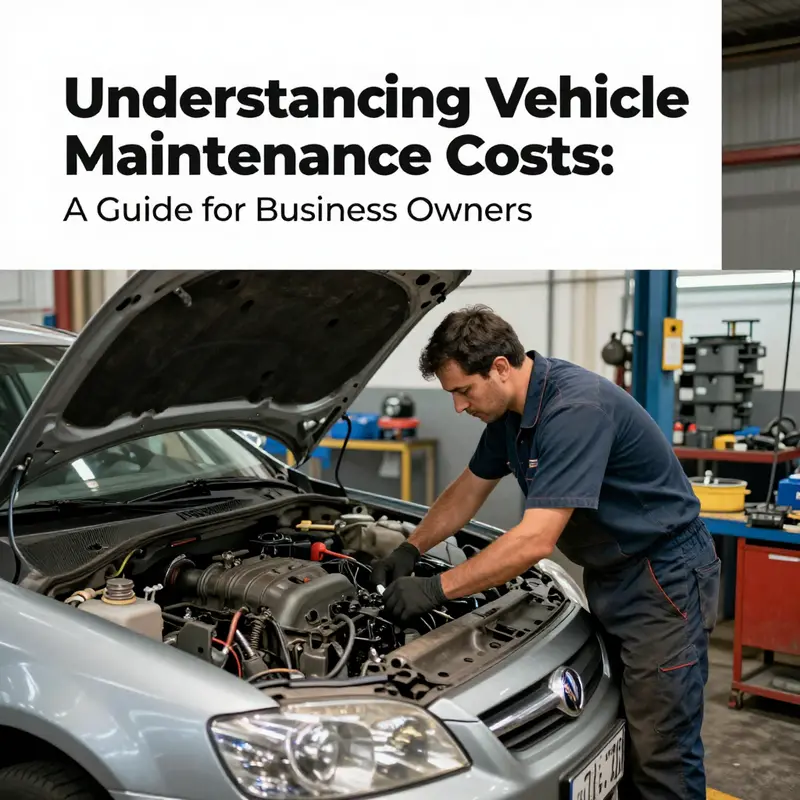
Maintaining an internal combustion engine (ICE) vehicle is a steady balance of routine tasks and unexpected glitches. The total cost of upkeep varies with the make, model, age, driving, and climate. There is a recognizable pattern: a modest annual cost for routine care, punctuated by possibly substantial jumps when parts wear out. The cost is the sum of small, ongoing expenses and occasional high outlays that can reshape ownership costs.
Routine maintenance sits at the heart of the ICE cost picture. It includes oil changes, air and cabin filters, spark plugs, brake pads, tires, and checks on the cooling system, belts, hoses, and exhaust. Oil changes are typically every five to seven thousand miles, with intervals extending for synthetic oils in some engines. The choice of oil matters; synthetic oil can cost more upfront but may reduce wear and extend change intervals in some cases. Routine costs are measurable and predictable in many markets, enabling budgeting, and when followed, engines run more efficiently with a lower risk of sudden failures. Yet routine does not mean free, and these costs accumulate over years.
Beyond routine, repairs can be high-cost events as ICE technology grows more complex. Transmission issues, timing belt/chain failures, catalytic converters, and electrical systems can lead to expensive repairs. A catalytic converter replacement can run from about $1,000 to $2,500, and transmission work can exceed $3,000. These are not everyday costs, but they become more likely as mileage climbs, underscoring the need for prudent budgeting and preventive maintenance.
Numbers help frame the scale, but context matters. In the United States, average ICE maintenance costs hover around $1,100 per year when accounting for routine service and occasional major repairs. Regional pricing and vehicle design can shift this picture, but the general message remains: maintenance is both a predictable annual expense and a potential source of large, irregular costs.
Practical budgeting begins with a strategy: align expectations with age and condition, treat maintenance as part of total ownership costs, consider warranty or maintenance packages where appropriate, and maintain disciplined upkeep to minimize surprises. Regular oil changes, timely filter replacements, and careful inspection of belts and hoses protect against expensive failures and contribute to better long-term costs. The relationship between maintenance and fuel economy is real: a well-tuned engine delivers better efficiency, reducing fuel costs over time.
For a broader view, readers can compare ICE maintenance with electric propulsion discussions to understand how total ownership costs differ. Although EVs promise lower routine maintenance, they introduce different risk profiles, especially around battery and high-voltage systems. Understanding both sides helps buyers weigh total ownership costs against upfront price.
External reference: Consumer Reports’ overview on vehicle maintenance costs provides updated figures and context for current ownership.
The Hidden Ledger of Maintenance: What Electric Vehicles Really Cost to Keep Running
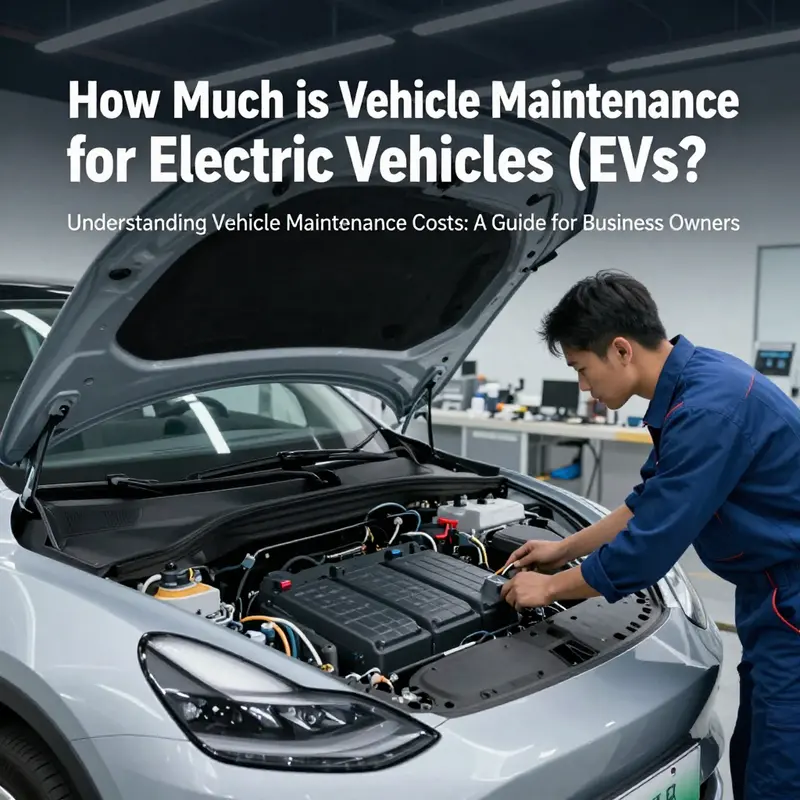
Maintenance costs are a critical, often overlooked part of owning a vehicle. Buyers tend to fixate on purchase price, financing, and fuel economy, but ongoing upkeep shapes lifetime affordability. With electric vehicles (EVs), routine maintenance is typically lighter, yet the high voltage systems and battery can drive expensive repairs. The net effect depends on where you live, how you drive, and which warranty protections you have.
EVs have fewer moving parts than internal combustion engine (ICE) cars: no oil changes, no exhaust system, and no spark plugs. This reduces routine service visits and many small costs. However, high voltage safety, battery diagnostics, and software updates require specialized labor and equipment, which can raise labor costs by a noticeable margin.
In the United States, Consumer Reports has reported that EV maintenance averages around a few hundred dollars less per year than ICE vehicles, though exact figures vary by model and usage. Over the life of the vehicle, these differences compound, making routine maintenance a meaningful driver of total cost of ownership.
Battery health and battery-related repairs are the big unknowns for EVs. While batteries are often covered by warranties, replacement can be extremely expensive and labor-intensive if the pack is damaged or degraded beyond warranty. The likelihood and cost of such repairs hinge on warranty terms, climate, charging habits, and driving patterns.
Beyond the battery, high voltage components, sensors, and power electronics can also drive expensive non routine repairs, though such events are uncommon for most owners. That said, when they occur, they can exceed typical service bills by a large margin.
To manage maintenance risk, prospective EV buyers should study warranty coverage for high voltage systems, plan for routine service (tire rotation, brakes, software updates), and consider a financial cushion for major repairs. A robust service network and parts availability also matter, because a well supported ecosystem helps keep routine costs predictable.
From a total cost of ownership perspective, EVs often win on routine maintenance, energy costs, and warranties, while ICE vehicles can still require significant repairs somewhere down the line depending on age and use. The strategic takeaway is to view maintenance as part of a holistic ownership plan: weigh routine costs, the probability of major repairs, and how those factors interact with purchase price, insurance, depreciation, and charging costs. If the landscape evolves with battery technology and repair networks, the maintenance calculus will shift accordingly.
The True Cost Engine: How Vehicle Design, Usage, and Market Forces Shape Maintenance Bills
Maintenance costs are rarely a fixed line item you can pencil in on a straight chart. They grow and bend with the vehicle’s DNA, how you drive it, and the market that quietly sets the price for parts, labor, and even repair options. When people ask how much maintenance costs, they’re often looking for a single number. What they really need is a living map of the forces behind that number. What this map shows is that the bill isn’t just about the engine in the hood or the miles on the odometer; it’s a composite of design choices, usage patterns, and the broader economic environment that surrounds the automotive industry today. In recent data drawn from real-world cost patterns, the spread is wide enough to alter a purchase decision as much as fuel economy or initial sticker price. For traditional gasoline-powered cars, average annual maintenance in a large market can hover around 2,600 yuan. A plug-in hybrid, promising a blend of electric drive and gasoline flexibility, might accumulate roughly 3,000 yuan in the first three years if driven to about 60,000 kilometers, averaging around 1,000 yuan per year over that period. A different example within the same category could push annual maintenance to around 1,500 yuan. These variations aren’t quirks; they reflect how the system scales with design, components, and the kind of wear you’re inviting on the road. And for electric vehicles, the picture shifts again. On average, EV maintenance sits lower, closer to 1,800 yuan per year, but the spread can be striking depending on what’s counted as routine versus what’s considered a repair. One electric car may need only a single annual inspection, with the first 60,000 kilometers costing a few thousand yuan in total, while another low-cost EV might run with annual costs well under a couple of hundred yuan. Yet the same family of vehicles carries a different kind of risk entirely: high-voltage components, battery packs, and the software-laden electronics that control them introduce the potential for catastrophic expenses if a major failure occurs. Replacing a battery pack after damage from a collision, for example, can exceed 10,000 yuan and in some cases run toward a substantial fraction of the vehicle’s original price. These numbers aren’t placeholders; they point to a structural reality in this era of “three electrics”—battery, motor, and power electronics—that governs maintenance risk just as surely as routine service schedules.
To understand why, one must see how the cost levers pull in different directions as soon as the vehicle leaves the showroom. Some of the most consequential factors are not about the model year or the odometer alone, but about the intrinsic design philosophy of the vehicle. Make and model, in a broad sense, sets the baseline for maintenance because premium brands tend to deploy more complex systems, more expensive materials, and more specialized labor. This doesn’t simply translate into a higher sticker price; it translates into higher parts costs and more time required for diagnosis and repair. The traditional concept of a “zero-to-one ratio”—the relationship between the sum of OEM parts costs and the vehicle’s new price—tends to tilt higher for luxury or performance categories. While a durable, economical compact may be cheap to fix in part because it relies on time-tested components, a high-end car can demand fewer minor fixes but a larger payout when something from the drive unit, chassis, or integrated electronics needs attention.
Engine displacement and age also shape maintenance. Bigger engines often carry more expensive components and oil-demanding lifecycles; more moving parts can mean more potential points of failure, and with age, wear compounds those risks. In parallel, as vehicles age, the probability of multiple simultaneous issues grows—compressing expenses not merely through one big repair but through a cascade of smaller fixes that accumulate over time. The aging curve isn’t linear; it’s a stair-step progression where a single failure can trigger a chain reaction, increasing shop time and the complexity of sourcing compatible parts.
Technology and complexity, in the current market, are perhaps the dominant variables. The modern vehicle is a network of electronic control units, sensors, and software modules that keep it running smoothly but also demand diagnostic tools, calibration, and firmware updates. The labor cost here is not just about the technician’s time but about the specialized knowledge required to interpret fault codes, interpret sensor data, and retrain or reprogram software to ensure proper integration across subsystems. The cost of maintenance follows the sophistication of electronic equipment, and this is a cost that can outpace the inflation of crude parts prices because it requires highly trained personnel, often with certifications distinct from conventional mechanical work. In a broader sense, the cost of maintaining electronic equipment in a vehicle mirrors the same trend seen in other high-tech industries: more capable systems come with higher per-task costs, particularly when the task involves diagnostics and repair that must be performed with precision.
Usage patterns, too, exert a powerful influence. The annual mileage is a simple metric with outsized effects. A vehicle that travels more each year accelerates the wear and tear on tires, brakes, and drivetrain fluids. High mileage translates into more frequent tire replacements, more frequent oil changes, and a higher likelihood of minor failures that cascade into bigger service needs. Driving conditions amplify this effect. City driving with constant stop-and-go traffic imposes repeated hard braking and thermal cycling on components and can stress transmissions in ways that highway driving does not. Extreme temperatures, frequent towing, or heavy payloads add layers of stress that push wear curves upward for suspension components, cooling systems, and electrical connectors. In short, the same model can demand very different maintenance budgets depending on whether it is used for short urban trips or long highway commutes, and whether the environment is hot, cold, or variable.
External market dynamics create another layer of variance. The choice between dealership service centers and independent shops often explains part of the bill. Dealerships typically rely on genuine OEM parts and adhere to manufacturer protocols, which may yield higher upfront costs but can also offer stronger warranties and a clearer chain of accountability. Independent shops may offer lower labor rates and greater access to aftermarket parts, which can significantly reduce costs but may carry with them questions about long-term reliability or compatibility in the context of newer, software-driven vehicles. The quality and sourcing of parts further complicate the financial picture. OEM parts carry a premium, but their guaranteed fit and intended performance can justify the price over the long run. Aftermarket parts vary widely in quality and durability, and while they can reduce initial costs, they may shift some of the risk of failure back onto the owner if they fail prematurely.
Insurance terms add another, subtler layer. Deductibles determine how much a driver pays out of pocket before a claim contributes to repairs, while coverage limits influence how much the policy will bear after a substantial failure. A higher deductible reduces the premium but raises the out-of-pocket cost in the event of a breakdown or accident. In practice, this means a driver who selects more expensive coverage may see lower effective maintenance costs after a major event, but the short-term outlay for routine service remains a separate line item in the annual budget. The interplay of service choices, parts sourcing, and insurance terms can tilt a maintenance budget by several thousand yuan over the life of a vehicle, especially when the risk of high-cost battery or high-voltage system repairs becomes a central consideration in the plan for ownership.
Among the most salient realities in the current landscape is the contrast between routine maintenance costs and the potential expense of major repairs, especially those involving high-voltage systems and battery packs. Routine EV maintenance, for many models, is relatively inexpensive compared to gasoline-powered cars; the annual price tag can be modest for smaller or simpler electric cars. But the high-voltage architecture is not a fixed-cost asset that depreciates with age; it is a set of systems where even a minor collision can precipitate a battery replacement if the damage compromises the pack’s integrity, safety systems, or thermal management. This is not to say EVs are inherently unaffordable to maintain; rather, it means the risk profile is different. When things go wrong in the battery, motor, or power electronics, the costs can be transformative. This dual character—low routine costs but potentially very high repair costs—makes EV maintenance a study in risk management as much as in budget planning.
To bring these abstract factors into concrete terms, consider how maintenance bills play out in practice. An ICE vehicle in a major market may yield a predictable baseline for routine service, but the monthly and yearly fluctuations are driven by wear patterns, driving behavior, and the availability of skilled technicians. A plug-in hybrid or a battery-electric vehicle can tilt that baseline downward for everyday maintenance, yet the tail risk of a major battery or high-voltage repair looms larger. The difference is not merely a matter of saving a few hundred yuan on an oil change; it is about the potential of a repair that can eclipse tens of thousands of yuan if the battery or the high-voltage system is involved. The essential takeaway is that maintenance cost is a dynamic sum—one that expands or contracts with the vehicle’s design philosophy, how it is used, and the economic context in which it operates.
This dynamic is why a practical approach to budgeting for vehicle ownership starts with understanding the underlying factors rather than chasing a single annual figure. If you own or plan to own a vehicle in a world where technology is rapidly evolving, you should expect that the cost envelope will be broadened by the complexity and integration of systems. You should also recognize that higher upfront costs for premium parts or specialized service do not automatically translate into poorer total cost of ownership. For some owners, the longer-term reliability and the more robust warranties associated with certain vehicles will offset higher recurring maintenance costs, while for others, the lower routine maintenance price of a simpler or less technologically dependent vehicle may be preferable even if that choice carries a higher risk of certain failures later on.
In practical terms, this means planning for maintenance should begin with a clear view of the vehicle’s design profile and the owner’s usage pattern. If early in ownership you expect high mileage in urban settings, you should prepare for more frequent tire changes, brake servicing, and potential electrical system checks. If you anticipate heavy loads or demanding operating conditions, you should account for faster wear of suspension components and cooling systems. For those eyeing electric propulsion, it is crucial to weigh the lower recurring maintenance against the possibility of a costly battery or high-voltage repair, and to factor in the availability and cost of certified technicians and genuine parts. The exercise is less about chasing a universal number and more about building a personalized budget that reflects the vehicle’s inherent design choices and the realities of how you drive and store it.
Along these lines, the broader takeaway ties back to practical finance and ownership strategy. Routine maintenance, particularly for conventional powertrains, remains a lever for controlling overall costs because it preserves component life and prevents escalating failures. For electric propulsion, routine checks remain important, but the heightened risk associated with high-voltage systems requires prudent planning—clear maintenance schedules, reliable service providers, and an understanding of the potential cost exposure should the battery or power electronics be compromised. The balance between these forces—lower daily costs versus higher potential catastrophic costs—shapes not just the annual budget but the long-term ownership experience. For readers seeking a concise cue about how regular maintenance can influence total fuel and running costs, it’s worth noting that disciplined upkeep often translates into better efficiency, fewer unscheduled repairs, and a more predictable cash flow over the vehicle’s life. See more on how routine maintenance translates into fuel savings and overall running costs here: how vehicle maintenance saves on gas expenses.
In the end, the chapter of maintenance cost is written by three intertwined actors: the car’s architectural DNA, the miles and modes of its journey, and the market’s ever-shifting price of care. A thoughtful owner negotiates with these actors by choosing a vehicle that matches their tolerance for risk and their budget for upkeep, by aligning driving patterns with wear profiles, and by selecting service paths that balance cost with reliability. The result is not a single number but a nuanced plan—one that recognizes that a high-cost-per-repair scenario can still be financially sensible if it’s paired with lower routine costs, stronger warranties, or better long-term reliability. It is this nuanced calculus that makes maintenance cost a more revealing measure of ownership than any isolated price tag. And as technology continues to embed itself deeper into driving, the conversation about maintenance cost will only grow more intricate, more data-driven, and more personal to each driver’s journey.
Final thoughts
In understanding vehicle maintenance costs, business owners can make informed decisions that greatly affect their bottom line. While traditional ICE vehicles typically incur higher annual maintenance costs compared to EVs, the latter presents unique risks associated with high-voltage components and parts replacement. By considering the specific needs of their fleet and the factors affecting maintenance expenses, business owners can optimize their operational costs and reduce the risk of unexpected repairs. Ultimately, strategic planning and regular maintenance can lead to significant savings and a more efficient fleet. Take control of your vehicle maintenance budget and ensure your investments propel your business forward.