
For business owners considering a hybrid vehicle for their operations, understanding maintenance requirements is crucial. While hybrids are celebrated for their efficiency and eco-friendliness, many myths surround their maintenance needs, particularly when weighing the benefits against traditional gasoline-powered vehicles. This article delves into four pivotal aspects of hybrid vehicle maintenance. We will first explore battery and electric system maintenance, assessing whether their longevity translates to ease or complexity for owners. Next, we’ll discuss the specialized components that hybrids possess, which can impact their upkeep. The nuances of regular charging for plug-in hybrids will follow, highlighting how charging practices can affect maintenance needs. Finally, we’ll provide a comparative look at routine maintenance, determining if hybrid vehicles indeed require more frequent service compared to their conventional counterparts. By the end of this exploration, business owners will be better informed to make decisions about incorporating hybrid technology into their fleets.
Guardians of the Hybrid Heart: Navigating the Battery, Brakes, and Electronics that Define Hybrid Maintenance
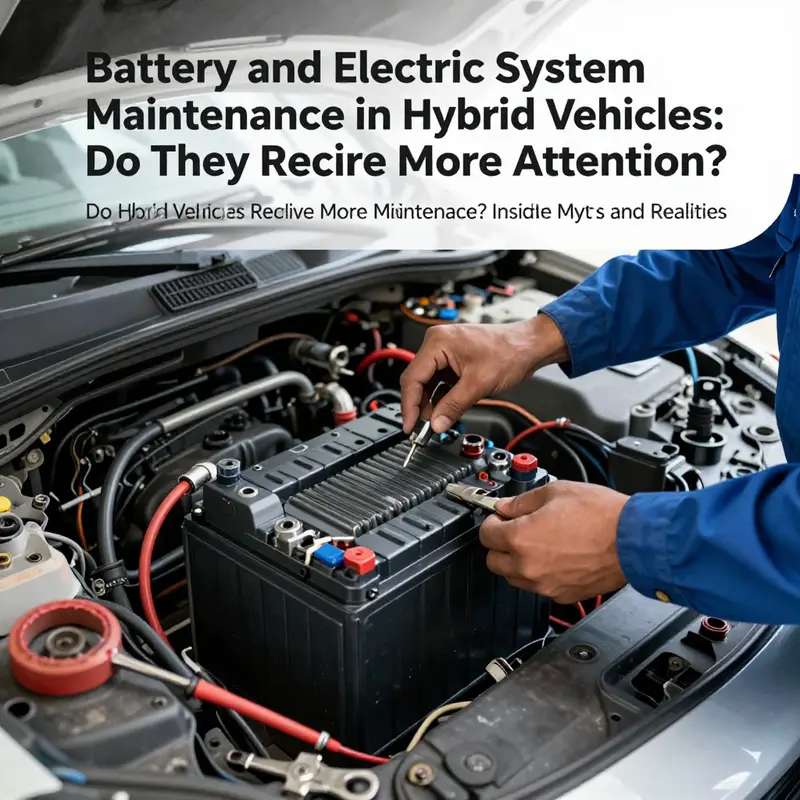
Hybrid vehicles fuse an internal combustion engine with an electric motor and a high‑voltage battery, a combination designed to maximize efficiency while preserving familiar driving dynamics. The question of maintenance for these vehicles often arises from the perception that electricity introduces a whole set of fragile components that could drive costs up. The reality is more nuanced. Hybrids do not inherently demand more routine maintenance than conventional cars; rather, they require attention to a different set of components—the battery, the regenerative braking system, and the integrated electronic controls that manage the interaction between two power sources. When viewed through that lens, maintenance becomes a matter of understanding the hybrid’s two-powertrain biology—how the battery ages, how energy recovery reshapes wear patterns, and how software keeps two powertrains singing in harmony. This focus does not diminish the importance of the familiar maintenance tasks—oil changes, tire rotations, brake inspections—but it does recalibrate what readiness looks like for a hybrid.
The battery sits at the center of the hybrid’s promise and its maintenance story. It is not merely a power reservoir but a living component whose health dictates how effectively the vehicle uses electric force, how smoothly the engine can engage, and how reliably it can sustain high‑temperature operations. Over time, factors such as temperature extremes, repeated short trips, or frequent deep discharges can tax battery health. As a result, technicians watch the state of charge, overall capacity, and the balance of individual cells with specialized diagnostic tools. Unlike conventional car batteries, which drivers often replace themselves or at least manage with straightforward checks, hybrid batteries require trained hands and the right equipment to inspect or service. This isn’t a reflection of lower quality but of the battery’s complexity and its safety requirements. Regular online diagnostics and professional evaluations become a meaningful part of hybrid maintenance, ensuring the battery remains within its expected performance envelope and that the system remains able to deliver the anticipated balance of fuel savings and power when needed.
The regenerative braking system is another area where maintenance takes on a distinctive character. Regenerative braking converts a portion of the vehicle’s kinetic energy back into stored electrical energy rather than dissipating it as heat in the brake rotors alone. This mechanism reduces wear on conventional brake pads, which can translate into lower brake maintenance costs over the life of the vehicle. Yet this energy recovery process also places unique demands on the braking system as a whole. Technicians inspect both the mechanical brakes and the electric‑drivetrain’s regenerative components to ensure they work in concert. The goal is not simply to prevent pad wear but to verify that the energy captured during deceleration is being correctly routed to the battery and that any interfacing software correctly interprets braking demand from the driver. When the regenerative system misreads a signal or a sensor drifts out of calibration, it can affect feel, efficiency, and even safety. Routine checks thus extend beyond pad thickness and rotor condition to include the health of sensors, wiring, and the software that governs energy flow.
No discussion of maintenance can ignore the electronic control systems that coordinate the hybrid’s dual power sources. The engine and motor must communicate with impeccable timing, and switching logic must respect state of charge, battery temperature, and driving conditions. Modern hybrids rely on a network of sensors, actuators, and control modules that run on software updated throughout the vehicle’s life. Software updates can improve efficiency or fix faults that manifest as subtle drivability issues or degraded fuel economy. Calibration of sensors—ranging from torque sensors to battery temperature readings—ensures the system maintains optimal performance. When a fault code surfaces, technicians must interpret it within the broader context of the hybrid’s operation, because a single code might reflect anything from a sensor drift to a transient communication glitch among modules. This is not a sign that hybrids are fragile; it is a reminder that the car’s brain is intricate, and care must be taken to keep it current and accurate. A well‑maintained system yields reliable power delivery, smoother transitions between electric and gasoline modes, and more predictable efficiency across a broad range of driving conditions.
Even as the battery, braking, and electronics demand special attention, the fundamental routine maintenance that all vehicles require remains essential for hybrids. Regular oil changes, coolant checks, filter replacements, tire rotations, and brake inspections continue to be part of the upkeep equation. The difference lies in where and how often service is performed and by whom. Because hybrids introduce high‑voltage systems and sophisticated power electronics, service centers with trained technicians and proper safety procedures are particularly important. Routine services done at certified facilities help safeguard against inadvertent battery or electrical issues and support the longevity of the hybrid’s complex subsystems. This integration of ordinary maintenance with specialized diagnostics is a defining feature of hybrid ownership. In essence, you still service the car with the same frequency you would a conventional vehicle, but you do so with the understanding that certain tasks require equipment and expertise specific to electric components and high‑voltage safety.
For those who wonder about plug‑in hybrids, the maintenance picture gains another nuance through the charging behavior and its impact on battery longevity. Regular charging helps maintain a higher state of charge, enabling the hybrid to favor electric propulsion more consistently and to operate the gasoline engine less in certain conditions. This not only preserves fuel economy but also places the battery in a temperature and usage profile that can minimize abrupt depth of discharge. Irregular charging, by contrast, can cause the system to operate more like a traditional gasoline car, with the high‑voltage battery cycling unpredictably and potentially increasing wear on certain components. The charging routine interacts with the vehicle’s thermal management and energy management software, highlighting why plug‑in hybrids may benefit from consistent charging habits and why the service needs to keep a close eye on charging circuits and related cooling paths.
The high‑voltage battery, in particular, is often shielded from a driver’s direct interaction. This is partly a safety precaution and partly a recognition of the battery’s sensitivity to improper handling. While the battery is built to last many years, its eventual replacement can be costly if it approaches the end of its warranty period or fails outside of it. Manufacturers typically provide substantial warranty coverage—commonly eight years or 100,000 miles for battery packs—recognizing that owners will face significant expected life costs over the vehicle’s lifetime. This context helps frame the maintenance decision: with proper care and regular professional inspection, the risk of unexpected battery failure can be mitigated, and even midlife battery issues may be addressed through diagnostics and, if necessary, planned replacement within warranty terms or through approved service programs. It is worth noting that the precise warranty terms vary by market and model year, so prospective buyers should review the specific policy for their vehicle.
Throughout these discussions, the role of the technician remains central. The hybrid drivetrain’s dual power sources demand specialized diagnostics and service capabilities. A technician trained in electric powertrains can interpret battery health indicators, validate the integrity of the power electronics, and ensure the electric motor and engine operate in harmony. This expertise is not about making maintenance more expensive by default but about ensuring that the unique hybrid systems perform as intended. As the literature on battery technology and vehicle electrification underscores, routine maintenance in hybrids blends conventional checks with targeted tests for the electric drivetrain. In practice, this means a service visit might look much like a typical appointment for a traditional car, with additional diagnostic steps, safety precautions, and software updates that reflect the vehicle’s hybrid architecture. For owners, the takeaway is clear: establish a predictable maintenance cadence that includes regular battery and electrical system checks at qualified centers, and you will likely encounter fewer unexpected failures and more dependable operation over the long run.
The broader takeaway for the maintenance question—do hybrids demand more attention than conventional cars? The answer is not simply yes or no. Hybrids require more specialized attention in certain areas, especially the battery, regenerative braking system, and control electronics. Yet in many cases, routine maintenance intervals remain aligned with traditional vehicles, and the net effect over the life of the vehicle is a reliability profile that matches or exceeds that of many nonhybrid powertrains when properly cared for. The complexity introduced by the dual power sources is balanced by advances in battery management, safety protocols, and diagnostic capabilities that guide technicians to keep these systems healthy. In other words, hybrids do not necessarily burden owners with higher maintenance costs or more frequent service in a vacuum; they reframe maintenance around energy recovery, high‑voltage safety, and software stewardship. When handled by trained professionals and paired with consistent charging practices for plug‑ins, the hybrid’s maintenance burden can feel predictable and manageable rather than overwhelming.
For those seeking practical guidance beyond theory, the idea is to integrate hybrid maintenance into a normal service plan rather than treating it as an exotic because of the dual powertrain. Tire care, brake health, and fluid levels remain routine concerns. But you should also treat battery health checks, regenerative braking diagnostics, and software/firmware updates as a standard part of periodic maintenance. Scheduling these checks at intervals recommended by the vehicle’s manufacturer—and ensuring the work is performed by certified technicians—helps preserve performance and efficiency while minimizing the risk of surprise failures. In that sense, the hybrid’s maintenance profile is ultimately about informed vigilance: a steady, proactive approach to the battery and the electronics that manage energy, rather than a reactive pattern driven by unpredictable faults. As with any evolving technology, staying informed about your vehicle’s specific guidelines and updates is part of responsible ownership, and it pays dividends in reliability and peace of mind.
Internal link for further reading on the maintenance comparison between electric and conventional powertrains: do-electric-vehicles-require-less-maintenance.
External context can deepen understanding of the battery and electronics that underpin these discussions. Readers may explore broader technical overviews of battery technology in electric vehicles in reputable sources, such as technical literature and engineering discussions available online. For a comprehensive external reference, see the following resource: Battery technology in electric vehicles.
Beyond Batteries and Brakes: The Real Maintenance Landscape of Hybrid Drivetrains
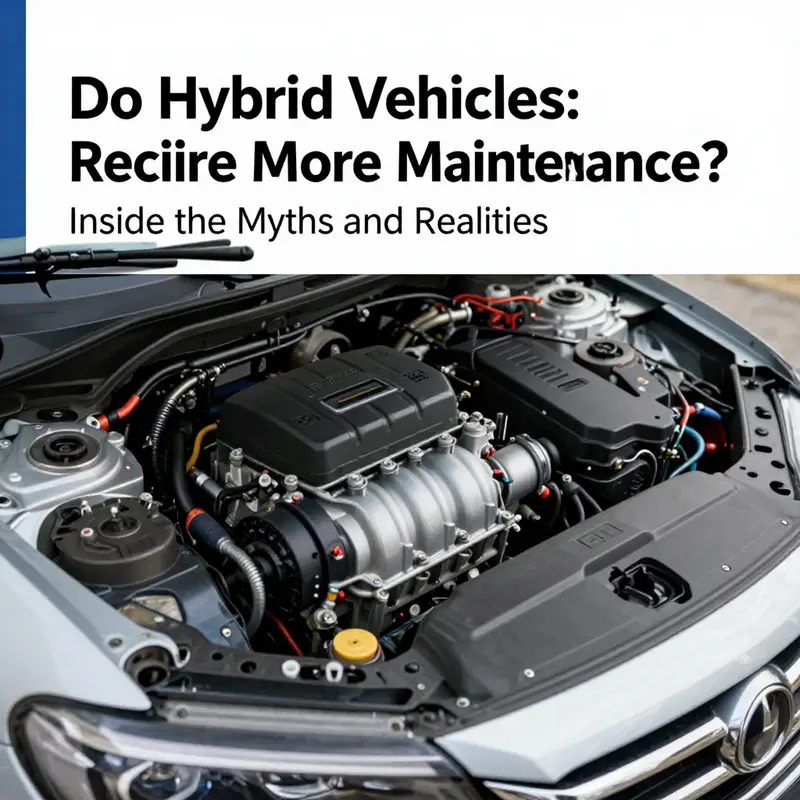
Hybrid vehicles have earned a reputation for reliability and lower long-term operating costs, a perception built on how their powertrains blend electric propulsion with internal combustion efficiency. The question of whether hybrids demand more maintenance than conventional cars is nuanced, and its answer depends on how one defines maintenance, the model in question, and how the vehicle is used. The central thread is that hybrids introduce specialized components and control systems, yet their ongoing upkeep often aligns with conventional expectations for routine care. The overarching message is not that hybrids inherit a heavier maintenance burden, but that they carry a different, more technology-driven maintenance profile. For the attentive owner, understanding that profile is essential to keeping a hybrid reliable, cost-effective, and long-lived.
At the heart of every hybrid is an electric drive system that works in concert with a traditional engine. A high-voltage battery pack sits alongside an electric motor or motors, which can power the vehicle alone at low speeds or assist the engine during acceleration. This architecture delivers real benefits: fuel economy gains of a meaningful order, often in the range of 20–40 percent over similar gasoline-powered counterparts, depending on driving conditions and how frequently the vehicle is charged or used in electric mode. The chemistry inside these packs—whether lithium-ion or nickel-metal hydride—reflects a trade-off between energy density, thermal stability, and longevity. Batteries today are designed to endure many years of service, and most manufacturers back them with substantial warranties. Yet, as with any large energy storage device, eventual replacement can be expensive, particularly outside warranty coverage. The cost is not just a function of raw price but of how the battery wears with cycles, temperatures, and high-power demand. For fleets or vehicles that rack up miles quickly, proactive monitoring of battery health becomes a practical necessity rather than a luxury.
The electric motor or motors that drive the wheels in electric-only modes are another layer of the hybrid’s unique maintenance footprint. These motors provide quiet, smooth operation and assist the engine during peak load, a synergy that improves efficiency and reduces emissions. From a maintenance perspective, what matters is consistent performance and efficiency. Unlike a conventional engine that wears more predictably with high mileage, electric motors have far fewer moving parts that suffer friction-based degradation. Still, they are not maintenance-free. Regular checks for electrical performance, insulation integrity, and mechanical coupling ensure the motors deliver the expected assistive power without overheating or drag that could erode efficiency. The power electronics that bridge the battery and the motor—DC-DC converters, inverters, and control modules—are equally important. These components govern the flow of electricity, manage thermal loads, and translate driver requests into precise motor torque. Their health hinges on effective thermal management, clean electrical connections, and software calibration. Any lapse in cooling or firmware drift can quietly undermine performance and efficiency.
Regenerative braking stands out as a distinctive feature of hybrids, turning deceleration into a recharging opportunity. This system can reduce brake pad wear significantly, a benefit that translates into lower brake maintenance costs over time. Yet, regenerative braking introduces its own maintenance considerations. The control software that governs how aggressively the system captures energy must be tuned to harmonize with standard friction braking. If the system begins to lag or the transition between regenerative and friction braking feels uneven, technicians must inspect the brake system holistically—pads, rotors, and the electronic control logic—to ensure consistent, predictable braking feel. In addition, the electrical wiring and sensors that monitor wheel speed and torque contribution are critical to the seamless operation of regenerative braking. A subtle sensor misread can alter braking performance and fuel economy, so these elements deserve thoughtful inspection during routine service.
Given this constellation of components, one might wonder whether the maintenance needs of a hybrid diverge markedly from those of a conventional car. The answer lies in the distinction between what must be checked routinely and what requires specialized diagnostics. Routine maintenance—oil changes, tire rotations, brake inspections, and fluid top-offs—remains quite similar in both hybrids and traditional vehicles. The cadence of these tasks often follows the same timetable, driven by mileage and manufacturer recommendations. However, because hybrids embed advanced powertrains and control software, there is a higher expectation for regular inspections that focus on electrical systems, thermal management, and software integrity. Battery health, cooling system performance, high-voltage safety protocols, and calibration of motor control software are examples of areas that may appear on service menus more frequently than in non-hybrid vehicles, particularly for older models or those with high usage in demanding conditions.
The maintenance story then becomes one of proactive care rather than reactive fixes. Proactive monitoring plays a central role, especially in fleet contexts where usage patterns can accelerate wear in ways that individual owners may not immediately notice. A proactive approach includes monitoring battery temperature during charging and discharging cycles, tracking state of health for the high-voltage pack, and paying attention to any anomalies in charging behavior or electrical system diagnostics. It is not a question of whether problems will arise, but when. With careful observation, many issues can be detected early, allowing for less invasive, more cost-effective interventions. Regular inspections become a principal line of defense, catching signs of degradation in both the battery system and the power electronics. Software calibration and updates, which govern how efficiently the vehicle harvests energy and delivers power, are increasingly central to performance. This software-centric reality means that technicians must be equipped with up-to-date training and tools to interpret data from vehicle networks, interpret fault codes accurately, and implement updates in a controlled manner.
Thermal management, a topic that may seem merely technical, is fundamental to the vitality of hybrid systems. The high-voltage battery, in particular, is highly sensitive to temperature. Excessive heat or heat cycling can shorten battery life and reduce performance. Hybrid systems rely on cooling loops, fans, and sometimes liquid cooling for electronics to maintain safe operating temperatures. When cooling systems falter, the consequences can ripple through the battery and the motor, diminishing efficiency and potentially accelerating wear. Regular checks of coolant levels, leaking seals, and radiator or condenser cleanliness are essential. A well-maintained thermal regime extends the life of the battery and the associated electronics, often yielding more predictable performance and lower long-term costs. In this sense, maintenance for hybrids has a distinctly preventive flavor: constant vigilance over temperatures, electrical integrity, and software health can forestall more expensive interventions later on.
The financial dimension of maintenance cannot be ignored. High-voltage batteries, while designed to outlast many other car components, can become cost quagmires if they fail outside warranty. The price of replacement, though not the daily maintenance bill, is a reality that hybrid owners consider when evaluating total ownership costs. The amortization of this potential expense—through warranties, extended service plans, and lower fuel costs—shapes the economic case for hybrids. It also underscores the importance of choosing certified service centers that have the specialized tools and training to handle high-voltage systems safely. The risk calculus is different from conventional cars, because the potential outlay is large and the consequences of improper service could be severe. This is not to condemn hybrids as expensive to maintain; rather, it emphasizes the need for informed maintenance planning and skilled technicians who can navigate the hybrid landscape with precision.
For drivers who worry about the complexity of these systems, the path to sensible maintenance is clear. Establish a routine that treats the hybrid’s electrical components with the same seriousness as the engine’s health. Schedule regular battery health assessments as part of routine service, especially as the vehicle ages or accumulates miles in challenging climates. Prioritize cooling system checks and ensure coolant quality remains within specification. Embrace the benefits of regenerative braking by having brake systems inspected for both friction components and the electronic controls that govern energy recovery. Recognize that software updates are not a nuisance but a necessary safeguard for performance and efficiency. When in doubt, lean on qualified technicians who can interpret the vehicle’s diagnostic narratives and translate them into actionable maintenance steps. This approach aligns with the broader truth about modern automotive maintenance: the vehicle is a networked system, and health hinges on the harmony of its parts, software, and how the car is used day to day.
From a driver’s perspective, one practical aspect that often determines maintenance needs is charging behavior in plug-in hybrids. Regular charging tends to preserve energy efficiency and reduces the engine’s reliance on gasoline, but neglecting charging can lead to more frequent engine operation, higher wear, and a steeper drop in overall fuel economy. The maintenance implications of charging behavior are not dramatic in isolation, yet they interact with the vehicle’s control logic and battery temperature management. Inconsistent charging can also affect battery conditioning routines that some hybrids employ, influencing how the battery remains in a favorable temperature window for performance. This is not a rigid rule but a pattern observed across many plug-in deployments: charging discipline can indirectly shape the maintenance landscape by preserving efficiency and reducing stress on electrical components during operation.
The capability to manage hybrid systems without a steep maintenance curve rests on a few guiding principles. First, adhere to manufacturer-recommended service intervals, especially for inspections tied to the hybrid system. Second, insist on certified technicians who have access to the vehicle’s diagnostic data and the correct tools for high-voltage systems. Third, maintain a proactive stance toward battery health and thermal management, recognizing that these pieces are the linchpins of long-term reliability. Fourth, appreciate the software layer as part of the vehicle’s maintenance ecosystem. Firmware or calibration updates may adjust energy management, thermal control, and even predictive maintenance logic, all of which influence how the car performs and wears over time. By treating the hybrid as a holistic system rather than a cluster of isolated parts, owners can enjoy the efficiency and reliability that typically accompany modern hybrid designs.
For readers who want concrete paths to cost-effective maintenance, a starting point is to explore how routine care translates into fuel savings and longer vehicle life. The maintenance habit that yields the best return is consistency: regular inspections, timely software updates, and attention to battery temperature and coolant condition. The goal is not simply to avoid expensive repairs but to keep each component operating in its optimal window. When a hybrid is cared for with that mindset, its advantages—fuel economy, smoother driving, quieter operation, and a gentler impact on brake wear—become visible in both currency and driving experience. The promise of hybrids as durable, economical transportation is not undermined by their sophistication; rather, it is reinforced when maintenance practices are aligned with the technology that makes them efficient in the first place.
As the landscape of hybrid technology evolves, so too does the expectation that service networks will evolve. The more software-driven the powertrain becomes, the more important it is for service providers to stay current. This is not merely about keeping up with the latest firmware but about understanding the way energy flows through the system, how thermal management interacts with driving patterns, and how diagnostic data translates into actionable maintenance tasks. In that sense, maintenance for hybrids is both a science and an ongoing practice—a science that benefits from robust data and a practice grounded in preventive care. The result is a vehicle that, with proper attention, can deliver the anticipated efficiency gains and reliability advantages over many years of use.
Internal link note: for readers curious about how routine maintenance strategies can reduce overall fuel costs and contribute to a longer vehicle life, see this discussion on maintenance practices and fuel efficiency: maintenance savings on gas expenses. This resource helps connect the maintenance discipline described here with tangible, everyday savings that extend beyond the fuel gauge.
External resource for deeper technical context: for a deeper dive into the technical specifications and operation of hybrid components, consult a comprehensive guide on hybrid accessories and specifications, such as Hybrid-Info’s overview of high-voltage systems, battery technologies, and power electronics. This external reference provides a technical complement to the practical insights discussed above and can help readers understand why certain maintenance tasks are critical to longevity and safety. External link: https://www.hybrid-info.com/hybrid-accessories-explained-key-specifications-features-common-uses
Charging Regularity and the Maintenance Equation: Do Plug-in Hybrids Demand More?
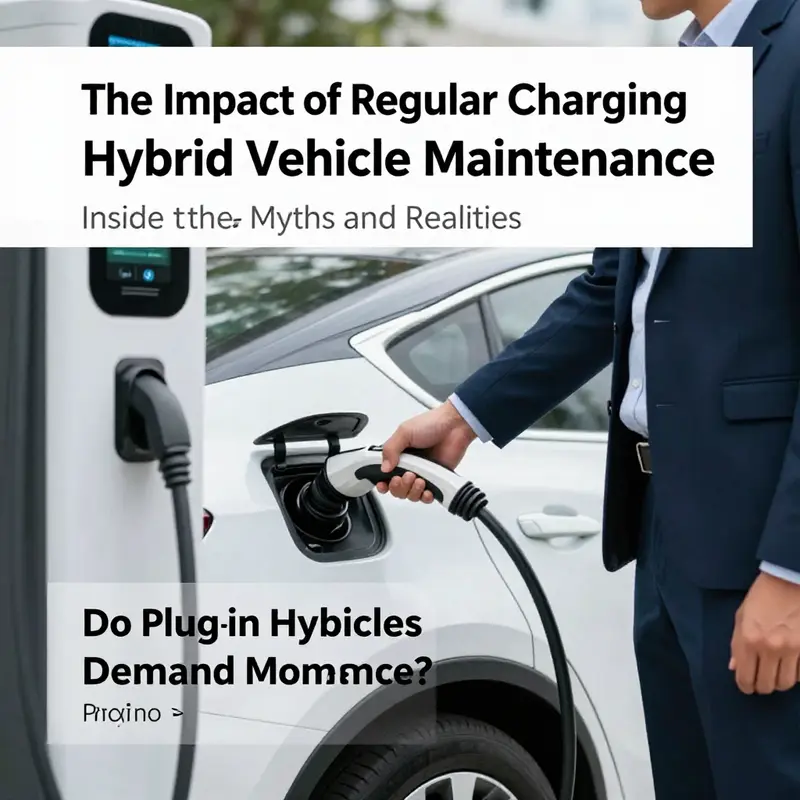
Plug-in hybrids (PHEVs) change the maintenance conversation, but not in a simple yes or no. Regular charging shifts wear from the internal combustion engine to the battery and electrical subsystem, altering what owners need to monitor over time.
When charged regularly, the electric portion handles a larger share of propulsion, which reduces ICE usage, engine hours, and certain routine engine maintenance. Regenerative braking also lowers brake wear in many daily scenarios, contributing to fewer frequent brake-service tasks. The practical effect is a maintenance pattern that is more battery- and software-driven, with many mechanical items remaining important but shifting in emphasis.
At the same time, greater battery capacity and high-voltage systems introduce new considerations. Battery health, thermal management, charging infrastructure, and proper charging practices become central to long-term reliability. The battery management system (BMS) helps, but owners should follow manufacturer guidelines and use appropriate charging equipment and windows to minimize thermal and charging stress.
Service needs still include tires, suspension, fluids, and routine inspections, but technicians increasingly require high-voltage safety training and battery diagnostics capabilities. When owners follow recommended charging routines, seek qualified service partners, and stay alert to battery performance indicators, reliability can be on par with, or even exceed, expectations for traditional hybrids.
In short, PHEVs do not inherently demand more maintenance; they demand a different kind of maintenance centered on battery health, charging quality, and electrical diagnostics, while keeping the familiar baseline care for any vehicle.
Beyond the Oil Change: Reassessing How Hybrids Stand Up to Routine Maintenance Against Conventional Cars
When people evaluate the maintenance needs of hybrids, the immediate reflex is to compare them with traditional gasoline cars and assume hybrids come with higher upkeep or greater risk of expensive surprises. Yet the research landscape paints a more nuanced picture. Hybrid vehicles—including plug-in hybrids—tend to be engineered for reliability, lower long-run maintenance costs, and a more economical routine than their conventional counterparts. The core insight is not that hybrids are maintenance free, but that their design reduces the wear and tear that drives frequent service visits in standard petrol cars. The practical effect is a maintenance profile that is often steadier, sometimes cheaper, and generally aligned with the tasks that every car needs—oil changes, tire rotations, brake inspections—albeit with different points of emphasis and some distinctive considerations for the electric components that make hybrids run so differently from traditional engines.
From a general maintenance standpoint, the evidence suggests hybrids do not require more frequent attention than conventional petrol cars. In many head-to-head comparisons, hybrid owners report saving roughly 15–30% on routine maintenance when contrasted with equivalent petrol models. This is not merely a small margin; it reflects a shift in where wear accumulates. Because the hybrid system can rely on electric propulsion for a large portion of driving, the internal combustion engine experiences fewer rapid heating cycles, smoother load conditions, and less sustained torque. The result is reduced stress on engine oil, fewer galling cycles in the exhaust system, and notably gentler wear on brakes through regenerative braking systems. The overall maintenance picture shifts away from routine bottlenecks toward a more balanced, predictable schedule where the biggest gains come from the hybrid’s efficiency rather than from radical mechanical redesigns. It is a reminder that maintenance, at its core, is about longevity and reliability across a car’s life, not just about ticking off a checklist of services.
One of the most tangible areas where hybrids win on maintenance is brake wear. Regenerative braking—where the electric motor acts as a generator to convert kinetic energy back into stored electrical energy—substantially reduces the mechanical load on conventional friction brakes. Cars equipped with this system routinely show longer intervals between pad replacements and rotor servicing than their pure petrol equivalents. The friction brakes still require periodic inspection and replacement, but the reliance on regeneration tends to press the brake-life curve toward the longer end. This isn’t merely theoretical. It translates into fewer brake services over the life of the vehicle, which compounds into meaningful savings when owners tally maintenance costs over many years. The same logic applies to engine components that are used less aggressively. With the engine idling and accelerating less aggressively during typical commutes, engine oil experiences fewer abrupt temperature swings and contaminants, which helps extend oil life and reduces the frequency of related services.
A practical matter for most hybrids is recognizing that while routine tasks like oil changes and tire rotations remain essential, some of the engine-centric maintenance can be less frequent or require different maintenance reasoning. The hybrid’s powertrain benefits come with a caveat: there are high-voltage and electric-drive subsystems that demand specialized diagnostics and service from technicians trained to work with electric components. This is not a quibble about quality or reliability; it reflects the reality that the electric side of hybrids introduces new technologies, sensors, cooling circuits, and power electronics that need careful calibration and safety standards. As long as owners adhere to manufacturer guidelines and use certified service centers, the hybrid’s long-term reliability tends to stay strong, and the total cost of ownership can be favorable compared with conventional cars, especially when fuel savings and reduced wear on major components are considered.
Turning to plug-in hybrids introduces a slightly different calculus. Because PHEVs combine a rechargeable battery with an internal combustion engine, two maintenance streams converge: traditional engine upkeep and battery/electric-system care. Some plug-in hybrids historically recommended somewhat shorter oil-change intervals, such as every 5,000 to 7,500 kilometers. There are several contributing factors behind these intervals. They can reflect engineering choices, the operating patterns that accompany dual use of electricity and gasoline, and concerns about oil dilution from cold starts in direct-injection engines. It is important to separate what is technically required from what is guided by risk management and conservative manufacturer practices. In other words, a more frequent oil-change cadence in some PHEVs does not automatically signal a mechanical necessity; it can be a precautionary approach aimed at maintaining engine cleanliness and ensuring optimal performance when the vehicle is frequently charging and running on electric power for short trips. The more decisive truth is that the core electric drivetrain components—the motor, inverter, and battery—generally require little to no regular maintenance. Their service life depends more on usage patterns, charging discipline, and thermal management, but they do not demand routine replacement or inspections at the same cadence as the internal combustion engine’s moving parts.
Understanding how maintenance for plug-in hybrids differs from conventional hybrids also benefits from looking at range-extended electric vehicles, or ER EVs, which follow a maintenance rhythm closer to traditional petrol cars. With ER Evs, the vehicle operates with a battery as a primary energy source and uses a petrol generator to maintain charge. In many cases, these vehicles align with standard maintenance intervals similar to petrol models—commonly around 10,000 kilometers or once a year. The predictability of these schedules can come as a relief to owners who want to plan visits to the shop or a dealership in a routine, steady fashion. The combination of the extended-range design and the rebalancing of driving modes tends to simplify the upkeep narrative, as the vehicle spends many miles in electric mode and relies on petrol generation only when needed.
Battery life and high-voltage systems sit at the heart of hybrid maintenance discussions. The high-voltage battery packs employed in modern hybrids are built to endure for many years and miles. They are typically accompanied by robust warranty coverage—commonly eight years or 100,000 miles, depending on the market and model. That warranty offers a safety net for owners who worry about the potential cost of battery replacement, which can be a significant concern in any hybrid. However, when the battery nears the end of its life outside of warranty, replacement costs can be substantial. The key to mitigating that risk lies in proactive battery management: maintaining proper thermal conditions, avoiding deep discharges when not necessary, and ensuring charging practices align with the battery’s design parameters. These considerations emphasize that while the battery is not a frequent maintenance item in day-to-day terms, its long-term health matters, and a portion of maintenance planning should be devoted to battery health monitoring and adhering to the manufacturer’s recommended charging practices.
The specialized nature of hybrid components extends to the need for trained service technicians. Unlike conventional cars, hybrids bring electric motors, power electronics, and high-voltage systems into the mix. Diagnostic procedures may require advanced tools and safety protocols for servicing high-voltage systems. For owners, that translates into choosing service providers with the appropriate certifications and experience. It is not a warning about poor reliability; it is a practical acknowledgement that some maintenance tasks require specific expertise to ensure safety and to preserve the integrity of the hybrid system. When owners follow manufacturer guidelines and pursue service at certified centers, the risk of misdiagnosis or improper maintenance drops, and the long-term reliability of hybrid powertrains remains competitive with, and often superior to, conventional petrol drivetrains.
For those weighing the overall maintenance equation, the message from the collective research is clear: hybrids typically offer a more economical maintenance experience than conventional petrol cars, despite the presence of more complex drivetrain components. The reductions in wear and tear on the traditional engine, combined with smoother operation and regenerative braking, contribute to lower upkeep costs over the vehicle’s life. The caveat that cannot be ignored is the importance of battery health and the need for qualified technicians to handle the electric subsystems. In practice, the decision to buy a hybrid should factor in the expected maintenance pattern over the vehicle’s lifetime, including the potential for battery-related costs after warranty expiration, the price of routine services, and the realities of charging behavior for plug-in variants. For consumers seeking a robust baseline on routine maintenance, one helpful starting point is a resource that clarifies what maintenance generally includes in any vehicle. A clear baseline for what constitutes routine maintenance can be found in What is vehicle maintenance, which provides practical guidance on the standard care that keeps any car running well across its life cycle. What is vehicle maintenance
The broader takeaways are reinforced by deeper analyses that lay out cost comparisons among hybrid, petrol, and electric vehicles. They consistently show that while maintenance costs for hybrids are not negligible, they are often lower than those for petrol-only equivalents, thanks to reduced engine wear and the endurance of electric components. Electric drivetrain elements require less regular maintenance in most cases, though they demand careful attention to battery health and thermal management. Plug-in hybrids, by their nature, introduce charging patterns that can influence maintenance cadence but do not inherently demand more frequent service than conventional hybrids. In short, hybrids—especially well-designed plug-ins—tend to offer a maintenance profile that emphasizes reliability, predictability, and long-term cost savings rather than frequent, high-cost stops at the shop. For readers who want to cross-check these claims against broader data, a detailed comparative analysis is available on Drive.com.au, which synthesizes maintenance-cost findings across hybrid, petrol, and electric models. https://www.drive.com.au
Final thoughts
In summary, hybrid vehicles generally do not require significantly more maintenance than traditional gasoline cars. The primary areas of focus include maintaining the battery system, specialized components, and the importance of regular charging for plug-in models. By understanding these factors, business owners can ensure they make informed decisions about their vehicle fleets, maximizing efficiency while minimizing downtime and unexpected costs. Ultimately, thorough knowledge of hybrid maintenance can lead to smarter, more sustainable business operations. Always remember to follow manufacturer guidelines and consult trained professionals for specialized maintenance needs.