
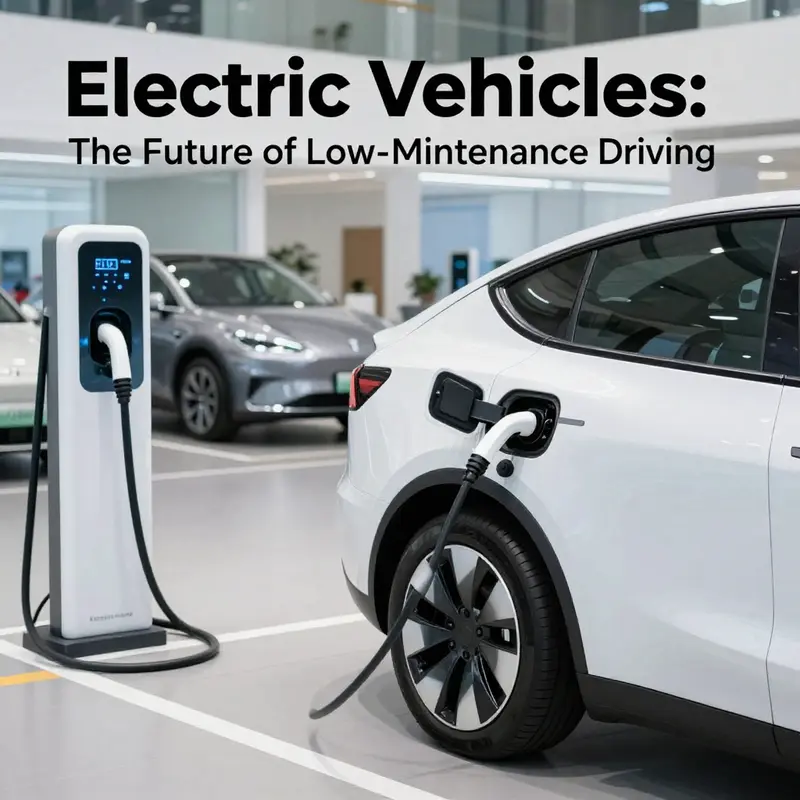
Electric vehicles (EVs) have emerged as a revolutionary choice for energy-efficient transportation and significantly reduce maintenance tasks compared to internal combustion engines (ICEs). For business owners, understanding the impact of these changes is crucial for cost management and operational efficiency. This article explores how EVs require less maintenance overall, focusing on routine services, brake and tire care, advancements in technology, and contributing factors to longevity and reliability. By understanding these facets, business owners can capitalize on streamlined operations and lower total ownership costs.
Less Moving Parts, More Time Between Visits: The Maintenance Advantage of Electric Vehicles
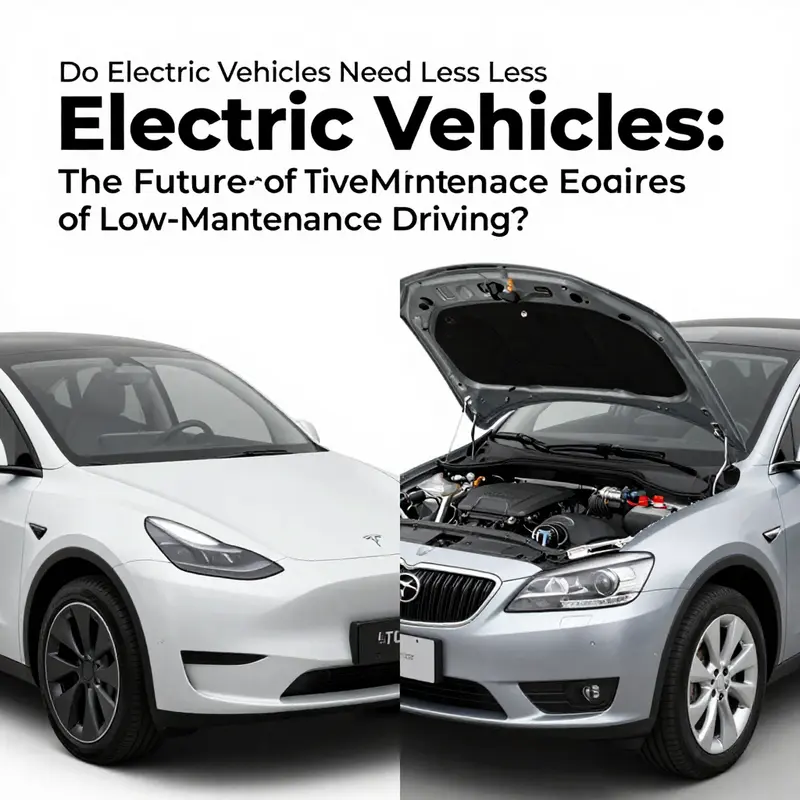
When we compare electric vehicles (EVs) to internal combustion engines (ICE), maintenance often becomes the quiet but decisive factor shaping ownership experience. It’s easy to focus on range or charging networks, but the maintenance story runs deeper. Across the lifecycle, EVs tend to require noticeably less routine attention. This isn’t just about fewer parts; it’s about how a simpler powertrain, regenerative braking, and software updates reduce the cadence of service. Relative to ICE vehicles, EVs have fewer moving parts to wear and fewer fluids to change.
Over the first 100,000 miles, owners typically incur lower maintenance and repair costs for EVs, a difference rooted in design choices that minimize wear and simplify service. Regenerative braking often extends brake life, while the single-speed transmission and absence of combustion-related components reduce routine tasks like oil changes and belt maintenance.
That said, EV maintenance is not zero upkeep. Tires, brakes, suspension, cabin air filters, and software updates still require attention, but the required work is generally less frequent and less costly. Variety in climate, driving style, and battery health can shift exact costs, but the overall pattern holds: fewer moving parts and simpler mechanical systems translate into lower maintenance burden for most owners.
For readers seeking a practical takeaway: expect fewer trips to the shop for routine service, lower part costs over time, and maintenance decisions focused on tires, battery health, and charging behavior rather than engine repairs.
EV Maintenance: Fewer Trips, More Reliability
Electric vehicles offer a maintenance profile that is simpler and often cheaper than internal-combustion cars. With far fewer moving parts in the drivetrain, no engine oil changes, no spark plugs, and no timing belts, EVs reduce routine service. Most maintenance shifts toward tires, brakes due to regenerative braking, software updates, battery health checks, and cooling system inspections. Regular tire rotation, wheel alignment when needed, brake pad life from regenerative braking, and periodic software updates are the main recurring tasks. Overall, owners experience fewer, less costly visits to the shop in the first years of ownership, contributing to lower total cost of ownership.
The Quiet Advantage: Do Electric Vehicle Brakes and Tires Demand Less Maintenance?
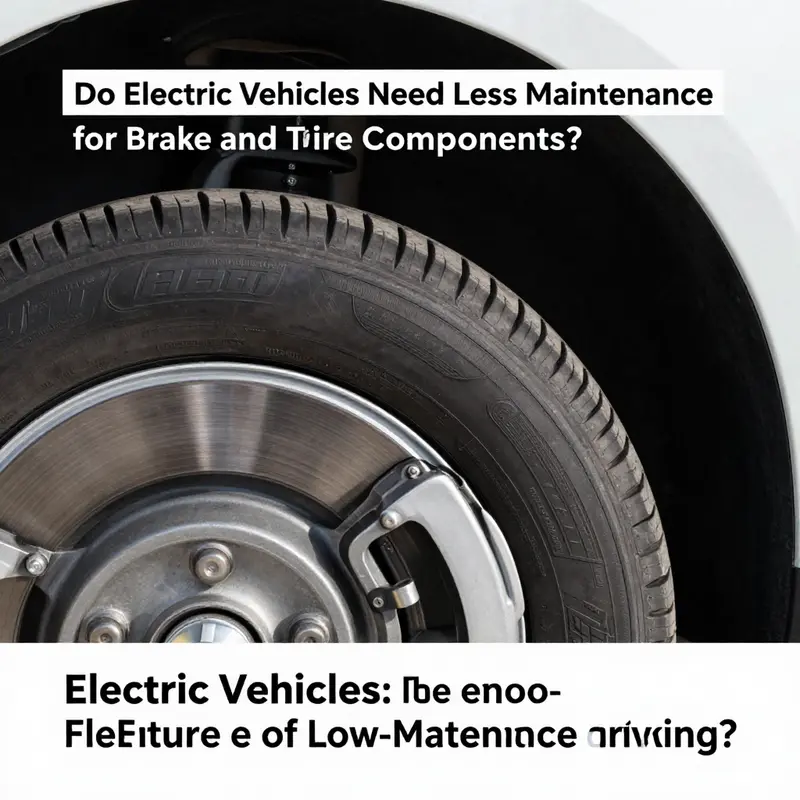
When people ask what makes electric vehicles (EVs) inherently cheaper to own over the long run, the conversation often centers on the absence of an internal combustion engine’s routine maintenance. Yet a significant part of that advantage emerges not from the powertrain alone but from the way EVs interact with two other critical wear components: brakes and tires. In a traditional car, every mile is a reminder that thousands of metal-moving parts, hydraulic circuits, and a hot, oil-lubed heart are aging together. In an electric vehicle, the engineering bouquet changes the rules of wear, and with it, the cadence of maintenance. The result is a pattern of use that generally translates into fewer service visits, lower replacement costs, and, for many drivers, a smoother, less interrupted ownership experience. The story unfolds most clearly in the brake system and the tires, where fundamental design decisions in EVs steer wear toward a more favorable horizon, even as nuances tempt a more careful eye on some other aspects of tire life and ride quality plugged into a heavier vehicle mass.
The most decisive factor in brake maintenance is regenerative braking. EVs harvest kinetic energy during deceleration and convert it back into stored electrical energy to replenish the battery. This process reduces reliance on conventional friction braking, which is the part of the system most associated with wear. In everyday driving, this means thinner brake pads and gentler rotor wear than in their gasoline counterparts. Industry analyses and owner-reported data consistently show that brake wear in EVs can be substantially lower—often cited as about half the wear seen in typical ICE vehicles under normal usage. In practical terms, many drivers observe that pads last much longer than expected, and rotors accumulate far fewer heat cycles that would otherwise necessitate replacement. While the exact numbers depend on driving style and climate, the direction is clear: regenerative braking lightens the load on the conventional brakes, pushing maintenance intervals farther apart and reducing the frequency with which a car needs a brake service.
That shift has a ripple effect on related maintenance tasks. Brake fluid is still part of the system, and regular checks remain prudent to ensure proper braking performance and hydraulic integrity. But the routine flushes and replacements that are so common in ICE vehicles are not as relentless in EVs. The result is not just fewer parts to service but less frequent visits to the shop for brake-related work. In many cases, drivers will discover that the most noticeable brake-related maintenance is simply ensuring the system is functioning as designed and that software optimization for brake blending—the interplay between regenerative and friction braking—remains up to date. The dialogue between hardware and software in EVs often means that a quiet improvement occurs over time through software updates, which can refine brake feel, response, and the balance between energy recuperation and traditional braking. This synergy helps sustain longer intervals between mechanical interventions, even as the vehicle remains as safe and responsive as ever.
The tire story, while less dramatic in its savings, is equally nuanced. Tires in EVs face two competing pressures. On one hand, the high torque delivered by electric motors can, in theory, accelerate wear, particularly during brisk takeoffs. On the other hand, automakers increasingly equip EVs with low-rolling-resistance tires designed to maximize range, efficiency, and durability. The heavier mass of EVs—driven by the substantial battery pack—adds a perpetual load that can, in some cases, hasten tire wear compared with lighter ICE equivalents. Yet this weight is counterbalanced by tire technology that targets longevity and efficiency. Modern EV-specific tires strive to optimize tread compounds, profile geometry, and rolling resistance to curb wear without sacrificing grip or noise comfort. Taken together, these choices tend to yield tires that hold up well across many miles, even if the early part of the tire life is influenced by weight and torque delivery. In practice, tire wear in EVs may be modestly higher in some scenarios, especially with aggressive acceleration or in vehicles that carry heavy loads frequently. But the broader equation—reduced brake maintenance and purpose-built tires—tends to keep overall maintenance needs lower than in many ICE setups.
What does all this mean for the actual maintenance rhythm? The short answer is a shift rather than a simple reduction in parts. Because brake wear is reduced, the interval between brake service and pad replacements generally extends. This extension translates into lower maintenance costs over time and fewer visits to service bays for brake work. For tires, the story is more contingent on vehicle mass, driving style, and the tire technology the manufacturer chooses. With the prevalence of EV-specific low-rolling-resistance tires, many drivers experience a favorable balance between longevity and performance. The heavier EV platforms do not magically erase tire wear, but they do encourage a more deliberate approach to tire maintenance, emphasizing pressure checks, alignment, rotation, and tread depth monitoring as a part of routine care. In broad strokes, the maintenance burden on brakes tends to shrink noticeably, while tires require slightly more careful attention but can still achieve long life with the right rubber and care.
A practical takeaway for readers considering the maintenance implications of EV ownership is straightforward. If you prioritize lower maintenance demands, EVs often deliver a meaningful advantage in brake-related service and, with appropriately engineered tires, in tire longevity as well. This doesn’t mean EVs are maintenance-free; rather, the distribution and timing of needed service shift in a way that can reduce the total maintenance cost and inconvenience over the life of the vehicle. For readers seeking deeper reassurance about overall maintenance trends, this chapter aligns with broader analyses that show EV ownership can offer substantial savings, especially for high-mileage drivers who benefit most from fewer brake replacements and fewer oil-related maintenance tasks. See Do electric vehicles require less maintenance for a concise synthesis of these maintenance dynamics, including the brake and tire dimensions and how they translate into real-world costs and convenience.
From a consumer’s perspective, what matters is not just the headline claim of fewer maintenance tasks but how those tasks fit into daily life. Fewer brake replacements mean fewer trips to the shop, less time spent in service lanes, and more time behind the wheel. The tire narrative remains important because tire health directly affects safety and fuel efficiency, both of which are central to the EV ownership experience. Owners should stay mindful of tire pressures, rotate at appropriate intervals, and ensure wheel alignment remains within spec, particularly after impacts or rough roads. In essence, the maintenance profile of EVs shifts from a heavy engine-focused model to a more distributed set of care needs centered on energy management, braking balance, and tire health. The transition may require a learning curve for drivers used to ICE maintenance schedules, but the payoff—quiet, reliable operation with fewer mechanical interruptions—tends to be well worth it.
For readers who want to explore the topic further, a practical, evidence-based resource that captures the maintenance landscape for EVs is available online. The broader body of data reinforces the impression that brake and tire components can drive meaningful savings and convenience over time, even as weight and torque characteristics create specific wear patterns that warrant attention. The takeaway remains consistent: EVs tend to require less maintenance for brake and tire components, contributing to lower overall maintenance costs and a more streamlined ownership experience across the early years of ownership. External readers seeking a rigorous overview of electric-vehicle maintenance can consult the authoritative maintenance guidance provided by industry and government-oriented sources, which offer a comprehensive look at how these systems behave in real-world use. For further reading, visit the external resource linked at the chapter’s end.
External resource: https://afdc.energy.gov/vehicles/electricvehiclesmaintenance.html
Lower Upkeep, Not Zero Hassle: How Advanced EV Technology Redefines Maintenance
The question of maintenance for electric vehicles is less about replacing a long list of wear-prone parts and more about staying ahead of a few high-importance systems that govern safety, reliability, and performance. Electric propulsion changes the calculus because the powertrain is intentionally simple. Instead of a maze of pistons, valves, timing belts, oil galleries, spark plugs, and exhaust components, you typically have a motor, a compact single-speed transmission, and a large battery pack. The practical effect is a substantial reduction in routine, scheduled services. Oil changes vanish because there is no engine lubrication, and there are no spark plugs to replace or timing belts to tension. Exhaust systems simply don’t exist in the same way. These removals aren’t cosmetic; they translate directly into fewer trips to the shop and lower ongoing costs for maintenance tasks that are routine, predictable, and often pricey in ICE-powered vehicles.
Yet the picture isn’t a simple zero. The same advances that deliver efficiency and responsiveness also introduce new corners to navigate. The battery and the high-voltage electrical system require specialized handling, diagnostic tools, and safety protocols that aren’t part of traditional auto-repair. Battery health monitoring, thermal management, software updates, and occasional checks of high-voltage components demand trained technicians with appropriate equipment. In other words, maintenance shifts in character rather than vanishing. For example, while you won’t be paying for oil changes or spark plug replacements, you may encounter occasional battery thermal management checks, software calibrations, and battery diagnostics. These tasks tend to be less frequent than the routine maintenance on many ICE vehicles, but they require a different kind of expertise.
The gains in maintenance efficiency are reinforced by data from large, independent sources. A 2023 Consumer Reports study found that EV owners spend roughly half as much on maintenance and repairs over the first 100,000 miles as owners of gasoline and hybrid vehicles. The benefit grows with higher annual mileage, because the reduced frequency of traditional maintenance tasks compounds over time. The science behind this is straightforward: fewer moving parts means fewer items subject to wear and fewer fluid systems that require regular attention. This structural simplicity is the backbone of lower maintenance costs and greater convenience for many EV owners.
Regenerative braking plays a central role in reducing routine service needs, particularly for the braking system. By converting kinetic energy back into stored electrical energy, the system limits wear on pads and rotors. In practice, many EV owners notice much longer brake life compared with conventional cars. While brake wear depends on driving style and conditions, regenerative braking can extend pad life by two to three times in typical urban or mixed driving. The advantage is tangible: fewer brake replacements, less brake fluid maintenance, and a lower chance of brake-related failures that can complicate ownership. Yet these savings do not immunize the vehicle from brake system checks, as the other half of the braking system—rotors, calipers, and the hydraulic circuits—still needs inspection and service at reasonable intervals.
The reduced maintenance burden is not a license for neglect. Routine checks—tire rotation, wheel alignment, suspension inspections, and software updates—remain essential. Tires still wear, and misalignment or improper inflation can quietly multiply energy consumption and compromise safety. Software updates, increasingly routine across many EVs, improve performance, efficiency, safety features, and even battery management. These updates aren’t cosmetic either; they can recalibrate battery charging strategies, thermal control, and power delivery. What changes is the balance: the interval between in-shop visits can be longer, and the individual visits tend to focus on the high-value items rather than a broad swath of mechanical wear points.
The reliability story gets more nuanced as we add the human element of maintenance infrastructure. The MDPI findings from 2024 underscore a practical challenge: there is currently no dedicated international or European standard for working on EVs. That absence is not a barrier to care in the abstract, but it does matter for workshop design, safety culture, and consistent service quality. Without a universal standard, shops must invest in robust organizational procedures, clear high-voltage safety protocols, and well-defined emergency response plans. The absence of a harmonized standard means technicians must be trained to meet the best practices that do exist, and employers must be proactive about safety equipment, test procedures, and the precise handling of high-voltage components. This is less about complicating ownership and more about ensuring that maintenance is safe, predictable, and scalable as EV adoption expands.
For most drivers, the practical upshot is straightforward: maintenance costs over the life of an EV are lower on average, but the work shifts toward specialized safety-focused tasks and software-driven care. A well-maintained EV benefits from proactive battery health monitoring and thermal management checks, which help preserve range and performance. It also benefits from timely software updates that can unlock efficiency gains and refine charging behavior, potentially extending the life of the battery pack and keeping the vehicle running smoothly over time. This new maintenance paradigm requires a rethinking of how service centers are equipped and staffed. High-voltage safety gear, insulated tools, battery diagnostic devices, and technician training programs are not optional extras; they are part of a foundational service model for modern EVs. When a workshop demonstrates clear, documented procedures for high-voltage work, customers gain confidence that their vehicles are being cared for with competence and care.
The shifting maintenance landscape also changes the economics of ownership. Because the mechanical complexity of EV powertrains is lower, routine service visits can be shorter and less expensive, even as the occasional high-ticket battery or electronics repair looms as a possibility in the long term. In the short run, the savings accrue through reduced oil maintenance, fewer filters, and less frequent engine-related maintenance. In the long run, the greater reliability and fewer unplanned repairs translate into a lower total cost of ownership for many users, especially those with higher annual mileage or those who rely on predictable, ride-sharing, or fleet-style usage patterns. Yet this is not a carte blanche for ignoring maintenance. Battery health, cooling systems, and software health require attention because neglect here carries the potential to degrade range, performance, and safety. The discipline of maintenance thus becomes more strategic: anticipate needs, align them with the vehicle’s software cycle, and ensure the shop environment is ready to handle high-voltage systems safely.
In guiding policy and consumer choice, the argument for lower EV maintenance rests on the consistency and transparency of care rather than a universal guarantee of zero upkeep. The core claim—that EVs demand less maintenance thanks to simpler mechanics and regenerative braking—remains robust across multiple studies and industry observations. The nuance comes in recognizing that the kinds of maintenance tasks change. The safest, most reliable pathway is to pair the reduced frequency of routine tasks with a structured schedule for battery health checks, software updates, and high-voltage system safety training. In this framework, maintenance becomes not a burden but a managed process supported by technicians and systems designed for high-voltage life. Those curious about the practical implications can explore broader discussions of EV maintenance at the dedicated resource linked here: do electric vehicles require less maintenance.
For a deeper perspective on safety standards and best practices in EV maintenance, see the MDPI article on maintenance and high-voltage safety, which notes the lack of a unified international standard and highlights the importance of workshop readiness and rigorous procedures. This reference underscores why industry investment in training, equipment, and safety protocols matters as EVs become more common on roads and in fleets. External resource: https://www.mdpi.com/1996-1073/17/23/6158
Quiet Power, Lasting Reliability: Do Electric Vehicles Truly Require Less Maintenance to Win Longevity?
When people consider the long arc of a car’s life, maintenance often looms large in the equation. With electric vehicles, the conversation shifts from routine repairs to a quieter, more durable kind of upkeep. The core argument is straightforward: EVs operate with a simpler powertrain and far fewer moving parts than internal combustion engine (ICE) vehicles. In practical terms, that means fewer things that can wear out, seize, or fail, which translates into less frequent service and a lower chance of unexpected breakdowns. This isn’t a promise of perpetual perfection, but it is a compelling picture of how an electric drivetrain ages over time and how that aging compares with conventional systems. The broader story of longevity and reliability in EVs hinges on design philosophy as much as on daily use, and it’s worth tracing how those design choices show up in real-world maintenance patterns.
The most visible difference lies in complexity. An ICE car carries engines with pistons, rings, valves, cams, timing belts or chains, oil pumps, heat exchangers, multiple fluids, and a sprawling exhaust and emission-control apparatus. An electric vehicle, by contrast, centers on a motor, a relatively simple single-gear transmission, a battery pack, and the supporting electronics and cooling systems. With hundreds, sometimes thousands, of additional components absent or greatly streamlined, there are simply fewer parts that can degrade or fail. This structural simplicity is a major reason why maintenance needs tend to be lower for EVs from the get-go. It’s not just about removing parts, but about removing failure modes. Fewer moving parts mean fewer potential sources of wear, leaks, and misalignment over time.
That simplification has material consequences for maintenance frequency and cost. A large portion of traditional maintenance—oil changes, oil filters, spark plug replacements, timing belt or chain replacements, regular coolant system flushes, and exhaust-system checks—does not apply to most EVs. Without engine oil circuits or spark plugs to service, owners save both time and money on routine intervals. A number of independent studies and reviews corroborate this logic, with reports noting that EVs typically require less hands-on attention in those early and middle years of ownership. Still, the practical reality is that a reduction in maintenance does not equate to a maintenance-free life. EVs still demand care, but the cadence and the cost are generally reduced, especially for higher annual mileage users who otherwise would accumulate more hours in the shop bay.
A cornerstone of EV longevity is regenerative braking. When the driver eases off the accelerator, the motor can operate as a generator, feeding energy back to the battery. This mechanism reduces brake wear by converting kinetic energy into stored electric energy, which translates into longer-lasting pads and rotors. In many cases, brake components wear at a fraction of the rate seen in ICE vehicles, sometimes producing brake-system maintenance intervals that are two to three times longer. That doesn’t eliminate brake inspections or replacement entirely, but it does reshape the maintenance equation. It also contributes to a smoother, quieter driving experience, since the brake system is handling fewer hard stops and less thermal stress. The same logic applies to other subsystems: while tire life and suspension components age as they would in any vehicle, the absence of a heavy, reciprocating ICE engine and associated components reduces the array of periodic refreshes that fleets and individual owners historically scheduled.
Still, the maintenance landscape for EVs is not a uniform “set it and forget it” picture. Routine checks remain essential, even if they are less frequent or lower in cost. Tire rotation and alignment, suspension inspections, and periodic brake checks are common touchpoints that persist because tires and suspension still endure wear and tear from road conditions and driving styles. Software updates form a new category of maintenance that ICE drivers rarely worry about. These updates can include firmware for the motor controller, battery management software, and infotainment or driver-assistance systems. Software health matters because the vehicle’s safety and efficiency depend on up-to-date programming, and updates can improve performance and reliability without a mechanic ever touching a wrench. For many EV owners, the most noticeable maintenance task is simply keeping the tires in good order and ensuring the battery’s thermal management system remains free of obstructions and functioning as designed. The net effect is a maintenance profile that emphasizes preventative care and software health over frequent, hardware-heavy interventions.
Another layer influencing longevity is battery health. The battery is the heart of an EV, and its behavior under heat, charging regimes, and usage patterns defines much of the long-term reliability story. Modern EVs are designed with thermal management systems to minimize battery aging and degradation, and the electronic monitoring systems continuously assess temperature, voltage, and state of charge. This vigilance helps prevent conditions that can accelerate wear. While battery degradation is an unavoidable reality to some extent, careful charging practices and supervised thermal controls can slow aging, contributing to a longer effective life for the pack. In practice, early ownership often yields the most pronounced benefits in reliability: fewer moving parts mean fewer potential points of failure, and a well-maintained battery system provides predictable, stable performance across the vehicle’s life. This relationship—low mechanical complexity paired with sophisticated battery management—underpins the real-world longevity stories that EV owners report.
There is, of course, value in acknowledging that maintenance costs do not vanish. The economics of EV ownership are influenced by initial purchase price, charging infrastructure, and relative maintenance costs over time. The reduction in routine maintenance translates directly into lower operating expenses, particularly for drivers who rack up higher annual mileage. Consumer research and industry analyses have repeatedly shown that the maintenance burden for EVs can be substantially lower than for ICE or hybrid counterparts over the first several years of ownership. The practical effect is not merely fewer trips to the shop; it is a more predictable maintenance budget, with less exposure to variable costs tied to engine failures, exhaust system repairs, or transmission servicing. This is a core part of why many researchers and policymakers emphasize the long-term reliability and lifetime cost advantages of EVs.
For readers who want a compact, high-level reference on maintenance and reliability, a concise overview can be helpful. Do not hesitate to explore the broader discussion here: do-electric-vehicles-require-less-maintenance. This quick resource aligns with the narrative that EVs offer a lower-maintenance proposition without sacrificing reliability or longevity. It is reinforced by the broader body of evidence and the ongoing work of energy and automotive researchers who study how design choices translate into real-world outcomes. And while the specifics of maintenance will vary by model, climate, and driving style, the overarching pattern remains consistent: fewer moving parts, smarter energy recovery, and disciplined battery and software management collectively underpin a durable, reliable ownership experience.
Ultimately, the question of longevity and reliability hinges on how the vehicle is used and how well it is cared for. EVs reward consistent, proactive maintenance—especially in the areas that matter most for long life: battery health, thermal management, and systemic software integrity. The gains in reliability are not a promise of never visiting the workshop, but a realistic expectation of fewer mechanical chokepoints and a smoother, more predictable ownership arc. As with any technology, the best outcomes come from informed, steady upkeep rather than fear-driven avoidance. When owners partner with the vehicle’s maintenance needs—tending to tires, watching for software updates, and ensuring the cooling systems stay clear—their EVs can deliver reliable, long-lasting transportation that remains efficient and capable across years of use. For a more detailed, authoritative overview, see the U.S. Department of Energy resource: https://www.energy.gov/eere/vehicles/articles/electric-vehicle-maintenance-and-reliability.
Final thoughts
Choosing electric vehicles comes with the significant advantage of reduced maintenance requirements, ultimately translating to lower costs and increased reliability for business owners. Less frequent servicing means time can be spent on core business activities rather than on vehicle upkeep. The insights gained from this article underline the compelling case for fleet electrification. Moving forward, integrating EVs into your operations can yield considerable benefits and align with sustainable practices.