

Proper vehicle maintenance is essential for business owners seeking to minimize operational costs. Each aspect of routine upkeep—from ensuring tire pressure to selecting the right oil—directly impacts fuel efficiency. Mastering these maintenance strategies not only helps reduce gas expenses significantly but also extends the lifespan of your vehicles, allowing for smoother operations. This article explores various maintenance practices, revealing how optimizing tire pressure, regularly replacing filters, using the best engine oils, and keeping vehicles lightweight lead to substantial savings at the gas pump.
Under Pressure, Over Miles: The Gas-Saving Power of Proper Tire Inflation
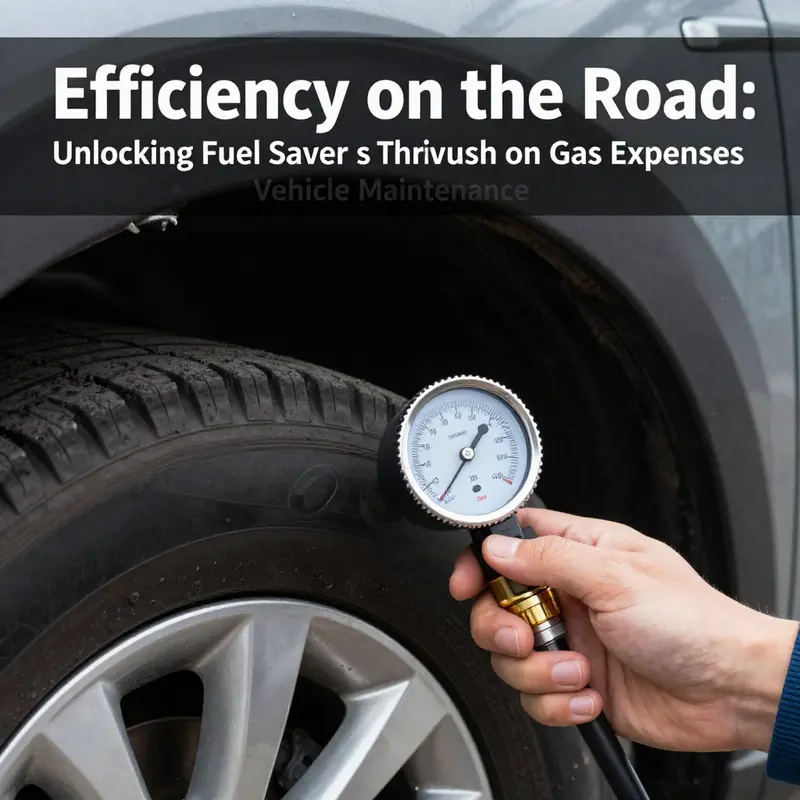
Tire pressure often hides in the background, a quiet factor that quietly shapes how far your next tank of fuel will take you. Yet proper inflation is one of the simplest and most potent ways to influence fuel economy. When tires are inflated to the manufacturer’s recommended pressure, rolling resistance is kept at a minimum and the engine is spared from unnecessary strain. The result is a smoother ride and a leaner fuel bill. The idea is straightforward, but its impact compounds over time. A small adjustment today can turn into meaningful savings week after week, year after year, especially as fuel prices fluctuate and the total cost of ownership becomes more visible to everyday drivers.
The science behind this is practical. A tire’s contact patch with the road is where friction and resistance live. When a tire is underinflated, more of the tread compresses and deforms with every revolution. That deformation translates into wasted energy as the engine fights to push the extra work uphill. Conversely, overinflation can reduce the tire’s contact with the road, but at the cost of reduced grip and uneven tread wear. The sweet spot—within the vehicle’s specified range—minimizes rolling resistance while preserving handling and safety. This balance matters because every percent of fuel saved compounds with miles traveled. Data from national safety programs and automotive research consistently shows that properly inflated tires can yield a measurable uplift in fuel economy, sometimes up to a few percent in real-world driving. In practical terms, that translates to hundreds of miles and hundreds of dollars over the life of a vehicle, depending on driving style, climate, and fuel costs. The numbers align with what many drivers sense in the pump: when tires wear evenly and operate at the right pressure, the car feels lighter on its feet and more eager to roll.
A useful baseline from credible sources notes that underinflation increases fuel consumption and that achieving the correct pressure matters not only for efficiency but for tire longevity. The relationship is not merely theoretical. For an average driver racking up thousands of miles annually, maintaining optimal tire pressure can produce an improvement in fuel economy that sits in the low single digits—a wide improvement when fuel costs rise or when annual miles surge. The practical implication is simple: check your tires, inflate them to the recommended level, and you unlock a predictable, repeatable return on investment that requires almost no special equipment beyond a reliable gauge and a modest amount of time.
The math behind the benefit is compelling. Consider a typical sedan or compact car operating with tires at the lower end of the recommended range. If the vehicle’s tires are underinflated enough to raise rolling resistance by a couple of percentage points, the engine must work harder to achieve the same speed. Over hundreds of miles, that additional work translates into noticeable fuel use. Conversely, correct inflation keeps the engine closer to its designed operating efficiency. The National Highway Traffic Safety Administration has highlighted fuel economy improvements of up to about 3 percent for properly inflated tires. Even this conservative estimate becomes meaningful when multiplied across a year of driving, especially in urban commutes or long highway trips where miles rack up quickly. Put differently, maintaining proper tire pressure can be a practical, repeatable way to shave fuel costs without changing driving habits or spending on equipment.
Beyond the fuel economy figures, the benefits of proper inflation extend to tire life. Underinflated tires wear more on their shoulders and degrade unevenly, shortening tire life and increasing the frequency of replacements. Replacing tires is a cost that many drivers underestimate when calculating operating expenses. By keeping tires within the correct pressure range, wear patterns stay more uniform, tread depth remains consistent across the width, and the overall miles you get from each tire can increase. This dual effect—less fuel use and longer tire life—means the same maintenance habit pays dividends in two directions at once. The value is not only measured in gallons saved but in fewer replacements, less downtime, and a steadier budget for maintenance overall.
To translate these insights into daily practice, it helps to frame tire pressure as a routine, not a once-yearly check. The best practice is to verify tire pressure when the tires are cold, ideally before you’ve driven or after the car has sat for at least three hours. Heat from driving raises tire pressure, and a heat-affected reading will overestimate the actual cold pressure. A cold-reading check gives you a true baseline and reduces the need for multiple trips to the pump. If you cannot check the tires cold, plan to check them after a longer rest period or at least a few hours after a drive. The measurement itself is quick: use a reliable gauge, ideally a digital or dial gauge with a good seal, and confirm readings on all four tires. If one tire shows a deviation, it can indicate a slow leak or a tire that is approaching end of life, which is worth a closer look.
The manufacturer’s recommended pressure range is the guide you should trust. In many passenger vehicles, this range sits around a few bars—commonly between about 2.3 and 2.5 bar, though exact specifications can vary by model and tire size. It’s not prudent to chase the lowest possible number or to default to the number printed on the tire’s sidewall. The sidewall label often reflects the maximum pressure the tire can safely hold, not the ideal operating pressure for your vehicle. The right target is the specification provided by the vehicle maker, which reconciles ride comfort, handling, load capacity, and fuel efficiency. If you ever carry heavy loads or travel with frequent full passenger loads, your optimal pressure may shift slightly with weight, but the baseline remains the manufacturer’s guidance. When you adjust pressures, keep a log if it helps you stay consistent, noting the date, tire location, and the actual reading. Consistency over time matters more than heroic one-off adjustments.
The tools you use matter as well. A dependable tire pressure gauge, paired with a quality air source, makes the routine easy rather than tedious. The goal is not to inflate to a single fixed number every time, but to bring each tire up to its intended target within the specified range. If you find you require frequent adjustments, a leak may be present. Slow leaks can spring from punctures, valve stem issues, or bead leaks, and those issues deserve timely attention. In many cases, a simple repair or valve replacement can restore proper pressure and preserve both fuel economy and safety. The habit of regular checks also doubles as a safety measure. Properly inflated tires improve braking performance, steering response, and cornering stability. These are not trade-offs you want to ignore, because safety and efficiency go hand in hand.
A broader sense of maintenance emerges when you view tire pressure as part of a larger picture. The aim is to reduce rolling resistance, minimize drag, and maintain smooth operation. When tires are correctly inflated, the engine does less work to move the car, which translates into money saved at the pump. The effect is not dramatic day by day, but it compounds with every mile and every dollar spent on fuel. Drivers who commit to this practice often notice a tangible difference in fuel economy over the course of a year, especially if their driving patterns include frequent city trips mixed with highway travel. And the savings are not purely financial. A well-inflated tire regime contributes to safer steering and is less likely to suffer from uneven wear that can degrade performance over time. This is a quiet, durable form of vehicle maintenance that respects both budget and safety.
For those who want a practical, step-by-step reminder of how this habit fits into the broader maintenance routine, consider the idea of consultative self-care for your car. A single check can be part of a broader monthly or quarterly maintenance ritual. While you should not expect miracles from a tire gauge alone, it becomes a catalyst for other good habits: checking tread depth, ensuring wheel alignment, verifying wheel balance, and confirming that the fuel system remains clean and efficient. The interconnectedness matters because, in modern engines, efficiency isn’t the result of a single fix. It is the outcome of maintained fundamentals working in harmony. When your tires roll at the right pressure, it reduces load on the drivetrain, which in turn helps the engine maintain its optimal air-fuel ratio, the oxygen sensors stay within target ranges, and the overall combustion process unfolds more cleanly. This is why tire inflation deserves a place in any thoughtful maintenance plan alongside filter changes, oil quality, and suspension checks.
In a narrative sense, the lesson is simple but far-reaching: take a few minutes to check and adjust tire pressure regularly, and you invest in efficiency with no specialized tools beyond a gauge and a pump. The result is consistent fuel savings and less risk of secondary costs, like early tire replacement due to uneven wear or safety hazards from underinflation. It is a reminder that small, repeatable actions, done consistently, translate into meaningful gains over time. To connect this thread to the broader topic of maintenance and fuel economy, you can explore how maintenance practices collectively influence gas expenses. For a broader view, explore How Vehicle Maintenance Saves on Gas Expenses.
As you cultivate these habits, consider the care with which you approach the rest of your maintenance schedule. The logic of tire inflation intersects with other practices discussed across the article, from filtering to engine lubrication, and from weight management to alignment and suspension. Each element contributes to a more efficient, resilient vehicle. The tire is a first line of defense against wasteful energy loss. It is the ride’s foundation, translating the energy the engine produces into forward motion with as little opposition as possible. In that sense, tire pressure is not merely a number on a gauge; it is a practical lens into the health of the vehicle’s drivetrain and a tangible lever you can pull to stretch every gallon further.
The journey toward lower fuel costs through maintenance is cumulative. The tire pressure habit is a reliable starting point because it requires minimal investment and yields immediate feedback: a more balanced ride, improved handling, and a steady read on fuel gauges that begin to reflect the improved efficiency. With time, the practice becomes nearly automatic. You check the tires on a cold morning, compare them to the recommended values, adjust as needed, and carry on with your day. If you commit to this process, you will not only save fuel but also reduce the wear patterns that shorten tire life and raise maintenance costs later on. It becomes a habit with measurable returns, a reliable, evergreen approach to managing the cost of driving without sacrificing safety or comfort.
Looking ahead, the tire pressure habit pairs naturally with the broader themes of maintenance that the chapter series explores. It is not an isolated tip but a cornerstone of a philosophy that frames maintenance as a daily investment in efficiency and reliability. The more consistently you apply this mindset, the more predictable your monthly operating costs become, and the more confident you can be in your vehicle as a long-term partner on the road. If you are curious to see how this specific habit plugs into the wider maintenance narrative, the linked article provides a broader map of practices designed to optimize fuel economy and extend vehicle life. You can explore further through the internal resource noted earlier. In parallel, external guidance from safety and research organizations reinforces the idea that tire pressure is a simple, effective lever for fuel savings, underscoring why this practice deserves a regular place in your maintenance cadence. For a detailed, safety-focused guide on tire pressures and related systems, see the external resource linked at the end of this chapter.
In closing, proper tire inflation is a straightforward habit with a measurable payoff. It aligns with the broader objective of the article: showing how thoughtful, consistent maintenance can meaningfully reduce gas expenses. The next chapters will continue to unfold the patterns that connect everyday upkeep with tangible savings, from keeping weight modest and wheels aligned to ensuring filters and lubricants work as intended. Yet the tire pressure habit remains a reliable, low-friction entry point—one that customers can implement immediately and see the difference in their next trip. If you want a quick reminder of how maintenance choices add up to fuel savings across the year, revisit the broader overview and the internal resource, and keep the momentum going.
External resource for further reading on tire pressure safety and monitoring systems can be found here: https://www.nhtsa.gov/vehicle-safety/tire-pressure-monitoring-systems
The Iron Triangle of Efficiency: How Regular Air, Oil, and Fuel Filter Replacements Trim Your Gas Costs
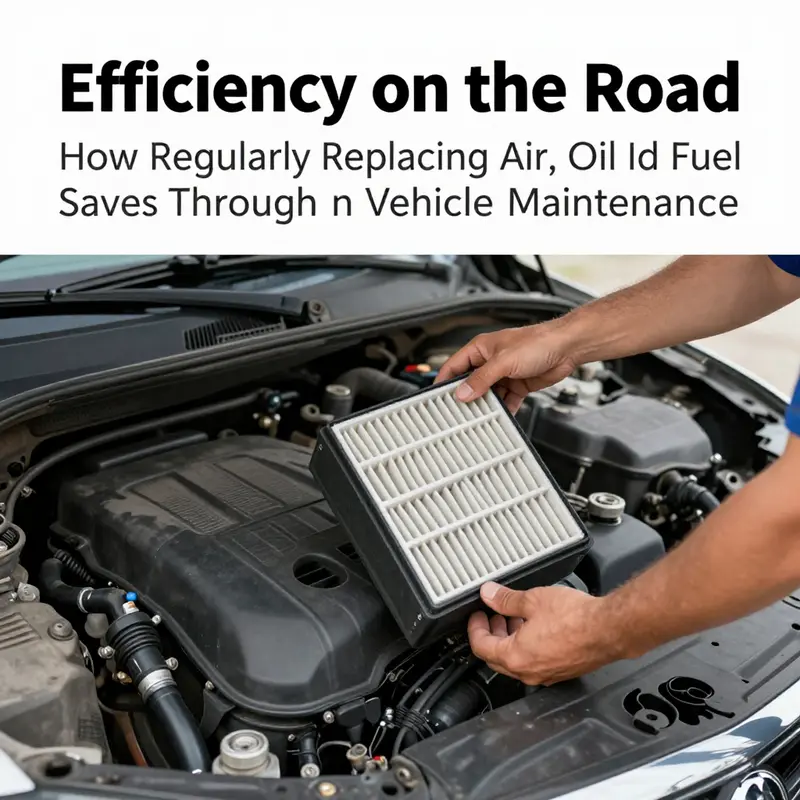
Every mile you drive is a vote for efficiency or waste. In the quiet economy of maintenance, three components work as a triad to keep your engine breathing cleanly and running smoothly: the air filter, the oil filter, and the fuel filter. When these three filters are refreshed on a reasonable schedule, they do more than protect the engine; they reduce the work the engine has to do to deliver power. That translates directly into less fuel burned for the same amount of usable motion. The effect may seem small in isolation—an extra tenth of a liter per 100 kilometers here, another sip saved there—but over months and years those tiny savings compound into a meaningful reduction in the amount you pay at the pump. This chapter examines how each filter contributes to fuel economy, why replacing them together is often the most economical strategy, and how to integrate this practice into a realistic maintenance routine that respects both budget and vehicle health.
The air filter is the gatekeeper to the engine’s air intake. A clean filter allows air to flow freely into the combustion chamber, enabling the engine to burn fuel efficiently and produce power predictably. When the air filter becomes clogged or dirty, the engine’s computer must compensate by injecting more fuel to achieve the same power, and the air-fuel mixture can become skewed. Real-world data show that severe air-filter blockages can push fuel consumption higher by as much as 2 liters per 100 kilometers. The impact on annual fuel bills may seem modest at first glance, but it translates to a noticeable amount of money saved over a year when the filter is kept in proper condition. Replacing a severely blocked filter can reduce that loss, culminating in about 30 liters of fuel saved across a year for many drivers. Depending on local fuel prices, that can amount to roughly one hundred to two hundred dollars saved annually. The math is simple, but its effects are cumulative: cleaner air means more efficient combustion, steadier engine performance, and less wasteful fuel use across routine commutes and longer trips alike.
The oil filter and engine oil form the second leg of the triad. The oil keeps moving parts lubricated, minimizes friction, and carries away heat and debris. The oil filter’s job is to prevent metal shavings, sludge, and other contaminants from circulating back into the engine where they could accelerate wear. When the oil filter is past its prime or the engine oil itself has degraded, friction rises, lubrication breaks down, and the engine begins to burn fuel less efficiently. Worn or dirty filters force the engine to work harder to achieve the same torque, and the engine’s thermal management system pays a higher price for that extra work. The relationship between proper filtration and fuel economy is intimate: lower internal friction means the pistons, bearings, and valves move more freely, allowing the engine to deliver power with less energy wasted as heat or drag. While the exact fuel savings from a fresh oil filter depend on driving conditions and engine design, the broader truth remains robust: clean oil and an effective filter reduce drag inside the engine, which translates into better mileage over time.
The fuel filter often operates in the background, guarding the fuel system from contaminants and water that can jeopardize injector performance and pump reliability. Dirty or clogged fuel filters can starve the engine of a steady fuel supply, leading to misfires, reduced power, and irregular combustion. When the fuel supply is constrained or inconsistent, the engine can compensate by delivering more fuel than necessary at given loads or by failing to reach optimal air-fuel ratios. Both scenarios degrade fuel economy. In practical terms, a healthy fuel-filter-and-fuel-system dynamic helps keep injector spray patterns consistent, maintains steady fuel pressure, and preserves the engine’s ability to burn fuel efficiently at a wide range of speeds and loads. A well-maintained fuel filter reduces the risk of fuel-system problems that could trigger inefficient combustion, a valuable, though often overlooked, contributor to lower fuel costs.
The concept of the three filters as an integrated, protective “iron triangle” is more than a metaphor. When you replace air, oil, and fuel filters as part of a coordinated maintenance plan, you’re not merely replacing wear items; you’re upholding the precise balance the engine relies on for efficient combustion, reliable lubrication, and clean fuel delivery. There is a tangible economic incentive to this approach as well. Technicians who replace all three filters during a single service appointment can often bundle labor more efficiently, reducing overall maintenance costs in a way that makes the combined service cheaper than performing each change separately. The cost benefits extend beyond the price tag of the parts and labor: by preventing misfires, rough idling, and degraded performance, you avoid short-term inefficiencies and the potential for larger, more expensive repairs that can arise from neglect.
Consider a practical scenario grounded in real-world experience. A driver who neglects filter changes might notice subtle clues—a slight decline in acceleration, a border-line rough idle after a cold start, or a drop in miles per gallon on a routine trip. If that driver discovers a clogged air filter, a worn oil filter, and a fuel filter past its prime, the cumulative effect can be a noticeable hit to fuel economy. Replacing the air filter alone might restore part of the lost efficiency, but the gains compound when done alongside a fresh oil filter and a clean fuel filter. In some cases, the annual savings from improved fuel economy and the reduction in the likelihood of expensive engine repairs can cover the outlay for a three-filter replacement and still leave a positive net benefit. It’s not merely about saving a few dollars each month; it’s about creating a maintenance discipline that preserves engine health and reduces fuel waste over the long haul.
From a maintenance planning perspective, the optimal approach often involves aligning the three-filter changes with manufacturer-recommended intervals. The owner’s manual provides guidance on when to replace air, oil, and fuel filters, taking into account engine design, driving conditions, and climate. In the real world, drivers frequently extend intervals beyond the minimum if the vehicle shows no signs of stress, but there is a price to pay for that belt-and-suspenders approach: more rapid declines in efficiency, and a higher risk of sudden, unexpected failures. A balanced practice is to monitor the vehicle for telltale signs of filter impairment—reduction in engine power, strong fuel odor, or an infamous stumble on acceleration—and to trust the scheduled maintenance window as a safety net rather than a rigid deadline. The synergy of the three-filter replacement lies in treating them as a system, not a sequence of isolated tasks. When one filter is replaced but the others are neglected, the overall efficiency gains can be dampened, or the vehicle’s health can deteriorate in ways that undermine fuel economy.
An important dimension of this approach is self-education and realistic expectations. The gains from replacing air, oil, and fuel filters are meaningful, but they won’t transform a high-mileage vehicle into a miracle of efficiency on every road and in every weather condition. The magnitude of savings depends on several variables: the vehicle’s baseline condition, climate, typical driving patterns, and the local price of fuel. A vehicle that spends most of its life in traffic or on hilly terrain may see greater relative gains from cleaner air intake and steady fuel delivery. Conversely, a well-maintained modern engine with a robust fuel injection system may exhibit smaller incremental gains, though even in such cases the reliability and longevity benefits are real and economically valuable over time. The key is consistency: regular inspection, timely replacement, and avoiding the lure of unnecessary procedures that promise quick fixes but deliver little tangible benefit.
To integrate this approach into a broader maintenance routine without overwhelming it, many drivers find it helpful to tie filter replacement to a single annual or semi-annual service window. This doesn’t mean performing all three changes on a fixed calendar date regardless of condition; instead, it means using the service window to review the vehicle’s air intake cleanliness, discuss oil-condition indicators, and sample the fuel-filter status if accessible within the service plan. When done thoughtfully, this triad of checks reinforces good habits and reinforces the link between maintenance and fuel savings. It also creates a straightforward decision framework: if any one of the filters is approaching the end of its service life, plan the full three-filter replacement during the same visit to maximize efficiency gains and minimize downtime. In this sense, the maintenance routine becomes a proactive investment rather than a reactive expense.
For readers who want to anchor these ideas in a broader article about fuel economy, a concise reference point is available here: how-vehicle-maintenance-saves-on-gas-expenses. This broader guide situates filter maintenance within the wider practices that sustain efficiency, including tire maintenance, engine calibration, and selective conservation driving practices. While the scope of the current chapter centers on the three-filter triad, the larger conversation acknowledges that gas savings accumulate from multiple, well-coordinated actions. Each approach has its place, and they work best when harmonized rather than pursued in isolation.
The economics merit more than a cursory glance. If you quantify the fuel saved by maintaining a clean air intake, a clean fuel delivery system, and proper lubrication, the return on investment can be solid. A typical household driver who follows manufacturer-recommended intervals and stays mindful of visible or audible signs of filter wear may find that the annual fuel-savings offset part of the maintenance cost, and more importantly, extend the engine’s useful life. The value isn’t just monetary; it also includes the knowledge that the vehicle is operating at its designed efficiency, with reduced emissions and improved reliability. This is where the chapter’s premise—proper maintenance saves on gas expenses—meets the lived reality of daily driving: a smoother ride, consistent acceleration, and fuel economy that doesn’t fade as quickly as the car ages.
In summary, the three-filter strategy embodies a clear, practical principle: protect the engine’s breathing, its lubrication, and its fuel supply to sustain efficient combustion. When done together, these services deliver direct fuel savings, lower operating friction, and a lower likelihood of expensive, disruptive repairs. The investment pays off not just in gallons saved but in the quiet confidence that your vehicle is performing as designed. The compact focus on air, oil, and fuel filters provides a reliable cornerstone for any maintenance program aimed at reducing gas expenses, while still leaving room for broader improvements—such as tire pressure, wheel alignment, and thoughtful load management—that further enhance efficiency without overcomplicating the routine. As you move forward, this integrated perspective can help you make informed decisions about maintenance cadence, budget planning, and the overall cost of ownership.
External resource: https://www.fueleconomy.gov
Oil That Works: How the Right Engine Lubricant Reduces Gas Costs
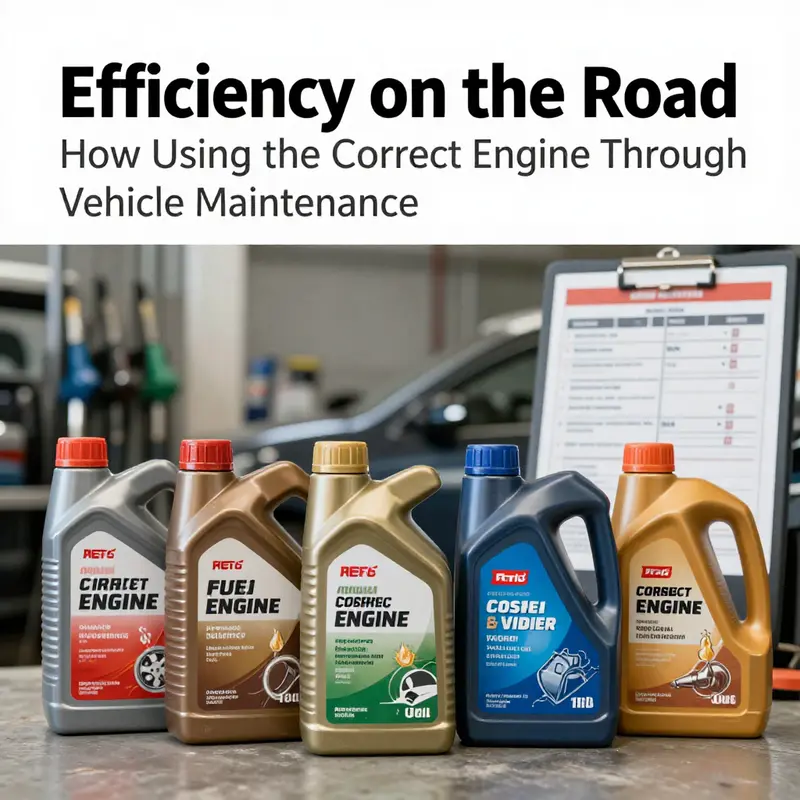
Engine oil sits at the heart of a car’s ability to convert fuel into forward motion with minimal waste. It is easy to overlook, yet the lubricant you choose and the condition it’s in directly shape how efficiently your engine runs. In the broader conversation about cutting fuel costs through diligent maintenance, the right oil acts as a quiet workhorse, lowering friction, stabilizing performance, and helping the powertrain do its job with less energy and less waste. When an engine is properly lubricated, moving parts glide rather than grind, and that smoother motion translates into fewer obstacles for the engine to overcome. Energy that would otherwise be lost to unnecessary drag stays inside the combustion cycle, which means more of each gallon goes toward propulsion rather than overcoming internal resistance. The practical upshot is subtle but meaningful: a healthier lubrication regime can shave a few percentage points off the fuel bill over the course of a year, and those small savings accumulate in a big way over time.
Modern lubrication science has moved beyond the old assumption that oil’s only job is to keep shiny metal parts from touching. High-quality lubricants—especially synthetic varieties—are engineered to maintain their protective viscosity under a wide range of temperatures and loads. This reliability matters for fuel economy because the engine’s efficiency hinges on how consistently the oil film separates surfaces and how readily moving parts can accelerate, decelerate, and return to idle without wasteful friction. A 2025 report from Car and Driver illustrates this clearly: full-synthetic oils are designed to preserve viscosity and performance under extreme conditions, yielding measurable fuel-efficiency gains that, in many cases, reach the 2–3% range. It might not sound dramatic at first glance, but for a car that travels 15,000 miles per year with an average of 25 miles per gallon and a gas price around $3.80 per gallon, that 2% improvement translates to roughly $45 in annual savings. Those dollars aren’t imagination; they show up as fewer gallons burned for the same miles, which matters when fuel prices ebb and flow and every mile counts.
Equally important is how the right engine oil interacts with maintenance scheduling. Synthetic oils and high-quality conventional blends don’t just stay in place longer; they also tend to hold up against new contaminants and breakdown products that can sap efficiency. In practical terms, this means a more stable oil performance over time, which helps keep the engine running like new for longer between changes. A common misconception is that switching to synthetic automatically requires fewer visits to the service bay. While it’s true that synthetic oils can tolerate longer intervals in many driving scenarios, the exact drain interval should still align with the manufacturer’s specification and real-world conditions. What changes is the potential for extending those intervals under normal driving, which MotorTrend’s 2026 study supports. The report found that vehicles using full-synthetic oil under typical conditions could safely extend oil-change intervals beyond 5,000 miles, with some vehicles reaching up to 10,000 miles without diminished performance. That extension matters not just for maintenance scheduling, but for the overall cost of ownership: fewer oil changes mean fewer consumables purchased, less labor time, and less downtime for your vehicle.
The connection between oil quality and engine cleanliness is another critical piece of the fuel-economy puzzle. High-performance oils resist sludge and deposit buildup more effectively than older, lower-quality blends. When sludge forms, it can restrict oil flow, increase engine drag, and demand more energy from the motor to pump oil to where it’s needed. The result is subtle, but real: the engine fights harder, consumes more fuel, and may deliver diminished performance over time. By keeping the engine clean, the right oil helps sustain the smooth combustion process that is essential to good fuel economy. Clean oil and clean internal passages mean less work for the fuel system to compensate for inefficiency, which compounds the savings achieved by friction reduction alone.
Choosing the correct oil is not about chasing a one-size-fits-all solution. Vehicle design, climate, and driving style all influence what oil works best. The owner’s manual remains the cartridge that holds the rules—the manufacturer prescribes the viscosity grade that ensures the oil pump can maintain a stable film under the full range of operating temperatures. In hot weather, low-viscosity oils can run hot and thin, while in cold starts, too thick a oil can hinder immediate oil delivery to the crank and cam gears. A well-chosen oil respects these dynamics, balancing flow characteristics and film strength so that the engine experiences minimum friction when starting in winter and minimal shear when the engine is hot and under load. These conditions matter because the energy lost to friction isn’t simply burned as heat; it’s energy that did not contribute to propulsion. The fewer losses the engine incurs, the more of each gallon of fuel reaches the wheels.
Beyond the chemistry and physics, there is a practical, everyday dimension to oil choice that drivers can act on without chasing expensive upgrades. For many drivers, the most cost-effective practice is to adhere to the oil-change schedule that aligns with the manufacturer’s recommendations, and to favor high-quality lubricants that hold their viscosity and lubrication properties over time. The extended intervals offered by synthetic oils have a concrete financial appeal: fewer oil changes mean saving on the cost of oil and filters and lower labor costs. Even though the per-change expense can be higher for synthetic oil, the net cost over a year or two often tilts in favor of fewer visits, especially for drivers who rack up long miles annually. The mathematics is straightforward: if you reduce oil-change frequency by one service per year due to extended intervals, you cut back on both the cost of the oil itself and the associated labor charges, which, when added up, can be a meaningful chunk of annual maintenance expenses.
All of this does not happen in a vacuum. The fuel-economy impact of oil quality is enhanced when it is part of a broader, disciplined maintenance routine. Engine oil doesn’t exist in isolation; it works in concert with air, fuel, and ignition systems to sustain efficient combustion. When oil maintains a consistent viscosity, it reduces the likelihood of excessive engine drag that can be caused by worn or contaminated oil. This synergy matters even more in engines that rely on turbochargers or operate under high-boost conditions, where the demand for stable oil films rises and the consequences of inadequate lubrication become more pronounced. In such contexts, the right oil becomes not merely a cost-saving measure but a protective, performance-preserving choice that helps the engine tolerate sustained loads without surrendering efficiency.
For readers exploring the broader context of how routine maintenance compounds fuel savings, consider the linked overview on vehicle maintenance and gas expenses. It reinforces the idea that every element of maintenance—tire pressure, filters, and proper lubrication—forms a chain of efficiencies that, when kept intact, equates to real money saved at the pump. See how-vehicle-maintenance-saves-on-gas-expenses for a complementary discussion on how these pieces fit together and how small, consistent habits compound into measurable savings over time. https://vehicletricks.com/blog/how-vehicle-maintenance-saves-on-gas-expenses/. While the mechanics above focus on oil, the larger picture recognizes that proper maintenance is a holistic discipline; neglect one link, and the chain’s overall strength weakens. A well-balanced maintenance regimen is a form of insurance against the creeping inefficiencies that otherwise erode fuel economy.
The practical takeaway is simple: invest wisely in the right oil, follow the manual for intervals, and appreciate the larger impact on fuel costs. The initial spend on high-quality synthetic oil may be higher, but the long-term benefits—improved fuel economy by a few percentage points, extended oil-change intervals, reduced engine sludge, and lower maintenance downtime—add up. The savings aren’t just theoretical; they appear as fewer gallons burned, modestly higher efficiency under both city and highway conditions, and a maintenance schedule that fits the realities of modern driving. In other words, engine lubrication, when done correctly, is a smart, sustained investment in efficiency that pays dividends with every mile.
As you consider your next oil change, remember that the goal is not simply to protect the engine but to preserve the conditions that make fuel use efficient. High-quality lubricants deliver that dual benefit: protecting modern engines under demanding conditions while contributing to lower energy consumption over the course of a year. The science behind the oil you choose is a reminder that fuel economy is not a single lever but a system—one where lubrication, combustion, and mechanical wear all interact. The better you align these elements, the more your vehicle can stretch its miles per gallon, and the more you can count every dollar saved at the pump as a direct result of thoughtful maintenance.
External resource: For a deeper dive into why synthetic oil is worth the cost, see this external discussion on engine lubrication and efficiency: https://www.motortrend.com/cars/why-synthetic-oil-is-worth-it/.
Lighten the Load, Boost the Miles: How Keeping Your Vehicle Lightweight Slashes Gas Costs
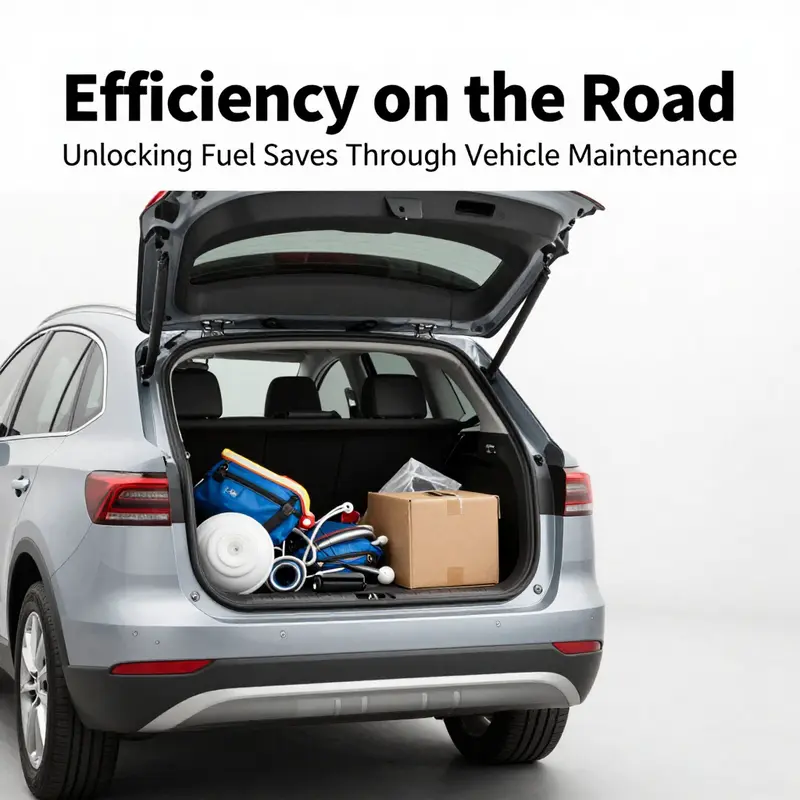
Weight is a quiet factor that influences every mile you travel. When people think about cutting fuel costs, they often focus on tune-ups or aerodynamics. Yet the mass you haul around acts like a hidden tax on your fuel bill. Extra weight means the engine must work harder to accelerate, move the car, and overcome rolling resistance. Practically, that translates to more fuel burned per trip, especially in city driving with frequent starts and stops.
The good news is that weight reduction requires no fancy gadgets and can yield meaningful savings over time. Narrowing the load a few pounds at a time compounds into real dollars saved at the pump. For a simple rule of thumb, note that every 100 pounds of extra weight can shave a few percent off fuel economy, depending on the vehicle and driving style.
Carry only what you truly need for the journey. Unload nonessential gear from the trunk, backseat, and roof rack, and review contents after each trip. The lighter your car, the less energy the engine needs to accelerate, climb hills, and cruise, which translates to fewer gallons per mile and lower spending at the pump.
Pair light loading with good maintenance. Proper tire pressure, clean air filters, and fresh engine oil reduce internal friction, so the energy you do expend goes further. When weight reduction is combined with regular maintenance, you’ll notice smoother performance and a steadier fuel bill over time.
If you’re curious for a concrete reference, you can estimate potential savings with the U.S. Department of Energy weight calculator: https://www.fueleconomy.gov/fuelcalc/weight.shtml
Final thoughts
Maintaining your vehicles effectively is a key strategy for business owners looking to control fuel expenses. By emphasizing optimal tire pressure, regular filter replacements, selecting the right engine oil, and keeping your vehicles free of excess weight, you can unlock substantial savings at the pump. This routine maintenance not only enhances operational efficiency but also contributes to the longevity of your fleet. A well-maintained vehicle ensures that every mile contributes to your bottom line, freeing up resources for other critical business areas. Start implementing these practices and watch your expenses decline.