
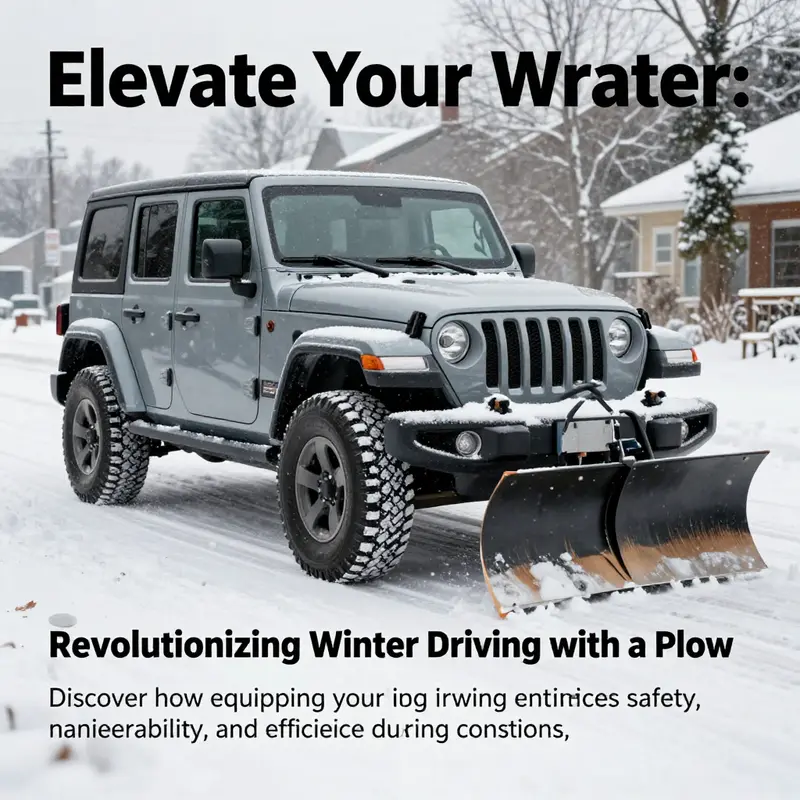
For business owners, maintaining operational efficiency during the winter months is crucial. Snow-covered roads can pose significant challenges, particularly for those relying on their vehicles for transportation and logistics. By equipping a Jeep Wrangler with a snow plow, not only do you enhance its utility, but you also guarantee a more seamless winter driving experience. This transformation is pivotal for businesses that demand constant mobility. In the upcoming chapters, we will delve into how a plow improves navigation in winter conditions, boosts safety and efficiency, and presents cost-effective solutions tailored to your operational needs.
From Trail Beast to Winter Workhorse: Transforming Your Jeep Wrangler with a Plow for Unstoppable Winter Driving

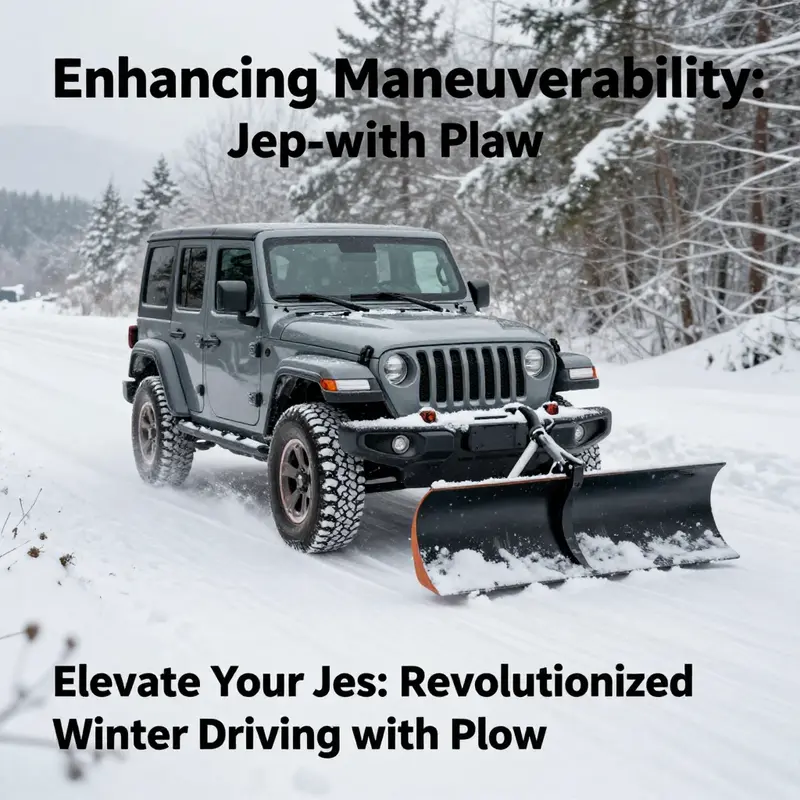
The Jeep Wrangler is iconic for its rugged demeanor, capable performance, and a spirit of independence that thrives where others stall. Yet winter tests its limits in ways that demand more than grit and good tires. When snow piles up and streets narrow, a front-mounted plow can convert the Wrangler from a weekend explorer into a dedicated winter workhorse. The transformation hinges on a simple, powerful idea: a front-mounted plow, paired with a robust mounting system, can push through snow with a predictable rhythm, restoring access to driveways, lanes, and emergency routes with less effort and more control. This chapter follows that logic as it treats the Wrangler not as a mere vehicle for off-road play but as a purpose-built winter utility machine capable of keeping life moving when the cold settles in. The goal is to paint a complete picture of what it takes to integrate a plow responsibly, why the Wrangler’s design makes it a strong candidate, and how to operate and care for the setup so it remains reliable season after season.
A plow, at its core, is a straightforward tool. It transforms the vehicle from a carrier of people and gear into a snow-clearing system that works with you rather than against you. There are two broad families to consider: hydraulic plows and electric plows. The hydraulic option is favored where snow loads are heavy or where speed and precision in control matter most. It uses a powered hydraulic circuit to raise, lower, and tilt the blade, delivering strong performance with a level of finesse that makes light work of deep drifts and packed snow. The electric variant, by comparison, prioritizes ease of installation and lower upfront cost. It relies on the vehicle’s electrical system to actuate the blade movements, which can be perfectly adequate for moderate storms and routine clearing tasks. Between these two paths lies a practical middle ground: a manual or semi-automatic push plow for light-duty tasks, especially for those who want a simple, affordable entry into winter plowing. The choice hinges on your typical snow load, your tolerance for setup time, and how frequently you intend to deploy the plow. Regardless of the route chosen, the first principle is solid and non-negotiable: secure mounting to the Wrangler with a certified system designed for the chassis. A generic, loose-fitting arrangement is a recipe for drift, instability, and expensive damage.
The Wrangler’s design already carries traits that complement a plow. Its high ground clearance helps the blade travel over light drifts without constantly hanging up on uneven pavement. The front bodywork is rugged enough to take occasional contact with helpfully soft, but not brittle, snow banks, and the 4×4 drivetrain remains a boon when traction declines under heavy snowfall. The weight distribution and the frame’s strength accommodate the added load of a plow, but this is not a decision to be taken lightly. A plow adds front-end weight, which affects steering feel, stopping distance, and the balance of the vehicle on slippery surfaces. The moment you mount a plow, you shift the Wrangler’s dynamics in meaningful ways. The highlight is control: you gain the ability to dictate where snow goes, not just where it lies. The downside is the extra stress on the suspension, the cooling system, and the electrical harness that powers hydraulic actuators or blade angles. That tension is manageable, however, when you approach the conversion with method and patience.
Choosing the right plow is not about chasing the most aggressive blade or the loudest hydraulic hum. It is about aligning capability with need and the Wrangler’s realities. A hydraulic system offers the strongest performance and the greatest versatility for frequent, heavy-duty snow removal. You’ll appreciate the responsive tilt, precise blade angle adjustment, and steady push power that makes clearing a long driveway or a municipal ramp a smoother, more predictable task. For many Wrangler owners, an electric plow provides a clear path to a capable winter tool without extensive installation work or ongoing maintenance. It delivers reliable performance for lighter to moderate snow and is well suited to those who want a straightforward setup that can be installed and removed with less downtime. A manual pusher, while less common for dedicated winter work, remains an option for small tasks, such as clearing a path to the shed or a single-car driveway. The core principle remains consistent: the plow should be chosen with an eye toward stability, ease of operation, and the ability to return the vehicle to its standard function when winter recedes.
Every plow journey is a learning journey. Before you hook a blade to the front, invest time in planning the mounting system. A certified mounting setup does more than secure the blade; it preserves the Wrangler’s integrity. It distributes the blade’s forces across the frame, minimizes leverage on brittle components, and provides a reliable connection for hydraulic or electric actuators. A high-quality mounting system also includes safety features like locking mechanisms to prevent unwanted blade movement, standardized attachment points that align with the Wrangler’s frame, and compatibility with other accessories such as light bars or winch mounts. The installation should be performed by someone with mechanical aptitude or by a professional, because improper mounting can compromise steering, braking balance, and airbag sensor integrity. While the initial cost may seem steep, the long-term benefits of a sound mount—safety, reliability, and the ability to remove and re-install the plow with confidence—far outweigh the short-term savings of a DIY or ad-hoc approach.
Once the plow is mounted, the operation begins. The first rule is to treat plowing as a controlled, repeatable process rather than a frantic sprint. In heavy storms, the plow blade will encounter resistance from snow banks, ice, and curbs. The operator’s job is to manage that resistance with deliberate blade angle, steady throttle, and deliberate steering. The hydraulic system, when present, translates input from the controller into precise blade movements. The hands learn a rhythm: raise before a boundary, tilt to adapt to the bank, push straight through, and re-center for the next pass. With electric plows, the same cadence exists, but the actuator speed may be slightly slower or faster depending on the model and battery condition. Either way, maintaining a slow, controlled pace reduces snow throwback toward you and minimizes the risk of clipping a curb, a parked car, or a hidden obstacle buried under the white blanket. The Wrangler’s wide stance helps with lateral stability, but that advantage can be undone by aggressive steering at higher speeds on slick surfaces. The safest practice is to begin in a controlled environment—an empty lot or a closed section of driveway—to calibrate blade height, angle, and travel speed, then gradually expand to real-world conditions.
The practicalities of plowing also include attention to the vehicle’s electrical and hydraulic health. Hydraulic systems require a clean, robust fluid circuit with no leaks, and the operator should monitor fluid levels, temperatures, and line integrity. Electrical plows demand a reliable battery and robust wiring to handle continuous actuator demand, especially in subfreezing temperatures where battery efficiency drops. Regular inspection of the blade’s edge is essential. A dull edge reduces efficiency, increases the load on the drive system, and can scatter snow rather than push it. Blade wear is inevitable, but it is also predictable; keeping a repair schedule and spare parts on hand preserves readiness. In addition, the blade should be cleaned and dried after each use to prevent corrosion. The metal’s surface is vulnerable to brine and road chemicals common in winter maintenance, so a routine rinse with fresh water and a light corrosion inhibitor can extend life.
Maintenance also extends to the plow’s mounting hardware and electrical connections. Seasonal removal and reattachment, where practical, reduces exposure to road grime and ice buildup. When the plow remains attached for extended periods, periodic checks for loose bolts, worn pins, and any flex in the mounting frame become essential. A tiny looseness can translate into substantial wobble at higher plowing speeds, which compromises accuracy and safety. Electrical connectors should be inspected for corrosion, pin fit, and secure grounding. The simplest precaution is to unplug the plow and inspect the harness sections for cracks, moisture intrusion, or pinched lines. If corrosion appears on any terminal, treat it promptly with contact cleaner and apply a dielectric grease coating to protect metal surfaces. These checks are not vanity maintenance; they are the quiet guardians of reliability when snow calls the Wrangler into service.
Operational experience, however, is the best teacher. Plowing is not about brute force; it is about optimizing the space the blade negotiates. Snow weighs differently depending on moisture content, wind-packed layers, and recent compaction by traffic. The plow’s efficiency rises when you approach the job with an eye for geometry: keep a straight line where possible, angle the blade only as needed to negotiate corners, and plan a short sequence of overlapping passes to prevent creating trailing banks that trap meltwater and refreeze. In practice, this means letting the plow lead the way while you manage the Wrangler’s momentum, steering with the same care you would use on ice, but with the added sense of purpose that the plow’s blade brings. The goal is not to clear every square inch with brute force but to create accessible routes that can be maintained by a human driver in less-than-ideal weather. A well-executed plow pass reduces the need for repeated shoveling and helps you reclaim driveways and entryways that might otherwise be blocked for hours or days.
The transformative potential becomes especially evident when you consider the broader utility of a winter-ready Wrangler. A cleared driveway improves safety for family members, guests, and service providers; it also preserves access to a garage, an important factor during blizzards or heavy snowstorms when roads become impassable. In rural or semi-rural settings, the ability to maintain a clear path to the road can have a tangible impact on response times for emergencies, deliveries, and daily routines. These practical benefits anchor the argument for the plow as more than a novelty upgrade. It is a deliberate investment in resilience—the Wrangler’s adaptation to winter’s unpredictability. And while the plow changes the vehicle’s character, it does so without erasing the core Jeep identity: off-road capability, rugged reliability, and a readiness to tackle whatever winter throws at you.
In the practical world of guides and owner experiences, there’s a perennial question: how do you verify that you’re getting the right equipment for a Wrangler, and how do you know you’re not overextending the vehicle’s limits? The answer lies in a disciplined approach to selection, mounting, and use. Start with a clear assessment of your typical snow scenario. Do you routinely encounter heavy, wet snow that piles high and clings to surfaces? Or is your winter climate milder but persistent, with ice and slush requiring frequent brushing and clearing? Your answer will steer you toward hydraulic or electric options and influence how aggressively you pursue blade width, tilt range, and power output. Then, engage with a certified installer or a knowledgeable shop to confirm that the chosen plow and mounting system are compatible with your Wrangler’s year, model, and any aftermarket enhancements. Finally, commit to a practical operation plan: pre-checklists, test runs, and a routine for inspecting and maintaining the system. This approach—balanced, deliberate, and informed—ensures that the Wrangler remains a dependable, year-round tool rather than a seasonal liability that sits idle for portions of winter.
Incorporating a plow into a Wrangler’s repertoire also invites reflection on the broader ecosystem of winter driving. It’s easy to fall into the trap of equating plowing with snow removal alone. In truth, the plow is part of a larger winter strategy that includes tires, weight distribution, visibility aids, and a driving style tuned for cold, slick conditions. A winter-ready Wrangler is a vehicle that can be trusted to clear a path when roads are compromised, but it is equally a vehicle that respects thresholds—speed limits, stopping distances, and the need to yield to pedestrians and other road users when visibility is poor. The plow does not replace safe driving habits; it complements them by reducing the time you spend exposed to the cold while you perform necessary tasks. It is a tool that, when used responsibly, strengthens your autonomy on snowy days and preserves your ability to respond to ordinary needs—the kids’ school drop-offs, a late-night grocery run, an urgent package delivery—without waiting for municipal services to catch up.
For readers curious about the broader winter performance discussion, a concise overview of how Wranglers perform in snow can be found online. Are Jeep Wranglers good in the snow? This resource surveys the vehicle’s capabilities in wintry conditions, offering practical insights that help frame decision-making about plows, tires, and driving technique. Are Jeep Wranglers good in the snow?
As winter progresses and the landscape shifts through new storms, the Wrangler-with-plow setup can evolve from a novelty into a trusted workflow. The initial installation becomes a backdrop for ongoing practice: refining blade angles, smoothing the rhythm of passes, and tweaking mounting or electrical connections as the weather and batteries demand. The transformation is less about replacing the vehicle’s core personality and more about expanding its repertoire. In this sense, the Wrangler becomes a modular winter platform that can be tuned to a user’s climate, driveway layout, and safety standards. The goal is to keep the path clear, the operation safe, and the driver steady under pressure—three outcomes that, together, define an ultimate winter-driving experience.
For readers seeking deeper technical details or installation inspiration, there are broader resources that explain mounting options, blade geometry, and maintenance best practices. One comprehensive external resource that provides practical guidance on jeep-wrangler plow configurations, installation considerations, and upkeep is available online. This source covers the kinds of questions that arise in the field—from assessing snow density and bank geometry to selecting a blade width that matches the Wrangler’s track and wheelbase, and from wiring harness protections to blade-edge replacement strategies. It serves as a helpful companion to hands-on guidance and real-world testing, bridging the gap between concept and execution as winter demands grow more challenging.
null
null
Winter Power, Measured Hands: Safety and Efficiency When Plowing With a Jeep Wrangler
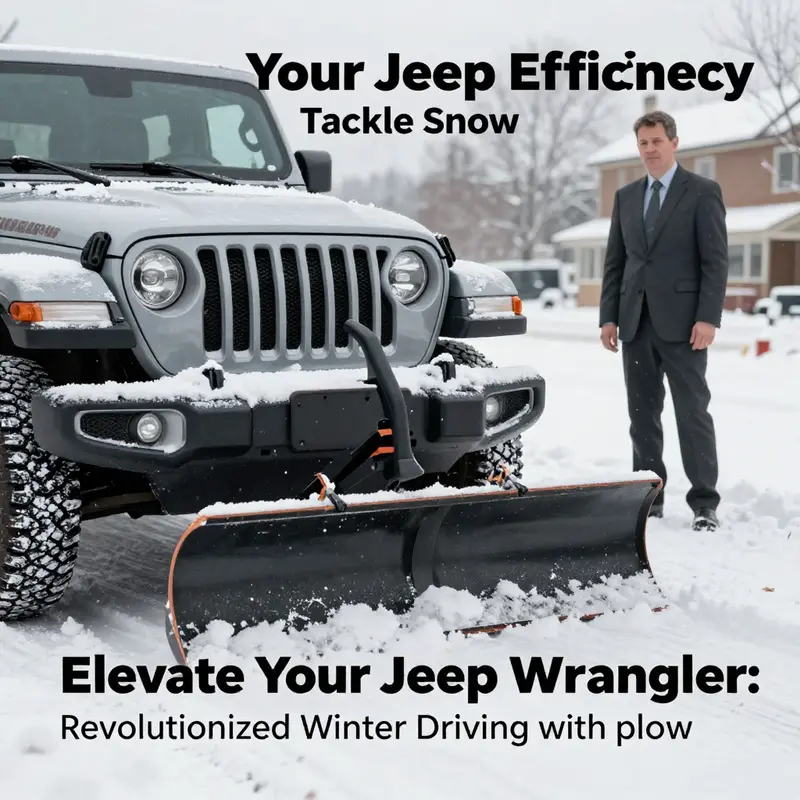
A Jeep Wrangler with a snow plow is more than a novelty for winter enthusiasts. It becomes a practical tool that can turn icy alleys, wind-packed driveways, and snow-choked lanes into predictable, navigable paths. But with that capability comes responsibility. The transformation is not only about clearing snow; it is about preserving control, protecting the vehicle, and reducing the strain on the body that often accompanies winter chores. To wield that power effectively, a driver must balance strength with restraint, speed with patience, and ambition with method. This chapter threads those threads into a single, coherent practice that keeps safety at the forefront while delivering real efficiency on frigid mornings and after-crash snows alike.
The essence of safety begins long before the plow blade meets the first flake. The Wrangler’s chassis, suspension, and steering are designed to handle off-road abuse and heavy loads, but adding a plow introduces a front-mounted mass that shifts the vehicle’s weight and the dynamics of handling. The plow is more than a tool; it is a load, and like any load, it changes how the Jeep behaves at low speeds and under braking. The prudent path is to choose a plow that fits the Wrangler’s geometry and to mount it with hardware that is specifically rated for the job. Look for reinforced mounting brackets and frames that distribute stress across the frame rather than concentrating it at a single attachment point. This is not a space to improvise; misalignment or under-spec hardware can propagate stress through the unibody and steering components, especially when striking uneven snow or small obstacles hidden beneath a crust of ice.
Even with a well-matched plow, the weight and balance should guide every maneuver. Never exceed the vehicle’s loaded weight recommendations, and plan for proper weight distribution. The front-mounted plow adds lift and load to the nose of the Wrangler, which can affect steering feel and braking distance. In practice, many drivers mitigate this effect by small, deliberate ballast adjustments or by adjusting tire pressure within manufacturer guidelines. The goal is to keep the front axle from binding under heavy, high-energy pushes while maintaining enough bite and traction on the rear to prevent fishtailing on slick surfaces. This balancing act is not a one-time setup; it requires ongoing attention as snow conditions change and as the plow blade wears.
Before the plow blade ever touches snow, the installation deserves deliberate care. Follow the installation guidelines that come with the plow and any install kit, and seek the help of a certified installer if there is any doubt about the process. A secure attachment is about more than keeping the blade steady; it is about ensuring that vibrations and impact loads transfer through robust, designed channels rather than into delicate components of the Wrangler’s body and its drivetrain. Tighten fasteners to the specified torque values, verify electrical connections if the plow uses lighting or hydraulic controls, and confirm that all safety devices—release pins, safety switches, and anti-rotation mounts—are in place and functioning. The first snowy morning is not an experiment; it is a test run that should end with confidence, not rattling or misalignment.
The driving technique while plowing is a study in rhythm and restraint. Snow, even when soft, offers resistance. A plow advances with a steady, purposeful push, and the driver’s role is to maintain a consistent pace that the vehicle can sustain without drama. Abrupt starts, sudden stops, and sharp steering while the blade is loaded create lateral forces that can upset balance and increase tire wear. A controlled, gradual approach helps the plow maintain efficiency and reduces the likelihood of bouncing the blade or catching on hidden obstacles beneath the snow. Steering should be light yet precise, with anticipation of curb lines, driveway edges, and the subtle contours of a snow-covered landscape. In icy patches, reduce steering input further and allow the plow to carry a little momentum rather than forcing the vehicle through a lock-up moment. In regions where pedestrians are common—driveways, sidewalks, and parking lots—the driver must slow even more and use significant caution. Visibility plays a critical role here; keep lights clean and aimed properly, and ensure that plow-mounted lighting, if installed, does not blind oncoming traffic and remains within legal requirements for your jurisdiction.
Part of the efficiency story is rethinking the plow as a tool for access rather than a blunt force instrument. A plow can clear a path with minimal passes when the operator uses the windrow effectively to bridge snow piles and avoid repeatedly crossing over the same snow. The blade angle and the speed of travel determine how much snow is moved with each pass and how much material ends up on the shoulder or in a cleared area. For longer driveways or tougher snow packs, plan your sequence to minimize rework. Start at the far end and work toward the street, if space permits, so that the blade’s path does not turn you back into already cleared zones. If the terrain is hilly, trenching and windrow management become critical; a too-steep windrow can block future passes or create a pedestrian hazard. These are not just hypothetical concerns—clear, well-thought-out planning translates into time saved, lower physical strain, and a safer working environment around the Wrangler.
Maintenance is the quiet backbone of safety and efficiency. A plow system, whether manual or hydraulic, thrives on routine checks, especially during the heavy use months. Regularly inspect the hydraulic lines for wear, leaks, and kinks, and verify that hydraulic fluid levels are appropriate for the climate. If the plow uses power-assisted movement, test the system in a dry, controlled setting before putting it to work in snow. Lighting systems deserve particular attention; burned-out bulbs reduce visibility to others and to the operator, while loose connections can create disorienting flickers or failure at critical moments. Blade wear is another practical concern. A dull blade requires more passes to move the same amount of snow and can put unnecessary stress on the vehicle. Keep the blade sharp or replace it as needed, and also check for bent or damaged mounting hardware after heavy use. A simple, routine maintenance ritual—visual inspection after each plow session, followed by a more thorough check weekly—will extend the life of the plow and protect the Wrangler from avoidable damage.
The decision to adopt a plow also carries a broader perspective on the vehicle’s winter role. A Wrangler with a plow becomes a year-round utility asset, capable of supporting home access and property maintenance when storms hit. It is not a substitute for professional snow removal in all conditions, but it can dramatically reduce the backlog of tasks that accumulate during a harsh winter. The practical benefits—faster clearance of driveways, safer access for family and guests, and the ability to maintain a predictable schedule—are real. Yet the value rests on disciplined practice: selecting compatible equipment, installing it properly, maintaining it diligently, and driving with a measured, anticipatory mindset. This is the core of turning a Wrangler into a winter-ready workhorse rather than a novelty that sits in the garage until the first snow day.
As drivers explore this path, they often encounter a shared question: how to reconcile the Wrangler’s off-road identity with the demands of plowing urban or suburban spaces. The answer lies in weight management, tire choice, and prudent routing. High-quality winter tires with deep tread improve road grip and steering feedback, which in turn enhances control when the blade is engaged. The tire choice should reflect the operating environment—slippery pavement, packed snow, and occasional ice—and the loading condition created by the plow. A tire with robust siping and a guaranteed cold-weather performance rating can be a decisive factor in how safely the vehicle negotiates turns and edges. The route selection remains a driver’s judgment call—avoid steep slopes when the windrow is tall, and favor routes with gradual grades and broad turning radii that reduce the need for aggressive steering inputs.
In considering all these aspects, it is useful to reflect on the broader knowledge base that exists around Wranglers in wintry conditions. Practical guides and vehicle-specific tips emphasize that safety and efficiency come from a combination of correct equipment, careful installation, deliberate driving, and consistent maintenance. The point is not to overstate the capabilities of a plow or the Wrangler but to acknowledge that together they can expand your winter toolkit when used with care. For readers seeking additional perspectives on how Wranglers perform in snow and how plow-equipped setups alter that performance, there is a breadth of community guidance and technical discourse available to consult. An example of this broader conversation can be found in discussions that ask whether Wranglers are well-suited to snowy conditions and what considerations matter most when adding a plow and related accessories. See the discussion here: Are Jeep Wranglers Good in the Snow?.
Despite the broad promise, a word of caution remains essential. The safety and efficiency gains hinge on disciplined practices, not on the plow alone. Even with the best equipment, reckless driving, neglect of maintenance, or improper installation can turn a winter maintenance task into a hazard. The goal is not to conquer nature by force but to work with it—using the plow to manage the snow layer while keeping the Wrangler’s handling predictable and recoverable. The process is iterative: select appropriate gear, install correctly, operate with a steady rhythm, and perform ongoing checks. When these steps are followed, the plow-equipped Wrangler does more than clear snow; it clarifies pathways, reduces physical strain, and enhances readiness for whatever the winter weather may bring.
For those who want a practical path forward, the recommended approach is clear. Start by validating the fit and mounting with the vehicle’s manual and with a qualified installer if there is any doubt. Then schedule a routine maintenance cycle that aligns with the winter driving calendar—before the first real snowfall and after the last heavy storm of the season. Practice slow, controlled plowing in a safe area to develop a confident rhythm before tackling your driveway, walkway, or property access in earnest. Finally, treat every snow event as part of a broader safety plan: ensure you have proper lighting, clear visibility, and a contingency plan if conditions worsen. The plow is a tool that, when used wisely, can change how you move through winter, turning treacherous roads into routes you can rely on.
External resource: https://www.amazon.com/dp/B0B3JW2X5Y
Budget-Smart Winter Clearing: Transforming a Rugged 4×4 SUV into a Practical Snow-Removal Partner

Snow can transform a quiet driveway into a white obstacle course, and a practical solution for clearing that snow without breaking the bank lies in giving a capable four-wheel-drive SUV a front-end plow setup. This chapter explores how a rugged, multipurpose vehicle—not designed as a dedicated snow service machine—can become a true winter helper when outfitted with a plow designed for light to moderate snowfall. The focus is less on chasing the latest branded gear and more on thoughtful integration, reliability, and cost-effectiveness. The goal is to show how a practical plow adaptation can extend the utility of a versatile vehicle, turning it into a dependable ally for homeowners dealing with regular snowfalls, seasonal backyards, or remote properties where a full commercial plow truck would be overkill.
A four-wheel-drive SUV with solid ground clearance already has the right baseline attributes for winter work. It can tackle rutted driveways and uneven surfaces while maintaining a manageable profile on winter roads. The real shift comes when a plow is mounted at the front end. With a properly sized blade, secure mounting, and basic reinforcement to the suspension and chassis, the vehicle changes from a personal transport into a practical snow-removal tool. Importantly, this transformation should be approached with an eye toward balance, safety, and long-term durability rather than simply slapping on a blade and hoping for the best. In light to moderate snow, a front-mounted plow can dramatically reduce manual shoveling effort, save time, and keep access routes clear, which adds real value for homeowners, rural residents, and those who maintain multiple small lots.
The core concept rests on three pillars: compatibility, reinforcement, and operation. Compatibility means choosing a plow system that can attach to a wide range of standard mounting points without requiring extensive fabrication. A blade in the 48- to 54-inch range generally suits most mid-size SUVs and light-to-moderate snowfalls. A blade of this size provides enough reach to push snow away from doors and walkways while remaining maneuverable enough to handle driveways and tight corners. The second pillar, reinforcement, addresses the stress placed on the front end during plowing. The added weight and leverage amplify forces on the suspension and steering components. Here a front-end upgrade in the form of an OEM-style air-suspension reinforcement option can help absorb the extra load. The kit provides improved ride control during plowing and helps protect the springs and mounts from fatigue over time. It’s a practical acknowledgment that the vehicle’s original springs and shocks were not designed to carry and push dense snow for extended periods. The third pillar is operation. Snow removal is a process that benefits from controlled, deliberate motion rather than brute force. Plows are most effective when used with steady pressure, consistent speed, and attention to windrows. Using a hydraulic plow system can offer even greater control for larger loads or more demanding clearing tasks, allowing the driver to manage blade angle, lift, and fall-back from inside the vehicle. While hydraulic systems add cost and complexity, they can significantly reduce physical strain and improve precision on longer clearing sessions.
For the budget-minded, the most economical approach is a straightforward manual push blade paired with a robust mounting and a basic protective reinforcement. The manual pusher benefits from its simplicity, reliability, and lower upfront costs. It also minimizes the risk of hydraulic leaks or electrical complications that can accompany powered systems. With a blade designed for heavy-duty use and corrosion-resistant materials, the equipment can withstand winter weather and frequent use without quick deterioration. When installed correctly, a manual blade can clear driveways, sidewalks, and parking spaces in a fraction of the time it would take to shovel or use a smaller, less capable tool. The key is ensuring that the mounting system is secure and that the blade’s weight distribution remains balanced enough to avoid inducing steering or braking instability.
As with any vehicle upgrade, a few practical caveats deserve emphasis. First, the front end will experience additional stress during plowing. Ensuring the mounting hardware is robust and the blade is appropriate for the vehicle’s weight class helps prevent loosening or misalignment that could compromise steering control. Second, maintaining visibility and control remains paramount. The operator should drive at sensible speeds, especially on icy surfaces, to keep the plow from catching on hidden obstacles or uneven pavement. Third, consider the impact on fuel economy. While a plow improves snow removal efficiency, it can also add drag and weight. Planning plowing sessions for when you have a clear route and sufficient time helps manage this impact without sacrificing safety or speed.
From a cost perspective, the virtue of this approach lies in its modularity. You can begin with a basic manual blade and add reinforcement or a hydraulic system later if needed. The incremental nature of the upgrade means you’re not committing to a single, high upfront price. Instead, you invest in a platform that remains useful beyond snow season. The choice to install a plow on a capable SUV is particularly appealing in zones where snowfall is light to moderate and where homeowners must navigate tight driveways, paths, or unpaved entrances. In these scenarios, the plow becomes a tool of consistency, enabling more predictable winter routines and reducing the seasonal strain of physical labor. The project also remains flexible enough to be reversed or modified should circumstances change, preserving the vehicle’s original value and resale appeal.
A practical path to implementation starts with selecting a plow blade size that aligns with the vehicle’s proportions and the typical snow load. In many cases, a blade around 48 to 54 inches provides a good balance between reach and maneuverability. This size is large enough to clear a walkway and a driveway edge efficiently but not so large that it becomes unwieldy in tighter spaces or on residential streets. The mounting interface should be compatible with standard frames and brackets, enabling straightforward installation and removal as needed. This portability matters for seasonal storage and for those who use the vehicle for ordinary everyday duties in the summer months. By choosing a system that can be attached or detached without permanent modifications, you retain the vehicle’s versatility for non-winter use.
Suspension reinforcement, while not glamorous, is a cornerstone of a responsible installation. The recommended path involves an OEM-referenced upgrade that helps absorb the load transfer during plowing. It acts as a safeguard, preserving ride quality for passengers and protecting components that do the heavy lifting whenever the blade is in action. In practice, this means fewer vibrations, less stress on the chassis, and a more predictable steering response when the blade meets a stubborn drift or a packed snow ridge. The result is a winter tool that behaves as a well-calibrated extension of the vehicle, not a jarring modification that destabilizes the ride or invites sudden wear on the suspension.
Operationally speaking, the experience hinges on how you approach the task. A plow-equipped SUV offers a straightforward workflow: position, engage, and maintain a steady rhythm. On light to moderate snow, a firm, controlled push is more effective than aggressive, high-speed passes. The driver should monitor the blade’s angle and height to avoid plowing too close to obstacles or curbs, which can cause damage or scour paint. If a hydraulic system is part of the package, the inside-the-cabin control panel becomes the command center. It allows the operator to adjust blade tilt, raise and lower the blade, and fine-tune the angle to push snow to the side or into a designated pile. The difference between manual and hydraulic systems is notable in terms of effort and efficiency. A hydraulic setup is particularly valuable when clearing longer driveways or multiple piles, where reduced physical strain translates into faster completion and more consistent results.
Beyond the mechanical and operational aspects, a cost-conscious approach also considers maintenance and lifecycle costs. Regular inspections of mounting bolts, blade wear, and hydraulic hoses (if applicable) can prevent more serious problems later. For a blade with a corrosion-resistant surface, maintenance is mostly about keeping joints clean, re-lubricating moving parts, and ensuring that the pivot points and locking mechanisms remain secure. The end goal is a durable snow-clearing solution that requires minimal downtime and delivers reliable performance across many winters. With a sensible maintenance routine, the plow setup remains an asset rather than a source of recurring repair expenses.
Another important facet is the alignment between the plow and the vehicle’s overall design philosophy. The purpose here is not to turn the SUV into a commercial-grade equipment carrier but to create a practical, home-friendly clearing system. This means maintaining a reasonable payload and ensuring that any added weight does not compromise overall safety or road compliance. Local regulations and vehicle handling guidelines should always guide installation decisions. If necessary, consult a technician who can verify that the mounting system, reinforcement, and blade dimensions meet both manufacturer recommendations and local code requirements. For many homeowners, this measured approach yields a reliable winter worker without the premium tag of a purpose-built plow truck.
When exploring the broader landscape of winter vehicle configurations, it’s helpful to view the setup as a tactical refinement rather than a radical transformation. The base SUV—already known for its off-road heritage and adaptability—gains a new utility profile through a plow that complements its strengths. The resulting system is robust enough to handle routine tasks like driveway clearing after a light snowfall, storm aftermath cleanup, and the occasional challenging clearing job on a rural path. It remains, at heart, a practical, multifaceted vehicle that can switch from everyday family transport to a functional winter ally with a few carefully chosen components and a disciplined approach to use and maintenance.
For readers seeking a broader perspective on how these configurations fit into winter preparedness, a related article offers a deeper dive into the concept of a winter-ready setup that embraces a plow as a practical tool rather than a niche accessory. Jeep Wrangler with a Plow: Ultimate Winter Warrior.
As a closing thought, budget-minded homeowners can gain substantial value from a disciplined, modular approach to plowing—one that respects the vehicle’s original design while delivering measurable improvements in winter readiness. The combination of a well-sized blade, a secure mounting system, and prudent reinforcement yields a cost-effective path to reliable snow removal. It’s not about chasing the most powerful or the flashiest setup; it’s about crafting a practical, durable solution that respects both safety and the realities of a homeowner’s winter routine. And because the project is modular, you can scale up later if your needs change, preserving both your investment and the vehicle’s versatility for years to come.
External resource: for a technical reference on compatible OEM suspension support for plow use, see the official parts catalog entry from the OEM provider. Mopar official parts catalog: front-end plow use
Final thoughts
Integrating a snow plow with your Jeep Wrangler not only improves your vehicle’s operational functionality during winter months but also safeguards your business commitments. By transforming the way you approach snow removal, you can navigate winter’s challenges with confidence, ensuring that your drives are swift, safe, and efficient. Whether you choose a manual snow pusher for smaller tasks or invest in a hydraulic plow system for larger demands, the enhancements to your Jeep Wrangler will revolutionize your winter driving experience. As we face harsher winters, this strategy becomes essential for maintaining accessibility and productivity.