

Winter can be a challenging season for many businesses, especially those in industries that require constant mobility in harsh weather conditions. The Jeep Wrangler, notorious for its off-road prowess, can be effectively customized to not only handle tricky terrains but also serve as a valuable asset in snow clearance efforts. This article explores the potential for transforming a Jeep Wrangler into the ultimate winter warrior. Each chapter will delve into specific aspects, from customization options to performance upgrades, ensuring that your Jeep is not just a vehicle but a reliable partner throughout the winter months. By understanding the right modifications and enhancements, business owners can maximize their vehicle’s value, ensuring efficiency in their operations, even in adverse conditions.
Winter Warrior Wrangler: Plow-Ready Jeep for Snow Clearing
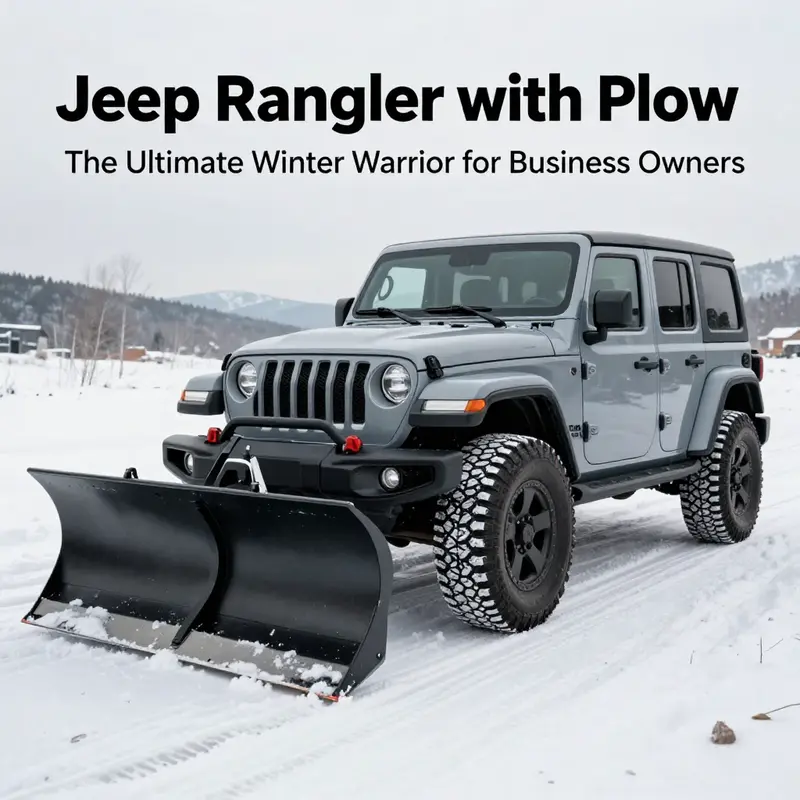
The Jeep Wrangler has long been a symbol of rugged capability, a vehicle built to handle rough weather and tough terrain. When winter tightens its grip, that same toughness can be redirected toward practical snow clearing. A plow equipped Wrangler is not about ostentation but about dependable mobility when driveways must be cleared and parking lots opened. The first consideration is selecting a plow that matches the vehicle and typical snow. A plow with a balanced weight and a robust steel or aluminum blade can move snow efficiently without overstressing the frame. Secure mounting to reinforced points on the frame and bumper is essential to prevent flex and fatigue during repeated pushes.
Next comes the front end upgrade. A heavy duty bumper or bumper with reinforced mounting tabs provides a stable foundation for the plow system and offers extra protection during off road use. Suspension upgrades such as heavier coils and compatible shock absorbers help the front end carry the extra load, preserve ride height, and maintain steering response when the plow is in use.
Tires and traction are crucial allies. Winter or all terrain tires with aggressive tread patterns improve grip on ice and snow. In some conditions, tire chains may be appropriate where legal and safe to use, but they should be selected and fitted with care to avoid interference with the plow and steering.
Electrical systems and controls deserve careful attention. A plow requires power for actuator systems, pump motors, and lighting. A dedicated power circuit with a reliable battery and appropriate fusing helps ensure consistent performance in cold weather. Lighting upgrades improve visibility for the driver and for others around the plow path.
Professional evaluation is wise before any retrofit. Plow geometry varies by model year and bumper style, so a qualified technician can verify mounting fit, weight distribution, and interaction with the steering and braking system. A system designed as a single integrated package is more likely to stay reliable than a collection of add ons.
Operation in snow demands discipline. Drive slower, anticipate changes in traction, and keep the plow at controlled angles and speeds to minimize stress on mounting hardware. In slushy conditions or on packed snow, careful throttle and steering inputs reduce shock loads and help keep the vehicle stable.
In the end a plow equipped Wrangler offers a practical solution for snow bound days. With a well planned build and professional guidance, the Wrangler can clear a driveway, a parking area, or a small commercial lot while keeping the rest of the vehicle ready for everyday use. This approach emphasizes safety, reliability, and long term value, turning a capable off road machine into a dependable winter partner.
Winter’s Heavy Lifts: Crafting the Jeep Wrangler into a Plow-Ready Winter Warrior

In the heart of winter, a Jeep Wrangler fitted with a plow becomes more than a tool for clearing snow. It evolves into a mobile asset that can extend a business day, protect a property, or simply keep streets passable when others pause. The vision of a springy, unstoppable machine is tempered by a few essential truths: reliability under cold, snow-loaded loads, and predictable handling when the plow weights the front end. The path to a true winter warrior is paved not with bravado but with integrated engineering—carefully aligned power, grip, protection, and control. The goal is to create a balanced system where every upgrade complements the others, so the vehicle remains controllable, durable, and safe through repeated cycles of plow work and shifting weather conditions.
At the center of any winter plow setup lies the powertrain. The latest Wrangler family offers a turbocharged four-cylinder option that delivers around 270 horsepower and about 400 Nm of torque, paired with an eight-speed automatic transmission. This combination matters when momentum is required to break initial traction or to push through a light crust of ice on an incline. It matters more when the plow’s own weight compounds the load on the front axle as the blade bites into packed snow. A four-wheel-drive arrangement with true locking differentials and a disconnectable sway bar can make a tangible difference in how quickly and steadily the vehicle gains traction. The presence of multiple locking points helps the front, center, and rear wheels share the load and reduce the slip that often accompanies front-violence pushes against a heavy blade. For drivers who expect deeper snows and longer shifts, a higher-displacement V8 option becomes appealing for its superior pushing power and steadier acceleration under load, but that extra strength comes with trade-offs in fuel economy and overall vehicle weight. The practical takeaway is that the powertrain must be tuned to maintain steady torque delivery as the blade engages with ice and snow, avoiding the nasty stutters that can unsettle a plow process and, in turn, threaten structural connections.
The plow’s presence also reshapes how the Wrangler behaves on rough winter roads. The front-end load pushes the suspension and chassis to work harder, especially when the plow first contacts the surface or when hitting uneven snow pack. The vehicle’s body-on-frame construction is inherently sturdy, yet a thoughtful approach to suspension reinforcement reduces the risk of fatigue or misalignment after repeated plow cycles. Before mounting a blade, it is prudent to inspect the front suspension for wear and to upgrade components that bear the brunt of the plow’s reaction forces. The aim is to distribute the plow’s counterforces more evenly and to preserve steering geometry and ride quality. Wheels and tires play a vital role here. Rugged, purpose-built tires designed for severe conditions, paired with sturdy wheels, can provide a margin of protection against sidewall impact and bead failures when negotiating curbs, hidden obstacles hidden under drifting snow, or compacted ice sections. In practice, the best combination is a sturdy wheel assembly coupled with tires that offer strong grip on ice and snow, yet remain predictable when the plow works against a firm edge.
Beyond the mechanical hardware, the Wrangler’s electronic systems act as intelligent safeguards that translate driver intent into measured action. Modern Wranglers deploy a terrain-analysis framework that uses sensor data to monitor slope, traction, and load distribution, then adjust suspension travel and power allocation to keep the vehicle stable as the blade performs its work. When plowing, this predictive capability becomes especially valuable; it helps the operator maintain controlled posture, reducing the risk of sudden surges or loss of grip that could compromise the plow and the wear points where it attaches to the chassis. A front-facing camera integrated near the windshield area also sharpens forward visibility, giving the driver a clearer view of conditions immediately in front of the blade. Although the camera’s aid cannot substitute careful judgment, it lowers the odds of striking a hidden obstacle or a snow bank lip at a critical moment. Taken together, the electronic safeguards and sensor-driven adjustments offer a level of confidence that pure raw power cannot provide alone.
From the outside, the plow setup interacts with the Wrangler’s silhouette and lighting in meaningful ways. Lateral LED headlights provide improved illumination through snow and glare, helping the driver read drifts and markings more clearly when visibility is compromised. Red tow hooks at the front are not just a rugged aesthetic; they function as robust recovery and mounting anchors under tough winter conditions. It’s important to note, however, that there is no factory-plow interface in most configurations. This is not a limitation but a design choice that invites certified aftermarket systems. When a professional installation kit is selected and properly integrated, the plow becomes a seamless extension of the vehicle’s structure and electrical system. The key here is to work with a qualified installer who understands how to anchor mounting points to the frame, route the electrical connections safely, and ensure the plow’s control circuits do not interfere with critical vehicle subsystems. A well-executed installation preserves safety margins and helps maintain warranty considerations by staying within recognized standards for modification.
The practical work of building a winter-ready Wrangler extends into careful, ongoing maintenance. Cold temperatures strain the electrical system, drain batteries faster, and can sap the starting energy needed for a brisk plow sortie. Some owners explore frost-resistant heating kits for the engine bay and underhood components, along with cabin insulation devices or supplemental heating measures for the interior. Such upgrades keep the powertrain and occupants comfortable while reducing thermal strain on electrical circuits during long plow sessions. Beyond temperature considerations, the plow’s weight alters braking characteristics and steering feedback, so regular checks on brake pads, rotors, and steering linkage are prudent. If a vehicle sees frequent plow duty, it’s sensible to schedule periodical inspections for mounting hardware and for the plow’s pivot points and wear surfaces. The idea is simple: a winter warrior should not confer extra risk to the operator or the terrain just because the blade was bolted on once and forgotten.
Safety in winter work also hinges on awareness of regulatory and advisory guidelines. Automakers reserve the right to modify models at any time, and the practical reality is that many winter-ready builds continue to evolve as new parts and approaches become available. A conservative approach favors professional evaluation and installation, especially for extreme-duty setups. For those who want to explore broader perspectives on how Wranglers perform in snow and how modifications influence day-to-day reliability, the following overview offers a grounded perspective on winter readiness and practical expectations: Are Jeep Wranglers Good in the Snow? Winter Performance Unveiled.
Even this measured view invites a degree of caution. The pursuit of true winter capability should be anchored in a comprehensive plan that treats the plow as part of an integrated system—the powertrain delivers, the drivetrain grips, the chassis supports, and the electronic helpers guide the operation. That integration becomes most valuable when it occurs under the supervision of qualified technicians who understand how to balance load, electrical demands, and suspension travel without overstressing any single component. It is not about chasing the loudest torque or the heaviest blade; it is about achieving reliable, predictable performance through thoughtful selection, precise installation, and disciplined operation. In practice, that means a well-mested plan: verify engine and transmission compatibility with the plow’s load, select a front suspension reinforcement strategy that aligns with the vehicle’s expected duty cycle, equip durable tires and wheels suited for icy surfaces, and ensure the entire system remains within safe limits through professional calibration.
As a closing note, the winter warrior concept is less a single piece of gear and more a carefully balanced ecosystem. With a sound powertrain foundation, reinforced front-end components, capable wheels and tires, and intelligent electronic aids, a Wrangler can maintain traction, control, and safety when the snow flies. The aim is steady, repeatable performance—enough to move the snow, protect the street, and keep the operator confident in every pass. The best practice is to pursue professional assessment for any extreme winter configuration, keep the electrical and mechanical systems maintained, and approach each storm with an organized plan rather than improvisation.
External reference: https://vehicletricks.com/blog/how-safe-are-jeep-wranglers-unveiling-the-truth/
Winter Frontline: Safety, Reliability, and the Wrangler Plow Challenge

Snow thickens along the edges of the road as the Wrangler sits steady in the driveway, a compact titan built for trails now cast into a winter task. The idea of a Jeep Wrangler with a plow sounds straightforward enough—a small army of winter services and weekend warriors alike imagine punching through snow to keep driveways and lanes clear. Yet behind the image lies a set of realities shaped by physics, wear, and how a rugged off-road machine adapts to a very different kind of duty. This chapter follows that shift from capability to consequence, tracing how added weight in the nose, altered balance, and a surge of electrical demand reframe safety and reliability in winter conditions. The aim is to illuminate the careful balance between purpose and prudence, so a Wrangler can be both capable and trustworthy when the storms arrive in earnest.\n\nAt the core of the Wrangler’s winter plow equation is weight distribution. A plow blade anchored to the front end adds significant mass ahead of the vehicle’s center of gravity. That extra mass changes how the front wheels bite into snow and how the rear wheels transfer traction when braking. In practical terms, the vehicle can feel nose-heavy, especially when turning on icy surfaces. The front end tends to dive under braking as the snow plow pushes resistance and friction against the snow, which can reduce rear-wheel traction and invite skidding or even fishtailing. For drivers accustomed to the Wrangler’s light-footed, off-road balance, the shift demands new caution. Speed becomes a risk multiplier, and turning radii widen in response to the altered momentum. This is not about lacking capability; it is about recognizing how extra frontal load transforms dynamics that are second nature in dry, studded, or mud-only seasons.\n\nVisibility is another quiet disruptor in the plow equation. The blade, even when properly configured, carves a physical blind zone directly ahead. Objects that would ordinarily be visible in a clear view of the road may vanish behind the plow’s bulk. Pedestrians, pets, or the edge of a snowbank can become invisible until they are uncomfortably close. That constraint heightens the driver’s reliance on mirrors, sensors, and a disciplined driving style. The result is a regression toward slower, more deliberate maneuvering: shorter bursts of acceleration, careful throttle modulation, and a mindful approach to approaching corners, driveways, and intersections where cross-traffic may appear suddenly.\n\nBraking distances naturally extend as a consequence of the added mass. The plow’s resistance compounds the rolling inertia of a heavier vehicle, while cold temperatures degrade tire grip and brake performance. On downhill stretches, gravity and frost cooperate to push the situation toward a threshold where the vehicle’s momentum outpaces its stopping power. The prudent operator manages this by adjusting speed well in advance, pre-planning braking points, and avoiding abrupt inputs that could unsettle the chassis. The plow also introduces aerodynamic drag that, at speed, can resist acceleration and complicate downhill control. These are not reasons to abandon a Wrangler’s winter utility; they are reminders that effective plowing hinges on respectful speed, deliberate technique, and continuing attention to road conditions.\n\nAttachment and operation of the plow itself require scrupulous care. A plow that is not securely mounted can detach during plowing, creating a dangerous obstacle or hazard for others. Installation must be performed by trained professionals who understand weight distribution, frame reinforcement, and the specifics of the Wrangler’s chassis. The danger of improper mounting extends beyond immediate collision risk; it can also cause damage to the bumper, frame, or surrounding sheet metal when the plow encounters obstacles or makes contact with curbs and snowbanks. Operators must be trained in proper plowing angles, blade height, and return-to-transport procedures so the equipment remains predictable under a range of winter scenarios. In short, the plow is not a simple add-on; it is a system that interacts with steering geometry, suspension travel, and power delivery in ways that demand respect and responsibility.\n\nFrom a reliability standpoint, plowing snow is a demanding task for any light-duty vehicle. The engine, transmission, and drivetrain are subjected to sustained loads far beyond standard cruising duty. Deep or compacted snow requires high torque and continuous operation, and that sustained load can push cooling systems toward their limits. If cooling capacity is not matched with the job, overheating becomes a real risk, especially when cold outside air reduces the engine’s ability to shed heat efficiently. The Wrangler’s electrical system also bears extra strain: the plow’s pump, lights, and any auxiliary features draw additional current, which can tax the alternator and battery, particularly in subfreezing temperatures where battery efficiency naturally declines. The result can be a cascading sequence of performance dips—from dim headlights to erratic winch behavior or even failed starting attempts if the battery is marginal to begin with.\n\nSuspension and steering components are equally tested by a front-mounted plow. The repeated impact of striking snowbanks or hidden debris can accelerate wear on springs, bushings, and tie rods. In a worst-case scenario, corrosion from road salt intensifies the vulnerability of metal components exposed to the elements, accelerating rust and potentially compromising the durability of critical joints. The solution is not to avoid winter plowing with a Wrangler, but to approach it with a plan: assess the vehicle’s reinforcements, schedule proactive inspections, and maintain a rigorous maintenance cadence that keeps fluids pristine, belts and hoses intact, and braking elements free of salt buildup. A well-prepared Wrangler can meet winter demands without sacrificing long-term reliability, provided it receives attention to both mechanical health and environmental exposure.\n\nWhat does preparation look like in practice? The most essential step is a professional assessment of mounting compatibility and frame integrity. Some Wrangler configurations may offer reinforced mounting points or compatible brackets designed for front-end attachments. Even with reinforcement, the added load must be accounted for in service plans, including more frequent inspections of the drivetrain, cooling system, and electrical charging circuit. Regular fluid checks become more critical in winter: coolant, oil viscosity, and transmission fluid temperature all influence performance when the mercury noses downward. Drivers should look for signs of overheating, unusual noises, or reduced electrical performance, and address them early rather than allowing them to compound into costly repairs. A proactive approach also includes winter-specific maintenance—heated cab insulation, frost protection for the battery, and checks on seal integrity to minimize heat loss. These measures don’t just improve reliability; they also enhance comfort during long, cold plowing sessions.\n\nThe decision to pursue a Wrangler plow setup should come with clear expectations and practical boundaries. For many drivers, a purpose-built snow plow truck remains the safer, more reliable choice for heavy and extended plowing work. The Wrangler, in its role as a versatile crossover, offers a capable and nimble platform for light-duty plowing, short drives, and intermittent clearing tasks. The key is to know when the Wrangler’s strengths align with the task and when the demands exceed its best-fit use. In that sense, the Wrangler becomes not merely a plow machine but a winter utility that demands disciplined operation, deliberate setup, and ongoing attention to safety and maintenance. This perspective helps connect the Wrangler’s off-road heritage with winter practicality, turning a potential liability into a controlled, purposeful tool for navigating snow and ice. For readers exploring the broader conversation about winter capabilities, a useful perspective piece on Wrangler performance in snow can be found in practical winter performance discussions, such as the article titled Are Jeep Wranglers Good in the Snow.\n\nTo ground these considerations in real-world practice, the integration of winter tires or chains is essential. The added traction from a dedicated winter tire compound makes a meaningful difference in grip, steering response, and overall stability when snow accumulates. Chains, when appropriate, provide an extra layer of security on icy grades or packed plow routes. Coupled with a robust approach to battery health and electrical system capacity, these measures help ensure the Wrangler remains dependable through the coldest stretches. A careful operator will plan plowing routes, anticipate changing weather, and adjust speed and technique to preserve control. The intent is to enable the vehicle to fulfill its winter role without becoming a liability on slippery surfaces or in unpredictable conditions.\n\nProfessional guidance matters at every step. Because the official specifications and safety recommendations can evolve, prospective Wrangler plow operators should seek consultation from qualified modification partners or certified third-party service providers who understand the specific model year, trim, and mechanical baseline. They can evaluate frame reinforcement needs, assess electrical load requirements, and tailor a plan that keeps the vehicle within safe operating boundaries. It is also prudent to acknowledge the broader context of the vehicle’s brand guidance and warranties. While a Wrangler can be adapted for winter tasks, the introduction of non-factory components can affect warranty coverage and long-term reliability if not executed correctly. These realities underscore why professional evaluation and installation remain central to any serious winter plow undertaking. In this light, the Wrangler’s winter duty becomes a managed, intentional collaboration between vehicle architecture, maintenance discipline, and skilled support.\n\nFrom a narrative perspective, the Wrangler’s journey from trail-tested icon to winter warrior is not about discarding its core identity. It is about recognizing how its strengths—compact footprint, solid low-range capability, and plentiful aftermarket support—can be directed toward winter utility with a measured approach. The chapter’s guiding idea is simplicity in the face of complexity: respect the science of weight and momentum, honor the limits of braking and visibility, and invest in reliability through professional assessment and careful maintenance. The few extra steps—the reinforcement checks, the battery upgrade, the right tires, the correct plow height, and the disciplined driving style—turn a potential risk into a controlled capability. In doing so, the Wrangler can be entrusted to handle snow with confidence, not just bravura. For readers seeking a concise overview of winter performance considerations, the practical takeaway is that safety, reliability, and proper preparation are not secondary concerns; they are the core conditions for turning a Wrangler into a dependable winter tool. For more detailed official information on safety and capability, the manufacturer’s site provides comprehensive data and resources: https://www.jeep.com.
From Trail Boss to Snow Boss: Transforming the Jeep Wrangler into the Ultimate Winter Warrior

Winter nights lengthen and pack with driving challenges in regions where the ground is covered in stubborn, shifting snow. The market for Jeep Wranglers equipped with plows has grown in step with harsher winters and more unpredictable storms. Neighborhoods in the Northeast, parts of Canada, and the Midwest report not just snowfall, but a need for a vehicle that can actively manage it. Homeowners who rely on driveways and secondary roads, outdoor enthusiasts who chase trails even in storms, and small businesses that must maintain access through winter weather are driving this trend. What makes the Wrangler a natural fit for this transformation is its rugged DNA, a chassis designed for off-road abuse, and a modular ethos that welcomes change. The platform invites owners to add strength where it’s needed, to balance power with control, and to pair a plow with a system of upgrades that preserves reliability when the thermometer drops. In a sense, the Wrangler’s essence shifts from merely surviving the snow to actively clearing it, turning a seasonal liability into a year-round asset. As climate patterns tilt toward more frequent winter extremes, the idea of a dedicated winter tool built on a Wrangler becomes less a novelty and more a practical philosophy for staying mobile and productive in winter. The growing interest reflects a broader cultural shift toward multi-use vehicles that can perform practical tasks without sacrificing off-road capability. This convergence of utility and ruggedness is what gives the so-called Winter Warrior its staying power, and why many owners see a plow-ready Wrangler as an investment in time, safety, and peace of mind rather than a simple cosmetic upgrade. The appeal is not merely the potential for snow removal; it is the ability to navigate icy lanes, unplowed side streets, and slushy driveways with confidence. The result is a vehicle that remains a daily driver, a workhorse, and a backcountry explorer all at once. The trend is reinforced by a steady drumbeat from the industry that aftermarket modifications—especially plow integrations—are becoming mainstream parts of the Wrangler’s lifecycle, not niche experiments. While some purists might worry about warranty or structural integrity, the practical reality is that properly designed mounts, reinforced frames, and compatible plow systems can preserve, and sometimes even enhance, long-term reliability when installed by qualified professionals. This is not a call to improvise in a garage, but a reminder that winter readiness can be achieved with a disciplined approach. The chapter that follows examines how this market movement has formed, what owners look for when selecting a plow-ready Wrangler, and how the ecosystem of upgrades supports a vehicle that truly earns its title as an ultimate winter warrior. The inquiry is not just about the plow; it is about the entire architecture of winter utility, from electrical demands to traction aids, from heat retention to safety protocols. For readers curious about how Wranglers fare in snowy conditions beyond plow installations, a helpful overview is available here: are-jeep-wranglers-good-in-the-snow. The linked piece reinforces the idea that the Wrangler’s fundamentals are conducive to snow work—if paired with deliberate, professional-grade modifications. In this context, the plow becomes a means to extend the vehicle’s seasonal usefulness rather than a temporary accessory. In practical terms, the modifications that define the Winter Warrior approach begin with structural respect for the front end. Owners reinforce the bumper and the frame to handle the added stress of plowing, ensuring that the vehicle can tolerate repeated plow engagement without compromising steering, suspension, or crash performance. Next comes the plow itself, typically a hydraulic or electric system that can raise, tilt, and angle to manage snow banks and curb lines. The installation requires a carefully designed mounting solution that preserves alignment and minimizes vibration, especially important when the truck sees mixed terrain days after a storm. Wiring and electrical integration follow, with attention to how the plow interacts with power draws, battery health, and alternator capacity. The goal is a seamless relationship between the vehicle’s core systems and the plow operation, so the Wrangler can switch from daily driving to snow removal with little downtime or risk. This is where the role of professional services becomes central. The market has responded with certified mounting options and conversion kits that align with Wrangler models across generations. These solutions aim to maintain structural integrity, keep weight distribution in check, and preserve warranty eligibility where possible. The emphasis on certified pathways reflects an industry understanding that a plow is not a casual add-on but a substantive modification that affects dynamics, electrical load, and safety. The practical upshot is a Wrangler that remains predictable under load, with a front-end system calibrated to distribute stress evenly and recover gracefully when conditions demand a firm grip on the road. In parallel, many Winter Warrior builds incorporate enhancements beyond the plow itself to address winter’s broader demands. Enhanced suspensions lift the vehicle’s stance enough to accommodate snow and to improve clearance over uneven drifts. Winter tires or chains anchor traction when pavement turns to ice, while a high-capacity winch provides a reliable recovery option should a vehicle be beset by snow or mud. Electrical upgrades, including stronger batteries or a more robust charging system, help ensure the Wrangler starts in the cold and keeps lights, heaters, and other accessories performing under heavy load. Some crews add frost-resistant heating kits and cabin insulation to maintain comfort without draining precious power, and others experiment with all-terrain track systems that offer propulsion in deeper snow or on packed ice. The overarching aim is to preserve the Wrangler’s agility and reliability, allowing a plow-equipped version to perform with confidence in the most unforgiving weather. This holistic approach reflects how the market envisions winter work as a continuum rather than a one-off seasonal task. The Winter Warrior is not merely about clearing a path but about sustaining mobility, preserving time, and enabling users to stay connected to work, family, and outdoor interests when the snow arrives. Yet there is a clear caveat embedded in this enthusiasm. Stellantis, the corporate entity behind the Wrangler, reserves the right to modify models at any time and without notice. That disclaimer underscores the importance of working with modification partners who are approved by Jeep or certified third-party providers. The caution is not a barrier to entry but a reminder that winter-ready Wranglers demand disciplined, expert handling to ensure safety, reliability, and warranty integrity. In this sense, the Winter Warrior is both a testament to engineering and a careful study in integration. The conversation in forums and on social channels confirms that this is not a fringe subculture but a growing community of enthusiasts who share tips on installation, plow selection, and reliable upgrade pathways. The online exchanges illustrate how owners refine their builds, compare plow setups, and demonstrate real-world performance through winter storms. The result is a body of knowledge that helps newcomers distinguish between a sturdy, properly mounted system and a risky, improvised arrangement. The chapter’s narrative closes by returning to the broader trend: demand for plow-enabled Wranglers is driven by practical need, proven platform credentials, and a supportive ecosystem of upgrades and professional services. The Winter Warrior is becoming less a bold brag and more a sensible response to modern winter conditions. For readers who want a concise primer on how a Wrangler transitions from street-ready SUV to proactive snow apparatus, this chapter offers a guiding map drawn from industry observations, owner stories, and technical considerations. For those exploring this path, the journey begins with ensuring a solid front-end foundation, followed by integrating a plow system that aligns with the vehicle’s electrical and structural limits, and ends with a thoughtfully chosen set of winter-focused enhancements that preserve the Wrangler’s versatility. The result is a vehicle that can clear a path through a storm, carry on with daily tasks, and remind everyone that winter is not a shutdown season but a terrain to master. External research from the industry reinforces that the trend is legitimate and enduring, rather than a temporary spike in interest. For broader context, see the industry discourse on Wrangler plow modifications and winter warrior concepts: https://www.autonews.com/industry/wrangler-plow-modifications-winter-warriors
Final thoughts
In conclusion, the Jeep Wrangler is more than just an adventure vehicle; with proper customization and modifications, it can become a vital business asset during winter months. The right choices in plow installations, performance upgrades, and safety considerations will not only enhance the vehicle’s capabilities but also ensure business operations run smoothly despite the harsh conditions. By recognizing the market demand for such winter warriors, business owners can position themselves well in their respective industries, embracing winter rather than retreating from it. As you consider your winter strategies, remember, an equipped Jeep Wrangler could be the solution you need.