
Understanding the dashboard symbols of your Jeep is crucial for effective vehicle operation, particularly for business owners who rely on their vehicles daily. These dashboard indicators reveal vital information about your vehicle’s condition, aiding in timely responses to any issues that may arise. This guide will delve into five comprehensive chapters: starting with the significance of these symbols, exploring key symbols to watch for, shining a light on common warning lights, examining the special capabilities for off-road driving, and emphasizing maintenance and safety through effective symbol recognition. By grasping these elements, business owners can enhance their driving experience, ensuring both safety and efficiency.
Seeing the Signs: A Deep Dive into Jeep Dashboard Symbols and What They Mean for Safer, Smarter Driving
Dashboard symbols are more than decorative icons on a panel; they are real-time, life-safety cues designed to keep you, your passengers, and the vehicle’s future performance in balance. In Jeep models, where rugged capability meets modern technology, these symbols often sit at the intersection of heritage and high-tech consciousness. The symbols act as concise messages from the vehicle’s brain to the driver, signaling whether a system is operating normally or indicating a condition that requires attention. When interpreted correctly, they help you respond promptly to potential issues, prevent unnecessary wear and tear, and maximize fuel efficiency and safety across both everyday commutes and more demanding adventures.
The evolution of the Jeep dashboard mirrors broader trends in automotive design. In recent years, digital dashboards have grown from simple digital readouts into immersive interfaces that blend essential alerts with navigation, vehicle status, and performance data. In higher trims like the Grand Cherokee L and Wagoneer, the display becomes a canvas that conveys not only speed and RPM but also tire pressure, fuel economy, and a suite of vehicle health indicators. This digital shift brings a refined, cohesive aesthetic and a wealth of customizable information, letting the driver tailor what’s most visible at a glance. At the same time, the same sophistication can introduce a learning curve for drivers who prefer traditional gauges or who are less comfortable with a constantly updating screen. The key is to treat the dash as a conversation with the vehicle: a source of precise, timely prompts that help you drive more safely and efficiently.
Within this digital ecosystem, a few core symbols recur across most Jeep models. The fuel gauge icon and the low-fuel warning light are straightforward, but their timing matters: lighting up long before you actually run dry buys time to plan your next stop and avoid anxiety on a deserted stretch. The engine-related indicators—the check engine light, oil pressure warning, and temperature indicators—are equally critical. A steady amber check engine illuminate with a fault code often signals a non-emergency issue that should be checked soon, while a red or continuously flashing engine light typically requires immediate attention to avoid engine damage. The oil pressure warning, sometimes depicted as an oil can, is particularly serious; if it lights up, it can mean approaching a lack of lubrication that could lead to severe engine damage if ignored. The coolant temperature symbol usually resembles a thermometer and warns of overheating, which, if ignored, can lead to a damaged head gasket or other costly repairs.
Tire health has moved into the digital era as well, with the Tire Pressure Monitoring System (TPMS) symbol appearing as a steady icon when tire pressures are within specification and as a warning when a tire drops below a safe threshold. This symbol has gained heightened relevance in today’s drive modes, where tire pressure interacts with traction control and stability programs. A sudden tire-related warning on the dash is not only a signal to stop and inspect but also a reminder of the value of regular tire maintenance—rotations, tread checks, and correct inflation. The brake system or ABS light adds another layer of urgency; a persistently lit brake warning or ABS indicator means you should consult the owner’s manual and seek service promptly, as brake performance directly affects stopping distance and overall safety.
Beyond these foundational signals, Jeep’s digital dashboards bring visibility into dynamic vehicle health and performance parameters that were once the realm of a service bay. In trail-ready or off-road-oriented configurations, an off-road performance dashboard may display telemetry that is unfamiliar to urban drivers but indispensable to enthusiasts. Pitch and roll indicators, articulation metrics, and terrain feedback provide real-time context about the vehicle’s stance and balance on rough terrain. This data helps a driver gauge vehicle orientation, choose appropriate torque and drive modes, and plan safe line choices on rock, mud, or sand. While off-road telemetry can enhance confidence and precision, it’s equally important to understand that these indicators are informational; they do not replace training, experience, and prudent judgment when maneuvering in challenging conditions.
The practical value of these symbols becomes clear only when drivers react appropriately. A steady amber warning for a system like stability control or traction control does not automatically signal an emergency, but it does indicate that the vehicle’s adaptive systems have intervened or are ready to intervene. In many cases, a driver can continue driving while planning a service appointment, but if the symbol remains illuminated or begins to flash, or if you notice a change in steering response, brakes, or engine behavior, the prudent step is to reduce speed, seek a safe place to assess the situation, and consult the manual for the specific meaning of that icon in your model and trim. This is why the owner’s manual remains an indispensable companion: Jeep symbols can have model-specific meanings, and some symbols are unique to certain interiors and options packages.
An integrated approach to learning these symbols pays dividends in both stress reduction and safety. Start by identifying the most common warnings—the oil pressure lamp, engine check light, brake alert, TPMS, and low-fuel indicator—and map what actions they typically trigger. Many drivers find it helpful to memorize a short, mental decision tree: when you see a red symbol, pull over and evaluate; when you see amber, prepare to slow and check the manual at your next safe stop; when you see a blue indicator, that signal is usually informational, such as headlight status, rather than an urgent mechanical problem. With time, scanning the dash becomes almost reflexive: you glance at the display, grab what you need to know, and respond with a clear set of steps.
The role of the official resources should not be underestimated. Jeep’s own interactive guide and the accompanying images and descriptions provide a definitive, model-specific reference. This is especially valuable for newer owners or those who move between trims with different displays. The guide clarifies symbol shapes, colors, and the exact conditions under which a light will illuminate. It also highlights how digital dashboards may combine warnings with actionable prompts, such as a service reminder or a check-list to address tire pressure or cooling system concerns. When you supplement your on-vehicle experience with this official reference, you gain a more reliable framework for interpreting what you see on the screen, reducing confusion and boosting your confidence behind the wheel.
To deepen practical understanding while keeping the narrative cohesive, consider a scenario that many drivers encounter. You’re cruising along, enjoying a long highway stretch, when a yellow warning light begins to glow in the cluster. It might indicate an issue that is not immediately dangerous but warrants attention—perhaps a tire pressure warning after a temperature swing or a minor fault in a non-critical subsystem. In this moment, your response should be calm and methodical: check the owner’s manual’s symbol section for the exact meaning, review your tire pressures with a portable gauge if the TPMS suggested, and plan a quick stop to inspect tires and look for any obvious leaks. If the light blinks or the status changes to red, shift toward safety first, reduce speed, and arrange repair or assistance as needed. In another situation, you might notice the off-road telemetry showing a pronounced pitch or roll that exceeds the safe operating window on a trail. In that context, the instrument cluster isn’t just a warning; it becomes a guide to line selection, wheel placement, and speed control, turning data into deliberate, controlled action that can prevent a vehicle from tipping or becoming stuck.
Crucially, the dash is not a static encyclopedia. It evolves with software updates and new features. The modern Jeep cockpit, with its digital widgets and customizable screens, invites drivers to curate what they see. Some drivers, particularly those who spend a lot of time off-road, may configure the display to emphasize terrain feedback, suspension status, and traction controls. Others may prefer a cleaner, more minimal setup focused on essential alerts and navigation. Either way, this customization should be paired with a solid understanding of the standard symbols and their meanings, so the screen’s custom layout does not obscure urgent warnings when seconds count.
As you grow more proficient, you may also encounter a broader conversation about the balance between digital sophistication and reliability. While the digital dashboard enhances readability and connectivity, it can be susceptible to software glitches or lag, presenting delays in alerts or interface responsiveness. This reality reinforces the importance of regular maintenance, software updates where applicable, and a habit of cross-checking the dash with external indicators (engine sounds, unusual smells, or changing vehicle behavior) before drawing definitive conclusions. In the end, the dash is a trusted companion, not a sole source of truth. It works best when combined with routine checks, periodic service, and a mindful driver who respects the information it conveys.
For readers seeking a practical, hands-on path to deepen their literacy of Jeep symbols, a concise takeaway is to explore one targeted resource that aligns with your vehicle’s technology level. For a related topic on vehicle systems and their interaction with the dash, you can visit how-to-service-electronic-stability-control-expert-tips-tricks. This guide offers actionable insights into how electronic stability control interfaces with your dashboard indicators and how to interpret related warnings across different driving conditions. While not a substitute for the owner’s manual, it can complement your understanding as you navigate routine maintenance and more demanding driving environments.
Finally, remember that the clearest path to staying current with Jeep dashboard symbols is to consult the vehicle’s owner’s manual and the official Jeep resource, which provides a model-specific, up-to-date reference with visual guides. The official resource emphasizes that symbols can vary by trim and year, and it reinforces the idea that reading the dash is a skill that improves with consistent practice and thoughtful attention. This combination of hands-on experience and authoritative documentation creates a robust foundation for safe and informed driving across all Jeep platforms.
External reference: For the official reference and visual diagrams from the manufacturer, see https://www.jeep.com/support/vehicle-information/dashboardsymbols/
Interpreting Jeep Dashboard Signs: A Practical Guide
Reading the Jeep dashboard signs is a practical dialogue between you and your vehicle. The dashboard translates health, fuel status, and warnings into cues you can act on before problems escalate. When you sit behind the wheel, you’ll see a cluster of gauges and lights that come alive as you start the engine. These signs form a language about speed, engine load, fuel range, and terrain readiness that supports both daily driving and off road adventures.
Gauges first tell you the basics: the speedometer shows how fast you are moving, the tachometer reveals engine revolutions per minute, and the fuel gauge indicates remaining range. Modern Jeeps also present digital readouts for instant miles per gallon, remaining range, and tire pressure. This blend of analog familiarity and digital precision makes the cockpit legible without clutter, especially in models designed for both highway and trail.
Warning lights deserve special attention. The oil pressure light warns of low oil pressure and can signal leaks, routing issues, or a failing pump. If it glows, pull over safely and check the oil level if possible. If the level is low, topping up might help briefly, but further diagnosis is usually needed. A blinking or steady battery light points to charging system issues and merits a stop at a service area for tests. The brake warning can indicate low brake fluid, worn pads, or hydraulic problems; slow down and seek a safe stop if it remains lit. The TPMS light alerts to underinflated tires, which affects handling and efficiency; adjust tire pressure to the recommended level.
The check engine light signals a range of engine and emissions concerns. Plan a diagnostic check promptly, recognizing that some issues are minor and others require professional attention, especially if the light blinks.
Digital dashboards add off road telemetry that can help you gauge terrain and vehicle response. Real time readouts may include tilt and articulation angles, steering response, and drive mode cues. Use these data points to refine throttle, wheel placement, and weight distribution, while relying on your own judgment and experience to stay in control.
Finally, digital systems can malfunction or lag. Maintain regular service, monitor traditional gauges as a backup, and update software when needed. Treat any illuminated symbol as a cue to slow down, reassess, and decide whether you can proceed safely or should stop to reassess.
By learning the language your Jeep speaks and responding calmly to warnings, you can keep both people and vehicle safer during everyday commutes and challenging adventures.
Reading the Jeep Dashboard: Mastering Warning Lights to Keep You Safe on Every Trail
A dashboard is more than a cluster of lights and numbers. In a modern Jeep, it speaks a language built from sensors, firmware, and careful design. When you sit behind the wheel, you aren’t just watching gauges; you’re listening to a car that wants to keep you safe, efficient, and on the right track. The warning lights you see are not random cues but signals that a subsystem—engine, brakes, tires, or electrical charging—needs attention. Understanding what those symbols mean and how you should respond turns a vague nag into a clear plan. It also helps you avoid unnecessary stops or expensive repairs by catching issues before they worsen. This chapter centers on the most common warning lights you’re likely to encounter in Jeep models and explains how to react in real time, without turning a dashboard into a cryptic treasure map. To anyone who spends time on the road or on the trail, this knowledge translates into steadier journeys and more confidence behind the wheel.\n\nAmong the lights that regularly draw drivers’ attention is the engine oil pressure warning. It appears as a simple oil can icon, but its implications are anything but simple. The light is a sentinel for oil pressure inside the engine. When the engine is off, it can flicker on as the system pressurizes when you start the vehicle. If the light goes out after startup, that is typically normal. If it fails to extinguish or, worse, comes on again while you’re driving, you should stop safely as soon as you can. Low oil pressure means the pumping system isn’t delivering enough lubrication to protect moving parts. Running the engine under those conditions risks catastrophic damage. The prudent course is to pull over, check the oil level if you can do so safely, and arrange service. In many scenarios, topping up oil isn’t enough; there could be a leak, a failed oil pump, or another mechanical issue that requires professional diagnosis. This is not a light you ignore, because the cost of neglect can be measured not just in repair bills but in a ruined engine and a loss of mobility.\n\nA second frequent signal is the check engine light, often shown as a yellow or orange symbol that resembles an engine. This Malfunction Indicator Lamp, or MIL, signals that the vehicle’s onboard computer has detected an issue somewhere in the powertrain—ranging from a loose gas cap to a misfiring cylinder or an emissions concern. The MIL is diverse in its causes, and it does not always reflect an imminent breakdown. Still, it signals that the vehicle’s computer has stored a diagnostic trouble code. If the MIL glows while you’re driving, you should plan a diagnostic check as soon as practical. In some cases, you might be able to continue driving, but not beyond a brief distance. It’s wise to consult the owner’s manual or a diagnostic guide for your exact model to understand typical causes and to determine whether you can continue to operate the vehicle safely while arranging service. A quick visit to a repair shop or a scan with a reader can reveal the precise code and help prioritize repairs.\n\nThe brake system warning light also appears with urgency. Usually shown as an exclamation mark inside a circle, this indicator covers several potential issues: low brake fluid, worn brake pads, a problem with the hydraulic system, or a malfunction in the anti-lock braking system. In some Jeeps, the parking brake indicator can illuminate the same symbol when the parking brake is engaged. Whatever the cause, this light deserves immediate attention. Brakes are the single most critical safety system. If you notice this light, reduce speed gradually and seek a safe place to stop. Check the brake fluid level if you know how to do so, and arrange service promptly if the fluid is low or you notice changes in pedal feel, unusual noises, or reduced braking performance. A brake system problem is not a wait-and-see issue; it’s a cue to park and diagnose.\n\nAnother alert that frequently appears on modern dashboards is the battery charging warning. The battery icon lights up when the charging system isn’t delivering adequate power to the electrical components or when the alternator isn’t charging the battery correctly. A vehicle’s electrical system relies on steady charging to run the engine, fuel injectors, and electronics that support infotainment, telematics, and driver-assist features. When this light comes on, continuing to drive can lead to a dead battery and a stalling engine—perhaps in a unsafe location or at a critical moment. The recommended response is urgent but thoughtful: find a safe place to stop, turn off nonessential electrical loads, and seek service. Alternator faults can stem from worn belts, faulty connections, or internal generator problems. The key is not to ignore the symptom, because repeated discharge cycles shorten battery life and can strand you unexpectedly.\n\nA fifth common symbol, the Tire Pressure Monitoring System (TPMS) light, shows as a tire with an exclamation mark. Proper tire pressure is essential for handling, braking performance, tire wear, and fuel economy. A TPMS light warns that one or more tires is significantly underinflated. The remedy is straightforward but important: inflate tires to the recommended pressure as soon as possible. Driving with underinflated tires increases rolling resistance, heat buildup, and the risk of a blowout. The TPMS doesn’t always tell you which tire is low; in some models, you’ll receive a system message that identifies the affected wheel. Regardless, promptly addressing underinflation protects you, your passengers, and the vehicle’s suspension components. If you’re on a trail or in a remote area, use a portable air compressor and a tire pressure gauge to restore proper inflation or at least reduce the risk until you can get to a service point.\n\nThe practical value of these indicators lies not just in recognizing what each symbol means, but in knowing how to respond efficiently. It helps to remember a simple hierarchy: prioritizing safety, confirming whether the vehicle can still be driven, and planning maintenance or roadside assistance as needed. If a light is persistent after startup or comes back while driving, do not rely on hope to get you through. The vehicle’s systems are designed to protect you, and the best response is a controlled and safe stop, followed by a diagnostic check. Some drivers find it helpful to keep a small notebook or a digital note on their phone where they record the lights they see and the conditions under which they appeared. This can be especially useful if you need to describe the symptoms to a technician or to track recurring issues over time.\n\nModern Jeeps also feature a sophisticated digital dashboard that displays a broad range of data beyond warning lights. In models designed for off-road use, like trail-ready variants, the dashboard can provide telemetry such as pitch, roll, articulation, and terrain feedback. These metrics help a driver gauge how the vehicle behaves in rough terrain, which is especially important when attempting to negotiate steep grades or uneven surfaces. While the additional data can be empowering, it can also be a learning curve for drivers who are newer to digital instrument clusters. A well-designed dashboard presents information in a way that supports quick decisions, without overwhelming the driver with data that is not immediately actionable. Regular exposure to the owner’s manual and official tutorials can flatten this learning curve, allowing you to interpret the signals efficiently while keeping eyes on the road.\n\nTo maximize the safety and reliability of your Jeep, it is wise to consult the vehicle’s owner’s manual for model-specific symbols and messages. The manual is your most authoritative reference for the exact meanings of icons and the recommended responses. If you are seeking official, up-to-date guidance on dashboard symbols, an authoritative resource is the manufacturer’s online support guide, which provides interactive images and detailed descriptions for current models. As you become familiar with the common lights described above, you’ll notice how often the same logic applies: identify the system, assess whether immediate action is required, and seek service when appropriate. This approach doesn’t just reduce risk; it fosters a sense of control that makes driving and even off-road exploration safer and more enjoyable.\n\nFor drivers who want a broader set of practical, hands-on tips beyond symbols, a centralized hub of vehicle tricks can be a helpful companion. It offers a wide range of articles, guides, and troubleshooting steps that complement the formal manuals. You can explore this broader resource at the Vehicle Tricks hub. Vehicle Tricks hub.\n\nAs you look ahead to your next drive, remember that every dashboard signal is a cue to act with intention. The lights do not appear to ruin your day; they protect it. They remind you that maintenance, vigilance, and preparedness are essential parts of responsible driving. The better you understand the language of your Jeep’s dashboard, the more confident you’ll be when faced with a warning—whether you’re navigating a slick city street, a winding mountain road, or a challenging off-road trail. And when in doubt, prioritize safety, seek professional diagnosis, and keep your journey on track by staying informed through trusted, model-specific sources. For those who study this language, the dashboard becomes less of a warning system and more of a reliable companion that helps you drive with precision and peace of mind.\n\nExternal resource for deeper reference: Jeep’s dashboard warning lights explained provides authoritative descriptions and visuals that align with the signals described here. https://www.jeep.com/owners/vehicle-resources/jeep-dashboard-warning-lights-explained/
Charting the Trail: Mastering Jeep Dashboard Symbols for Safer, Smarter Off-Roading
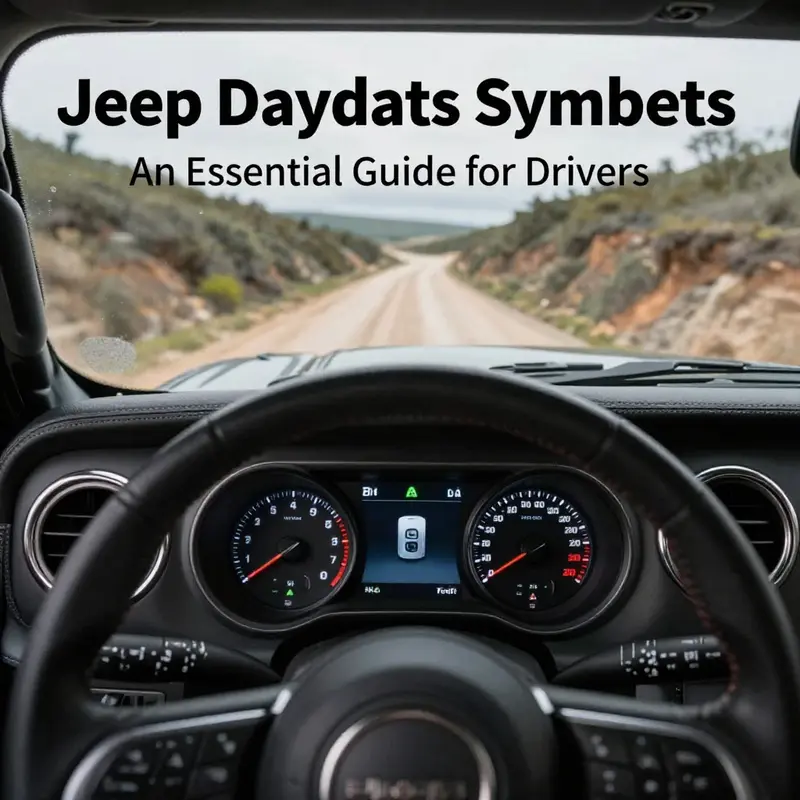
Every time you climb into a Jeep on a rugged trail, you enter a dialogue with your vehicle. The dashboard is the translator, turning complex mechanical signals into intuitive icons and readouts. For off-road adventures, this language becomes even more critical. The modern Jeep cockpit no longer presents only speed and RPM; it offers a suite of telemetry that helps you read terrain, monitor position, and respond to changing conditions in real time. To navigate mud, rock gardens, or steep approaches with confidence, you learn to interpret symbols that warn of danger, guide grip, and preserve powertrain health. The path to mastery begins with recognizing the core signals typical to off-road dashboards and understanding how they relate to your surroundings, vehicle setup, and driving style. The digital display in vehicles like the Grand Cherokee L or Wagoneer blends standard metrics with terrain-aware data, giving you a holistic view of how your Jeep is behaving on uneven ground. It is this integrated view—speed and RPM alongside pitch, roll, articulation, and terrain feedback—that turns data into decisions on the trail.
The most fundamental layer of this dialogue is the tire pressure monitoring and engine indicators. Tire pressures matter more than most drivers realize when negotiating soft soil, uneven rock, or slick mud. A sudden warning about low pressure tells you that a tire’s footprint is changing under load, which can alter grip and steering response. In turn, engine oil temperature and coolant levels remind you to balance pushing through a tough section with protecting the engine from overheating. On the surface, these are simple health checks; in practice, they form the baseline you rely on before committing to a line or choosing a path. In off-road mode, the dashboard may emphasize these indicators alongside a precise readout of fuel economy. This isn’t a luxury; it’s a practical cue to conserve fuel and manage the powertrain during long, arduous climbs where efficiency translates directly into endurance.
The real distinctive value appears when the off-road performance dashboard opens a window into the vehicle’s positional data. Pitch and roll indicators, tilt warnings, and articulation metrics cultivate a three-dimensional sense of the vehicle’s balance. Pitch informs you how steep an ascent or descent is, while roll indicates the degree of side-to-side tilt. On an exposed ledge or through a wash of mud, a rapid change in tilt can indicate approaching a limit where tires lose contact or traction. A symbol signaling excessive tilt isn’t merely a precaution; it’s a direct prompt to adjust wheel placement, throttle response, and suspension articulation to maintain stability. In tandem, articulation readouts reveal how much the axle is moving relative to the chassis, which helps you choose lines that maximize wheel contact with the surface.
Terrain feedback rounds out this triad of data. It provides cues about surface composition—grip changes, slope, and obstacles—and translates them into readable indicators that help you anticipate the next challenge. For a driver, this feedback becomes a reliable predictor of how the vehicle will respond to throttle, braking, or steering input as you crest a rise or descend into a trough. In practice, these readouts become a mental map that guides throttle application and wheel placement. With experience, you learn to read subtle shifts in the display that signal the vehicle’s stance changing under load, enabling smoother, more deliberate movements rather than reactive corrections. The off-road performance dashboard, designed with trail-ready Jeeps in mind, uses intuitive icons and dynamic readouts to alert you to potential hazards or terrain changes. It makes complex physics feel approachable and actionable.
Yet even as the dashboard elevates awareness, it is not a substitute for judgment or a substitute for a spotter when the trail demands it. The most capable off-road setup can lurch into trouble if a driver becomes overconfident in readouts alone. The symbols can mislead if interpreted in isolation or ignored in the moment when tire placement, momentum, or line choice matters most. This is why many experienced off-roaders couple dashboard data with training in traction control, throttle modulation, and line selection. They learn to cross-check the readouts with the tactile cues of the vehicle and the terrain’s feel through the steering wheel and seat. Practically, this means pausing before a difficult obstacle to observe how the vehicle sits on the slope, how the tires bite, and how much suspension travel is available. It also means using the active safety assists—when appropriate—as a guide rather than a crutch.
Every enhancement on the dashboard comes with a caveat. The same digital sophistication that makes off-road telemetry so valuable can introduce a learning curve. Newer dashboards are powerful, but they also demand regular software updates, which may carry costs and occasional glitches. If the display freezes, if icons disappear, or if the color coding seems less intuitive after an update, the driver’s best response is a calm, methodical check of settings, a review of the user manual, and, when needed, a service visit. In some cases, an issue like a software hiccup can appear to be a sensor fault, when it’s merely a display calibration matter. This is why many owners keep a copy of the official reference for symbols specific to their model and periodically revisit the guidance to stay aligned with any refinements from the manufacturer.
For the off-road enthusiast, the dashboard isn’t just a utility; it’s a tool that shapes strategy. When you’re mapping a trail, you can preselect the display to foreground the measurements that matter most—pitch and roll in narrow gorges, articulation in rock gardens, or terrain feedback when negotiating ruts. The ability to customize what you see helps reduce cognitive load and keeps eyes on the line rather than on a clutter of data. The goal is a clean, actionable interface that supports fast, safe decisions in the most demanding environments. In practice, this means learning to read a cluster of readouts as a single scene: a tilt indicator signaling a cautious approach, a tarp of tire pressures suggesting a re-seat or pull-through, and a roll gauge nudging you toward a more stable stance.
As you become more proficient, you may notice how off-road telemetry complements other driving skills. The same principles apply whether you’re negotiating loose gravel or crossing a streambed. The symbols act as a continuous, real-time briefing that keeps you mindful of the vehicle’s status and the environment’s demands. They also serve as a reference point for maintenance. If a tire monitor warns of a slow leak, you’ll know to address it before an extended expedition. If engine temperatures trend higher during a climb, you’ll adjust your pace and allow the cooling system to catch up. The discipline of checking the dashboard before you begin a trail, during a pause on a difficult segment, and after you exit the obstacle builds a habit that reduces risk and extends the vehicle’s life on demanding terrain.
For readers seeking a practical anchor, the official guide to Jeep dashboard symbols provides a clear, image-rich reference that can be accessed for model-specific details. It emphasizes the same core approach: use the symbols as a prompt to act, not a substitute for situational awareness. While this chapter centers on off-road enjoyment and safety, the same mindset applies to urban driving, where smooth operation and proactive maintenance reduce unnecessary wear. The best practice is to treat the dashboard as an ally—one you understand, trust, and consult as you plan each leg of your journey. Advanced telemetry alongside standard gauges creates a cohesive story about your vehicle’s health, capability, and readiness for the next challenge on the horizon.
To dive deeper into the practical strategies tied to electrified powertrains and dashboard feedback, explore the linked resource on a model that exemplifies how charging and efficiency data integrate with off-road telemetry. You can read more about the charging and efficiency realities of the 2024 Jeep Wrangler 4xe here: [2024 Jeep Wrangler 4xe charging guide]https://vehicletricks.com/blog/2024-jeep-wrangler-4xe-charging-ultimate-guide-to-efficiency/
For a broader, authoritative overview of dashboard symbols and their interpretations across current Jeep vehicles, you can consult the official digital dashboard overview that outlines types, features, and how the dashboard supports performance in varied conditions. This external resource complements the practical, hands-on approach described here and reinforces how symbols translate into safer, more confident driving in both on-road and off-road environments: https://www.jeep.com/vehicles/digital-dashboard.html
Gauge Whisperer: Mastering Jeep Dashboard Symbols for Safer, Smarter Driving
The dashboard in a Jeep is more than a cluster of indicators; it is a conversation between your vehicle and you. Each light, icon, and reading is a line of dialogue that translates mechanical state into human action. Learning this language is not about memorizing a catalog of symbols; it is about cultivating a habit of attentive driving. When the engine hums, the tires breathe, and the digits tick upward, your eyes are trained to read more than speed. They read warnings, warnings that are designed to avert trouble before it arises. In this sense, dashboard symbols are guardians of safety and guardians of your time and money. They invite you to respond promptly, calmly, and correctly to the vehicle’s needs. The modern Jeep, with its digital cockpit, expands that language beyond simple lights. It presents a stream of data—speed, RPM, fuel economy, tire pressure, and sometimes even terrain feedback and pitch or roll on off-road models. This is not just a display; it is a safety and efficiency ecosystem. Yet with more data comes more responsibility. A misread or ignored symbol can escalate a minor nuisance into a costly repair or a dangerous situation. The good news is that, with a clear framework, any driver can translate these signals into practical actions that preserve performance and reliability. From the recognizable red warning to the more nuanced amber indicators, the meaning remains straightforward when you approach it with a steady routine and respect for the vehicle’s needs.
The heart of responsible Jeep ownership rests on recognizing a handful of indicators that historically carry the most weight in daily driving and on trails alike. The Engine Temperature Warning Light—a stylized “E” inside a thermometer—signals that the engine may be overheating. When this light glows, the right move is almost always to pull over safely, switch off the engine, and let it cool. Continuing to drive with an overheating engine can cause severe damage, including warped gaskets and cracked components, and repair costs that far exceed a routine service visit. Then there is the Battery Charge Warning Light, a plain battery icon that appears when the charging system is not functioning correctly. If the light remains on while you drive, it may indicate a failing alternator or a slipping belt. In many Jeeps, this is a head-fake toward a roadside emergency, a situation where electrical systems begin to fail and crucial components—like lights, sensors, and the engine control unit—lose power. The prudent course is to visit a serviceProfessional promptly to diagnose the charging system before you find yourself stranded.
The Brake System Warning Light is another critical beacon. Shaped as a circle with an exclamation point, it can indicate anything from low brake fluid to worn pads or a malfunctioning ABS. This light asks for immediate attention because braking performance is the backbone of safe driving. If it is accompanied by a soft pedal or swaying feel, slow down, find a safe place to stop, and arrange for inspection. A failure to respond can compromise your ability to stop in emergencies, increasing the risk of a collision. The Tire Pressure Monitoring System (TPMS) Light—a tire with an exclamation mark—alerts you to underinflated tires. Underinflation undermines handling, raises rolling resistance, and, in extreme cases, invites a blowout. The corrective path is simple in theory: check tire pressures when the light appears, adjust to the manufacturer’s recommended cold pressures, and inspect for leaks or damage that could trigger a slow air loss. A consistent TPMS warning deserves attention, especially on long trips or changing weather conditions that affect tire performance.
Another essential signal is the Oil Pressure Warning Light, represented by a drop-shaped icon. Low oil pressure or oil level can cause insufficient lubrication, leading to accelerated wear or catastrophic engine damage. When this light comes on, the engine should be shut down as quickly as is safe, and oil level should be checked and topped up if needed. If the warning persists, professional inspection is mandatory, because driving with insufficient lubrication is a pathway to expensive repairs. The Check Engine Light, a yellow engine icon, is a general alert that covers a broad spectrum of issues—from minor sensor faults to misfires or catalytic converter problems. It does not always point to an immediate threat, but it does require diagnosis. A timely check helps prevent long-term damage and preserves fuel efficiency and performance. The Airbag Warning Light—depicting a person with a seatbelt and a circle around the head—signals an issue with the supplemental restraint system. If this indicator stays on, airbags may fail to deploy correctly in a crash, posing a serious safety risk. In all cases, the core rule remains the same: a warning light is a call to action, not a suggestion to ignore.
For drivers who spend time on rocky trails or slippery grades, the dashboard can also be a window into off-road realities. Some Jeep models offer an off-road performance cluster that broadcasts telemetry such as pitch, roll, articulation, and terrain feedback. This information assists the driver in adapting throttle, braking, and steering to the terrain at hand. It is not a substitute for skill, but it is a reliable companion that helps you stay within the vehicle’s limits and avoid unnecessary cargo-shifting or body lean that could destabilize traction. The on-screen data can reassure a driver navigating a steeper incline or a tight rock garden, and it can highlight the moment when a line you chose might require correction. This is the difference between a casual trail run and a deliberate, controlled approach that preserves hardware and keeps you in control.
The broader landscape of dashboard interaction is shaped by two pragmatic realities. First, the digital cockpit—while aesthetically modern and capable—introduces new symbols and new contexts for warnings. Vehicles now deliver more information than ever, which means you must cultivate a steady routine for interpretation. A moment of distraction can turn a helpful alert into a missed opportunity to prevent a fault. Second, every model and trim year may carry its own variations. While the seven indicators above are among the most universal, your owner’s manual remains the most authoritative reference, detailing model-specific symbols, locations, and recommended actions. The personal discipline of checking the manual isn’t antiquated; it is the practical backbone of predictive maintenance and safe operation. Beyond the basics, modern Jeeps also rely on software-driven warnings that can be triggered by sensor glitches or calibration issues. In such cases, you may see the light appear and disappear in a cycle, or you might notice inconsistent readings. When this happens, a cautious approach—treat the symptom as real, confirm with a service technician, and pursue a software update if needed—helps avoid misinterpretation and unnecessary repairs.
To stay proactive, drivers should think of the dashboard as a continuous feedback loop rather than a single moment of alarm. Regular maintenance plays a decisive role in minimizing false positives and ensuring that warnings reflect genuine needs. Regular oil changes, tire maintenance, and brake inspections restore trust in the cluster’s signals. If you notice that a light behaves irregularly—flickers, stays on intermittently, or appears after a cold start only—document the circumstances and share them with a technician. This habit not only speeds up diagnosis but also prevents misdiagnosis that could lead to unnecessary part replacements. In addition to maintenance, the safety ecosystem is strengthened by ADAS indicators such as forward collision warning, lane departure alerts, and blind-spot monitoring. While these features enhance safety, they also add layers of indicators that you must understand to avoid confusion on crowded highways or during complex driving conditions.
The practical core of this chapter is simple: treat dashboard indicators with respect, not fear. When a warning lights up, prioritize a calm, deliberate sequence. Assess traffic and road conditions, find a safe place to pull over if needed, and reference the relevant action in your owner’s manual. Many warnings share common-sense remedies—low tire pressure or low oil pressure require immediate attention; a check engine light calls for diagnostic evaluation; airbags are a safety system whose status should never be ignored. By attaching a routine to these indicators—a quick visual scan before departure, a mid-trip check of critical systems at fuel stops, and a post-trip review of any abnormal readings—you create a robust shield against avoidable breakdowns. This habit not only protects the vehicle’s longevity but also fortifies the driver’s capacity to respond under pressure, whether you’re negotiating a rain-soaked boulevard or navigating a rock-strewn trail.
In moments of doubt or ambiguity, you can find practical guidance in the broader ecosystem of Jeep maintenance literature and owner communities. For instance, when a feature indicator seems temporarily out of step with the vehicle’s behavior, a reliable, experience-based resource like Blind-Spot Alert: Temporarily Unavailable Jeep Solutions Tips offers actionable steps to address the issue without resorting to guesswork. That resource can help you differentiate between a genuine failure and a transient sensor glitch, so you keep the vehicle safe and ready for action. The real strength of this approach is that it blends official guidance with practical, real-world problem-solving, a combination that makes the dashboard a collaboration between man and machine rather than a command from the machine alone.
To reinforce the flow of reliable information, keep a copy of the official symbol guide and any model-specific notes in the vehicle or on your phone. This practice reduces the friction of learning as new features arrive with updated software and new trims. It also makes it easier to talk with service technicians, who rely on precise symbol descriptions to diagnose issues quickly. When you diffuse uncertainty with a clear action plan, you gain confidence behind the wheel and extend the life of your Jeep. In the end, the dashboard becomes less about chasing problems and more about sustaining performance, safety, and enjoyment on every journey—the essence of maintenance and safety through Jeep dashboard symbols explained, and a central pillar of responsible, informed driving.
External resource: For the official, up-to-date reference on dashboard symbols, you can consult Jeep’s dedicated dashboard symbols guide at the following external source: https://www.jeep.com/support/vehicle-information/dashboardsymbols/
Final thoughts
Navigating the complexities of Jeep dashboard symbols is essential for business owners who depend on their vehicles, especially in ensuring they are prepared for any situation on the road or off it. Each chapter has provided foundational knowledge, from understanding basic symbols to utilizing advanced telemetry for off-roading and recognizing critical warning lights. This insight into your vehicle not only enhances operational safety but also encourages proactive maintenance practices that can extend the vehicle’s life. Stay informed and engaged with your Jeep’s dashboard, as this knowledge is instrumental in making confident driving decisions.