
Flat towing a Jeep Wrangler can be a straightforward process, especially for businesses that need to transport their vehicles over long distances. Understanding the correct drivetrain setup, necessary equipment, and proper towing procedures is crucial to ensure the safety and reliability of your flat towing operation. Each chapter of this article will uncover vital aspects to enhance your flat towing knowledge, equipping you to navigate the process efficiently.
Safely Flat Tow a Jeep Wrangler: Mastering Drivetrain Setup and Tow-Strategy Choices
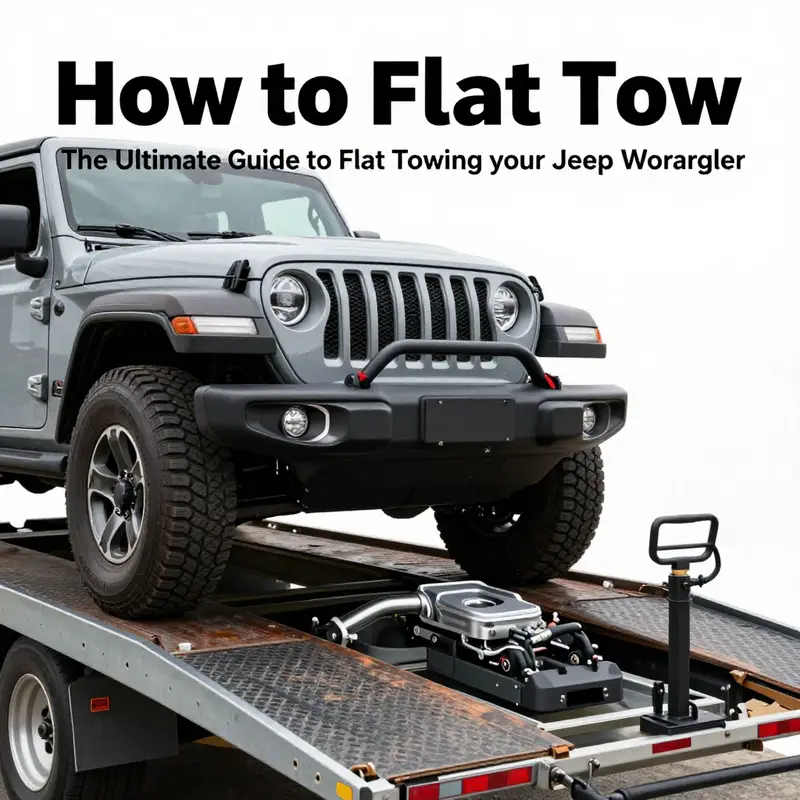
Flat towing a Jeep Wrangler demands more than a simple hitch and a rope. It requires a careful alignment of the Wrangler’s drivetrain with the towing method, a clear understanding of what the model year supports, and a strategy that protects the transmission, transfer case, and front axle from unintended stress. The Wrangler’s fame as a rugged, go-anywhere vehicle often invites a straight-ahead approach to towing, but the truth is more nuanced. The drivetrain configuration, whether the vehicle is designed for part-time or full-time four-wheel drive, dictates whether flat towing is even advisable and, if so, under what conditions. The overall objective remains the same: move the Wrangler behind another vehicle without leaving the drivetrain bound to spinning gears, without overheating brakes, and without inviting expensive repairs that can outpace the value of the trip. To achieve that, one must first know the vehicle inside and out, then choose the towing setup that preserves life in the drivetrain and keeps everyone on the road safely.
The core requirement that sets the stage for any flat-tow plan is the transfer case setting. In most Wranglers, particularly those built in the recent decade, a transfer case shifts the vehicle into different drive modes that are not meant to be spun freely when the wheels are turning without the engine running. The essential step is to switch the transfer case to a neutral state in advance of towing. This is not merely a suggestion; it is a shield against internal binding, where gears, shafts, and clutches can experience friction and misalignment if the system remains engaged to the powertrain while the vehicle is rolling along behind a motorhome or tow vehicle. In practical terms, for many Wrangler configurations, that means selecting a 2H position before anything else and then ensuring the transmission is in Neutral. The emphasis here is not on the meaning of the label alone but on what it does: it disengages the front and rear driveshafts from directly driving the engine’s components while still allowing the towed vehicle to roll freely.
Yet the story does not end with shifting to 2H and Neutral. The Wrangler also carries an electronic parking brake that, if left engaged, can introduce braking forces that oppose the towing action. The temptation to leave the EPB on can feel convenient, especially after a long day of loading and securing a vehicle for transport. But leaving the electronic parking brake engaged while towing can cause the brakes to overheat as the system tries to manage residual pressure. The resulting heat can wear brake components and, in some cases, lead to uneven braking behavior once towing resumes on the road. The prudent approach is to release the EPB manually before you begin towing and to re- engage the parking brake only after you have completed the towing sequence and parked the Wrangler securely at the destination. This simple precaution is a cornerstone of a responsible towing routine.
Another layer of complexity comes from the Wrangler’s evolution over model years. The Jeep Wrangler spans generations with shifts in drivetrain philosophy that matter for aTow plan. Prior to 2018, some Wrangler configurations featured a transfer case setup that, while robust for overland exploration, was not designed to be flat-towed behind another vehicle without modification. Since 2018, the JL and JT platforms introduced sophisticated four-wheel-drive arrangements that, in many configurations, require either a specific tow-ready package or a controlled disconnect of certain front-drive components to enable flat towing. The takeaway is consistent and clear: always consult the model-year specific manual or Jeep’s official documentation before planning a tow. The transfer case’s design, the presence of any front-axle disconnect, and the way the front driveshaft engages with the transfer case all influence whether flat towing is feasible as-delivered or if substantial modifications are needed. In practice, this means that what works for one year’s Wrangler may not work for the next, and what is permissible for a two-door model can differ from a four-door, four-seat variant. The safety and reliability calculus hinges on confirming those details rather than assuming universal compatibility.
Given the variability, many owners facing long trips understandably ask whether flat towing is ever the best option for a Wrangler. The landscape across the community has long debated using a tow-dolly that lifts the front axle or a trailer that carries all four wheels. The general consensus is pragmatic: if you want to preserve the integrity of the drivetrain, the simplest path is not to spin the Wrangler’s drivetrain at all while it is towed. This is why the choice to flat tow is often paired with a dolly or trailer. A dolly places the Wrangler’s front wheels on the dolly and keeps the rear wheels on the road, effectively removing the load from the front drivetrain while still offering a compact, cost-effective solution for shorter trips. A trailer, on the other hand, removes all four wheels from the road’s contact with the engine and drivetrain, providing maximum protection over longer distances. In both cases, the objective is to prevent the transfer case, the transmission, and the differential gears from experiencing the inadvertent motion that occurs when the engine, even in a neutral state, remains connected to spinning parts.
If a Wrangler owner nevertheless insists on flat towing, a disciplined approach to modification becomes non-negotiable. The most reliable route is to implement a front axle disconnect kit that can neutralize or disengage the front driveshaft from the transfer case. By effectively removing the front axle from the drivetrain loop, the Wrangler can be towed safely behind a motorhome with the engine off and the drivetrain disengaged. It is important to emphasize that such disconnect kits must be certified and appropriate for the vehicle. Installation should be conducted by a qualified technician who can verify alignment, mounting points, and the proper reassembly after towing. The warning here is firm: do not attempt an aftermarket disconnect solution without professional assessment and verification. In practice, that means choosing a kit that has been evaluated for Jeep use and validated for the specific model year, then having it installed by someone with expertise in Wranglers and fifth-wheel or gooseneck towing setups. While the kit does not make flat towing a universal option for every Wrangler, it does offer a path for those who travel in places where a trailer or tow-dolly is impractical and who understand the need for careful maintenance checks and ongoing inspection in the course of a journey.
With the drivetrain concerns addressed, the practical aspects of the tow begin to take shape. The tow bar is the physical link between the towing vehicle and the Wrangler. A properly rated flat-tow-compatible tow bar must match the Wrangler’s weight and the towing vehicle’s capacity. The tow bar should include safety chains, which are a non-negotiable element of any tow setup. The towed vehicle should have its lights wired to the towing vehicle so that brake lights, turn signals, and running lights synchronize correctly. This electrical liaison is crucial for road safety and for ensuring that other drivers on the highway are aware of the towed unit’s actions. The wiring harness is a common point of failure in practice. A reliable harness makes the electrical connection between the Wrangler’s lighting circuit and the towing vehicle’s system seamless, and it should be inspected for wear or corrosion before any trip. A robust harness and a secure tow-bar connection reduce the risk of intermittent signals, which can happen if connections loosen with movement. A clean, well-secured connection is a sign that the towing operation has been planned with attention to detail, not improvisation.
Beyond the mechanical and electrical considerations, the operational discipline of the tow itself matters greatly. Speed and distance are not merely guidelines but practical safeguards. The recommended limit—often summarized as keeping speeds modest and the distance finite—reduces the likelihood of drivetrain overheats, binding, or excessive cooling loads on the braking system. The general rule of thumb is to keep the towing speed under twenty-five miles per hour and to limit the journey to a practical, shorter distance unless the Wrangler has been prepared for longer hauls through more extensive modifications. These numbers are conservative, but they reflect caution at the edge of the line where mechanical tolerance and road conditions intersect. Weather, road grade, and traffic density all influence how soon such a plan must be altered. A driver who respects these boundaries is less likely to confront a situation where an all-too-common complication—excess heat in the transfer case or imbalanced braking in the towed unit—erupts during travel.
The post-tow routine matters as well. Once the Wrangler has reached its destination, the towed arrangement should be disengaged with the same care used to set it up. Re-engaging the transfer case, releasing the neutral alignment, and reinstalling the parking brake are steps that must be performed in the correct sequence to avoid residual stress or inadvertent engagement during shutdown. This procedure is not merely bureaucratic formality; it ensures that the drivetrain remains in its safe resting state after motion has ceased. It also serves to remind the operator that towing is a dynamic operation, not a one-time event. Each phase—pre-tow setup, the journey, and post-tow reassembly—requires deliberate action and a readiness to adapt if conditions change.
Given the limitations of flat towing on many modern Wranglers, a crucial part of the decision-making process is recognizing when a tow-dolly or trailer represents not just a preference but a safer, more reliable option. A dolly is often adequate for short trips, traffic-laden corridors, or destinations not far from the starting point. It reduces service complexity and often keeps costs down while preserving the drivetrain. A trailer, conversely, is the more robust choice for longer voyages, offering the maximum protection for the vehicle’s drivetrain by removing any four-wheel contact entirely. Either choice should be paired with a clear maintenance plan and an inspection routine before each trip. The idea is to establish a consistent, repeatable process rather than improvising a tow plan on-site. And while the temptation to simplify can be strong, the risk of missteps—whether in forgetting a neutral position, failing to disengage the front driveshaft, or overlooking a defective wiring harness—can lead to repairs far more costly than the tow solution itself.
For readers exploring the broader topic of how Wranglers behave in critical conditions—such as winter driving or edge-of-road scenarios—an additional perspective can be helpful. It is worth exploring how winter conditions affect overall vehicle performance and to understand how towing dynamics can differ in those environments. Are Jeeps Wranglers Good in the Snow? offers insights into how the brand’s design translates to traction and stability in slick or variable surfaces, which in turn informs whether towing in cold weather warrants a more conservative approach or a different equipment lineup altogether.
As the discussion shifts toward best practices, it is useful to anchor the sequence in a practical, safety-first mindset. The first decision is whether flat towing is viable at all for the specific Wrangler in question. The second is to determine whether modifications are feasible and compliant with manufacturer guidance. If mods are approved, the third is to select a properly rated tow bar, a reliable connector system, and a wired lighting solution that reduces the chance of electrical failures on the road. The final piece is to ensure that the towing operation remains within the limits prescribed by the owner’s manual, which, in the end, is the most authoritative source for the exact steps and cautions that apply to your particular model year and drivetrain configuration. The manual’s guidance is not a bureaucratic hurdle; it is a concrete blueprint for avoiding damage, preserving vehicle value, and maintaining safety across the spectrum of towing scenarios.
In sum, flat towing a Jeep Wrangler is a more nuanced endeavor than it might appear at first glance. The vehicle’s drivetrain configuration, the presence or absence of a front-axle disconnect, and the recommended procedures for Neutral, EPB, and the tow-bar connection all weave together into a coherent, safety-centered approach. The best path for most Wranglers—especially those newer models with more complex four-wheel-drive systems—is to avoid flat towing unless the proper disconnect kit is installed and validated by a professional, and to consider a tow dolly or trailer for the journey. This approach protects the transfer case, the differential gears, and the transmission, while also delivering predictable handling on the highway. When you plan any tow, take the time to verify year-specific instructions and to align every element of the setup with the vehicle’s official guidelines. The result is a towing experience that keeps the Wrangler’s rugged reputation intact and turns what could be a risky venture into a carefully managed operation that you can rely on when the road demands it.
External reference for further guidance: https://www.jeep.com/owners/manuals
Flat Tow Mastery: Safe, Equipment-Driven Steps for Moving a Jeep Wrangler Behind Your Motorhome
Flat towing a Jeep Wrangler behind a motorhome is as much about disciplined procedure as it is about the right gear. When done correctly, it lets you extend adventures without breaking the rhythm of your trip. When done poorly, it can lead to drivetrain damage, brake issues, or a stressful highway incident. The Wrangler, with its history of part-time four-wheel drive, presents a particular set of considerations. The core requirement is straightforward but essential: you must set the transfer case to 2H before you begin any flat tow. The reason is simple yet critical—when the transfer case stays engaged in higher ranges or when the drivetrain remains partially connected to the driven wheels, internal components can bind, friction can spike, and damage can occur in ways that aren’t immediately obvious until you’re miles from the driveway. Before you even roll out, verify your model year and drivetrain configuration in the owner’s manual. While most Wranglers are designed for flat towing with the correct setup, there are model-year nuances and feature tweaks that can change the exact steps. Never attempt to flat tow with the transfer case in 4H or 4L. The manual will specify the precise sequence, the lever positions, and any locking devices that must be engaged to keep the transfer case disengaged from the drivetrain.
With the transfer case confirmed in 2H, the next step is to ensure the transmission itself is in neutral. This separation between the engine and the road wheels is what prevents the drivetrain from being actively driven by the towing vehicle. Neutrality is not a cosmetic setting; it is a functional state that ensures no gear engages during the tow. The transmission should be shifted to neutral after you have selected 2H, and you should check that the transfer case is still correctly positioned as you begin the tow. A confident feel of the shifter in neutral, with no resistance or unintended engagement, is a solid indicator you are ready to proceed.
A frequently overlooked but crucial step concerns the electronic parking brake. If left engaged, the parking brake can heat up as the towed vehicle moves, leading to brake pad wear or, in the worst case, brake overheating. Before moving, manually release the electronic parking brake and leave the system disengaged during the tow. This is not a one-and-done action; you must recheck the EPB status after every stop to ensure the brake system remains in the intended state. A lapse here is a common source of late-stage issues on long flat-tow runs, so treat EPB management as an ongoing, repeatable process rather than a one-time setup.
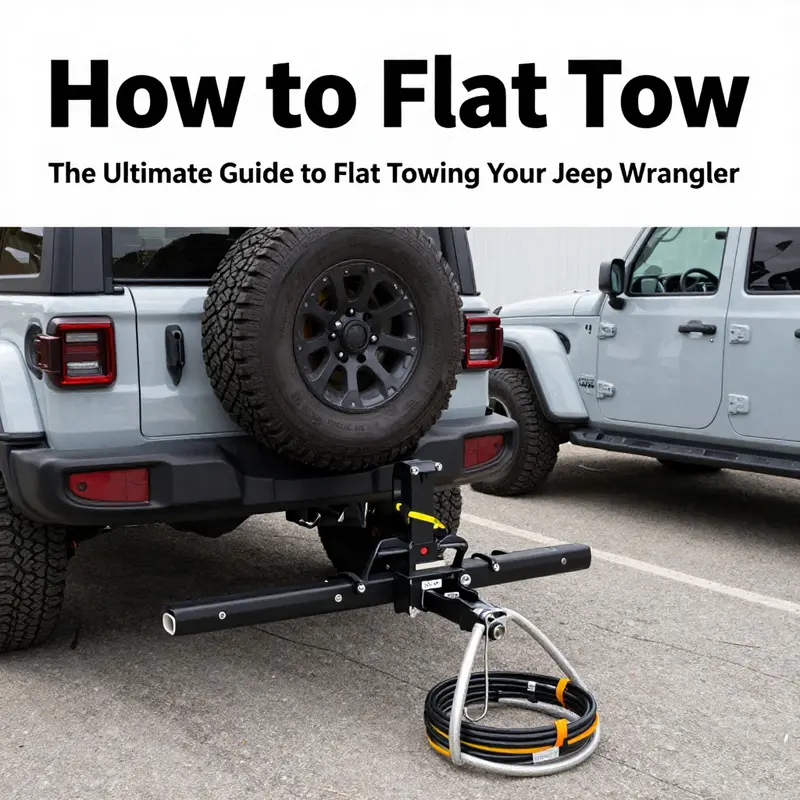
A properly prepared towed setup relies on a flat-tow kit designed for the job. The kit typically includes three indispensable components: a tow bar to connect the Wrangler to the towing vehicle, a wiring harness to allow the towed Jeep’s brake and turn signals to communicate with the motorhome, and a brake light controller to synchronize the braking response with the towing vehicle’s actions. The towing bar is rated for the vehicle’s weight and is mounted to the front of the Wrangler, typically to built-in tow hooks that are designed for this purpose. It is worth noting that a tow rope or any non-rated towing connector is not suitable for flat towing. The towing bar must be securely attached according to the manufacturer’s instructions, and the safety cables or chains should be incorporated into the connection for an added layer of redundancy. As you assemble the system, check every connection for play, corrosion, or wear. A loose connection is not just a nuisance; it is a safety risk that can lead to disconnection at any moment on the road.
Along with hardware, the electrical interface is essential. The wiring harness is what makes sure the towed Jeep’s brake lights and turn signals communicate with the towing vehicle. The goal is a clean, consistent signal chain that makes the towed vehicle as predictable as the vehicle doing the pulling. A brake light controller sits between the two vehicles and ensures that when the towing vehicle brakes, the towed Jeep’s brake lights illuminate in step. The controller may require calibration or a brief setup sequence, and adherence to the installation instructions is non-negotiable. Test the lighting system in a safe environment before you depart; verify that every function from brake lights to turn signals to running lights responds correctly when you or your spotter activates the corresponding controls in the towing vehicle.
The process of connecting the tow bar bears particular importance. Secure attachment to the Wrangler’s front area, using the designated points and any lockout mechanism provided with the tow kit, ensures the bar remains firm under dynamic loads. As you connect the bar, take a moment to observe the Wrangler’s geometry: the tow bar must maintain a straight line from the towing vehicle to the Jeep, avoiding any angle that could place leverage on the mounting points. A slight misalignment might not be immediately evident in a stationary test, but in motion, it translates into wear and potential failure. A thorough double-check of all fasteners, pins, and locking devices is a wise habit before every trip.
Beyond the mechanical and electrical, the on-road behavior of a flat-towed Wrangler hinges on the signals that travel from the towing vehicle to the towed vehicle and back. Safety lights are the visible language of the convoy. Ensure all exterior lighting on the towed Jeep is fully functional, including brake lights, turn signals, and running lights. If the installed harness is not wired to meet the local requirements, add a compliant conversion harness. The law, as well as common sense, expects the towed vehicle to be visible and communicative. A well-tuned lighting setup reduces the risk of miscommunication with other motorists and is a fundamental piece of the overall safety puzzle.
The speed and distance of a flat tow are not negotiable when you are following a manufacturer’s guidelines and common-sense safety doctrine. A conservative rule of thumb is to keep speed below 40 km/h (approximately 25 mph) and to limit the tow distance to about 50 kilometers (roughly 30 miles) unless your owner’s manual specifies otherwise. These limits are not arbitrary; they reflect considerations of transmission lubrication, brake system responsiveness, steering stability, and cooling for any supplemental systems. While some sources may suggest longer tows, sticking to the conservative limits minimizes risk to the drivetrain and brakes and provides a margin for unexpected traffic or environmental conditions.
After you reach your destination, the post-tow procedure is a quiet but essential ritual. Stop the vehicle safely, then re-engage the electronic parking brake. Shift the transmission back into Park (P) before turning off the engine. This sequence protects the drivetrain from residual motion and ensures the parking brake is ready should you need to move again. It may seem routine, but in a long trip this ritual keeps wear to a minimum and reduces the chance of a forgotten brake or locked gears when you return to a parked position.
A broader layer of safety emerges when you consider front-wheel behavior and alignment during the tow. The front wheels must be free to turn in the event of a steering correction, so it is advisable to disconnect the steering stabilizer if your setup permits. A stabilized steering trio—front wheels straight, steering lock engaged, and a tie-down system or wheel locks maintaining alignment—reduces tire wear and helps avoid any accidental wheel scrubbing that can occur if the steering tries to correct while the Wrangler is stationary or moving slowly. This adjustment is not simply about tire life; it reduces the risk of unexpected steering feedback while in motion, which could compromise control on a busy highway.
In addition to steering, the braking system for the towed vehicle deserves attention. A supplemental braking system, integrated with the tow kit, ensures that the towed Jeep participates in braking in a controlled and predictable manner. The system must be installed and calibrated according to the manufacturer’s instructions. Proper calibration provides a proportional response: when you brake in the towing vehicle, the towed vehicle’s brakes engage in a manner that mirrors the towing vehicle’s deceleration. This synchronization is not optional—without it, the towed vehicle could experience delayed braking response or uneven deceleration, increasing the risk of a rear-end collision or an erratic tow experience.
Legal considerations add another layer of responsibility. Local regulations may require specific lighting configurations, mandated brake activation, or particular mounting arrangements for tow bars. Before you embark on a flat tow, check the relevant rules in your travel region and the routes you plan to traverse. Driving with an awareness of legal constraints is as important as mechanical preparedness, because compliance protects you, other road users, and your investment. In this context, education becomes a practical tool: understand the rules, confirm that your setup adheres to them, and carry documentation that may be requested by authorities or insurance inspectors.
Compatibility considerations deserve careful review, particularly for Wranglers produced after 2018. While most of these newer Wranglers are designed with flat towing in mind, verify not only the model year but also any factory or dealer-installed options that could affect the towing setup. For example, vehicles with a rear-mounted transmission cooler or other specialized configurations may require additional modifications to the tow kit or a different tuning approach for the braking system. A conversation with a knowledgeable technician or a careful reading of the owner’s manual can illuminate these edge cases. This mindfulness ensures that your towing equipment matches the vehicle’s structural realities and avoids surprises on the road.
If you want to expand your knowledge beyond the mechanical and regulatory specifics, consider exploring resources that map out the practical landscape of vehicle tricks and maintenance. For a broader tour of the site’s resources, you can consult the Vehicle Tricks blog map. It provides a helpful overview of related topics and how they connect to real-world vehicle handling. Vehicle Tricks blog map
As you plan and perform a flat tow, keep in mind the overarching goal: simplicity and predictability behind the wheel. The Wrangler should feel as if it is almost an extension of the towing vehicle, with the same signaling language, the same rate of deceleration when you press the brake, and the same predictable steering response. The careful steps outlined here—verifying the drivetrain state, neutralizing the transmission, disabling the parking brake, employing a proper flat-tow kit, securing and aligning the tow bar, validating lighting, observing conservative speed and distance, and performing a disciplined post-tow routine—form a cohesive sequence. This sequence minimizes risk, preserves drivetrain health, and fosters confidence for drivers who want to take their Wrangler on the road behind a motorhome with a clear sense of control.
Finally, remember that the safety ecosystem around flat towing extends beyond your vehicle. It includes the driver’s attention, the towing vehicle’s readiness, the condition of the road, and the reliability of connections and safety devices. The procedure remains consistent: preparation, verification, secure connections, mindful operation, and post-tow checks. Treat each step with care, and your journey will be marked by smooth transitions rather than avoidable hiccups. If you ever encounter ambiguity in the manual or the kit’s instructions, pause and seek clarification. The cost of a moment’s hesitation is small compared with the potential consequences of skipping a critical step in a flat-tow operation.
External resources for safety guidance reinforce the point that best practices are grounded in standardized recommendations. For official safety guidance related to towing, consult the national authority that provides these standards. You can access the federal safety guidance on towing here: https://www.nhtsa.gov/vehicle-towing-safety
Flat-Tow Realities for a Jeep Wrangler: Safe Procedures, Precautions, and Post-Tow Care
Flat towing a Jeep Wrangler is a topic that sits at the crossroads of practicality and risk. For many owners, the idea of towing with all four wheels on the ground is appealing because it saves time, avoids loading a trailer, and keeps the tow vehicle simple. Yet behind that appeal lies a set of rules that differ across model years, drivetrain configurations, and even trim packages. The chapter that follows threads together the practical steps, the hidden caveats, and the careful post-tow routines that keep a Wrangler’s drivetrain from turning into costly mischief. What matters most is that you begin with a clear, model-specific understanding of what your Jeep can tolerate on the road behind another vehicle, and you proceed with a plan that prioritizes the health of the transfer case, transmission, and differential gears.
The core idea guiding flat towing for the Wrangler hinges on the drivetrain arrangement. Wranglers have historically used part-time four-wheel drive, a system that can be coaxed into a temporary two-wheel engagement for towing under certain conditions. The critical action is to place the transfer case in the correct high-range gear — typically 2H — before any movement begins. The transfer case is the heart of the matter because, when engaged in a mode that drives the front or rear differential while the engine is off, the rotating components can experience binding and friction that the vehicle’s design did not anticipate. This is why a blanket rule that applies to all Wranglers would be misleading; the right mode is not universal across model years or configurations. The best practice is to verify your exact year and drivetrain one more time in your owner’s manual and to treat manufacturer guidance as the authority.
With the transfer case in neutral (N) once you’ve correctly set 2H, the transmission itself should also be placed in neutral. This separation helps ensure the towed vehicle’s gearbox won’t engage the engine’s internal components and that the towed motion won’t be transmitted into gears that are not meant to spin freely when the engine isn’t powering them. This is not simply a suggestion; it is a procedural requirement that prevents internal friction and component wear that can accumulate quickly when the car is being dragged on the asphalt by another vehicle. The nuance here is that the neutral setting works differently depending on the transfer case mode, so you must confirm that the engine is not trying to drive the drivetrain while being towed.
A parallel, and often overlooked, step is disabling the electronic parking brake. The electronic parking brake is designed to clamp the brakes when the vehicle is stationary, but during towing, leaving it engaged can create heat buildup, sticky calipers, and potential brake overheating. The safety logic in many Wranglers expects certain electrical states, and if the system remains engaged, it can complicate braking signal transmission and the towed vehicle’s responsiveness to signals from the towing vehicle. The manual instructions are explicit: disengage the EPB before you attach the tow infrastructure. This is a simple, low-risk precaution that prevents a cascade of mechanical and electrical issues as you begin the tow.
The equipment you choose matters just as much as the state of the transfer case. A properly rated flat-tow compatible tow bar synchronized with safety cables is essential. Do not improvise with a rope; towing ropes are dangerous and inappropriate for flat towing. The tow bar must be matched to the Wrangler’s weight and towing profile, and it should be used with a safety strap or chains as a redundancy. A tow bar with built-in safety chains is highly recommended because it adds a second line of defense should the primary connection weaken or fail. Once you have the hardware, the next task is to connect the tow bar securely to the Wrangler. The front of most Wranglers is equipped with dedicated tow hooks or mounting points designed for this purpose. Following the manufacturer’s installation instructions is not just good practice; it is a critical safety measure that reduces the risk of accidental detachment during highway or backroad pulling.
Electrical integration is another nontrivial layer. Proper lighting is essential so that brake lights, turn signals, and running lights on the towed Wrangler are visible to nearby traffic. In many setups a dedicated wiring harness connects the towing vehicle’s lighting system to the towed Jeep’s lighting. If the harness is not installed or the lights are not functioning, other drivers may not anticipate braking or lane changes, increasing the chance of an incident. The wiring harness is not just about compliance; it’s about giving your towed vehicle full situational awareness and ensuring the towing operation feels like a coordinated, responsive system rather than a pair of separate machines sharing a road.
Speed and distance are the practical limits you should always respect. The conservative guidance is to maintain a speed well below freeway thresholds, with a common practical limit around 25 mph (40 km/h) and to cap the distance at roughly 30 miles (50 kilometers) unless your owner’s manual specifies otherwise. These figures are not arbitrary; they reflect concerns about drivetrain heat, lubrication distribution in the transmission and transfer case, and the risk of micro-slippage that can accumulate when the towed vehicle’s internals are not being driven by the engine. The intention behind these limits is to give you a buffer against failures that could escalate into expensive repairs. If your route involves hills, a longer downhill pull can also increase heat generation in the drivetrain, so anticipate grade changes and adjust your speed and distance accordingly. If the manufacturer’s manual offers a different specification, that guidance overrides these general figures, and you should follow it to the letter.
An important caution underlines this entire process: not all Wranglers are approved for flat towing. In fact, many modern Wranglers, especially those with full-time four-wheel drive and electronic locking differentials, do not tolerate flat towing as a routine practice. The Selec-Terrain system and related full-time 4WD configurations are designed for on-vehicle operation that keeps the powertrain continuously engaged in a way that flat towing cannot replicate safely. The risk is not merely theoretical; it can manifest as permanent damage to the transfer case and drivetrain components, with repair costs that can climb into five figures if the problem goes unidentified or unaddressed. This is why the most important step, before you even attempt a tow, is a definitive check of your model year and drivetrain against manufacturer guidance. It is not enough to rely on general advice; you must verify the exact instructions for your Wrangler. If the manual or the official Jeep website does not approve flat towing for your configuration, do not proceed with flat towing.
What happens if you still choose to tow despite the lack of official approval? You may be tempting fate. The potential damage is not gradual; it can be sudden, and once a peculiar binding or hydraulic pressure is introduced by the wheels turning while the engine is stationary, the damage may be irreversible. The risk is not merely theoretical: the official service documentation for 2018 and later Wrangler models with Selec-Terrain and full-time 4WD explicitly cautions against flat towing. For those who need to move a modern Wrangler in the absence of a flatbed, the prudent alternative is to use a car hauler or a tow dolly, which place all four wheels off the ground and eliminate the risk of drivetrain windmilling altogether. This approach preserves the vehicle’s lubrication regimes and internal gears, shielding you from the financial and operational headaches that could follow.
In practical terms, the decision tree becomes simple: if your Wrangler is approved for flat towing by the manufacturer, follow the 2H transfer case setting, neutral transmission, disengaged EPB, and the correct tow bar setup with proper lighting. Drive conservatively, respect the speed and distance limits, and perform a robust post-tow check once you have completed the journey. If, however, the manufacturer’s guidance indicates that flat towing is not suitable for your model, the safest and most reliable option is to employ a flatbed trailer or a dolly that lifts the Wrangler’s wheels off the road. The emphasis remains the same: protect the drivetrain from conditions it is not designed to endure and avoid creating preventable wear that could manifest as leakage, binding, or misalignment when you finally restart the engine.
The post-tow procedure is not simply a ritual but a diagnostic check, a bridge between towing and normal operation. After you stop, re-engage the electronic parking brake to restore the parking security that you disabled before the tow. Shift the transmission back into park, and only then turn off the engine. At this moment you verify that no warning lights remain on the dashboard and that the vehicle’s electronic systems have gone through their reset cycle. It is also prudent to check fluid levels once the vehicle is on level ground and cooled down, especially the transmission and differential fluids that may have been stressed during the tow. A brief test of steering and brakes before driving away confirms that the towed system remains reliable when reintroduced to powered operation. These checks are not only about safety; they are about ensuring the Wrangler’s heart — its transmission, its transfer case, its brakes — returns to a neutral, healthy state after a period of passive motion.
An overarching frame for all of these steps is the knowledge that technology and design matter. The Wrangler’s potential for flat towing is real, but it is bounded by the engineering choices made at the factory and the model year you own. Understanding those boundaries helps you decide whether you can leverage a two-wheel-tow approach or whether you must switch to a ground-supported towing method. When you decide to flat tow, treat every step as an opportunity to confirm that you are in the right mode, that your connections are secure, and that the electrical signaling to the towing vehicle is unambiguous and functional. The diligence you invest now pays off in safer road time and in preserving the Wrangler’s long-term durability. If you feel uncertain at any stage, pause and consult the official owner’s manual or the Jeep customer resources that spell out the official stance on flat-tow procedures for your exact model.
For readers who want a broader perspective on how Wranglers behave in challenging conditions and how to adapt to those conditions with safety in mind, a useful point of reference can be found in discussions about how Wranglers perform in snow and other slick conditions. Those discussions highlight the value of understanding traction, weight distribution, and the limits of electronic aids when the vehicle is not actively powered. The takeaway is not that Wranglers are fragile, but that towing scenarios require an approach that respects the vehicle’s engineering while acknowledging the realities of shared-road travel. See the discussion titled Are Jeep Wranglers Good in the Snow? for a broader sense of how four-wheel dynamics and driver input align under adverse conditions. You can read more about that here: Are Jeep Wranglers Good in the Snow?.
As you weigh the options, remember that the official manufacturer resources provide the definitive guidance. For detailed diagrams and explicit towing procedures approved by the manufacturer, consult the official Jeep owner manuals. They outline the exact steps, the limitations, and the cautions that apply to your Wrangler’s drivetrain and configuration. When the route and conditions are known, and the vehicle is within the approved towing envelope, flat towing can be performed with careful planning and precise adherence to the steps described above. When it is not approved, the safest alternative remains to use a flatbed trailer or dolly to ensure all four wheels are off the ground during transport. The relevant, authoritative information is available here: https://www.jeep.com/owners/manuals/.
In sum, flat towing a Jeep Wrangler requires respect for the distinction between what the vehicle is designed to endure in a towed state and what is simply beyond its intended operating envelope. The pathway to safer flat towing hinges on accurate model-year identification, proper transfer-case mode, neutral transmission, disengaged EPB, and a robust towing setup with correct electrical signaling and secure connections. The post-tow routine closes the loop by verifying that all systems reset properly, fluids are within normal ranges, and the vehicle is ready to return to daily use without the shadow of prior towing concerns. When in doubt, opt for the conservative route and protect your Wrangler with a flatbed or dolly — a decision that aligns with manufacturer guidance, financial prudence, and the simple goal of keeping your four-wheel partner ready for the road ahead.
External resource: For a comprehensive overview and official procedures, refer to the Jeep manuals page: https://www.jeep.com/owners/manuals/
Final thoughts
Understanding how to flat tow a Jeep Wrangler not only ensures the safety and integrity of your vehicle but also optimizes operations for businesses that rely on these versatile vehicles. By adhering to the proper drivetrain setup, utilizing the correct equipment, and following the detailed procedures outlined in this guide, you can confidently transport your Jeep Wrangler as needed, reducing risks and enhancing reliability in your business operations.