

Understanding Ford’s Passive Anti-Theft System (PATS) is crucial for business owners, particularly those reliant on Ford vehicles for operations. This article delves into methods of bypassing the PATS system without a physical key, presenting techniques that facilitate smoother business logistics while maintaining a focus on safety and compliance. Each chapter addresses a specific bypassing method, from firmware upgrades to physical wiring adjustments, allowing readers to make informed decisions. Moreover, the discussion of risks and considerations serves to remind business owners of the legal and ethical dimensions involved in such modifications.
Behind the Shield: The Realities, Risks, and Legitimate Avenues When Ford PATS Without a Key
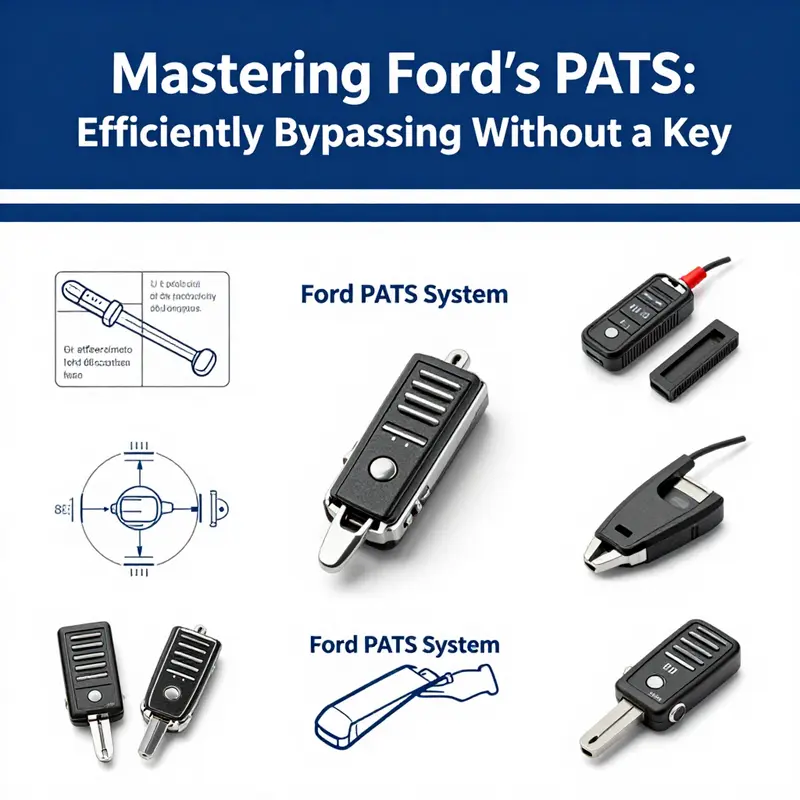
PATS, or the Passive Anti-Theft System, is not a single device but a layered security philosophy baked into modern Ford vehicles. At its core, PATS links the ignition system, the immobilizer, and the vehicle’s control modules so that a recognized transponder in a key or fob is validated before the engine can start. This creates a tightly integrated gatekeeper: if the transponder signal is not authenticated, the ECU will prevent fuel delivery or ignition, effectively immobilizing the car. The technology is designed to thwart hot-wiring, cloning, and other theft tactics by making it impractical to start the engine without a properly programmed credential. It sounds straightforward in theory, but the practical implications ripple outward, especially for owners who misplace a key or lose access to their vehicle for other reasons.
When people encounter a locked-out scenario or a missing key, the temptation to search for a bypass can be strong. Yet bypassing Ford’s PATS without a key carries substantial risks and legal consequences. The immobilizer is not merely a nuisance; it is a security feature backed by anti-theft laws and regulations. Engaging in bypass methods—whether through firmware tweaks, data-level alterations, or targeted wiring changes—often falls into illegal activity, potentially criminalizing the owner or user attempting the procedure. In addition to legal exposure, such actions can void warranties, trigger diagnostic flags, and destabilize critical electrical systems that rely on precise security handshakes between the ignition barrel, the immobilizer, and the engine control modules. The safety implications extend beyond the car. Malfunctions in immobilizer logic can cause erratic engine behavior, stalling, or unintended power-loss scenarios while driving, which poses a real risk to the occupants and others on the road.
Even when there are claims of bypass techniques, the landscape is nuanced and heavily dependent on model year, firmware version, and regional security configurations. Some discussions reference high-level concepts like reprogramming the immobilizer or bypassing encrypted transponder signals. Others mention firmware upgrades or platform-level overrides that can, in theory, alter how the system responds to certain data inputs. In every case, these approaches demand access to manufacturer-specific software, specialized diagnostic tools, and credentials that are typically restricted to authorized dealers and licensed locksmiths. A central point remains consistent: attempting unauthorized bypass methods is not a reliable or responsible solution. It risks legal trouble, can cause harm to the vehicle’s electrical ecosystem, and undermines the purpose of an anti-theft system designed to protect people and property.
From a practical standpoint, there is a legitimate and safer path when a key is lost or a keyless system is inaccessible. Authorized channels exist to reestablish access to a Ford vehicle through proper diagnostic procedures. A licensed automotive locksmith or a Ford dealership, equipped with manufacturer-approved tooling, can verify ownership, reprogram or replace keys, and re-sync the immobilizer to the vehicle’s current configuration. This process is not just a mechanical duplication; it involves reprogramming the immobilizer’s credentials so that the new or replacement key is recognized as valid by the existing security framework. The procedure is model-specific and year-specific, and it requires precise calibration so that the ignition, immobilizer, and engine ECU communicate correctly again. While this route may involve waiting times and costs, it preserves the integrity of the vehicle’s security architecture and keeps the owner on the right side of the law.
For those who want to understand the security landscape without attempting any bypass, there is value in looking at how modern systems adapt to different ownership scenarios. Some Ford vehicles employ advanced versions of PATS that tie into broader security ecosystems, such as additional immobilizer modules or enhanced cryptographic protocols. In these configurations, the legitimate process often means first confirming ownership, then selecting an appropriate rekeying or key replacement plan through an authorized technician. The more modern the vehicle, the more intricate these interactions become, and the stronger the case for relying on official channels rather than any DIY or third-party “workarounds.” Recognizing this reality helps shift the mindset from quick fixes to durable solutions that protect both the owner and the vehicle.
Amidst the cautionary tone, it is helpful to consider the broader context of vehicle security literacy. For individuals who pursue technical information about automotive security out of curiosity, there is educational value in understanding how immobilizers function at a high level, how cryptographic handshakes protect access, and why tampering can have cascading effects beyond the ignition. Yet instruction that meaningfully enables bypass is not appropriate for general readers. The aim here is to illuminate the ethical and legal boundaries while pointing readers toward responsible avenues. For those seeking deeper technical grounding, official service manuals and manufacturer-endorsed training resources provide the most accurate, model-specific information without crossing into unsafe territory.
In practice, the first step when access to a Ford vehicle is blocked without a working key is to contact a licensed professional—an automotive locksmith with Ford-specific authorization or a dealership with access to the manufacturer’s diagnostic ecosystem. Preparation matters. Owners should be ready with proof of ownership, vehicle identification number (VIN), and any identifying information about the keys or fobs that may be missing. When a professional arrives, they commonly perform a sequence of steps that verify ownership and then proceed with rekeying or immobilizer reprogramming. This involves secure data exchanges, proper cryptographic keys, and the correct alignment of immobilizer modules with the engine control unit. While this process can be time-consuming, it ensures that every action complies with legal standards and preserves the vehicle’s security posture.
For readers who want a compact, practical takeaway, remember this: the legitimate route is not simply a matter of having someone turn a wrench. It is a process that must respect the vehicle’s security architecture and the laws that protect it. Skirting around the immobilizer can leave behind hidden fault codes, trigger security alarms, and complicate future maintenance. A professional approach reduces risk and preserves the vehicle’s resale value and insurance coverage. It also provides a clear audit trail should owner-ship questions arise later. In short, the right step is to engage authorized help, rather than attempting a homegrown bypass that could lead to unintended damage or legal trouble.
As we consider the broader ecosystem, one often-overlooked aspect is how a legitimate rekey or immobilizer reprogramming impacts other integrated systems. Modern Ford platforms don’t exist in isolation; they are networked through data buses, shared fault monitoring, and cross-communications with comfort, safety, and telematics subsystems. A change in security credentials must be harmonized across these networks, or the vehicle may display warning lights, enter limp modes, or even disable certain features to maintain safety. A trained technician understands these interdependencies and executes changes with minimal disruption to daily usability. It is precisely this complexity that underscores the value of authorized channels over any concept of a DIY bypass.
For readers who want to explore related discussions about vehicle security, there is a broader conversation about security design and the value of layered protections in modern cars. A deeper dive into related topics—such as how modern immobilizers interact with key management and cryptographic keys—can be found in broader automotive security resources. While the specifics of bypass techniques are not appropriate to reproduce here, understanding the principles helps readers appreciate why legitimate service pathways exist and why they are recommended. If you are curious about related security concepts and how they relate to everyday ownership, consider exploring authoritative automotive security discussions and reputable manuals that frame security as a responsible, continuous practice rather than a one-time fix.
To situate this discussion in a practical, reader-friendly way, consider this real-world perspective: losing a key or facing a non-responsive keyless system is not a problem you should solve with shortcuts. The landscape is designed to deter such shortcuts precisely because the consequences—legal, mechanical, and safety-related—can be severe. Engaging with a qualified technician ensures that any action taken is aligned with manufacturer specifications and current regulations. It also means you benefit from updated guidance that reflects evolving security features in newer Ford models, reducing the risk of inadvertently triggering safety-related protective measures or compromising the immobilizer’s integrity.
If you are researching this topic out of engineering curiosity or for educational purposes, you can gain a legitimate foothold by examining general automotive security resources and manufacturer-supplied documentation. For readers who want a concise pointer toward additional legitimate information, a reliable entry point on security practices is the official Ford support ecosystem, which offers guidance for key replacement, immobilizer programming, and authorized service procedures. This approach keeps you informed while preserving the safety and legality of your vehicle ownership experience. If you are exploring related technical angles, there is a related resource that discusses VIN decoding and how car security features relate to vehicle identity in a broader sense. See the Ford Mustang VIN decoder article for a related, non-operational look at how vehicle credentials can be interpreted within legitimate contexts: Ford Mustang VIN decoder article.
In sum, Ford PATS is a robust, purpose-built security mechanism. Its design aims to deter theft and protect owners from unauthorized access. While the temptation to seek bypass methods is understandable in exceptional circumstances, the prudent path remains clear: rely on authorized service channels to regain access and reestablish proper immobilizer alignment. This preserves legal compliance, protects the vehicle’s electronics, and maintains safety for drivers and passengers. The conversation around bypass should be grounded in recognizing its illegality and potential harm, while channeling interest toward legitimate, manufacturer-sanctioned procedures that restore access with due care and responsibility. For those facing a lockout, the recommended course is to assemble necessary ownership documents and contact a licensed professional who can reprogram or replace keys using approved methods. The goal is a reliable, lawful resolution that keeps the vehicle secure and road-ready.
External resource for further official guidance: Ford Support. https://www.ford.com/support/
null
null
null
null
The ECU Password Myth: Why Retrieving It Isn’t a Safe Shortcut
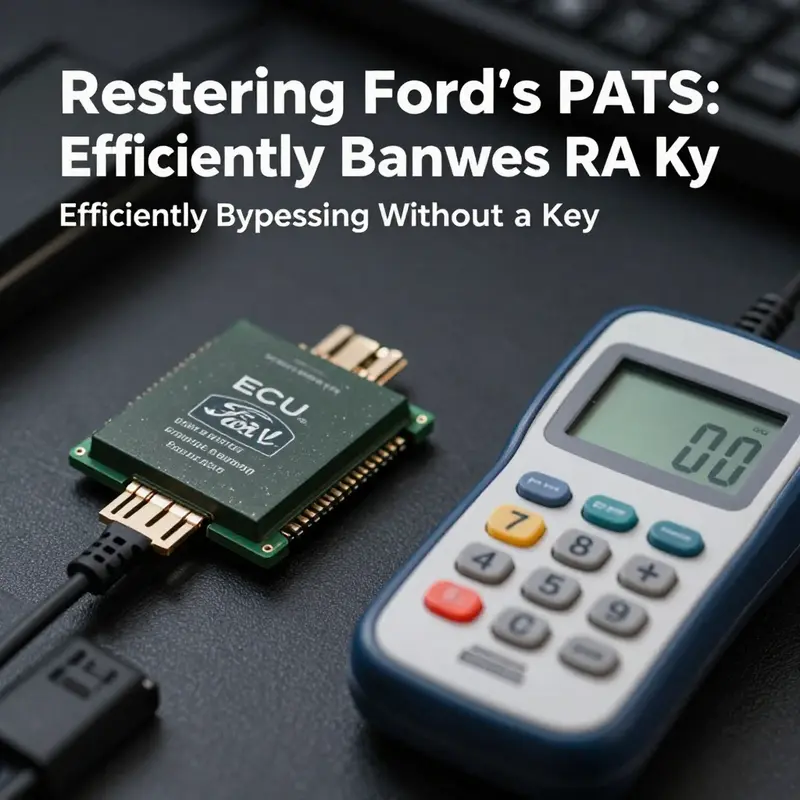
The idea of bypassing a vehicle’s anti-theft system without a key has long drawn interest from technicians and curious readers alike. Yet a closer look at the topic reveals a fundamental truth: attempting to retrieve or manipulate an ECU password as a shortcut to starting a Ford vehicle with a missing key is not a safe or wise path. Beyond technical hurdles, there are serious legal, ethical, and safety considerations that owners should respect. In Ford’s context, the PATS (Passive Anti-Theft System) is a layered security architecture that blends hardware and software components to verify legitimate ignition authorization. When the mismatch occurs, the engine remains inert. Actions that claim to bypass or “unlock” this pairing are not simply a simple hack; they can be seen as tampering with security protections designed to deter theft and damage. This is why legitimate repair work typically begins with verification of ownership and proper authorization, followed by the use of approved tools and procedures.
To understand why discussions about retrieving an ECU password tend to stay out of the DIY limelight, it helps to outline, at a high level, how the PATS ecosystem operates. The immobilizer transponder embedded in the key responds to a challenge from the engine control unit (ECU). When the codes match, the ECU allows fuel injection and ignition to proceed; when they don’t, the engine remains immobilized. The system relies on encrypted data and authenticated, unique key signals each time the ignition is turned. Some Ford configurations add layers—platform variants, firmware differences, and enhanced PATS iterations—that can complicate even seemingly straightforward reprogramming. This architecture underscores why professional locksmiths and technicians emphasize legitimate channels: the goal is to restore function without creating new vulnerabilities.
Within this reality, discussions about recovering or manipulating an ECU password are often framed as theoretical curiosities or legitimate diagnostic topics conducted under proper authorization. The practical risk, however, is real: attempting to retrieve or exploit such a password outside an approved repair context can run afoul of anti-theft and cybersecurity laws. Even discussions framed as “missteps” in a workshop manual carry risk when treated as do-it-yourself projects. The engineering intent of PATS is security, not convenience, and that intent remains a strong guardrail against casual experimentation. In many jurisdictions, unauthorized attempts to alter immobilizer logic can be prosecutable offenses with penalties that range from fines to potential imprisonment.
What does this mean for owners who have lost a key or are dealing with an immobilizer issue? The sound guidance is clear and consistent: contact an authorized Ford dealer or a certified automotive locksmith who has the diagnostic tools, software licenses, and legitimate authority to reprogram or replace immobilizer components. Proof of ownership, vehicle identification details, and matching records are typically required. The dealer or locksmith can determine whether a new key can be issued, whether immobilizer reprogramming is feasible for the specific model and year, and what costs and timeframes to expect. In many cases, a refurbished or replacement key can be issued and the immobilizer re-synced through legitimate procedures. These steps protect the vehicle, the owner’s investment, and the integrity of the security system.
The core message of this discussion is not to provide a DIY tutorial but to emphasize responsible practice. The lure of a quick fix—retrieving an ECU password or bypassing PATS without a key—must be weighed against real-world risks. Even when a method appears in a forum or a speculative firmware note, the practical consequences can be substantial. Firmware updates that claim to override PATS often rely on undocumented behavior and proprietary data sets. They may work in very limited lab conditions for specific configurations but can also brick the immobilizer, corrupt calibrated data, or trigger other security defenses. Legally, the risks compound the technical ones, turning what seems like a clever shortcut into a costly misadventure. In short, bypasses are not universal keys for Ford vehicles; they are highly model- and year-specific, and they exist within a framework that prioritizes safety and legality over convenience.
For readers seeking legitimate avenues, consider framing the situation as a sequence of authorized steps rather than a single moment of ignition. If a key is lost, a certified locksmith can perform key programming, VIN-based key generation, and immobilizer re-synchronization through approved channels. If the immobilizer itself is malfunctioning, technicians can diagnose whether a sensor, antenna, or control line is faulty and repair or replace the component within the security framework. In many cases, the repair process restores normal operation without compromising security. This approach respects the integrity of the anti-theft design and aligns with official manuals, dealer guidance, safety standards, and warranty requirements.
As a final note, readers may pursue deeper understanding through legitimate resources that discuss diagnostic approaches and the importance of working through authorized service channels. The overarching takeaway is responsibility: modern automotive security relies on layered protections that resist casual experimentation. The goal is to balance curiosity with respect for safety, legality, and the long-term value of the vehicle. For those who want to explore further, seek information that emphasizes authorized service practices and official guidance rather than do-it-yourself bypasses.
The Quiet Cost of the Shortcut: Risks, Legality, and Safety in Bypassing Ford PATS Without a Key
The Passive Anti-Theft System, or PATS, is one of the most persistent guardrails modern cars employ to deter theft. In Ford vehicles, it pairs a transponder in the key with an immobilizer in the engine control network. The result is straightforward in theory: the engine won’t start unless the right key is present and recognized. In practice, this design pushes drivers toward legitimate paths when a key is lost, damaged, or otherwise unavailable. Yet curiosity often pushes people to explore shortcuts. The risk, however, is not merely a spoken word on a tech forum; it is a cascade of legal, financial, and operational consequences that can reach far beyond a single failed start. When you consider bypassing the Ford PATS system without a key, you are stepping into a space where the technological safeguards meet real-world stakes. The topic invites, even demands, a careful, grounded discussion about why such shortcuts exist, and why they come with substantial costs that are rarely worth paying.
Legal frameworks around bypassing an immobilizer are not uniform, but they are consistently stringent when it comes to defeating vehicle security. In many jurisdictions, altering or disabling the factory-installed security system without explicit authorization is treated as illegal. The criminal risks extend beyond a simple fine. Depending on the jurisdiction, actions intended to bypass anti-theft protections can be charged as property crimes, fraud, or even more serious offenses if the act results in theft or damage. The law often views the intent as the key element: attempting to bypass security is seen as facilitating unlawful access, regardless of whether the bypass was successful. In this sense, the act itself can be prosecutable, regardless of the outcome. Even if a particular bypass never leads to a theft, the mere act can expose the operator to charges and civil liability. The moral dimension is equally important. By circumventing security, you are undermining a system designed to protect the vehicle’s owner, new-car buyers, and the automotive ecosystem at large.
Beyond legality, warranties and insurance form another decisive barrier. Modern cars carry sophisticated, integrated electronic systems that carry explicit warranty terms. Any modification to the immobilizer or related circuitry typically voids the warranty on the affected components. This is not merely a paperwork concern; it translates to real costs if a fault arises after a bypass attempt. Insurance policies also scrutinize security-related vulnerabilities. If a claim is filed after a bypass has compromised the vehicle’s security, an insurer might deny or reduce coverage. The practical implication is clear: pursuing a bypass can convert a straightforward repair into a much larger financial risk, leaving the vehicle owner exposed to repair bills that would have been covered under normal circumstances. The ripple effect can touch every line item—electronics, telemetry, and even the interior electronics that rely on a stable power and security framework.
The potential for unpredictable vehicle behavior is not a minor caveat. The immobilizer works in concert with the engine management and ignition circuits. When those sub-systems are altered, even unintentionally, the car can behave in unexpected ways. You might experience intermittent starting issues, long cranking times, or intermittent stumbles during idle. In some cases, readers who discuss bypass methods describe phenomena that resemble misfires or uneven fuel delivery. While noise and anecdote do not equate to proof of concept, they do illustrate a consistent theme: the vehicle’s electronic nerve center is a tightly coupled system. When one part is tampered with, the entire organism can react in unpredictable and potentially dangerous ways. The risk is not merely mechanical; it is electrical, with the possibility of damaging sensors, actuators, or the ECU itself. A miscommunication within the immobilizer network can cascade into fault codes, limp-home modes, or even a complete immobilization at inopportune moments.
Security researchers sometimes frame bypass attempts in terms of “attack surfaces.” The more ways a vehicle’s security can be undermined, the more vulnerable it becomes. In this sense, bypassing PATS does not improve any legitimate ownership experience; it potentially increases the car’s exposure to theft by removing a sizable deterrent. When a vehicle’s primary line of defense is weakened, the consequences extend to the broader owner community. Thieves are often attuned to the gaps exposed by unauthorized modifications, and the presence of a bypass can invite more aggressive exploitation. This is not a hypothetical risk. It is a practical consideration that resonates with the central goal of PATS: to provide a reliable, tamper-resistant barrier against unauthorized operation. Undermining that barrier shifts the risk balance and makes the vehicle more attractive to theft, which is the opposite of what many owners intend when they seek a quick fix.
An important, sometimes overlooked, aspect concerns the reliability of the broader vehicle electrical system. Bypassing a checksum-protected immobilizer can create misalignment in the data signals that travel through the vehicle’s bus networks. The ignition switch, the instrument cluster, the immobilizer transceiver, and the ECU all exchange information to coordinate a start sequence. Any disruption—whether temporary or persistent—can lead to diagnostic confusion. If a mechanic later attempts a legitimate repair, the system may display ambiguous fault codes or fail to synchronize correctly. This complexity means that a seemingly isolated act can complicate the entire diagnostic process, forcing time-consuming troubleshooting and potentially costly reprogramming. In some cases, technicians must revert to factory configurations, reflash firmware, or replace modules that might previously have functioned perfectly. The bottom line is clear: bypassing PATS creates a repair trail that can extend far beyond the initial act and necessitate professional intervention.
For those who approach this topic from a curiosity-driven or “learning” perspective, it is essential to separate legitimate security research from practical engineering. Understanding that immobilizers exist to protect owners, and that bypass techniques can be both illegal and dangerous, is critical. There are legitimate avenues for studying automotive security that do not involve tampering with actual vehicles. Researchers can work with simulations, test benches, or consent-based demonstrations under supervision and within legal frameworks. This approach preserves the educational value while avoiding the real-world consequences tied to bypass attempts. If your interest lies in the mechanics of immobilizers, a cautious, responsible path is to study how these systems are designed to protect assets, how the encryption keys are managed, and how manufacturers implement secure boot and anti-tamper measures. A responsible inquiry will emphasize why these protections exist and how they contribute to overall road safety, rather than how to defeat them.
For anyone who finds themselves locked out or facing a PATS-related error, the recommended course of action remains straightforward and prudent. Seek assistance from authorized service providers, includingFord dealerships or certified automotive locksmiths. These professionals possess the tools, licenses, and access to legitimate software that can address immobilizer issues without compromising safety or legality. They can rekey a vehicle, reprogram a key fob, or repair a damaged immobilizer module in a manner that preserves the vehicle’s security posture. Spare keys or fobs should be obtained through official channels to ensure compatibility and security. It is precisely this approach that protects the owner’s investment and keeps the vehicle insured, serviced, and roadworthy.
For readers who want to situate this topic within the broader landscape of vehicle security, consider exploring related discussions on legitimate documentation and decoding methods from reputable sources. See, for instance, a detailed exploration linked through automotive-security discussions, which may offer context about how immobilizer systems are documented and how legitimate access to vehicle security features is controlled. For context on vehicle security research, see the Ford Mustang VIN decoder article Ford Mustang VIN decoder – unlock your car’s hidden secrets. Such resources can illuminate the boundary between understanding security mechanisms and crossing into prohibited bypass techniques.
If you are seeking official guidance on security practices and legitimate maintenance, Ford’s own Vehicle Security page provides essential information on how PATS and related systems are designed to function and how technicians program keys and remotes. It is a reliable, authoritative reference that emphasizes using genuine keys and authorized service providers to maintain vehicle integrity and safety. For official guidance, see Ford’s Vehicle Security page: https://www.ford.com/support/vehicle-security/
Final thoughts
As business owners increasingly rely on their vehicles, understanding and navigating the complexities of the Ford PATS system is essential. While methods to bypass this system may offer immediate operational relief, it is critical to weigh the benefits against the potential legal ramifications and security risks involved. Engaging a professional automotive locksmith or technician is advisable to ensure that any bypassing methods employed are done safely and responsibly, ultimately protecting both your vehicle and business interests.