
The Jeep Wrangler is built for adventure, but when a dangerous vibration known as the death wobble occurs, it can threaten safety and productivity for fleet operations. This guide outlines common causes, how to detect the wobble early, repair options, preventive maintenance, and the impacts on owner experience. By following these chapters, business owners can maintain reliable, safer vehicles for daily operations.
The Front-End Ballet: Understanding and Surviving the Jeep Death Wobble
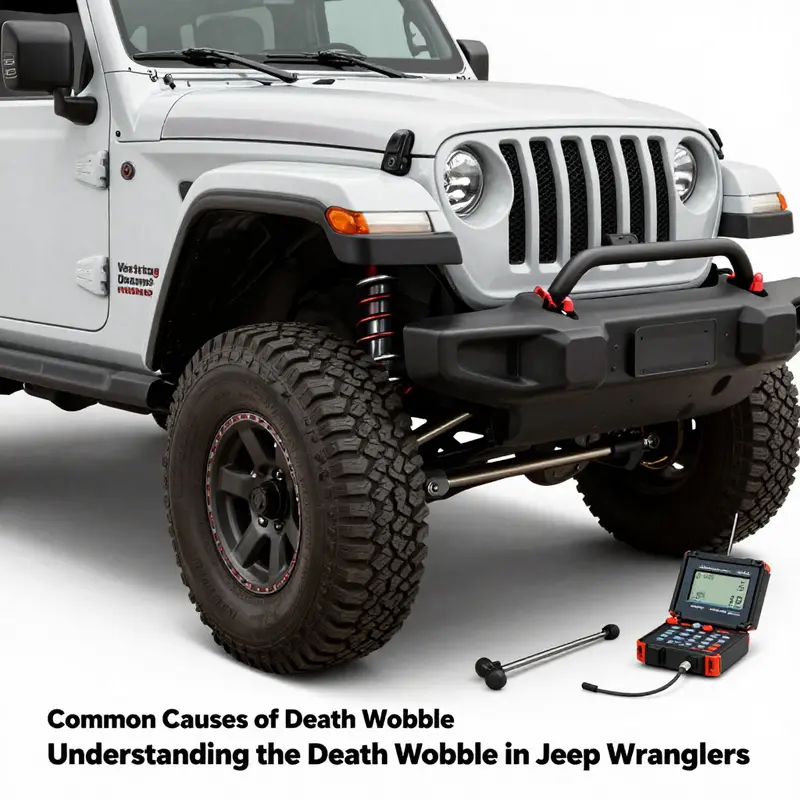
Death wobble is a front-end oscillation that can begin at highway speeds and feel like a fight for vehicle control. It often starts after a bump or load change and, if present, can persist as the vehicle travels between roughly 45 and 60 mph. The shaking can involve the steering wheel, the front suspension, and even the whole chassis, and it can be alarming even for experienced drivers. The safest response is to slow down gradually and avoid overcorrecting the steering as the wobble develops.\n\nCommon causes include worn or damaged steering components such as tie rod ends, ball joints, center links, and track bar bushings; improper alignment after modifications like lift kits or bigger tires; and worn suspension elements such as control arms, shocks, or sway bar links. In many cases, aftermarket changes that alter geometry or weight amplify stresses that the factory system was not designed to handle. A missing or failing steering stabilizer can also play a decisive role by reducing damping of rapid side-to-side motion.\n\nDiagnosis should be thorough and systematic. Start with a front-end inspection for play in the steering links, verify proper torques, and look for bent or damaged parts. Check alignment in light of any suspension modifications, and inspect tires for wear, balance, and proper sizing. If wobble persists, a calibrated alignment and a careful review of toe, camber, and caster angles are warranted. Replace or repair worn components as needed and test again under controlled conditions.\n\nA practical safety-first approach emphasizes no quick fixes. Replace questionable parts, recheck alignment, and confirm tire conditions before returning to highway speeds. In many cases, the wobble responds to a combination of fixes rather than a single component, so the plan should be staged and documented, with a focus on restoring predictable steering feel and confident handling on both road and trail.\n\nFor readers seeking extra context, many owner forums and professional guides discuss death wobble in depth, highlighting that there is no one-size-fits-all solution and that careful, correct parts and installation are key to a durable repair.
The Dancing Front End: Symptoms, Detection, and Safe Repair of Death Wobble in Jeep Wranglers
The term death wobble is often spoken about in hushed tones among Wrangler owners, yet it describes a phenomenon that is both startling and remarkably specific. In certain late-model Jeep Wranglers, especially those built during the 2012–2018 JK era, the front end can begin to oscillate with violent energy once the vehicle brushes a bump, a dip, or an uneven stretch of highway. At first it may feel like a quick tremor through the steering wheel, but before long the entire front end seems to buck and shake as if the vehicle itself is resisting a mischievous ghost riding along the frame. The vibrations surge at higher speeds, typically in the 40 to 65 mph range, and the sensation can escalate with each hit of a pothole, seam, or transition from asphalt to freeway cross-slope. The danger is not only the uncomfortable jolt but the real risk of losing control if the oscillation grows or continues unchecked. That combination—high speed, a shuddering front end, and a loss of steering certainty—defines the core of death wobble. It is not a mere nuisance; it is a safety alarm bell that demands immediate attention and careful diagnosis.
What makes death wobble so confounding is that it can appear and disappear with little warning. A driver might find the steering wheel suddenly tremoring after cresting a hill and then feel a momentary calm, only to be greeted later by another, more stubborn shake when the next road irregularity arrives. The wobble can feel like the vehicle is dancing on the edge of equilibrium, with the front tires and steering linkage trading micro-movements that quickly grow into a contrapuntal, almost mechanical rhythm. This is not a case of a single worn part yanking the steering in one direction; it is a resonance that travels through the front suspension and steering system, magnified by speed, road texture, and any modifications made to the vehicle’s geometry. The experience has a way of turning a routine highway drive into a tense test of composure and reaction time, demanding the driver to respond with calm, restrained inputs rather than frantic corrections.
From a technical standpoint, the most common pivot point for death wobble is the steering system. A failing or improperly installed steering stabilizer—often described as a steering damper in lay terms—can dramatically reduce the dampening of those unwanted vibrations that travel from the wheels through the front suspension and into the steering column. When the stabilizer is compromised, the steering linkage loses its ability to absorb and dissipate energy generated by a wheel encountering a sudden road irregularity. Yet even a healthy stabilizer does not guarantee protection if other components are compromised. The front suspension system houses an array of parts that can contribute to wobble if they wear unevenly or become loose. Tie rod ends, ball joints, control arms, and bushings are all suspects in the equation. A misalignment, improper torquing, or play introduced by worn joints can set up a chain reaction as the wheels attempt to regain straight-line stability, only to be knocked off balance again by the very surface that set off the initial vibration.
In practical terms, the death wobble becomes a symptom of an overworked front-end geometry. When a Wrangler runs larger tires or sits higher than stock, the leverage on those front components increases. That altered geometry can magnify the effect of even minor imperfections in the road, making a wobble more likely or more pronounced in everyday driving. It is why many owners report that wobble emerges more readily after suspension modifications, heavier wheels, or aggressive tire sizing, though it can also appear on stock setups under the right combination of speed and surface. This interplay of parts and conditions is why a thorough inspection matters more than a single replacement part. A diagnostic approach that treats the wobble as a system problem—not merely a bad damper or a single worn joint—produces safer, longer-lasting results.
The detection phase hinges on attentive driving observations and a methodical front-end evaluation. The symptoms are the most readily recognizable sign: an abrupt, intense shake transmitted through the steering wheel; visible front-end motion from the vehicle’s nose; and a sense that the whole vehicle is “dancing” as it travels over the irregularities. The wobble often appears at highway speeds and may briefly settle when the driver reduces speed, only to return with the next bump. This pattern—speed-dependent, road-feature-triggered, and frequently episodic—helps distinguish wobble from other steering-related issues, such as a simple tire imbalance or rattling trim. It also underscores the importance of not chasing a quick fix in the moment. If the phenomenon is observed, the prudent course is to slow down and seek a safe place to stop, where a thorough inspection can commence with the vehicle at rest.
Beyond the immediate symptoms, there is a diagnostic narrative that drivers may not always know how to read. Modern Wranglers can accumulate wear in various parts of the front end—some components more likely to contribute to wobble after years of use or after altering the vehicle’s dynamics with lift kits and larger tires. A worn or loose tie rod end, or a ball joint that has developed some play, can set the steering system on a misalignment path that invites oscillation rather than straight travel. Control arm bushings that have lost stiffness may permit slight misalignments to grow under load, especially when the suspension transfers weight across a bump. Wheel alignment, if neglected after a tire or suspension change, can create lingering drift characteristics that interact with the wobble. And yes, the tire and wheel combination matters: mismatched or improperly balanced wheels can introduce an input that the steering system must dampen but cannot fully absorb if the stabilizer and joints are already compromised.
What this means in practice for a Wrangler owner is that addressing death wobble is rarely a single-fix proposition. The journey begins with the most common remedy—replacing the steering stabilizer—but it should not end there. A careful, hands-on inspection of the entire front-end assembly is essential. The mechanic should check torque values on all critical fasteners, verify that joints are free of excessive play, and assess the condition of the ball joints and control arm bushings for signs of wear. The inspection should also consider alignment status and tire-wheelladen geometry, including whether tires are uniform in size and evenly balanced. The overarching goal is to ensure that every piece of the front-end chain can contribute to, rather than resist, stability when the wheels meet a random road insult. When all components are in good condition and properly torqued, and when the steering linkage and stabilizer are functioning as intended, the likelihood of recurrent wobble diminishes significantly.
For Wrangler owners who have disked into the problem themselves, the instinct to chase a quick repair can be strong. Yet the evidence points to a general, practical rule: start with the simplest robust fix—the steering stabilizer—and then validate the rest of the system. This approach aligns with the broader practice of using high-quality, OEM-replacement parts and entrusting the work to a qualified mechanic. The reason is straightforward. The front end is a coordinated orchestra of parts that must be harmonized. A single misfit note—whether a worn joint or an out-of-tune alignment—can sustain an unsettling wobble, especially under speed and load. A thorough, staged diagnostic that culminates in replacing the stabilizer if needed, followed by a comprehensive front-end inspection, provides the best blend of safety, reliability, and long-term resilience.
Driving practice also plays a role in reducing risks. If you suspect wobble, it is wise to avoid abrupt steering corrections or sudden braking at speed. The impulse to grip the wheel tighter or to force the vehicle back toward a straight path can amplify the very oscillations you are trying to dampen. Instead, ease off the accelerator gradually, maintain a steady steering line, and decelerate in a controlled manner to a safe speed before continuing. In many cases, this measured response prevents a dynamic situation from worsening and buys time for a proactive inspection and repair. The psychological pressure of a wobble—knowing the vehicle can drift or shake out of control—underscores why a calm, methodical approach is essential, both for the driver’s safety and for the technician’s ability to diagnose root causes accurately.
For readers who are curious about how these dynamics play out in different driving contexts, it is worth considering winter conditions, where stability becomes even more critical. The interplay of cold tires, slick roads, and the added effort to maintain control can intensify the consequences of a wobble. If you are curious about how Wranglers perform in snowy conditions, you may find it useful to read about its winter performance and stability characteristics in comparative discussions such as this one Are Jeep Wranglers good in the snow. The winter context reinforces the point that front-end integrity is not just about quiet highways and sunny days; it is a matter of consistent handling across a spectrum of road textures and temperatures.
The authoritative voice on these issues comes from the vehicle’s official service guidance. Jeep provides technical service notices that outline the recommended maintenance, inspection steps, and repair guidelines for affected Wrangler models. This official documentation is essential reading for anyone who wants to understand the intended service path and the rationale behind the recommended fixes. While a hobbyist may start with common-sense checks, the best outcomes come from combining hands-on due-diligence with the manufacturer’s documented guidance. In the end, the goal is straightforward: restore stable, predictable steering behavior and eliminate the conditions that allow a dangerous wobble to arise after a routine drive. The journey from symptom recognition to safe repair is not glamorous, but it is practical, repeatable, and ultimately life-saving for drivers and passengers alike.
External resources and official guidance provide a clear path forward. For those seeking formal, what-to-do guidance directly from the manufacturer, consult Jeep’s Technical Service Notices. This documentation offers detailed service information, repair guidance, and torque specifications that help ensure the repair addresses the problem comprehensively rather than superficially. As always, when in doubt, a qualified technician should perform the diagnostic work and carry out any repairs using appropriate, high-quality replacement parts. The goal is not merely to quiet the telltale shudder but to restore confidence in the vehicle’s ability to handle rough roads and fast highway segments with predictable, controlled steering. For a broader perspective on how these dynamics manifest in daily driving, the discussion above highlights the key symptoms, the diagnostic mindset, and the practical pathway back to safe operation.
External resource: https://www.jeep.com/support/technical-service-notices/
Repairing the Death Wobble: A Thoughtful Diagnostic Path to Safe Steering on the Wrangler
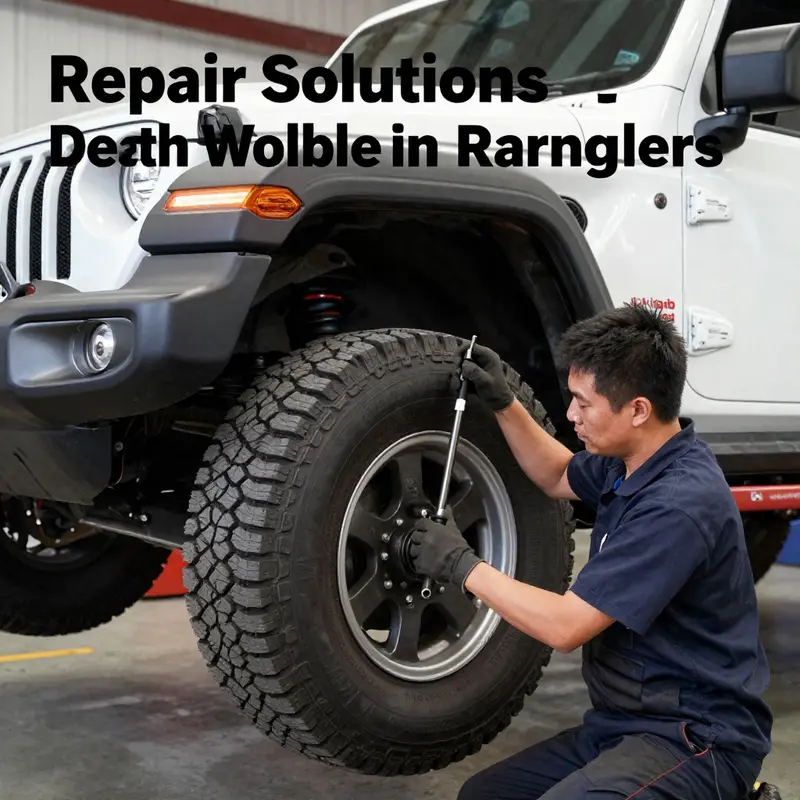
The moment the highway stretches ahead and a Jeep Wrangler dips over a rough patch, a very specific fear can grip the driver: the front end begins to shake, the steering wheel becomes a stubborn, violent drum, and the whole vehicle seems to improvise its own anxious dance. This is the dreaded death wobble, a front-end oscillation that can strike at high speeds, often around the 45 to 65 mph range, and is as alarming as it is potentially dangerous. For owners, the sight is more than a nuisance; it is a test of a vehicle’s integrity and a test of the driver’s calm under pressure. Understanding not just what happens, but why, is the first step toward a repair path that restores confidence and road manners. The core truth is that while the wobble can feel capricious, it almost always hides a mechanical chain of causality that can be traced, measured, and corrected with careful inspection and precise part changes. The most common culprit—though not the only one—remains a steering stabilizer that has lost its grip on the task of damping steering-induced motion. Think of the stabilizer as a shock absorber for the steering linkage. When it works, it cushions the tiny, continuous jolts that travel from the road, through the suspension, and into the steering system. When it fails, those jolts turn into amplified oscillations that the front tires and suspension components must wrestle with at speed. Yet the stabilizer is rarely a lone culprit; it sits at the center of a web of front-end parts that can all contribute to the wobble if they are worn, loose, or misaligned. The moment you suspect death wobble, you are really looking at a front suspension and steering health check that demands patience, method, and respect for the torque specs and tolerances that keep a Wrangler stable under load.
Beyond the stabilizer, the usual suspects recur with regularity. Tie rod ends, ball joints, control arms, track bars, and associated bushings are the moving joints that transmit steering inputs into the wheels. If any of these components wear unevenly or loosen, the front wheels can develop play that becomes a feedback loop when road imperfections interrupt the motion. Misalignment compounds the problem; even when the geometry seems nominal at rest, a mis-specified toe or camber can make the steering sway in response to flexed joints. A tire situation can magnify everything. Uneven wear, mixed sizes, or inconsistent brands can create subtle deviations in wheel circumference that mimic or worsen the wobble when the vehicle is asked to track a straight line on a free highway. In the mix, lifted Wranglers add another layer of stress. Raising the front end changes leverage in the steering and suspension geometry, increasing the load on joints and bushings and demanding stiffer, more resilient components to maintain alignment and stiffness under dynamic loads. The practical message is simple: death wobble is rarely the fault of a single bad part; it is a symptom of a front-end system that has drifted out of balance and out of spec.
To approach a fix with the clarity a safe repair requires, a diagnostic arc becomes essential. The diagnostic journey begins with a thorough, methodical inspection of all front-end components. A technician or an experienced owner should look for any obvious signs of wear or damage—play in the tie rod ends, looseness in ball joints, or audible clunks when the steering is moved with the wheels off the ground. If a component shows any sign of wear, replacement is not just advisable but prudent. The next checkpoint is the steering stabilizer itself. It must be checked for resistance, leakage, and the ability to dampen motion across the full range of steering travel. A failed stabilizer often presents as insufficient damping, which allows the steering linkage to resonate with the road’s irregularities rather than absorbing them. The third pillar of the diagnostic effort is wheel alignment. A precise alignment ensures the tires contact the road in a way that supports predictable steering behavior. This includes checking the toe, camber, and caster angles and verifying that all four tires contribute to a consistent, coherent ride. In parallel, tire conditions are evaluated. Tire pressures must be equal, tread depths should be uniform, and tire sizes must be matched across both sides. Inconsistencies here can sow the seeds of instability that your steering system then tries to compensate for, often in the most undesirable way at speed.
For Wranglers that sit higher or are employed off-road more aggressively, the diagnostic story evolves further. Lifted suspensions introduce altered loads and changed leverage points that can accentuate steering play. In this scenario, even a vehicle with otherwise good components may benefit from upgrading to heavier-duty or performance-oriented suspension parts designed to handle the added stress without sacrificing steering feel. The upgrade philosophy is practical: you don’t replace a wobble with a stiffer ride; you restore the system’s ability to damp motion, maintain alignment, and keep the wheel under control when the road throws a surprise. With the stabilizer functioning, joints wearing as expected, the alignment within spec, and the tires harmonized, the wobble’s source diminishes and can disappear altogether. Owners who have pursued this path frequently report a complete, durable resolution, with the steering returning to a predictable, confidence-inspiring feel on both highway straights and curved backroads.
The diagnostic approach, though straightforward in concept, benefits from a guided, evidence-informed method. A reliable roadmap begins with the simple checks that any owner or shop can perform, moves through targeted component testing, and culminates in a measured replacement strategy. The core steps are not exotic: inspect for play; assess the stability and response of the steering stabilizer; verify alignment; confirm tire consistency; and, if the Wrangler wears a lifted setup, consider hardware upgrades that reinforce the front end without softening its handling through sheer mass alone. The value of this approach lies in its rigor rather than its speed. A rushed diagnosis risks misidentifying the wobble’s cause and replacing parts that do not address the root problem. Instead, a disciplined sequence—check, confirm, measure, and compare—yields results that last and minimizes downtime.
In the broader context of expert guidance, a respected automotive publication offers a detailed, stepwise framework for diagnosing and fixing death wobble. The article blends lab-tested insights with real-world testing scenarios, providing concrete repair recommendations that are tailored to Wrangler owners facing this very issue. While it is always prudent to cross-check with manufacturer service data and align work with the vehicle’s specific year and model, the Car and Driver feature serves as a valuable companion in the repair journey. It invites owners to adopt a structured plan rather than a grab-bag of fixes, emphasizing the importance of validating each front-end link before concluding that the wobble has been vanquished. For readers seeking a deeper drill-down, this resource can act as a practical companion that complements the diagnostic narrative described here.
As a Wrangler owner contemplates the path from diagnosis to repair, a simple but powerful reminder anchors the process: the death wobble is a symptom, not the end state. It signals that the front-end assembly has reached a threshold of wear, misalignment, or insufficient damping that requires attention. The repair path is not a guesswork exercise; it is a sequence grounded in mechanical logic, clear torque specs, and quality parts. When the job is done with care—using reliable, properly torqued fasteners, OEM-replacement parts where appropriate, and a focused inspection of related components—the vehicle’s steering returns to a stable, linear response. The driver gains reassurance that the front end will track its path with confidence, rather than chasing after a road’s irregularities with a mind of its own.
What to keep in mind as you navigate this repair journey is that the wobble’s remedy often lies in the quiet, steady work of restoring proper geometry and damping. The steering stabilizer’s damping function, the integrity of tie rod ends and ball joints, the rigidity of control arms and track bars, and the alignment’s precise angles—all these factors collaborate to produce a road-ready Wrangler. The goal is not to chase the latest fix in isolation but to reestablish a balanced front end that behaves predictably under the bumps and dips that every road presents. In practice, many owners find that replacing the steering stabilizer first yields the most immediate improvement. If the wobble persists, a comprehensive front-end inspection follows, and the replacement list grows to include any worn joints or misaligned components. And if your Wrangler wears a lifted suspension, remember that upgrades tailored to higher loads—while not a cure-all—can provide the necessary durability to keep the steering precise across the vehicle’s full operating range.
For a concise primer on how this diagnostic and repair approach translates into real-world steps, consider the following pathway as a framework you can discuss with a qualified shop: start with a visual and tactile inspection of all front-end joints, test the steering stabilizer for resistance and leaks, verify alignment with a four-wheel alignment procedure, ensure tires are new or uniformly worn and matched in size and brand, and finally evaluate whether upgraded front-end components are warranted for a lifted Jeep. If the wobble remains after these measures, there is no shame in seeking expert hands and a more comprehensive upgrade plan. The safest outcome is a Wrangler that feels steady at speed and responsive in steering, with the confidence to carve a highway curve or traverse a rough patch without the unsettling tremor that used to define the driving experience.
As you weigh the information above, you may find it helpful to explore other perspectives on Wrangler performance in different conditions, such as winter driving, where stability is equally critical. For a perspective focused on winter performance and how Wranglers manage snow and cold surfaces, you can read more here: Are Jeep Wranglers Good in the Snow.
External reference: for a detailed expert analysis and repair steps that align with the diagnostic framework described in this chapter, see Death Wobble Jeep Wrangler Fix. https://www.caranddriver.com/jeep/wrangler/features/a54186793/death-wobble-jeep-wrangler-fix/
Steadying the Dance: Preventive Measures to Halt Death Wobble in the Jeep Wrangler
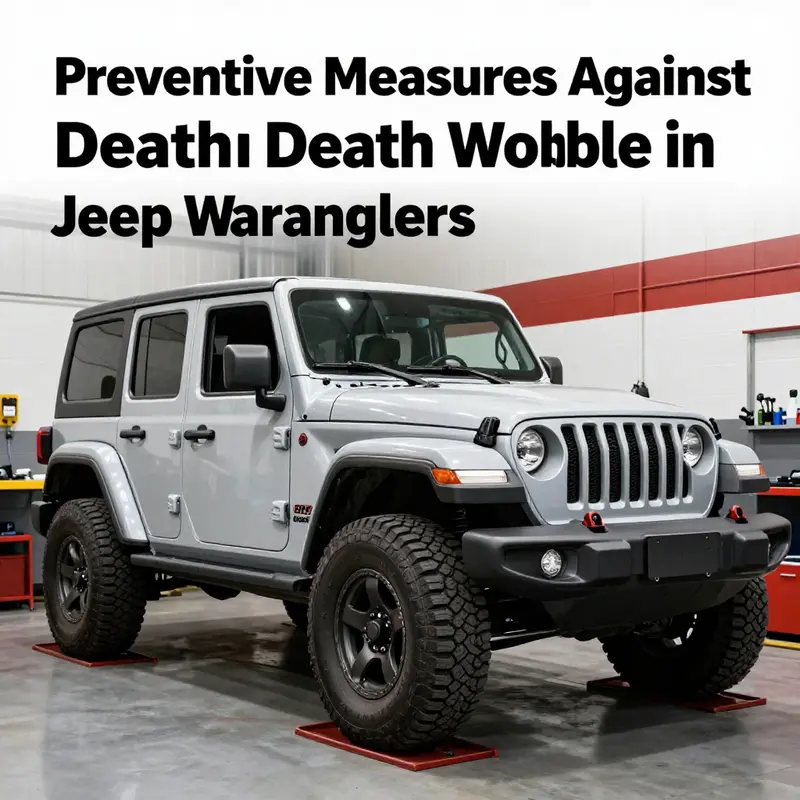
Steadying the Dance: Preventive Measures to Halt Death Wobble in the Jeep Wrangler
When the front end of a Jeep Wrangler begins to vibrate in a violent oscillation at highway speeds, most drivers describe it as a sudden, almost surreal loss of control—the vehicle seems to dance while the steering wheel shudders in their hands. This phenomenon, commonly called death wobble, has earned a reputation for stress, fear, and the urgent need for a practical, well-reasoned response. The chapter you are about to read explores not just what triggers this dangerous event, but more importantly, how to prevent it from ever showing up in the first place. The narrative here is built around a core idea: prevention hinges on disciplined maintenance, careful driving choices, and a clear understanding of how the front-end suspension and steering system interact at speed. A careful, ongoing approach can dramatically reduce the likelihood of a wobble and, when necessary, guide owners toward fixes that restore stability without turning routine maintenance into a dealership ordeal.
At the heart of the preventive strategy lies the steering damper, the component most often implicated when death wobble materializes. Think of the damper as a shock absorber for the steering system. It damps and smooths the rapid, tiny movements transmitted through the front suspension as the wheels roll over ruts, potholes, and patches of rough surface. When the damper is worn, damaged, or incorrectly installed, those small oscillations can amplify, transmitting through the steering linkage and into the wheel assemblies. The result is a feedback loop in which the steering wheel starts to shake and the rest of the vehicle follows, sometimes violently. The most immediate and often effective preventive step, then, is to ensure the steering damper remains functional and properly installed. If a diagnosis points to a failing damper, replacement with a high-quality aftermarket option can be a straightforward and decisive remedy. This approach aligns with the broader understanding voiced by vehicle safety and service campaigns associated with certain Wrangler model years. While specific brands and configurations are a matter of preference and vehicle history, the underlying principle remains: a damper that performs as intended cushions the system against the shudders that would otherwise cascade into a wobble.
The road to durable stability does not end with the damper, however. A comprehensive preventive regimen calls for regular inspection of the entire front-end suspension and steering assembly. In practice, this means taking a careful, tactile look at tie rod ends and ball joints for any play or looseness. These joints act as the hinge points that translate steering input into wheel rotation. Even a small amount of looseness at these joints can serve as a seed of wobble, especially when the tires encounter a sudden change in the road surface. The track bar and its mounts deserve equal attention; a loose or worn track bar mount can permit lateral movement of the axle, creating a condition where the system resonates under certain speeds and conditions. It is not uncommon for drivers to notice a wobble developing after an alignment, a sign that the front end was not torqued to specification or that a mounting point has begun to shift under load. Axle shafts and U-joints, though less commonly the spark that starts a wobble, must be inspected for signs of wear or looseness that could compromise the integrity of the drivetrain and front-end geometry. The overarching message is simple: a front-end that is worn, loose, or misaligned accumulates tolerance and slack. At speed, that slack can translate into the kind of oscillation that proves dangerous in a heartbeat.
Equally important is tire health. The tires are the interface between the road and the steering system, and their condition has a direct impact on high-speed stability. Regular tire maintenance—ensuring proper inflation, balancing, and even wear—helps prevent the subtle vibrations that can act as precursors to death wobble. An unbalanced tire or one with irregular tread wear introduces a vibration signature that can be misread by the steering system as a destabilizing input, effectively magnifying any existing wobble tendencies. When tires are properly inflated to the vehicle’s specifications, balanced, and evenly worn, they contribute a steadier baseline against which the steering and suspension can operate.
Beyond wear and maintenance of stock components, the question of modifications deserves careful consideration. Off-road and performance upgrades—larger tires, lift kits, or aftermarket suspension components—change the vehicle’s geometry and dynamics. While these modifications can enhance capability, they also have the potential to introduce new interactions within the steering and suspension systems. If a Wrangler has been modified, it is essential to verify that every component is compatible, correctly installed, and properly aligned. The goal is not to avoid upgrades altogether but to approach them with a practitioner’s discipline: check geometry, verify alignment specs, and confirm that the damper, track bar, tie rods, and other critical parts work together within the new configuration. In practice, this translates to a rigorous inspection routine after any modification and a willingness to revisit settings that were once considered “good enough” in the stock configuration.
Driving behavior is another essential layer of prevention. High-speed travel over rough roads, potholes, or gravel is a high-risk scenario because sudden impacts can act as triggers for wobble. Planning routes to minimize these exposures, especially at highway speeds, matters. When bumps are unavoidable, a gradual approach to speed changes—avoiding abrupt braking or acceleration—helps keep the front-end dynamics within a predictable envelope. The simple act of adjusting driving style to the road surface can forestall the conditions that often precipitate a wobble. For those who live in climates with frequent winter hazards or rough surfaces, it is worth noting a practical reality: staying within speed ranges where the steering system has a margin to damp vibrations is a preemptive form of safety. In winter conditions, for example, the additional demands on the front end can be pronounced, and a cautious, anticipatory driving approach is especially valuable. For readers navigating such conditions, a concise reminder is in order: see how other Wrangler drivers manage the balance between performance and stability in winter driving, as discussed in dedicated driving resources that address cold-weather handling.
The preventive framework outlined here is not about a single miracle fix. It is a disciplined, layered approach that recognizes how the steering damper, the broader front-end assembly, tire health, and driving style all contribute to stability at speed. When a wobble does occur, it is a sign that one or more of these layers has failed to perform as intended. In that moment, a calm, methodical response is essential. Begin by easing off the accelerator and allowing the vehicle to slow gradually. Do not jerk the steering or apply heavy braking, which can destabilize the vehicle further. If the wobble persists, a controlled, smooth pull toward the shoulder or a safe stop is warranted. Once the vehicle is stopped, the inspection begins: check the damper for leaks, confirm that mounting points are secure, test for play in tie rods and ball joints, and assess the track bar’s condition. If any component shows signs of wear or damage, replace it before continuing. In many cases, a single damper replacement combined with a thorough front-end inspection resolves the issue, restoring a sense of predictable steering behavior and confidence at speed.
For readers seeking a broader perspective on practical driving considerations in winter conditions, see the article addressing how Wranglers perform in snow. It offers actionable guidance on traction, tire choices, and the subtle interplay between vehicle weight distribution and steering response in cold weather. Are Jeep Wranglers Good in the Snow?
In the larger context of Wrangler maintenance, it is also prudent to stay informed about recalls and service campaigns related to steering and front-end components. The global automaker community and government safety agencies provide ongoing updates to help owners identify risky configurations and take corrective action promptly. Regularly checking safety recall databases enables owners to act quickly, rather than waiting for symptoms to appear. A practical starting point is to review the official safety information portals and to coordinate with a qualified technician who can interpret service bulletins in the context of a particular vehicle history. The aim is not fear but preparedness: a Wrangler that is maintained with vigilance, driven with awareness, and repaired with standard, quality practices, is far more likely to stay out of the wobble’s reach.
As this chapter closes on preventive strategy, it is helpful to anchor the discussion in a source that consolidates recall information and service guidance for Wrangler owners. The National Highway Traffic Safety Administration maintains recall resources that can be used to verify current status and recommended actions. This external reference provides a structured, authoritative frame for owners seeking to understand the scope of potential front-end concerns and the processes by which they can obtain official remedies. External resource: https://www.nhtsa.gov/recalls
Wobble and Will: How the Death Shake Shapes Wrangler Ownership

The Death Wobble is not just a mechanical quirk; it is a moment of reckoning between a vehicle that wears its off-road bravado on its sleeve and a driver who trusts what’s beneath the steering wheel. For many owners, the phenomenon appears as a violent, rapid oscillation of the front end that begins at highway speeds—roughly in the mid-range, often between 45 and 65 mph—when a sudden bump, dip, or even a braking or accelerating input unsettles the suspension. What follows is a churning shuffle of the steering wheel and a whole-body vibration that can feel as if the Jeep itself is pitching over a hidden fault line. The experience does not simply rattle the teeth; it shakes confidence to its core. A thrill-seeking drive can instantly become a trial of nerve, turning what should be a straightforward highway cruise into a tense, cognitive tug-of-war between human reaction and machine reaction. The fear is not just about a single dangerous moment; it is about the recurring exposure to a known, if intermittent, threat that can escalate with any road imperfection or traffic condition. In that sense, the Death Wobble becomes a chronic anxiety for some owners, a constant reminder that even the most capable vehicle may betray its own strengths when a critical connection—between wheels and steering—fails to dampen the way it should.
The most common technical explanation anchors this instability to the steering system, with the steering stabilizer—often called a damper—being the usual culprit. That component is the steering system’s shock absorber, designed to dampen and control the hammering sensations that racing down a bump line can unleash through the front suspension. When it wears out, or if it’s not installed with precise torque and alignment, the dampening effect diminishes. The result is a chain of responsive, sometimes violent, feedback that the driver must wrestle into submission with a steadier grip and a faster, more careful cadence. Yet the stabilizer does not always tell the whole story. A Death Wobble can emerge from a web of interrelated front-end conditions: worn tie rod ends that allow play without obvious leakage, ball joints that no longer keep the wheel accurately in line with the steering input, or control arms and bushings that sag under load, especially after hard use on rough terrain. An improper alignment can magnify tiny steering inputs into outsized wheel movements, while tires and wheels that do not match in size or balance can introduce rhythmic, low-amplitude vibrations that begin to ride up the steering column. In short, the wobble is a symptom of a front-end health check that needs a comprehensive, methodical approach rather than a single quick fix.
Owners frequently report a practical pattern: replacing or upgrading the steering damper often resolves the issue, and for many, the certainty of a straightforward, one-step fix can be a relief after days or weeks of uncertainty. Yet even then, the story does not end with a single replacement. The prudent path is a thorough front suspension and steering system inspection, ideally performed by a qualified mechanic who can verify that every bolt is properly torqued, every joint is within wear limits, and every alignment parameter sits within spec. The goal is not merely to stop the wobble but to ensure that nothing else in the front end is contributing to it and that the vehicle remains predictable under demanding driving conditions. The emphasis on high-quality, OEM-replacement parts is not an afterthought; it is a safety posture. Substituting in a lower-quality damper or misfit components can invite a new cycle of vibration and risk. For anyone who depends on their vehicle for daily commuting, family transport, or weekend off-roading, that disciplined approach to repair matters as much as the choice of the first fix.
The human dimension of the Death Wobble goes beyond the mechanical. It imprints a lasting impression on the owner’s sense of trust and reliability. Even when the problem has a clear repair path, the repeated mention of wobble in forums, owner manuals, and service bulletins can leave a residue of skepticism about long-term durability. The Wrangler’s reputation for rugged capability is not easily tarnished, but this issue tests the faith that a highly capable vehicle can deliver consistent safety and confidence at highway speeds. The wobble undercuts the image of a vehicle that conquers backcountry trails with ease by reminding its driver that the most challenging terrain is sometimes the one that cannot be seen until it is upon you in the lane. In practical terms, the ownership experience shifts. Drivers become more cautious on uneven pavement or in conditions where road texture changes abruptly. They learn to anticipate, rather than react, and to carry a mental checklist—stability, alignment, steering play, and tire balance—that might have felt unnecessary before the wobble revealed itself. This change in behavior can be subtle but meaningful, influencing trip planning, daily commutes, and even the willingness to push the vehicle toward its natural off-road limits.
An equally important facet of the ownership narrative is the social dimension. The phenomenon has become a recurring topic within online communities where experiences are shared, symptoms are diagnosed, and fixes are recommended. The visibility of the problem in digital spaces—where a few seconds of video can capture fear, relief, and validation in real time—helps shape how potential buyers, current owners, and even prospective buyers perceive the vehicle. The open dialogue surrounding Death Wobble can be a double-edged sword. On one hand, widespread documentation helps owners feel less isolated; they find solidarity in shared experiences and practical guidance that makes the repair less intimidating. On the other hand, persistent discussion of the wobble can cast a longer shadow, foregrounding risk and reducing the sense of reliability that typically accompanies a vehicle with strong off-road credentials. It is here that the Wrangler’s enduring appeal meets a countercurrent of caution—an irony in which the very trait that makes the vehicle beloved—the willingness to venture off the beaten path—also invites a set of front-end vulnerabilities that can erode the thrill of exploration and require careful, ongoing maintenance.
From a design and engineering perspective, the Death Wobble underscores the importance of a holistic approach to front-end dynamics. It pushes owners and technicians to think not only about a single component in isolation but about the dynamic interplay of steering input, suspension articulation, wheel geometry, and tire behavior. It becomes a case study in the value of preventive maintenance and precise alignment, and it anchors a broader conversation about how a vehicle that is celebrated for capability must also be equipped and maintained to meet the safety expectations that come with that capability. The real-world takeaway is straightforward: when a wobble appears or you hear a change in steering feel, treat it as a signal to stop, assess, and verify the health of the entire front end rather than to push through the discomfort and hope it will disappear. The best path forward blends vigilance with a measured, technically informed repair approach, ideally using high-quality, replacement parts and professional expertise.
For drivers who want to contextualize the experience within broader driving realities, there is value in examining how the vehicle behaves in less forgiving conditions, such as winter road surfaces or rural highways where the texture and temperature can amplify steering feedback. In these moments, the question shifts from whether the wobble will occur to how quickly a driver can recognize the signs and how reliably the vehicle can be restored to a stable state. The conversation, therefore, extends beyond a single incident of oscillation into the longer arc of ownership: routine inspections, timely repairs, and a thoughtful response to the vehicle’s feedback. This is what transforms a once intimidating phenomenon into a manageable maintenance story, enabling the Wrangler to preserve its core identity as a rugged, capable companion rather than a source of constant concern.
Are winter roads the only arena where such concerns surface? Not at all, but they offer a useful frame to reflect on chassis health and driver confidence. For readers curious about how these vehicles handle snow and slick surfaces in everyday use, a broader perspective can be found in discussions that compare traction, weight distribution, and off-road capability during winter driving. Are Jeep Wranglers good in the snow? is a question that often comes up in ownership communities and can be explored through practical experience and shared insights. For further context on that topic, you can explore a related discussion at the linked resource: Are Jeep Wranglers good in the snow?.
Ultimately, while the Death Wobble tests the nerves and patience of owners, it also crystallizes an essential lesson about responsible ownership: a vehicle that projects capability must be paired with disciplined maintenance, precise setups, and a readiness to engage with the front end as a system rather than as a collection of independent parts. The Wrangler remains a symbol of freedom and exploration, a vehicle that invites people to push boundaries and seek new horizons. The wobble, in this light, is not the end of the story but a punctum—a marker that signals the need for a careful tune-up, a thorough inspection, and a renewed commitment to safe, confident driving. For an authoritative, technical overview of the causes and recommended repairs, consult the official guidance that documents the steps, tests, and service bulletins associated with Death Wobble: https://www.jeep.com/support/technical-service-issues/death-wobble-explained.html.
Final thoughts
The death wobble is a serious safety concern that can affect fleet reliability and owner confidence. Understanding its causes and symptoms is essential for vehicle safety and uptime. Implementing proven repairs and preventive maintenance helps protect drivers and preserves the value of your Jeep Wranglers for business use.