

The 2014 Jeep Compass, while a popular choice for many drivers, has garnered attention for its recurring issues that can affect performance and safety. Many business owners rely on their vehicles not just for personal use but as vital tools for their operations. Understanding these common problems, from throttle body malfunction to electrical failures, is crucial for maintaining reliability and ensuring uninterrupted service. This article explores the significant issues with the Jeep Compass, and more importantly, it offers practical solutions and maintenance strategies to help owners manage these challenges effectively.
Throttle Body Troubles in a 2014 Compact SUV: From Idle Woes to Smooth Acceleration
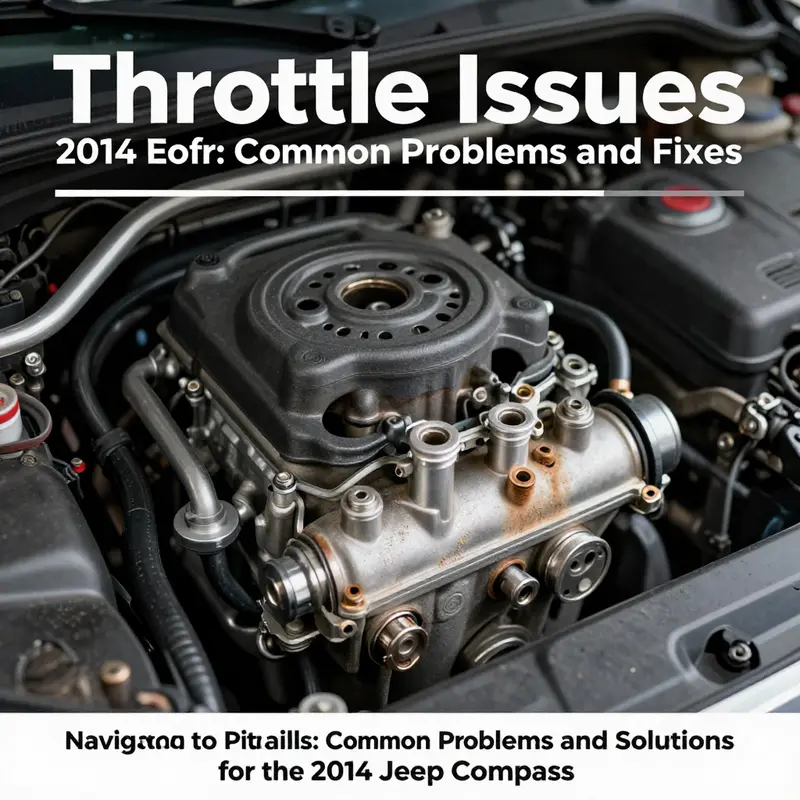
The throttle body is a small but critical component that controls air entering the engine. In a 2014 compact SUV, dirt, carbon buildup, or sensor fault can cause idle fluctuations, hesitation, or unexpected deceleration. Common signals include an erratic idle, stalling, or delayed throttle response, and diagnostic trouble codes such as P0507 (Idle Speed Too High) or P0171 (System Too Lean). These codes point to potential causes rather than a final diagnosis and guide technicians toward carbon buildup, TBPS misreadings, or wiring issues. \n\nA related factor is the throttle position sensor (TBPS); when its readings drift, the PCM can misinterpret pedal position, leading to abrupt or weak throttle response. Electrical connections matter too: corroded grounds, loose pins, or damaged harnesses can cause intermittent faults that vanish during a test drive but reappear later. \n\nRemedies typically start with careful cleaning of the throttle body and passages, followed by replacing the gasket if needed. If sensors are out of spec or wiring is suspect, calibration or replacement may be necessary. In some cases, replacement of the throttle body is the final option. Routine maintenance—keeping the air filter clean, using quality cleaners, and staying current with manufacturer bulletins—helps prevent many issues. \n\nFor hands-on guidance, consult official repair databases and reputable sources. Proper diagnosis often requires live data from a scan tool to distinguish between a dirty throttle body and a faulty sensor or wiring problem.
Shadows Beneath the Dash: Electrical Turbulence and Throttle Troubles in the 2014 Jeep Compass—and What It Takes to Fix Them
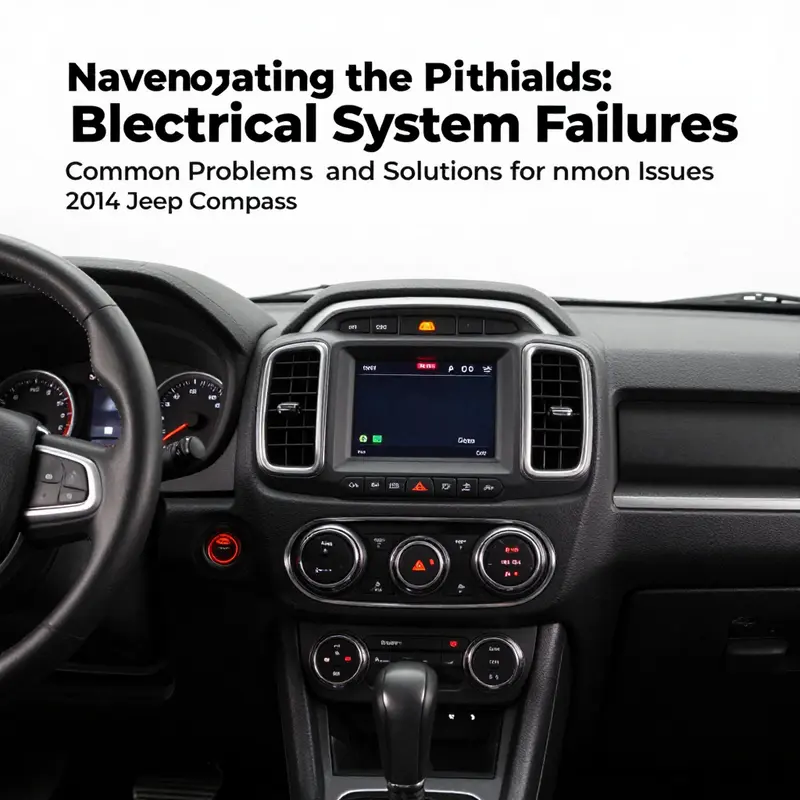
The 2014 Jeep Compass was pitched as a compact SUV capable of handling city streets and light trail duties, a practical choice for drivers who wanted a little versatility without chasing luxury. Yet beneath its accessible ride and familiar Jeep silhouette, a stubborn chorus of electrical gremlins and a troublesome throttle system often undermined the very reliability a buyer might expect. This chapter follows a single thread through a wider landscape of chronic electrical failures and throttling glitches, showing how a car’s brain and its nerves—the electronic control modules, the wiring, the BCM, and the throttle-by-wire system—can become the source of repeated, confounding symptoms. For many owners, the issue is not a single failing component but a cascade of symptoms that radiate through power delivery, information displays, and engine response. The result is a vehicle that feels unreliable at best and unsafe at worst, especially when an erratic throttle response or an unexpected stall occurs during acceleration or maneuvering.
Intermittent power loss is one of the most frustrating signals of trouble because it can hide in plain sight. A driver might notice the radio dimming momentarily, a window that stalls mid-raise, or headlights that flicker as the engine is running. In some cases, the instrument cluster can flash warnings or display incorrect data, further complicating the task of diagnosing the root cause. The underlying culprits frequently point to the electrical system as a whole rather than to a single, isolated component. Wiring harnesses can wear or sustain damage from vibration and heat, compromising the continuity of power to multiple circuits. Fuses and relays, the gatekeepers of electrical flow, can fail in ways that are not always immediately obvious, leaving a circuit momentarily without power and then restoring it without explanation. A failing alternator compounds the problem by not keeping the battery charged, so voltage dips become a recurring theme that can trigger various modules to misbehave. In the Compass, where multiple modules talk to each other through a shared data backbone, a single voltage sag can ripple across several systems, producing a cascade of fault codes and confusing symptoms.
Corrosion at connectors and grounds is another often overlooked factor. When metal grounds become intermittently resistive, the vehicle can experience what feels like random electrical gremlins: sudden resets, lights dimming under load, or a cluster of warning indicators that lights up and then goes dark. The Body Control Module (BCM), which controls lighting, power door locks, and other convenience features, sits at the nexus of these issues. A failing BCM can masquerade as problems in several subsystems, because it oversees many of the signals that other modules rely on to complete a task. When the BCM starts misreading signals or cannot stabilize the power delivery to its connected circuits, you may see a pattern of symptoms that includes sluggish or inconsistent starting, stalling, or failure of accessory systems to function reliably. For owners, tracing these symptoms back to a BCM fault is a classic diagnostic rabbit hole, one that often requires specialized diagnostic tools and a methodical, patience-driven approach to troubleshooting.
The diagnostic path for an electrical problem in a 2014 Compass is rarely straightforward. An OBD-II scanner that can read live data and capture fault codes is a practical starting point. Codes may point toward a specific circuit or module that is misbehaving, but they can also be generic, requiring deeper probing. A technician will typically verify battery health and charging performance first because even a healthy-looking battery can be expected to fail if the alternator is not delivering steady voltage. A failing alternator or a poor charging system can produce fluctuating voltage that makes the BCM and other controllers behave erratically. Voltage drop tests across grounds and battery cables can reveal hidden resistance that only shows up under load. From there, the investigation expands to inspecting wiring harnesses and connectors for signs of wear, abrasion, or corrosion. A common-sense check of fuses and relays is essential, since a blown fuse or a faulty relay can interrupt power to essential components without warning. In many cases, the root cause is a combination of factors, not a single failing part, which means a holistic approach to diagnosis is crucial.
A central theme in these electrical challenges is the way moisture, temperature, and vibration interact with the Compass’s wiring and control modules. The combination can corrode connectors in ways that aren’t immediately visible. A connector might appear intact, yet the pins can be slightly corroded or loosened, resulting in intermittent connectivity that confuses the vehicle’s computer and triggers fault codes that don’t always align with the actual fault. The BCM, as the hub of many systems—from interior lighting to door locks and beyond—can be particularly sensitive to this corrosion, creating a ripple effect that makes the vehicle feel unstable even when the engine itself runs without misfire. Repairing these issues often requires re-seating or cleaning corroded connections, replacing a damaged wiring harness, or, in more severe cases, reprogramming or replacing the BCM itself. Such tasks are typically beyond simple maintenance and call for a professional with the right diagnostic suite and access to service literature that reveals the relationships between modules and the acceptable fault code ranges for each system.
Against this backdrop, throttle system faults add another layer of complexity. The 2014 Compass uses a throttle-by-wire system, which means there is no direct mechanical linkage between the accelerator pedal and the throttle plate. Instead, a sensor reads pedal position and sends that data to the engine control module (ECM). The ECM then modulates the throttle plate through an electric motor. When dirt and debris accumulate on the throttle body, the smooth operation of the throttle plate can be compromised. Symptoms of throttle-body issues include sudden hesitation, a loss of acceleration, and, in some cases, unexpected stalling. The dirt can cause the plate to hang or become slower to respond to pedal input, which translates to a vehicle that feels unresponsive at critical moments—such as merging onto a highway or overtaking another vehicle. The fix commonly pursued by owners starts with a thorough cleaning of the throttle body to remove the buildup that insulates the sensor and the actuator from their intended movement. In more stubborn cases, the throttle body may need to be replaced to restore the precise control the ECM expects. Many mechanics also recommend pairing cleaning with a careful diagnostic check to rule out related issues like sensor calibration, wiring integrity, or software glitches.
As practical as these fixes are, they are not silver bullets. The breadth of electrical faults in the Compass means that a successful repair often requires a layered strategy. For instance, while a simple fuse replacement can restore power to an ailing circuit, it does not address the root cause if moisture ingress or corrosion continues to fuel intermittent failures. Likewise, cleaning the throttle body addresses one potential cause of poor engine response but does not fix a failing BCM that may intermittently throttle the whole system. This is why the diagnostic process emphasizes a methodical approach: start with the low-hanging fruit—fuses, grounds, and the charging system—and then expand to module-specific diagnostics using factory-level or equivalent diagnostic tools. The path may involve component replacement, but it often requires careful reprogramming or reinitialization to ensure that new parts integrate correctly with the vehicle’s software map. In other words, a fix is not only about replacing a part; it is about restoring a reliable communication and control loop among the vehicle’s electrical systems.
Owners of the 2014 Compass frequently report that the overall reliability of the vehicle is uneven, with some models displaying recurring mechanical or electrical faults beyond the throttle and BCM failures. Reports commonly include transmission issues, miscellaneous electrical malfunctions, and even air conditioning quirks that frustrate daily use. Inside the cabin, the impression of a cramped space and the use of lower-cost materials can amplify the frustration, as owners feel they are paying a premium for function less than what they expected. While these interior and reliability concerns are not universally applicable to every Compass, they help explain why some buyers approach the vehicle with caution. A cautious buyer or owner can still extract value from the Compass by focusing on informed maintenance, early detection of symptoms, and a disciplined repair strategy. The goal is not perfection but predictable reliability, achieved through proactive diagnosis and timely maintenance.
For those navigating this landscape, a practical takeaway is clear: policy-driven maintenance and up-to-date service information matter just as much as the mechanical health of individual parts. Staying current with available technical service bulletins issued by the manufacturer can help identify early warning signs and recommended repairs before issues escalate. When dealing with an electrical problem, the combination of live-data monitoring, careful inspection of wiring and connectors, and a structured approach to testing the BCM and related circuits offers the best chance to restore dependable operation. The throttle issue adds another layer of vigilance—regular throttle body inspection and cleaning, especially if the vehicle has accumulated mileage or operates in dusty environments—can help prevent performance dips that might otherwise be mistaken for more serious failures elsewhere in the system.
To support readers who want an additional perspective on how these issues manifest across the model year and what owners have documented, consider reviewing broader troubleshooting guidance from trusted automotive resources linked in the broader site ecosystem. For a concise entry point to related discussions and guidance, see the Vehicle Tricks blog overview. It can provide a broader sense of the common patterns seen in similar vehicles and how owners interpret these symptoms in real-world use. Vehicle Tricks blog overview.
Ultimately, the 2014 Compass presents a compelling case study in how electrical and throttle systems can conspire to erode confidence in a vehicle that otherwise aims to deliver utility and adventure. Recognizing the hallmark symptoms—intermittent power loss, instrument cluster anomalies, stalling, starting difficulties, and rough throttle response—can empower owners to pursue a structured diagnostic path. This means prioritizing a clean electrical baseline, verifying the charging system, inspecting wiring harnesses and grounds, and then moving toward module-specific checks, including the BCM and the throttle control electronics. When the correct sequence is followed, many of the frustrations associated with these issues can be mitigated, and the Compass can return to its intended role as a practical, capable daily driver.
For readers seeking a broader, externally sourced overview of electrical problems reported by owners of this model year, a detailed compilation can be found at CarComplaints. This resource aggregates owner-reported issues and can provide additional context for common fault patterns and repair outcomes. https://www.carcomplaints.com/Jeep/Compass/2014/electrical_problems.php
Rough Shifts, Silent Faults: Unraveling Transmission Troubles and What They Reveal About the 2014 Compass’s Reliability
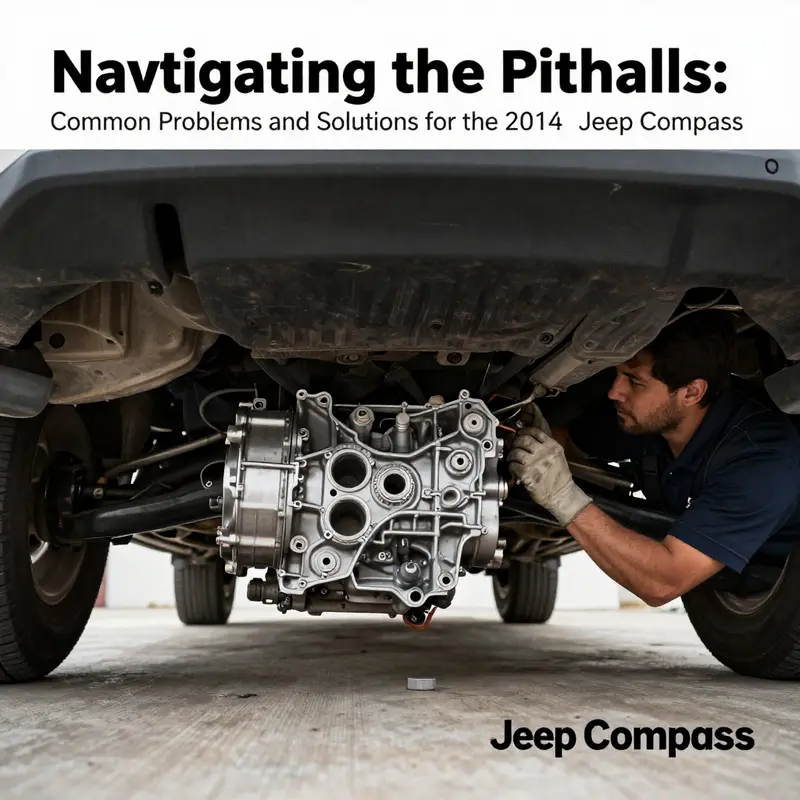
The transmission is a car’s backstage crew—often unseen, yet crucial to the ride. In the 2014 Compass, that backstage crew has drawn attention for a cluster of symptoms that owners repeatedly report: slow or hesitant acceleration, occasional shuddering during gear changes, stalling at low speed, overheating, and noticeable delays in gear engagement. Taken together, these signals do more than describe traffic hiccups; they illuminate a broader story about the vehicle’s long-term reliability. When a powertrain exhibit signs like oil leaks that threaten lubrication and cooling, or sudden shifts that feel imprecise, the questions go beyond “Will it start?” and drift toward “How long will it stay dependable?” This chapter threads those symptoms into a cohesive understanding, linking daily driving experience to the maintenance and diagnostics that can temper risk, extend longevity, and help owners navigate the repairs that do arise.
From a practical perspective, oil leaks around the transmission create a cascade of concerns. Transmission fluid is not just a lubricant; it also functions as a hydraulic medium that controls valve timing, gear engagement, and cooling within the unit. A leak can lower fluid level enough to impair lubrication and heat rejection, especially when the vehicle is used in warmer climates or in stop-and-go traffic where the transmission is working harder. The result can be a cycle of slipping, inconsistent engagement, and, over time, accelerated wear on internal components. Owners sometimes notice a sweet or burnt smell, or see reddish fluid under the vehicle after a period of parking. These observations may seem benign, but they are early warning signs that demand a professional inspection. The diagnosing path is rarely a single-mlicable fix; it often begins with a thorough fluid check and a careful inspection of seals, pan gaskets, and lines, then proceeds to a broader evaluation of the valve body and cooler system. A leak that is not addressed promptly can escalate into more expensive repairs or premature transmission failure, underscoring a fundamental principle of drivetrain maintenance: proximity to heat and fluid integrity governs lifespan as much as torque and tuning.
Acceleration issues expand the concern from a mechanical fault to a safety and usability issue. Hesitation or a sudden surge when pressing the throttle disrupts confidence, particularly in urban traffic where quick, predictable response is essential. In many cases, drivers correlate such symptoms with electronic throttle control or transmission control module (TCM) communication problems. A common thread is the need for clean, timely data exchange between the engine, the throttle body, and the transmission. Dirt and debris can accumulate in the throttle body or in the valve-body passages, causing momentary erratic behavior that feels like a readiness or power drop. While throttle-body buildup is a distinct topic, its relevance here lies in the shared vulnerability of modern drivetrains to contaminants and the way that a single degraded signal can cascade into a sense of lost power. The practical response is methodical: inspect the fluid health, verify sensor inputs and electrical connections, and perform a calibrated throttle-body clean if necessary, followed by a software check that ensures the controls are synchronized with current hardware conditions.
Shaking and shuddering during shifts are among the most disconcerting experiences for drivers. When a gearbox or its controlling systems interpret load changes or torque requests inconsistently, the result is a perceptible tremor that can be felt in the steering column, seat, or accelerator pedal. This symptom often points to a combination of wear, fluid condition, and valve-body performance. If the valve body becomes clogged or the solenoids misread signals, the transmission may attempt a gear change at the wrong moment, producing a jolt or a temporary misalignment between engine speed and wheel speed. A careful diagnostic approach addresses multiple layers: scan for fault codes that may indicate solenoid or pressure issues, inspect the transmission fluid’s color and viscosity, and examine the cooling circuit for adequate heat removal. In a modern system, even minor deviations in hydraulic pressure or circuit routing can become noticeable as a hitch in how smoothly gears are selected and held.
Stalling, particularly at low speeds or in stop-and-go traffic, introduces a serious safety dimension. When a vehicle stalls, the driver loses motive power, the engine may idle erratically, and the transmission can be left in a state that reduces responsiveness. In theCompass, as in many modern vehicles, stalling can reflect a broader mismatch between engine torque delivery and transmission input. Electrical faults in the TCM or in the engine control unit (ECU) can momentarily disrupt the carefully choreographed handoff between engine speed and transmission engagement. Because stalling can occur without warning at critical moments, owners often pursue a multi-faceted remedy: a baseline inspection of electrical connectors and grounds, a transmission-fluid and filter assessment, and, where warranted, a software update that harmonizes control logic under a wider range of operating temperatures and loads. The stakes in addressing stalling are not merely about comfort; they are about ensuring safe operation in scenarios as varied as merging onto a highway or navigating through a busy roundabout.
Overheating is the quiet adversary of many automatic transmissions. The transmission cooling system relies on fluid circulation and heat exchange to maintain stable operating temperatures. When overheating becomes a recurring theme, it may signal fluid degradation, accelerated wear, or a cooling circuit that is not performing as designed. Overheating accelerates material fatigue, weakens hydraulic performance, and can precipitate a range of symptoms—from delayed engagement to erratic shifting. A practical handling strategy begins with confirming fluid age and condition. A dark, smoky, or burned odor is a telltale sign that the fluid has degraded beyond a simple refresh. In such cases, a comprehensive service that includes fluid replacement and possibly a torque-converter or valve-body inspection becomes essential. However, overheating is not always a sign of catastrophic failure; it can be a sign of cumulative neglect or suboptimal maintenance. Regular checks of fluid level, color, and smell, plus ensuring the transmission cooler is free of obstruction, can dramatically improve reliability and dampen the risk of heat-related failures.
Delays in gear engagement are another symptom that can create a feeling of hesitation that spans across multiple driving scenarios. If the transmission fails to engage promptly after a throttle input, the driver may experience a noticeable delay before movement begins. This can be caused by a range of issues—from low fluid levels to valve-body wear or solenoid faults. A disciplined diagnostic approach can reveal whether the root cause is hydraulic, electronic, or a combination of both. In many instances, technicians will verify fluid freshness, conduct a live data test to observe line pressures, and assess the integrity of the valve body. If a fault code points toward an electronic control issue, a software update or reprogramming can restore correct interpretation of input signals. If the issue is hydraulic, the solution may involve seal replacement or more extensive valve-body work. The common thread across delayed engagement, shudder, and acceleration irregularities is the interplay between fluid quality, mechanical wear, and electronic control. When one component drifts out of spec, the others often follow, creating a feedback loop that sharpens symptoms over time.
These transmission-related symptoms, while individually worrisome, collectively reveal a pattern: the transmission in this model year benefits from proactive maintenance and careful diagnostics more than from a single, one-and-done repair. Owners who document maintenance histories, stay current with service bulletins, and address early warning signs tend to experience fewer severe failures and a longer lifecycle. The role of formal service bulletins—official guidance issued by the manufacturer—should not be underestimated. They can flag known issues with valve bodies, sensors, or fluid packs and outline recommended repairs before symptoms worsen. In practice, a capable technician will approach the problem as a system-level health check rather than a patchwork of isolated fixes. The aim is not merely to fix the current fault but to stabilize the drivetrain’s behavior across the full range of operating conditions—the city crawl, highway overtaking, and the occasional steep grade where performance matters most.
To place this discussion in a broader maintenance frame, consider the value of disciplined fluid management together with a diagnostic mindset. Transmission fluid is often overlooked as a routine maintenance item, yet it has outsized influence on the reliability and smoothness of operation. Fluid health, combined with heat management and proper software calibration, forms a tripod that supports prolonged life of the geartrain. A conservative maintenance approach—regular fluid checks, timely fluid changes with correct specifications, and adherence to cooling system maintenance—tends to reduce the frequency and severity of the symptoms described above. It also aligns with the broader driver expectations for a vehicle that remains predictable and safe in diverse driving contexts.
For readers seeking a broader perspective on how these issues fit into overall vehicle reliability narratives, a deeper dive into general maintenance practices can be helpful. The Vehicle Tricks blog offers practical insights into ongoing upkeep and common repair considerations that apply across many models and years. A concise exploration can be found here: Vehicle Tricks blog. This resource can complement the more model-specific diagnostics outlined above by reinforcing the habit of proactive checks before symptoms escalate.
As with any vehicle, the path from symptom to solution in transmissions is rarely a single replacement part. It is a process of diagnosing, validating data, and executing a repair plan that accounts for how hydraulic, electrical, and thermal systems interact under real-world conditions. The takeaways for potential buyers and current owners are clear. First, recognize that transmission-related symptoms may signal broader reliability concerns that deserve careful attention rather than quick, isolated fixes. Second, maintain a disciplined service schedule that prioritizes fluid health and cooling performance. Third, rely on professional diagnostics to differentiate between hydraulic issues, valve-body wear, and electronics faults, and to determine whether reach for a software update is appropriate. Finally, keep in mind that while repairs can restore functionality, ongoing reliability depends on consistent maintenance and timely addressing of early warning signs as they appear, before they evolve into more consequential failures.
External perspective can also help inform expectations. For a professional, data-driven review of 2014 transmission problems and the fixes that have proven effective, readers can consult Car and Driver’s in-depth assessment. Their analysis covers the practical consequences of the issues discussed here and the remedies that have emerged from real-world ownership experiences: https://www.caranddriver.com/jeep/compass/reviews/a43589796/2014-jeep-compass-transmission-problems/.
Inside the Cabin: Interior Quality Shortfalls and Practical Fixes in the 2014 Jeep Compass

The 2014 Jeep Compass sits in a segment where utility and value often blend with compromises in interior quality. This chapter looks beyond the loud engine debates and the more visible mechanical faults to the everyday, tactile experience inside the cabin. For many owners, the verdict on the Compass hinges not just on how it performs on a highway ramp or in a rainstorm, but on what it feels like when the car is idling in a driveway, the carpeted floor a little damp after a wash, or the wind rushing through a door seal at speed. While the throttle body and related engine concerns have captured headlines, the interior issues shape daily livability and long-term satisfaction in ways that are easy to dismiss but hard to ignore over time. A vehicle’s interior is where people live, and in the Compass, what you encounter there can reinforce or erode confidence in the broader reliability picture.
Water intrusion emerges as the most disruptive interior problem reported by owners. It rarely announces itself with grand drama; instead, it arrives with quiet, insidious leaks during heavy rain, after river crossings, or even when a vehicle wash is especially aggressive. The most frequently implicated entry points are door seals and windshield junctions, where aging or misaligned seals allow moisture to seep into the cabin. The consequences of leaks extend beyond a damp carpet. Odors can take hold, especially in already humid climates, and the damp environment creates a hospitable setting for mold or mildew to flourish, gradually diminishing air quality and comfort. The carpet pile may retain a stubborn mustiness, and the cushioning beneath can begin to feel slightly out of its youthful, supportive role. In some cases, water intrusion serves as a visible reminder of more systemic seal integrity issues, suggesting the need for an exterior and interior sealing audit rather than a single fix. Prospective buyers, and even current owners, should learn to recognize signs that moisture has visited the cabin. Patches of discoloration along the seams, a faint musty odor when the HVAC system cycles, or carpet fibers that stay damp after a drive are all red flags. A thorough evaluation of the door weatherstrips, window seals, and the junctions around the windshield becomes a practical ritual for anyone considering ownership, especially if a road test includes a heavy rain door-to-door route. In daily practice, keeping an eye out for damp spots in the passenger footwell after a storm or car wash helps distinguish routine humidity from a more serious seal failure. A proactive approach—checking under mats and along the carpet edges for dampness, and noting any repeated instances of moisture after similar weather—helps owners address leaks before they become persistent mold problems or cause electrical gremlins tied to moisture exposure.
The broader interior experience is also colored by finish quality and acoustic comfort. A notable, if less dramatic, issue is the paint and finish quality that can reflect on the overall perception of build integrity. While the exterior is the first contact point with most vehicles, the way a finish holds up often signals how a manufacturer managed quality control across the entire assembly. In the Compass, some owners report premature clear coat degradation on the exterior that, while not strictly an interior defect, contributes to a sense that corners were cut during assembly or finishing. This perception matters because it subtly feeds a narrative about interior materials, fit, and long-term durability. When light catches a hood or door edge and reveals micro-scratches or chipping, it can color the buyer’s expectations about the cabin and its capacity to retain luster and feel premium over time. The practical takeaway is that buyers should consider the total package—from exterior paint to interior seams—when evaluating a used Compass. A vehicle with solid interior materials may still disappoint if the paint layer shows early wear, signaling potential quality control variances that could foreshadow other hidden issues.
The cabin’s acoustic environment introduces a separate dimension of interior quality that often surfaces at highway speeds. Unwanted noise, particularly air-related, becomes a recurring annoyance for some owners. Reports describe whistling, rushing, or a persistent whoosh around doors and windows when the vehicle is moving fast. These noises are rarely dramatic, but they intrude on comfort and can make long trips fatiguing. The root causes traced by owners and technicians frequently point to sealing and insulation gaps around the door frames, improper fitment of weatherstripping, or imperfect alignment of window glass. The net effect is a cabin that feels less insulated from the outside world than expected for a vehicle in its class. The fixes for this class of problem typically involve careful attention to the door seals and weatherstripping, with replacements or adjustments aimed at achieving a tighter seal. In many cases, the remedy is not a single component, but a sequence of steps that re-establishes the interface between the door and the body, reducing air ingress and the resultant noise. The degree of improvement often correlates with maintenance history and the vehicle’s exposure to harsh elements, underscoring the value of periodic inspections and, when needed, targeted replacements during routine service.
In addressing these interior concerns, Jeep published technical service bulletins that offer procedural guidance for leaks, seal integrity, and related cabin comfort concerns. These TSBs acknowledge that water leaks can come from multiple points and often require a systematic approach—first verifying the leak’s path, then resealing or replacing offending seals, and finally confirming the remedy through a controlled test. The practical implication for owners is straightforward: if a Compass shows signs of water intrusion, or if the cabin’s noise profile is louder than expected, the remedy may involve more than a cosmetic fix. It may require a careful reseal of door and window frames, an assessment of windshield junctions, and, in some cases, the replacement of seals or related hardware. For those evaluating a used Compass, a documented service history that includes any door or window seal work can be a reliable indicator of how well the vehicle has been maintained and whether the prior owner addressed interior moisture or sealing concerns. The broader point is that interior quality lived within the context of a vehicle’s lifecycle. The Compass invites a realistic appraisal of how the cabin ages, and what warranties or service alternatives exist to ease the fear of creeping moisture or growing noise polarization.
To those considering their options, a practical reading of interior quality should be paired with a careful pre-purchase evaluation. Prospective buyers can focus their checks on the seals and carpeting, looking for signs of water damage, dampness, or lingering odors. A pre-purchase inspection by a certified mechanic remains one of the most valuable steps, not merely for structural or mechanical health but for validating the interior’s condition. This approach helps ensure that a Compass with an otherwise solid mechanical baseline does not carry a concealed interior tax in the form of recurring leaks or persistent noise. The broader lesson is that interior quality is not a standalone metric; it is a living component of the vehicle’s total reliability profile.
For readers seeking additional perspectives and extended owner experiences, consider exploring practical discussions on vehicle quirks and fixes through the Vehicle Tricks blog, which compiles a variety of insights drawn from real-world ownership. Vehicle Tricks offers a broader context for understanding how interior and exterior issues manifest across different models, including compact SUVs like the Compass, and how owners respond with routine maintenance and fixes. This kind of resource can complement the more formal vehicle diagnostics and service bulletins by capturing the day-to-day realities of owning a vehicle in the real world.
In sum, the interior chapter of the 2014 Compass story combines moisture management, aesthetic finish considerations, and acoustic comfort into a cohesive portrait of what it feels like to live with the car day after day. The interior is where the difference between a practical daily driver and a compromised experience often shows up most clearly. Water intrusion, seal integrity, and wind noise shape not only the cabin’s comfort level but also its perceived durability. While the Compass can deliver competent on-road performance and versatile practicality, its interior quality narrative reminds potential buyers and current owners to look beyond instrument clusters and engine metrics. A thorough, proactive approach—checking seals, carpeting, and any signs of water exposure—paired with a careful review of TSBs and a robust pre-purchase inspection, can help secure a cabin that remains comfortable and resilient as the vehicle ages. For those who find that interior flaws are a recurring irritant, the road to a better cabin experience often begins with a clear-eyed assessment and a willingness to pursue the recommended, targeted interventions that the community and the service ecosystem have highlighted.
External resources and further insights can deepen understanding of these interior considerations and how they relate to the broader reliability landscape of the model. For a detailed overview of owner-reported issues and firsthand experiences, refer to the comprehensive compilation at CarComplaints. It provides a broader context for how these interior concerns intersect with other mechanical and electrical problems reported in the same model year. https://www.carcomplaints.com/Jeep/Compass/2014/
External resource: https://www.carcomplaints.com/Jeep/Compass/2014/
Guarding Longevity: A Proactive Maintenance Blueprint to Deter Recurring Problems in the 2014 Jeep Compass

A vehicle that earned attention for a bundle of quirks can become a model of reliability when its owner relies on a steady, informed maintenance routine. The 2014 Jeep Compass has drawn scrutiny for a range of issues, from electrical quirks to driveability concerns. Yet the pattern that emerges from experienced owners and service notes is not simply about chasing problems after they appear. It is about crafting a preventative maintenance approach that builds resilience into the everyday operation of the vehicle. When maintenance is deliberate and timely, it can soften or even prevent the very conditions that lead to stumbles at speed, unexpected stalls, or hesitations at the worst moments. The path to a longer, more predictable life for the Compass lies in a consistent rhythm of inspections, timely replacements, and a readiness to address the small signs before they become large failures. This chapter threads together those strands into a practical maintenance blueprint that aligns with the vehicle’s known trouble spots while respecting a driver’s time, budget, and safety on the road ahead.
Central to this approach is recognizing that preventative care is not a single act but a continuous process. One of the most consequential components in this model is the engine’s intake and fuel management system, where the throttle body has been a focal point of complaints. In many observed cases, symptoms such as reduced acceleration, occasional stalling, or hesitation can trace back to dirty or degraded throttle body operation. While there is a spectrum of contributing factors, a disciplined maintenance habit can reduce the likelihood of throttle-induced surprises. A proactive program would include periodic checks and, when warranted, a careful cleaning of the throttle body to remove carbon buildup and debris. In some vehicles, this step is enough to restore smooth response, while in others, a more comprehensive repair may be needed. The core idea is to minimize the dirt‑related resistance before it translates into drivability issues. A broader takeaway is not to treat throttle cleanliness as a one‑time fix but to monitor the surrounding intake system for signs of contamination, such as irregular idle or fluctuating manifold vacuum readings.
Beyond the throttle itself, the Compass benefits from a structured schedule that guards the timing belt and the powertrain’s synchronization against age and wear. The timing belt stands out as a critical service item—its failure has the potential to cause catastrophic engine damage and substantial repair costs. Manufacturer guidance typically places its replacement within a specific mileage window, often around 60,000 to 90,000 miles, depending on the exact engine configuration and driving conditions. Treating this interval as a hard deadline rather than a polite suggestion is an act of prudent foresight. The preventative plan, therefore, should include a clear reminder system for timing belt inspection and replacement, plus a careful review of belt tension, alignment, and accompanying idlers and tensioners. When the belt is replaced on schedule, it reduces the risk of unplanned failures that can strand a traveler far from home and complicate maintenance with cascading engine concerns.
The transmission deserves similar attention, with a practical emphasis on fluid condition and leaks. Regular monitoring of transmission fluid can reveal early signs of degradation or leakage that, if ignored, may progress to shifting irregularities or failure. A deliberate maintenance habit involves checking fluid color, smell, and level at every major service interval. Any bright red or pink color that seems unusually dark, a burnt odor, or a low fluid level should prompt a prompt, careful diagnosis rather than deferred neglect. Addressing leaks quickly—noticing wet spots on the ground, or a gradual drop in fluid level—helps preserve smooth shifting and overall transmission health. This approach aligns with the broader principle of catching minor symptoms before they escalate into more expensive or unsafe conditions.
Electrical reliability forms another pillar of the maintenance philosophy. The Compass’ electrical system, with its interwoven sensors, infotainment functions, and engine controls, can become susceptible to intermittent faults if grounding points corrode or loosen over time. A practical safeguard is attention to braided ground straps placed in key locations as part of the vehicle’s EMI and RFI prevention strategy. These grounding paths help stabilize electrical performance and reduce the risk of sensor drift, miscommunication between control modules, or sporadic infotainment glitches. Regular checks for corrosion or looseness at grounding points, plus attention to any signs of electrical gremlins—like flickering lights, intermittent sensor failures, or unexpected resets—can dramatically improve reliability without requiring expensive diagnostics more than once in a while. In essence, the electrical system benefits from the same logic that governs every other part of the vehicle: small, routine checks prevent larger, disruptive failures.
The Compass’ suspension and braking system also warrant a steady, proactive eye. The concern raised by owners and technicians about front control arms and ball joints underscores the need for routine inspections as part of a standard service cadence. A preventative plan here centers on periodic evaluation of play, steering response, and tire wear patterns, with particular attention to unusual noises or changes in alignment. Early discovery of worn components means that parts can be renewed before affecting handling or safety. Likewise, the cooling system—often overlooked in casual maintenance—should be kept clean and properly filled with the correct coolant mixture. Regular inspections of hoses and clamps for wear or leaks, along with verification that the radiator is free of obstructions and that the thermostat operates correctly, help prevent overheating, which can cascade into head gasket concerns or radiator damage. This is not a luxury but a baseline of responsible ownership for a vehicle that has shown a propensity for multifaceted failures when neglected.
All of these strands converge into a single, actionable practice: adhere closely to the manufacturer’s maintenance schedule and use high-quality fluids and components. The owner’s manual is a crucial companion in this mission, outlining precise intervals for oil changes, filter replacements, coolant checks, and other essential services. Following those guidelines consistently is the most reliable way to optimize performance, preserve value, and extend the Compass’ useful life. Yet the manual itself is only part of the picture; owners benefit from complementing the official guidance with attentive, hands-on inspections at home or with a trusted technician. The goal is to develop a cadence that feels welcome rather than burdensome—a rhythm that makes preventive care a familiar habit rather than a rare, reactive response to problems as they arise.
In practice, a comprehensive preventative routine for the 2014 Compass looks like a layered schedule. At each major milestone—every 5,000 to 7,500 miles for traditional oil change intervals in many driving contexts, and at every seasonal or annual service—owners should perform or request specific checks. Begin with a throttle‑body assessment when possible, especially if any irregular idle or hesitation is present. Next, review the timing belt or its equivalent at the mileage thresholds recommended by the manufacturer, with particular attention to tensioners and idlers that influence belt life. Move on to the transmission, confirming fluid condition and checking for leaks around seals and gaskets. Inspect the electrical system by testing grounding points and scanning for codes that may indicate sensor or module hiccups, illuminating an opportunity to preempt a heater or infotainment fault. Include a thorough look at the suspension, focusing on front control arms, ball joints, and associated hardware, since worn parts there can alter ride quality and steering precision. Finally, treat the cooling system with care—flush and replace coolant as advised, inspect hoses and clamps, and confirm that the radiator, water pump, and thermostat are performing within spec. The objective is not to chase every possible anomaly but to create a reliable baseline that catches early signals and keeps the Compass performing as a confident daily driver.
This approach also invites owners to empower themselves with knowledge. Engaging with the broader maintenance narrative—beyond anecdotal advice—helps build a framework for decisions about service intervals, parts quality, and diagnostic steps. A practical way to extend learning is to explore trusted automotive resources that summarize common concerns and the corresponding preventive strategies. For readers who appreciate a concise digest of issues and owner experiences, a well-structured overview can offer valuable context for when and how to act. A related resource that complements this chapter’s emphasis on proactive care is the Vehicle Tricks blog, which provides practical guidance on vehicle maintenance and care. Readers can visit the blog for broader tips and techniques that align with the philosophy of preventative upkeep: Vehicle Tricks blog.
In addition to these internal recommendations, drivers should be aware of the broader landscape of reported concerns and how maintenance can mitigate them. A comprehensive external snapshot of the 2014 Compass, including owner-reported issues and typical failure points, provides a candid backdrop for why a preventive habit matters. For a consolidated external overview, see the detailed problem compilation available online: https://www.carhp.com/jeep/compass/2014/problems. This reference underscores the value of a disciplined maintenance approach as a countermeasure to the model’s recurring challenges and reinforces the idea that prepared ownership can significantly reduce the probability and impact of unexpected breakdowns.
Maintaining a Compass with a history of electrical and drivetrain quirks is also about cultivating a proactive mindset toward minor symptoms. If you notice a slight change in throttle response, a subtle drop in fuel economy, or a fleeting electrical hesitation, treat it as a cue to review the maintenance plan rather than a standalone mystery. By logging symptoms, tracking service actions, and staying aligned with a consistent maintenance rhythm, owners can minimize the chance that small issues become big, inconvenient repairs. This is the essence of a practical longevity strategy: prevent, not chase. And while issues may still arise from time to time, a well-structured program gives you greater confidence behind the wheel and preserves the Compass’ usability for everyday life as well as longer trips.
The chapter’s guidance is neither overly prescriptive nor unattainable. It reflects a balanced philosophy: respect the vehicle’s known weak spots, stay attuned to the signs of wear, and execute timely, well‑informed maintenance decisions. It also recognizes that preventive care is most effective when supported by reliable information and accessible resources. The official owner’s manual remains the baseline source for intervals and specifications, while practical, experience‑based insights—such as those summarized here—help translate that knowledge into action. For readers who want to expand their practical toolkit, exploring a broad maintenance mindset through trusted automotive communities and sources can be a natural extension of this chapter’s logic.
In sum, a disciplined preventive maintenance routine is the most reliable hedge against recurring issues in the 2014 Compass. By prioritizing regular checks of the throttle and intake system, adhering to timing belt and transmission maintenance guidelines, safeguarding the electrical grounding network, and ensuring the suspension, cooling, and overall system integrity, owners can transform a model with a reputation for multiple faults into a dependable companion on the road. The goal is not perfection but predictability: fewer surprises, steadier performance, and a longer, more satisfying relationship with a vehicle that deserves thoughtful care.
Final thoughts
In conclusion, the 2014 Jeep Compass presents unique challenges that every owner should be prepared to tackle. Understanding common problems like throttle body issues, electrical failures, transmission defects, and interior quality complaints provides the necessary context for making informed decisions about maintenance and repairs. By incorporating preventative maintenance strategies, owners can enhance their vehicle’s longevity and performance. Ultimately, knowledge is power for business owners, enabling them to keep their vehicles running smoothly and efficiently.